
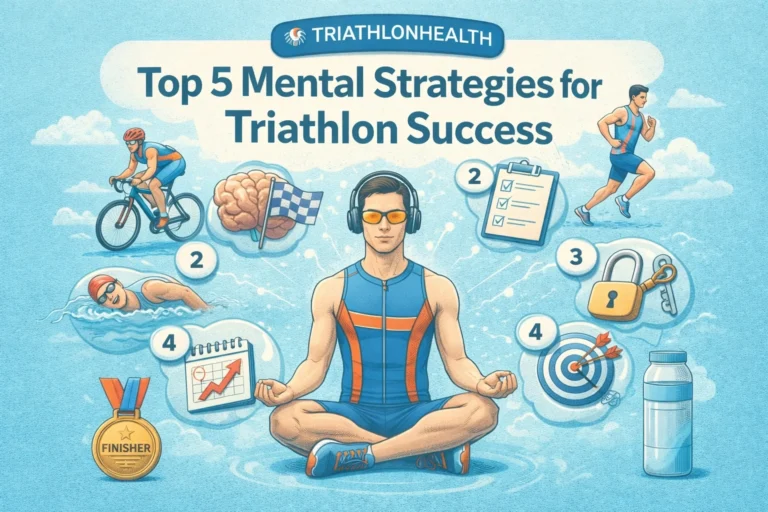
Triathlon is as much a mental test as a physical one. In this article I share clear, practical mental strategies triathlon athletes can use in training and on race day. You will get short, usable steps and simple drills to practice so your mind supports your fitness when it matters most.
Goal setting and process focus
Setting goals is one of the fastest ways to train your mind. Good goals give direction and reduce anxiety. They help you decide what to do each week in training and how to act on race morning.
Start with clear goals. Include outcome goals, but focus mainly on process goals you control. Process goals are things you do, not what others do or what a stopwatch shows. They keep your attention on actions you can repeat under pressure.
When you train, set one process goal for each session. Aim to execute that goal and then reflect. This simple routine builds confidence and familiarity. Over time, your brain learns the steps and stress drops.
Here are practical process goals you can use in training. Read them and choose two to three to try next week.
- Swim: focus on a steady rhythm for 200 meters, count stroke cycles every 50 meters.
- Bike: hold a specific cadence for blocks of 10 minutes to train control under load.
- Run: use negative-split pacing in a tempo run to practice finishing strong.
- Transition: set a target time and rehearse the exact movements to get there.
- Nutrition: test a fueling plan during a long ride or run and note what worked.
Visualization and mental rehearsal
Visualization is a simple mental warm-up. It helps your brain practice when your body rests. Use it to run through the race in your head, step by step. Picture the swim start, sighting, the bike corners, transitions, and the final run finish.
Spend five minutes after easy sessions imagining exact race scenarios. See and feel the actions. Imagine how you will handle common problems: a slow swim start, a sudden gust of wind, or cramping on the run. Rehearse the solution clearly in your mind.
Mental rehearsal reduces surprise and speeds decision making under stress. It also lowers anxiety because the event feels familiar. When you visualize often, your brain treats the images as practice.
Use this short list to structure your visualization. Read it, then try a 5-minute session tonight.
- Start calm: picture standing on the line and breathing steadily.
- Key moments: imagine three critical moments of the race and your exact response.
- Problem solving: picture one likely issue and the step-by-step fix you will use.
- Finish strong: end each rehearsal with a clear image of crossing the line and feeling proud.
Pre-race routines and cues
Routines calm the nervous system and prime performance. A short, repeatable pre-race routine signals to your brain that it is time to perform. Build a routine for the 24 hours before the race and another for the hour before start.
Keep routines simple. Too many steps create pressure. Choose things that are easy to repeat: a short warm-up sequence, a breathing exercise, and a checklist you run through calmly. Practice these routines in training so they feel automatic on race day.
Routines also include cues, small sensory triggers that put you into the right headspace. A cue could be a specific playlist, a small warm-up move, or a phrase you whisper to yourself. Use the same cues at tune-ups and low-pressure races to build the link between cue and calm focus.
Below are specific items you can include in a pre-race routine. Pick a few and rehearse them this season.
- 24-hour checklist: gear, nutrition, backup items, and a simple sleep plan.
- 60-minute routine: light jog, dynamic drills, and two minutes of controlled breathing.
- 5-minute cue: a short phrase or breathing pattern to center attention before the start.
- Post-finish ritual: a brief cool-down and three things you will note in your race log.
Pain and fatigue management
Triathlon racing brings physical pain and a growing urge to slow down. Good mental strategies help you accept discomfort and keep moving. Acceptance does not mean giving up; it means naming the feeling and acting despite it.
Use language that separates pain from performance. Instead of telling yourself “This is unbearable,” tell yourself “This is heavy but manageable.” Small shifts in wording change how the brain evaluates a signal. The message becomes: I can act now, even if it is hard.
Break big discomfort into smaller blocks. Focus on one lap, one kilometer, or the next feed station. Short windows are easier to accept mentally. Each completed block gives a small win and convinces your brain the effort is sustainable.
The list below contains techniques athletes can use during hard sections. Read and practice them before race day so they are ready when you need them.
- Box breathing: inhale for 4, hold 4, exhale 4, hold 4. Use for 30 to 60 seconds to slow your heart rate.
- Task-focused cues: repeat a simple phrase tied to action, for example “Smooth strokes” or “Strong cadence.”
- Chunking: divide the remaining distance into short, manageable pieces and count them off.
- Self-checks: scan your body for tension and relax shoulders and jaw to save energy.
Focus, attention control, and race tactics

Focus determines how well you execute your plan. Attention drifts under fatigue. Training specific focus skills helps you return to the plan quickly. Use short anchors to bring attention back to the present.
Anchors are simple sensory or verbal cues. They ground you when your mind wanders. A swim anchor could be the sound of your breath and the feel of your wrist entering the water. A bike anchor might be a cadence target. A run anchor could be stepping light and quick.
Practice attention shifts in training. Set timers for 10 minutes of strict focus, then allow a minute to relax. Increase focus windows gradually. This trains your brain to hold attention during long efforts.
Below are tactical focus techniques to use in training and on race day. Try one per week until it becomes automatic.
- Windowed focus: focus for a fixed interval, then review form for a short moment, then return to focus.
- Peripheral scanning: check your surroundings every few minutes to stay safe and aware without losing rhythm.
- Simple mantras: short, action-based phrases to reset focus, for example “smooth, strong, steady.”
- Pre-set responses: decide ahead of time how you will react to common events, like a gap opening or a rough patch of water.
Putting the five strategies together
Each strategy is useful on its own, but they work best when combined. A dependable process goal gives you structure. Visualization makes the race familiar. Routines calm nerves. Pain management keeps you moving. Focus tactics protect execution.
Use a weekly plan to practice each skill. Spend one session on visualization, another on focus drills, and insert pain-management practice into hard workouts. Rehearse pre-race routines at tune-up races.
On race week, simplify. Review your process goals and one visualization. Do a short, familiar pre-race routine. Trust the work you have done. Confidence grows when your mind recognizes patterns it has practiced often.
Below is a simple four-step plan to integrate these skills into your training. Follow it for a month and note the changes in your race-day calm and clarity.
- Week 1: Add a 5-minute visualization after two easy sessions. Use one concrete race scenario.
- Week 2: Build a short pre-race routine and use it before a long training day.
- Week 3: Practice focus windows and pain management during interval work.
- Week 4: Combine all elements during a simulation session that mimics race pacing and transitions.
Key Takeaways
Mental strategies triathlon training are skills you can practice like any physical drill. They reduce worry, improve decision making, and make your fitness count on race day. Start small and build consistency.
Focus on process goals, use visualization often, keep a short pre-race routine, practice pain management, and train attention control. Each skill adds a layer of reliability to your performance.
Make one change this week: pick a single process goal, rehearse a short visualization after an easy session, and use a two-step routine before your next long workout. Small steps create big results over time.
With steady practice these mental strategies triathlon athletes rely on will become natural. Your mind will support your training, help you make smart choices, and keep you confident when it matters most. Enjoy the work and trust the process.