
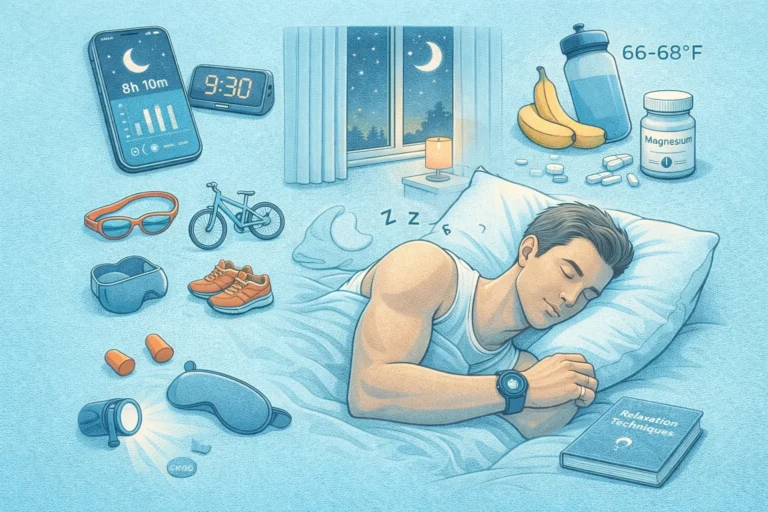
Good sleep is one of the easiest and most powerful ways to get faster and stay healthy. This article gives clear, practical sleep tips triathletes can use right away to improve recovery, boost training quality, and feel sharper on race day. Read on for routines, habits, and simple tools you can try this week.
Why Sleep Matters for Triathletes
Sleep repairs muscle tissue and restores the nervous system. When you train hard on the bike, in the pool, and on the run, tiny tears appear in muscle fibers. Deep sleep helps the body rebuild those fibers stronger. Without enough sleep, healing slows and training gains shrink.
Sleep also affects hormones that control energy, mood, and appetite. Growth hormone peaks during deep sleep and helps with recovery. Cortisol, a stress hormone, drops with good sleep. If sleep is poor, hormones go out of balance and you may feel tired, cranky, or more prone to illness.
Finally, sleep improves mental skills that matter on race day. Good sleep sharpens reaction time, tactical thinking, and motivation. A rested athlete makes better pacing choices, handles race stress better, and follows nutrition and hydration plans more reliably.
How Much Sleep Do Triathletes Need
Most adults need seven to nine hours of sleep each night, but endurance athletes often benefit from more. Many triathletes perform best with eight to ten hours, counting naps as part of total sleep time. Training load, age, and stress affect how much you need.
Quality matters as much as quantity. If you get eight hours but wake often, the recovery value falls. Aim for continuous blocks of deep and REM sleep. Track how you feel day to day to find your personal sweet spot. Feeling fresh, training consistently, and avoiding frequent illness are good signs your sleep is adequate.
On heavy training weeks, plan extra sleep time. Add 30 to 90 minutes nightly for a few days after intense sessions or long bricks. This helps with tissue repair and restores energy faster than trying to push harder without extra rest.
Sleep Tips Triathletes Can Use
These are practical steps you can try right away. Start with one or two changes and add more over a few weeks. Small, consistent habits beat big, fast changes that are hard to sustain.
First, set a fixed sleep window. Going to bed and waking at the same time each day trains your body clock. Even on easy training days, keep the schedule close. That predictability improves sleep quality and daytime energy.
Second, create a simple pre-sleep routine. Use the same three to five actions before bed, such as a warm shower, light stretching, and turning off screens. Repeating these cues tells your body it is time to switch to rest. Over several weeks you will find falling asleep becomes easier and more consistent.
Sleep Hygiene Practices

Good sleep hygiene means building a sleep-friendly environment and routine. Small changes in your bedroom and habits can have a big effect on how fast you fall asleep and how deeply you rest. Start with what you can control tonight.
Below is a focused checklist to help you set up a better sleep space. Read the list, then apply one or two items this week and add more as you go.
- Keep your bedroom cool, around 60 to 68 degrees Fahrenheit, which helps deep sleep.
- Block out light with blackout curtains or an eye mask to protect melatonin production.
- Reduce noise with earplugs, a fan, or a white noise machine if needed.
- Use a comfortable mattress and pillow that support your usual training positions.
- Remove bright screens from the bedroom and leave phones out of reach at night.
- Limit fluids late at night to reduce sleep interruptions for bathroom trips.
Make the bedroom a place for sleep and quiet recovery. Avoid using it as a training planning station or for late work. The brain links environment and behavior. A tidy, calm room cues rest and helps you fall asleep faster.
Training Schedule Adjustments to Protect Sleep
Training timing affects sleep quality. Hard sessions too close to bedtime can leave you wired and make sleep harder. Heat and high-intensity work raise body temperature and adrenaline, both of which slow the onset of deep sleep.
Try to finish intense workouts at least three hours before bed. If you must train late, use low-intensity, short sessions to avoid overstimulation. Gentle stretching and breathing work after training can help the nervous system downshift.
Plan heavier sessions earlier in the day during hard blocks. Morning or mid-afternoon intervals often lead to better night sleep. Then use evenings for mobility, light swim drills, or active recovery rides that support sleep rather than compete with it.
Nutrition and Recovery: Food Choices That Help Sleep
What you eat and when you eat affects how quickly you fall asleep and how deeply you stay asleep. Heavy or spicy meals late at night can disrupt digestion and wake you. Aim for a balanced dinner that includes lean protein, complex carbs, and vegetables to support overnight recovery.
Timing matters. Finish large meals two to three hours before bed. If you need a small snack closer to bedtime, choose something that pairs protein and carbs, such as a small yogurt with fruit or a banana with nut butter. These options provide steady blood sugar without large digestive stress.
Watch caffeine and alcohol. Caffeine can stay active for many hours and reduce sleep depth if taken late. Alcohol might help you fall asleep but fragments sleep later in the night. Limit caffeine to mornings and use alcohol sparingly, especially before key training blocks or races.
Napping Strategies for Triathletes
Naps can top up recovery and improve alertness during long training days. Smart napping supports total sleep time and may allow you to train more effectively without overstressing your body. Use naps as planned tools, not random fixes.
A good nap length is 20 to 30 minutes for a quick boost, or 90 minutes for a full sleep cycle that includes deep and REM sleep. Short naps reduce sleep inertia, the groggy feeling after waking, while longer naps can provide stronger recovery when needed.
Schedule naps mid-afternoon, typically between 1 p.m. and 3 p.m., when the body naturally feels drowsy. Avoid napping too late in the day, since that can push bedtime later and fragment night sleep. Keep naps consistent and part of a weekly plan on heavy training days.
Sleep Tracking and Tools
Tracking sleep gives useful feedback, but it should guide behavior, not cause worry. Use basic tools like a sleep diary or consumer sleep trackers to see patterns. Look for trends over weeks, not day-to-day noise.
When you use a tracker, compare its data to how you feel. If a wearable shows lower deep sleep but you feel sharp and recovered, do not panic. Use the numbers to identify persistent issues, such as short sleep duration, frequent waking, or late bedtimes that match how you feel on hard days.
Other tools to support sleep include blackout curtains, white noise machines, and blue light filters on devices. Try progressive muscle relaxation or simple breathing exercises at night. These tools help your body shift into rest and can be part of a reliable pre-sleep routine.
Common Sleep Problems and Practical Fixes
Many triathletes face similar sleep issues. Early waking, trouble falling asleep, and fragmented sleep are common. Often a few targeted changes fix these problems quickly. Start by identifying one main problem to work on.
If you wake too early, check evening habits. Avoid heavy alcohol before bed and try earlier light exposure in the morning to shift your clock. If falling asleep is the issue, create stronger pre-sleep cues and reduce evening screen time. If night waking is common, reduce late fluids and manage training intensity late in the day.
Persistent insomnia or sleep apnea needs professional help. If you regularly feel unrefreshed despite good sleep habits, see a sleep specialist or your doctor. Treating persistent problems pays off in consistent training, faster recovery, and better racing.
Night Before Race and Race Day Sleep
Race week sleep strategy is not about making up lost hours in the last night, but about steady sleep for several nights before the event. Plan lighter training and earlier bedtimes in the three nights before a big race to build reserve. This approach beats trying to extend sleep massively the single night before racing.
The night before a race, keep your routine familiar and focus on calm, restorative activities. Avoid new foods, heavy drinks, or unfamiliar sleeping setups if possible. If travel is required, try to arrive with enough time to adapt, and use familiar items like your pillow or sleep mask.
Race day naps can help, especially for long events that start early. A short nap of 20 to 30 minutes a few hours before race start can sharpen focus. Keep timing practical and test it in training so you know how your body responds without surprises on race morning.
Putting Sleep Habits into a Weekly Plan
Good sleep habits are easier to keep when they are part of your weekly plan. Treat sleep blocks like training sessions in your calendar. Block time for a full night of sleep and add short recovery naps on heavy days. Planning reduces the chance that life or work will push rest aside.
Start small: choose a consistent wake time, set a bedtime that allows eight hours, and add a 20-minute afternoon nap on heavy sessions. Track how you feel across two weeks and adjust. Over a month you should see clearer recovery, lower fatigue, and improved training quality.
Share your sleep plan with family, coaches, and housemates so they can support quiet evenings and protected sleep time. Sleep is a team effort for athletes with busy lives. Simple agreements at home help you stick to routines and protect race week rest.
Key Takeaways
Sleep is a core training tool for triathletes, not an optional extra. Use the sleep tips triathletes can apply now: set a consistent sleep schedule, build a short pre-sleep routine, control your sleep environment, and plan naps strategically. These steps support recovery and performance.
Monitor habits rather than obsessing over single nights. Use trackers and diaries to spot patterns, adjust training timing, and tune nutrition. If problems persist, seek professional help to address issues like insomnia or sleep apnea that block recovery.
Start with one change this week and add others gradually. Small, steady improvements in sleep add up to better training, fewer injuries, and stronger race-day performance. Sleep well, train smart, and enjoy the gains from better recovery.