
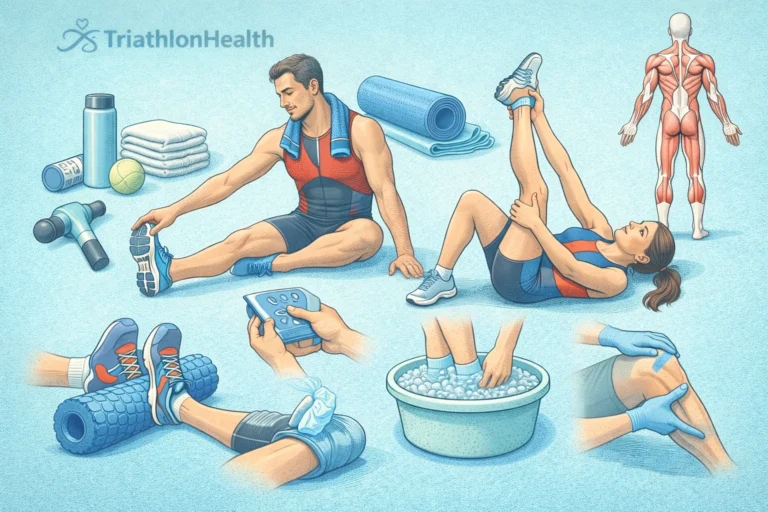
As a triathlon journalist and coach, I love showing athletes how small moves can make a big difference. This article explains stretching recovery techniques for triathletes in clear steps. You will learn when to use each method, simple routines, and how to add them to your week.
These tips are practical and easy to use. They work for new triathletes and experienced racers. Read on to find routines you can apply after a swim, bike, or run.
Why stretching recovery techniques matter
Stretching recovery techniques help your muscles relax after hard training. They also help maintain range of motion. When muscles recover well, you can train more often and race better.
Recovery reduces soreness and lowers injury risk. It helps joint motion and keeps muscle length healthy. That matters for swim technique, pedal stroke, and running form.
Good recovery gives you consistent training weeks. It can prevent small issues from becoming big problems. Use the right techniques to stay healthy and strong.
These techniques are simple to add to your plan. You do not need special gear. A foam roller and a regular stretching routine are often enough.
When to stretch: timing and signs
Knowing when to use stretching recovery techniques matters as much as the moves themselves. Timing changes depending on the activity and how your body feels. Use timing to get the best benefit from each session.
Before a workout, use dynamic warm-ups. These prime the nervous system and raise tissue temperature. Static stretching right before a hard effort can reduce power. So avoid long, passive holds before speed work.
After training, choose gentle static stretches, mobility work, and foam rolling. This helps reduce tightness and improves circulation. Keep the post-session work short if you have another session soon.
On easy days, use longer mobility sessions. That is the time for deeper work and technique checks. If you feel a sharp or unusual pain, back off and treat it like an injury. Rest and consult a professional when needed.
Types of stretching recovery techniques
Triathletes need a mix of methods. Stretching recovery techniques fall into clear groups. Each group serves a different purpose for recovery and performance.
Below are the main types you will use. I will explain what each one does and how to apply it. Use a blend of methods to get the best results.
Choose the method by the session and the body area. For example, do dynamic drills before a run and foam rolling after a long ride. Mix and match for balance.
Here are the main methods to include in your plan.
Static stretching
Static stretching uses steady holds to lengthen muscles. Hold each stretch for 20 to 60 seconds. This helps reduce tightness after a session and improve flexibility over weeks.
Use static stretches after training or on recovery days. Focus on hips, hamstrings, calves, chest, and shoulders. Swimmers and cyclists often get tight in the chest and hip flexors, so include those areas.
Keep the stretch firm but not painful. Breathe and relax into the position. If you feel a sharp pain, stop. Regular static work can protect joints and help with technique.
Before a list of useful static stretches, note that these are basic. You can follow them after a swim, bike, or run to ease tight spots.
- Hamstring stretch: seated or standing, reach to the foot and hold.
- Calf stretch: wall push or step stretch with a straight back leg.
- Hip flexor stretch: low lunge with hips forward.
- Quadriceps stretch: standing knee bend, keep hips level.
- Pectoral stretch: doorway or wall chest opener with arm raised.
Dynamic stretching
Dynamic stretching uses controlled movement. It prepares the body for training. Use dynamic work before swims, rides, and runs to increase blood flow and mobility.
Examples include leg swings, arm circles, walking lunges, and hip openers. These moves reduce stiffness and help you move more freely. They also warm muscles without weakening them for performance.
Do dynamic sets in short circuits. Keep reps reasonable and stay smooth. Aim for 6 to 12 reps per move and 2 to 4 moves per joint area. This primes the nervous system and helps with race-day speed.
Here is a short list of dynamic moves to add to warm-ups. Introduce each with light movement and build range gradually.
- Leg swings front to back and side to side.
- Walking lunges with reach.
- High knees or butt kicks for running prep.
- Arm circles and band pull-aparts for swimmers.
Foam rolling and soft-tissue work
Foam rolling targets fascia and muscle tight points. It often reduces immediate soreness and improves movement. Use it after workouts or between sessions on easy days.
Roll slowly and pause on tender spots for 20 to 40 seconds. Avoid rolling directly over bones or joints. If a spot is too painful, reduce pressure or stop. You want release, not injury.
Pair foam rolling with light stretching. Rolling first can make static and dynamic stretches more effective. Use a medium-density roller for most triathletes. A ball can help small areas like glutes or calves.
Before a list of key foam roll targets, remember to move slowly. Spend more time on tight, worked areas and less on relaxed spots.
- Quadriceps: roll from hip to knee, focusing on tender lines.
- IT band side of thigh: use the roller gently and support with opposite leg.
- Hamstrings: roll from glute to back of knee.
- Calves: roll from ankle to knee and pause on knots.
- Upper back: roll between shoulder blades to ease swim and bike posture.
Sample routines using stretching recovery techniques

Short, simple routines are easiest to keep. The routines below match common triathlon sessions. They give structure and help you recover faster.
Each routine starts with a short lead-in and then a list. The lists show a clear order. Start with dynamic moves before efforts and static or rolling after workouts.
Pick one routine for a given day and make it a habit. Small consistency adds up over weeks and months. You will feel the difference in training quality and comfort.
Use these sample routines right after a swim, bike, or run. Tailor durations to time available and how your body feels.
Pre-ride or pre-run warm-up
A short warm-up gets you ready quickly. Use 8 to 12 minutes of light movement and dynamic drills. This reduces injury risk and improves performance.
Start with easy aerobic movement such as light jogging, spinning, or arm swings. Raise heart rate gradually. Move smoothly and focus on range of motion.
Finish with sport-specific drills like high knees, leg swings, and banded shoulder turns for swimmers. Keep the work specific to the upcoming session.
Here is a quick list to try before a race or hard interval session. Do each move for 30 to 60 seconds or 8 to 12 reps.
- Easy jog or spin for 3 to 5 minutes.
- Leg swings front to back and side to side.
- Walking lunges with twist.
- High knees or short accelerations.
- Arm circles and band pull-aparts for shoulders.
Post-session cooldown and recovery
After a session, slow down with light movement and then use static stretches and foam rolling. Keep the post-session work to 10 to 20 minutes if time is tight.
Start with 5 minutes of easy pedaling or walking. Move to foam rolling for the major legs and back muscles. Finish with static holds to relax tissue and restore length.
Focus on areas that felt heavy or sore during the workout. If your chest and shoulders feel tight after a swim, spend more time on pectoral stretches and scapular mobility.
Here is a short list for a balanced post-session routine you can follow most days.
- Easy spin or walk for 5 minutes to cool the system.
- Foam roll quads, hamstrings, calves, and upper back for 6 to 8 minutes.
- Static stretches held 30 to 60 seconds for hip flexors, hamstrings, calves, and pecs.
- Finish with deep breathing and short mobility moves for the spine.
Active recovery day routine
On recovery days, use longer mobility sessions and light aerobic work. The goal is to move well and relax tense areas. Keep intensity low and focus on quality.
A 20 to 40 minute session can include gentle cycling, swimming, or walking. Add extended mobility drills and soft-tissue work. This helps flush metabolic waste and speeds repair.
Pay attention to sleep, nutrition, and hydration on recovery days. Movement helps, but rest and food are vital for repair and growth.
Below is a balanced active recovery plan that mixes movement and mobility. Use it midweek or after a hard block of training.
- 20 minutes easy bike or swim at low heart rate.
- 10 minutes foam rolling focused on sore areas.
- 10 to 15 minutes of full-body mobility and static stretches.
Common mistakes and how to fix them
Many athletes skip recovery or do the wrong kind. Common mistakes slow recovery and raise injury risk. Fixing these habits gives fast gains in comfort and performance.
One mistake is static stretching before hard effort. This can reduce power and stability. Swap static holds for dynamic movement before speed or race work.
Another error is over-rolling or pushing into sharp pain. Foam rolling should be uncomfortable but not injurious. If you feel a sharp or burning pain, ease off and try a gentler approach.
Finally, not being consistent is a big problem. Doing a single long session once a month helps less than short daily work. Aim for short, regular sessions to build resilience.
Integrating stretching recovery techniques into your week
Add small sessions around key workouts. Use dynamic work before efforts and static or rolling after. Plan one structured recovery day with longer mobility each week.
For busy athletes, split sessions into 10 to 15 minute blocks. Do a short warm-up before the session and a 10-minute cooldown afterward. These small blocks are easy to fit into a packed day.
If you train twice a day, keep the session between them short and restorative. Focus on foam rolling, breathing, and gentle stretches. This helps you recover for the second session.
Track what works. Note soreness and mobility changes. Adjust the mix of methods so you remain healthy, strong, and ready to race.
Key Takeaways
Stretching recovery techniques help triathletes train more consistently. Use dynamic work before efforts and static or foam rolling after. Be gentle and progressive in your approach.
Keep routines simple and regular. Short daily sessions beat rare long ones. Match techniques to the sport: chest and shoulders for swim, hips for bike, and calves for run.
Listen to your body and adjust timing and intensity. If pain is sharp or persistent, slow down and seek professional help. Stay curious and consistent and you will see steady improvement.
Use these principles to build a plan that fits your week. With the right mix, stretching recovery techniques will help you train harder, race faster, and enjoy the sport more.