

As a triathlon journalist and shoe expert I see the same mistakes on race day. Triathlon shoe problems can cost time, comfort, and even safety. This article explains the common issues and gives clear, practical fixes you can use in training and on race day.
Read on to learn how to stop blisters, speed transitions, manage water, align cleats, and keep shoes lasting longer. The guidance is hands-on and easy to apply, whether you are new to the sport or chasing a personal best.
Fit and blisters (triathlon shoe problems)
A poor fit is the top cause of pain and blisters. Shoes that are too tight press on toes and the top of the foot. Shoes that are too loose allow friction that causes hotspots. Both lead to blistering and lost performance.
To solve fit problems, start by checking shoe size after a run. Feet swell in training and in races. Measure your feet at the end of a long effort to pick the right size. Socks, if you use them, affect fit too, so test with the clothing you will wear on race day.
Adjust lacing or the closure system to balance pressure. If your shoe has a strap or Boa dial, tighten the midfoot first, then the forefoot. Avoid over-tightening the toe box. If standard lacing still causes pressure, use a different lacing pattern to relieve hotspots. A slight looseness in the toe area prevents toes from jamming while you run.
If blisters form despite adjustments, treat them quickly. Clean the area and cover with a blister dressing. During training, practice different shoes and sock choices until you find a combination that stays comfortable for long efforts.
Heel slip and instability
Heel slip reduces power and can make you feel unstable on the bike and during the run. It often happens because the shoe shape does not match the heel cup of your foot. Fabric stretch and worn padding also create looseness over time.
Fix heel slip by improving heel lock. Use the shoe’s heel strap, double-heel loop, or a tighter upper at the top of the shoe. If your shoes lack these features, add a heel lock lacing technique. You can also use thin heel pads to reduce extra space and keep the heel planted.
Another approach is to check the sock choice. Too thick a sock can allow extra movement. Try thinner technical socks or no socks in warm races to get a firmer fit. Testing during long sessions reveals how the shoe behaves after hours of effort.
If heel slip persists, consider a different shoe model with a deeper heel cup or firmer heel counter. Some brands design shoes specifically for triathlon foot shapes and transitions. Investing in a better fit pays off in comfort and power transfer.
Slower transitions and fastening problems
One common triathlon shoe problem is slow or clumsy transitions. Struggling to fasten shoes wastes time and adds stress. Fastening systems that require lots of fiddling are not ideal for the seconds-first world of transitions.
Practice practice practice. Set up your gear and simulate transitions in training. Learn to get one hand in and secure the closure while you run from T1 to the mount line. Practice getting the shoe on and engaging the strap quickly while standing or jogging. Speed comes from repetition and muscle memory.
Consider shoe mods that speed the process. Cutting the tongue for a quick entry, using elastic laces, or adding a large, easy-grab strap near the ankle all help. Test any modification in training to ensure it does not reduce shoe security or comfort in the race.
Keep shoes prepped before the race. Position them in easy view, face them in the direction you will run, and pre-open closures. These small actions save seconds and reduce transition stress. A simple checklist helps you avoid common mistakes on race day.
Water retention and drainage (triathlon shoe problems)
Water trapped in shoes adds weight and causes sloshing, which slows you down. Shoes that soak up water or have poor drainage make the run after the swim much harder. This is a frequent triathlon shoe problem for open-water events.
Choose shoes with mesh and drainage ports if you race in wet conditions often. Many triathlon shoes include holes in the insole or quick-draining uppers. These features let water exit the shoe fast, reducing added weight and improving comfort.
There are quick fixes to improve drainage. Cut small holes in the insole near the toe and under the arch to let water escape. Make sure cuts do not compromise material that supports the foot. Test any cut in training until you know how it affects comfort and debris entry.
After training or races, help shoes dry quickly. Remove insoles, prop the shoes open, and allow air flow. Drying prevents odor and preserves materials. For long events, plan how you will remove water quickly during transitions to speed up the run leg.
Cleat alignment and clipping issues
Cleat misalignment can cause knee pain and reduce pedaling efficiency. Loose cleats or stripped bolts are dangerous on race day. Fixing cleat issues before the event keeps you safe and fast on the bike.
To align cleats, use a basic method. Sit on your bike, place your feet on the pedals in a natural position, and mark the shoe where the pedal spindle aligns with the ball of the foot. Adjust the cleat so the spindle sits under that mark. Small tweaks make a big difference in comfort and power.
Always torque cleat bolts to the manufacturer suggested setting and check them before every ride. Use a thread locker on bolts if they keep loosening. Replace worn cleats quickly. If your shoe is old and the cleat area has stretched, consider replacing the shoe to avoid slippage while clipped in.
Practice clipping in and out calmly. Rehearse unclipping with one foot while braking lightly. Confidence with your pedals reduces panic in transitions when you clip in while accelerating from the mount line.
Wear, sole breakdown and odors
Shoes wear out. Soles can compress, uppers fray, and cushioning loses rebound. These changes affect fit, power transfer, and foot protection. Ignoring wear increases the chance of a gear failure on race day.
Monitor wear by checking sole stiffness, tread wear, and upper integrity. If the sole bends easily at the toe or the tread is worn smooth, the shoe has lost performance. Replace shoes when padding no longer recovers between efforts or when you feel foot fatigue earlier than usual.
Odor is another common issue. Bacteria thrive in wet, warm conditions. Regular washing, thorough drying, and occasional odor control sprays or baking soda help. Rotate shoes between long sessions to allow full drying time and to slow material breakdown.
When trimming weight or cutting for drainage, be mindful of structural integrity. Remove material only where it does not reduce support. A small mod can make a big difference for light weight but may shorten shoe life.
Care routines and quick fixes checklist
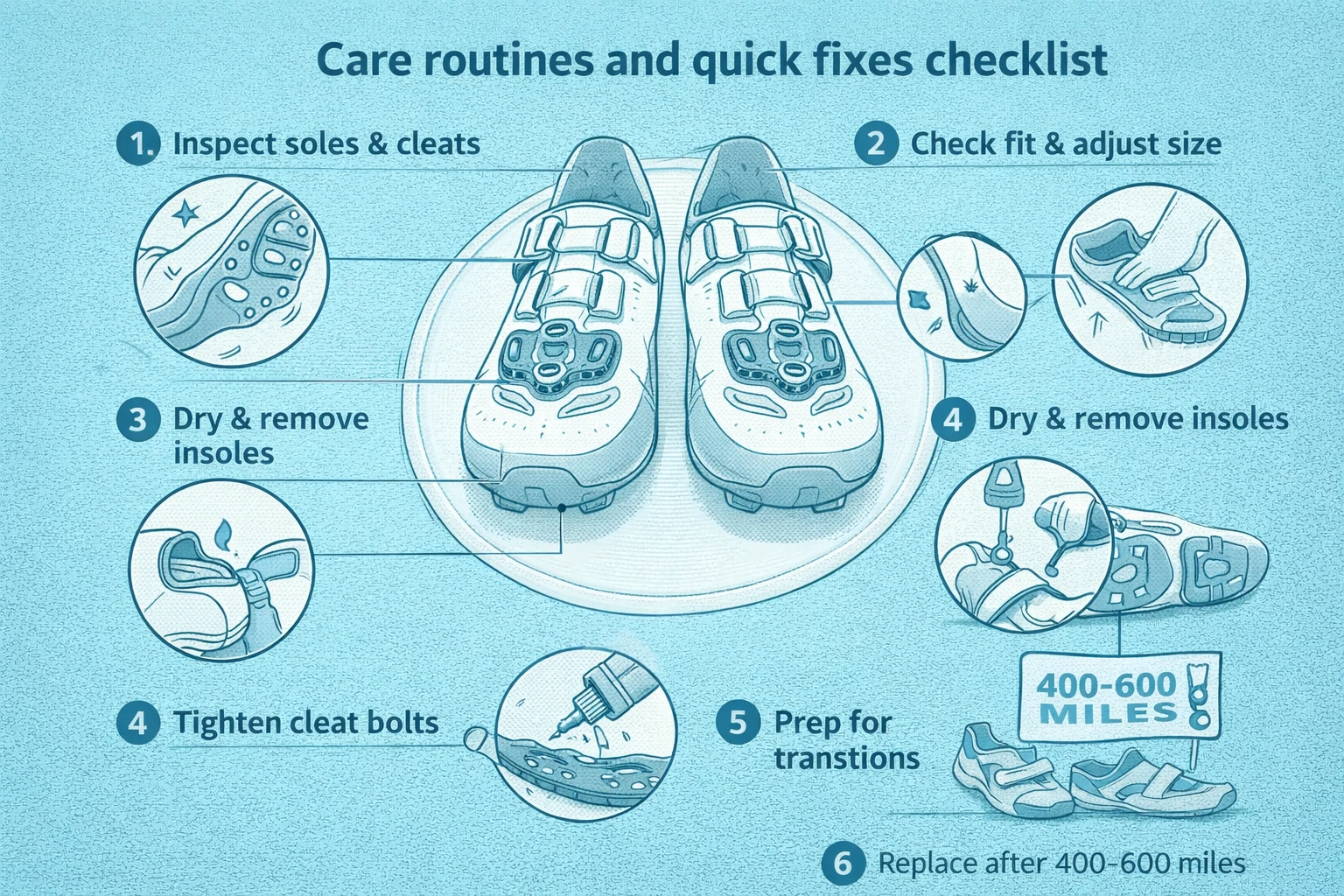
Good care prevents many triathlon shoe problems. A simple routine keeps shoes performing longer and avoids last-minute panic. Follow a checklist before and after major sessions and races to maintain readiness.
Here is a clear checklist you can use before and after rides and runs. Each item helps reduce risk and improves performance. Keep these steps in your training log so they become habit.
- Inspect soles, uppers, and cleats for wear and damage.
- Check fit after long sessions; swap size if needed.
- Dry shoes fully between uses and remove insoles to speed drying.
- Tighten cleat bolts and add thread locker if needed.
- Prep transitions: open closures, position shoes, and rehearse quick entries.
- Replace shoes after 400 to 600 miles or when support fades.
When you face a specific problem during training, try these quick fixes. They are meant for short-term relief and must be tested before race day. Keep a small repair kit with you to handle minor issues at the venue.
- Use adhesive blister patches to stop hotspots in training.
- Add heel pads to stop slip until you can replace the shoe.
- Cut small drainage holes in the insole to speed water exit.
- Carry spare laces, a mini multi-tool, and a spare cleat bolt.
Other gear notes and related issues
Shoes are one part of a triathlete’s kit. You will face other gear failures. Knowing common fixes helps you prepare for many race-day problems. Keep a calm plan and a small toolbox in transition for quick repairs.
For example you may need gear issue solutions for items beyond shoes. A quick repair kit and practice can solve many small failures without losing time or focus. Thinking ahead reduces stress and lets you race your plan.
Some problems, like a broken wetsuit zipper or a rim issue, need specialist attention. For swim suit repairs search guidance to fix leaky wetsuit and for bike failures have a strategy for a bike chain break. Practice switching tasks under pressure so you remain efficient when things go wrong.
Keeping a maintenance log helps track when shoes and other gear were bought and how many hours they have logged. This practice reduces surprises and keeps your equipment race-ready.
Key Takeaways
Triathlon shoe problems are common but manageable. Issues like poor fit, heel slip, drainage, cleat misalignment, and wear all have practical fixes. Addressing these issues in training prevents race-day problems.
Use a routine to inspect and care for shoes, practice fast transitions, and test any modification before a race. Simple tools like heel pads, drainage cuts, or faster lacing can provide quick relief. Replace shoes when support or fit degrades.
Plan for other gear issues too. Keep a small repair kit and a calm checklist for transition. Knowledge and preparation save time and keep you focused on racing well.
Work through these tips during training and make adjustments to match your body and race conditions. With the right care and practice you can eliminate many triathlon shoe problems and enjoy faster, more comfortable races.