
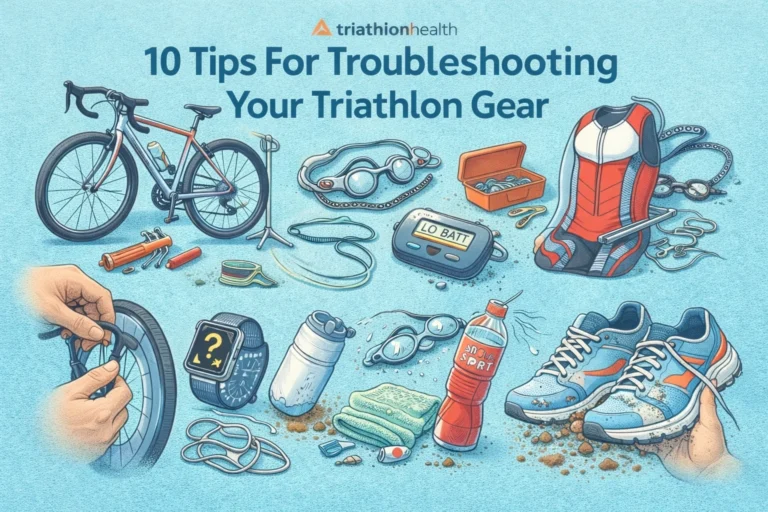
Troubleshoot triathlon gear fast and with confidence. You want gear that works on race day. This guide gives clear steps to find and fix common problems before they cost you time or safety.
As a triathlon journalist and expert, I share tested tips that are simple to follow. Read on to learn what to check, how to test, and what to replace so you can race with less stress.
This article covers bike, wetsuit, shoes, electronics, and packing. Each tip is practical and written for busy athletes who want fast, reliable solutions.
How to troubleshoot triathlon gear
Start with a calm, methodical check of every item. Take five minutes to inspect each piece of gear. Small problems compound on race day, so early checks matter.
Use a written checklist and a quiet space. Walk through swim, bike, run items in that order. A simple routine will help you catch issues before packing.
Keep a small repair kit on race day. That kit should match the tips in this article. When you practice fixes, you cut panic and save time during transitions.
Check your bike basics
Inspect the frame, wheels, brakes, and bolts once a week. Tightening a loose bolt is simple but critical. Loose parts can shift and cause poor handling.
Spin each wheel to check for wobbles. Squeeze the brakes to feel for smooth stopping. Look for cracked spokes or rim dents and note any odd noises while spinning.
Before a race, clean the drivetrain quickly. A clean chain shifts better and reduces the chance of a mechanical. Regular light cleaning is faster than deep fixes on race morning.
Here is a short checklist to run through before you leave home.
- Quick tire pressure check and pump.
- Brake test and pad check.
- Wheel spin for true and noise.
- Quick bolt scan for loose bolts.
Fix shifting and gear issues
If shifting feels slow or jerky, start with cable tension. Stretch and wear can cause poor shifts. Adjust the barrel or cable tension to restore crisp changes.
Check limit screws on the rear derailleur. A mis-set limit screw can cause dropped chains or inability to reach a gear. Small turns can correct range problems.
If the problem persists, examine the chain and cassette for wear. Worn teeth and a stretched chain lead to skipping under load. Replace components when they show clear wear signs.
Use this short list to diagnose shifts quickly.
- Lift the rear wheel and pedal to test shifts.
- Adjust cable tension a quarter-turn at a time.
- Check derailleur hanger alignment for bends.
Prevent and handle flats
Tire flats are the most common bike emergency. Regularly check tire sidewalls for cuts and embedded debris. Replace any tire with visible damage before a big event.
Learn to use a tube or sealant quickly. Practice a fast change at home so you can do it under pressure. Keep two spare tubes and a mini-pump in your kit.
If you suspect sealant issues, refresh or top-up sealant before a long race. Fresh sealant performs better and reduces the chance of multiple punctures costing you time.
Follow this list to prepare for the most common flat scenarios.
- Carry two spare tubes and a compact pump.
- Keep a small patch kit for long rides.
- Check and remove embedded glass or wire before each ride.
Deal with a bike chain break
A bike chain break can end a race if you are unprepared. Know how to remove a broken link and reinstall a quick link. Practice this once or twice until it feels natural.
Carry a chain tool or a quick link in your repair kit. If the chain is severely damaged, replacing the section can be faster than attempting a complicated repair on the road.
After a fix, always test by pedaling gently before you push to race pace. Ensure the repaired chain sits smoothly on the cassette and rings to avoid slips or further damage.
Prepare with this short packing list to avoid being stranded by a bike chain break.
- Carry a chain tool for your chain type.
- Pack a spare quick link sized to your chain.
- Bring a small rag and degreaser for a quick clean if needed.
Inspect your wetsuit
Wetsuit issues can ruin your swim time. Check seams, zippers, and thin spots every month. Small tears grow quickly under stress and cold water.
If your suit leaks or lets in water, try simple edge repairs. A small tear near the ankle or wrist can often be patched with neoprene cement. Practice the repair at home so you can fix a small hole confidently.
For serious damage, replace the suit. A worn suit will let water in and slow you down. Do not risk a long race with a suit that fails to insulate or fits badly.
If you need step-by-step actions, consider this short list to help you fix leaky wetsuit spots.
- Rinse and dry the suit to locate thin areas.
- Use neoprene cement for small tears and seams.
- Replace if shoulder or chest panels are delaminated.
Manage triathlon shoe problems

Triathlon shoes need to fit, stay fastened, and drain water quickly. Check straps, clasps, and soles for wear. A loose strap can cost seconds during transitions and slow you on the run.
If shoes rub or cause blisters, use simple padding or tape to prevent hotspots. Test these fixes on short runs before the event. Small adjustments can prevent a big problem on race day.
For cleat issues, check the bolts and position. Loose cleats cause uneven power transfer and can feel dangerous under load. Tighten bolts and note any unusual wobble or noise.
Here is a short checklist for common triathlon shoe problems including quick fixes.
- Inspect straps and Velcro for wear.
- Add blister tape or padding to pressure spots.
- Check cleat tightness before every ride.
Electronics and sensor checks
Always update firmware on your devices before race week. Outdated software can cause odd behavior. Update early so you can test devices after the update.
Charge all batteries the night before and again the morning of the event. Pack a charged backup battery if your device supports it. Low power can cause data loss or sudden shutdowns mid-race.
Test heart rate straps, cadence sensors, and GPS on a short ride. Ensure the units pair correctly and transmit stable data. Unpaired or noisy sensors distract you and slow decision making.
Use this small routine to avoid mid-race electronics failures.
- Charge devices and run a full pairing test.
- Carry a tiny multi-tool for sensor mounts.
- Label cables and backups in your kit for fast swaps.
Transition kit and packing
Packing well reduces stress and transition errors. Lay out everything in race order so you see missing items quickly. A dry run in your living room works really well.
Use small bags or trays to separate items. Shoes, nutrition, and race numbers should each have a dedicated place. Clear organization saves valuable seconds and mental energy.
Include spare items for common problems. A compact repair kit, spare goggles, and an extra race belt can rescue a race that starts to go wrong. Keep spares light and focused on likely issues.
Here is a quick list of must-pack items to help with common race day gear issue solutions.
- Spare goggles and anti-fog spray or wipes.
- Small bike repair kit and spare tube.
- Race belt, safety pins, and extra nutrition packs.
Maintenance routine and pre-race checklist
Create a weekly and a race-week checklist. Weekly checks keep gear healthy and prevent surprises. Race-week checks focus on tires, fuel, and final adjustments.
Regularly replace items that wear out. Tires, chains, and wetsuits lose performance with age. Track mileage and condition so you replace items at sensible intervals.
Practice a final pre-race run-through two days before the event. Test shoe fit, bike shifting, and sensor pairing. This practice gives confidence and reduces last-minute fixes that cause stress.
Use a short checklist before you leave for the event to ensure you covered the main points.
- Final tire pressure and brake check.
- Device charge and pairing confirmation.
- Pack spares and check straps and closures.
Key Takeaways
Simple checks prevent most race day failures. Spend a few minutes each week and a few focused checks before race day to reduce the chance of big problems. Practiced fixes build speed and calm.
Keep a compact repair kit and practice common fixes like changing a tube, repairing a chain, and patching small wetsuit tears. These skills turn trouble into a minor delay rather than a race ender.
Remember to train with your gear and test fixes at home. Consistent preparation gives you reliable gear and better race day performance. Use these tips to troubleshoot triathlon gear and race with confidence.