
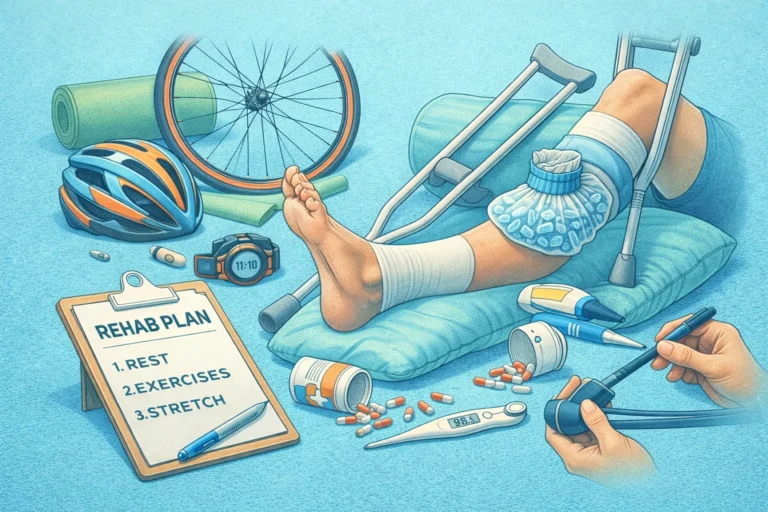
Recovering from a triathlon injury can feel overwhelming. This article explains how to recover triathlon injuries with clear steps you can follow. You will get practical guidance on first aid, rehab planning, strength work, and a safe return to training.
Understanding common triathlon injuries
Triathletes face a mix of running, cycling, and swimming stresses. That combination raises the risk of overuse injuries and sudden strains. Knowing the common problems helps you spot issues early and act fast.
Here are the injuries you are most likely to see. This list shows where pain usually shows up and why. Read it to identify what may be affecting you.
- Runner’s knee and IT band irritation from too much running or poor mechanics.
- Achilles tendinopathy from abrupt increases in run volume or hard intervals.
- Shoulder impingement from stroke imbalance or poor swim technique.
- Lower back pain from bike position and weak core muscles.
- Stress reactions in the bones from repetitive load without rest.
Each injury has a different recovery path. But many share the same first steps: reduce load, manage pain, and start guided movement. Knowing which path fits your injury speeds recovery.
As an expert triathlon journalist, I emphasize listening to your body. Small aches can turn into long breaks if ignored. Early attention gives you the best chance to recover and return stronger.
Immediate steps after injury

Act quickly and calmly after a new pain or injury. Your first day sets the tone for recovery. Aim to protect the injured area without stopping all movement entirely.
Before starting any list of actions, remember this: do not rush back into full training. Use the next short list to guide your first 48 to 72 hours after injury.
- Protect the area: stop the activity that caused the pain and avoid positions that increase it.
- Control inflammation and pain: use cold for the first 48 hours if swelling is present; use heat later to ease stiffness.
- Gentle movement: start pain-free range-of-motion to keep joints mobile and circulation working.
- Relative rest: reduce the load rather than full immobilization for most overuse injuries.
In many cases, a simple plan of reduced training and guided mobility is enough in the first week. If swelling, sharp pain, or loss of function appears, seek professional assessment quickly.
Do not use painkillers to mask pain and return to high load too soon. Pain is your body’s feedback system. Respect it and adjust training accordingly.
Building a structured rehab plan
A clear rehab plan helps you recover triathlon injuries without rushing. A structured approach moves from pain control to rebuilding strength and then to sport-specific work. This phased method lowers the risk of relapse.
Below is a typical set of phases most athletes will follow during recovery. These phases give a clear path from rest to full training. Use them to set expectations and milestones.
- Phase 1: Pain and inflammation control. Focus on rest, gentle mobilization, and basic daily movements.
- Phase 2: Restore mobility and basic strength. Add controlled exercises for range-of-motion and light resistance work.
- Phase 3: Build load tolerance and power. Increase volume of strength work, add eccentric training and sport-specific drills.
- Phase 4: Return to swim, bike, run. Gradually reintroduce each sport separately, then combine sessions while monitoring symptoms.
Progress through each phase only when you meet clear criteria: pain is reduced, movement is controlled, and load is tolerated. Measure progress with simple tests, such as single-leg squats, timed walk or bike segments, and pain-free ranges.
A rehab plan should be tailored to the injury and to your goals. Work with a coach or physiotherapist to set timelines and to monitor load. That keeps training smart and safe.
Strength, mobility and targeted exercises
Strength and mobility work are the backbone of recovery and prevention. Weak muscles or tight joints often lead to recurring problems. A focused program rebuilds resilience and supports efficient technique.
Before a list of key exercise types, know this: quality beats quantity. Perform exercises with controlled form and pain-free range. Add load slowly to keep gains lasting.
- Core and hip stability: planks, side planks, and single-leg bridges to support each discipline.
- Posterior chain strengthening: Romanian deadlifts and hip thrusts to protect the back and knees.
- Eccentric calf and tendon work: slow heel drops for Achilles rehabilitation.
- Shoulder stabilizers and rotator cuff: band work and prone Y/T/Ls for swim health.
Include stretching recovery techniques as part of your plan. Gentle dynamic stretches warm tissue before activity. Longer, controlled stretches after sessions help restore range without weakening the muscle.
Work mobility drills into daily routines. Short, frequent sessions beat long, infrequent ones. Consistency builds tolerance and reduces the chance of flare-ups when intensity returns.
Nutrition, sleep and recovery habits
Physical therapy is vital, but recovery also needs good fuel and rest. Nutrition and sleep shape how quickly tissues heal and how well you adapt to rehab. Treat them as training essentials.
Before a list of practical habits, keep in mind: small, steady changes help more than dramatic short-term fixes. Build routines that fit your daily life and training schedule.
- Protein timing: aim for 20 to 30 grams of protein at meals and after rehab sessions to support repair.
- Anti-inflammatory foods: include leafy greens, berries, oily fish, and nuts to support healing naturally.
- Hydration: stay consistent with fluids to help tissue health and recovery processes.
- Sleep: 7 to 9 hours a night where possible. Good sleep speeds repair and reduces injury risk.
Manage stress and schedule enough easy days. Stress lowers recovery capacity and makes pain feel worse. Use light activities like walking or easy cycling to keep feel-good hormones active without taxing healing tissues.
Supplements can help select cases, but focus first on whole foods and good sleep. Talk to a sports dietitian for specific guidance tied to your injury and training load.
Progressive return to training
Returning to swim, bike, and run should be gradual and planned. Jumping back into full training invites setbacks. A staged return helps you rebuild fitness without inflaming the injury.
Below is a simple framework for reintroducing each discipline. Use pain and function tests to decide when to move from one stage to the next. Progress only if symptoms remain stable.
- Start with controlled, low-impact movement: pool running, easy spinning, or short technique swims.
- Increase duration before intensity: add minutes at easy pace before adding speed work.
- Monitor weekly load: increase total time by no more than 10 percent per week in running and cycling.
- Combine sessions carefully: do bike-run bricks last and short at first to test tolerance.
Assess readiness with simple performance checks: pain-free movement, stable strength tests, and ability to complete a low-load session without increased pain the next day. Use these as objective markers to guide progress.
Communicate with your coach and physiotherapist during the return phase. They can adjust plans and spot patterns that might predict a relapse. That team approach shortens recovery time and builds confidence.
When to see a professional
Some injuries need expert care. If you have severe pain, numbness, or loss of function, consult a clinician quickly. Early assessment can prevent long-term problems.
Below is a list of red flags that warrant prompt professional help. Use it as a guide to decide when to seek immediate assessment or imaging.
- Sharp, worsening pain that stops you from walking or using the limb.
- Significant swelling, deformity, or inability to bear weight.
- Numbness, tingling, or signs of nerve involvement.
- No improvement after a week of conservative care or repeated flare-ups with return to sport.
A physiotherapist, sports medicine doctor, or orthopedist can diagnose specific tissue problems and set a targeted rehab plan. They also offer manual therapy, injections if needed, or imaging to clarify serious conditions.
Keep clear notes on pain patterns, what makes symptoms better or worse, and training load. That history speeds diagnosis and ensures you get the right care for the fastest recovery.
Let’s Recap
Recovering from triathlon injuries is a step-by-step process. Start with protection and gentle movement. Build a phased rehab plan that moves from pain control to sport-specific work. Use objective tests to guide progress.
Strength, mobility, nutrition, and sleep all support recovery. Include targeted exercises and stretching recovery techniques to rebuild resilience. Increase load slowly and monitor symptoms each week.
Work with professionals when red flags appear, and keep a clear plan with milestones. This approach helps you recover triathlon injuries efficiently and return to training with less risk of repeat problems.
Be patient and consistent. Small daily actions add up to a strong, healthy comeback to the sport you love.