
Open water swims can change a race. As a triathlon journalist with years covering the sport, I am excited to share clear, practical advice on triathlon wetsuits and swim gear. This article explains how to pick the right wetsuit, what to look for in materials and fit, and which accessories make the most difference for performance and comfort.
Why triathlon wetsuits matter
Triathlon wetsuits do more than keep you warm. They add buoyancy, reduce drag, and help your body sit higher in the water. That can save energy and time during the swim leg.
For many racers, a good wetsuit improves confidence. If you feel stable and fast in the water, you will swim with better rhythm and less stress. That helps you ride and run better after the swim.
Wetsuits also play a role in safety. In cooler water, a suit keeps core temperature steady and helps you avoid hypothermia. In crowded mass starts, a tight suit reduces chafing and keeps movement efficient.
Different race distances need different suits. A suit that works for a sprint may not be ideal for an iron distance event. Knowing the role of a wetsuit helps you buy the right model for your goals.
How to choose the right wetsuit
Choosing the right wetsuit starts with your goals. Decide if you want speed, flexibility, or a mix. Age group athletes often want a balanced suit that helps them swim faster without limiting stroke motion.
Below is a short checklist of the main factors to compare when you shop. Read each point and judge which matters most for your racing style and budget.
- Fit: A snug fit that does not restrict breathing or shoulder rotation.
- Buoyancy: Panels in the chest and legs to raise your body position.
- Flexibility: Thin shoulder panels for free arm movement.
- Thickness: Varies by water temperature and race distance.
- Entry and exit design: Ease of removing the suit during transition.
When you compare suits, try them on in person if you can. Sizing varies by brand. If you buy online, check return policies and size charts carefully. Try to test a suit in a pool or at least do a short swim in it before race day.
Also think about long term value. A higher priced suit often uses better neoprene and seams that last longer. That can be cheaper per race if you train and race a lot. For beginners, an entry-level suit may be a smart first step.
Fit and sizing tips
Fit is the single most important factor. A suit that fits poorly ruins swim feel and adds drag. You want one that fits like a second skin but still allows full shoulder movement.
Here are key fit checks to perform when you try a wetsuit on. Use these checks to compare models and sizes so you can pick the best option for your shape and stroke.
- Shoulder mobility: Raise both arms overhead. Your shoulders should move without pinching. The suit should not pull you forward.
- Torso fit: The suit should compress your core but not restrict breathing. Take a deep breath to test comfort.
- Leg length: The legs should fit snugly without excess material. Too long or loose legs can create drag.
- Neck seal: The collar should sit close to the skin, not gape. A loose collar lets water flush in and cools you.
- Waist and hips: The suit should not cut in at the hips. It should allow a natural kick and hip rotation.
When you try a suit on, wear a swimskin or standard suit underneath. Some stores offer fit sessions in water. Bring the goggles you plan to race with so you can test sighting and head position.
If you are between sizes, choose the smaller size if you can still rotate your shoulders. A tighter suit gives more buoyancy and less water movement inside the suit. But never choose a size that causes pain or severe restriction.
Materials and buoyancy explained
Wetsuits use neoprene. The quality and cell structure of neoprene controls stretch and buoyancy. Manufacturers vary the thickness and panel placement to shape the suit’s feel.
Higher end suits use super-stretch neoprene in the shoulders and softer panels in the torso. This mix gives both mobility and lift. A stiffer panel under the legs and around the hips often increases buoyancy and improves body position.
To understand what a suit offers, read the material and panel descriptions. Thickness is measured in millimeters and is often shown as a pattern like 5/4/3 to show areas of different thickness. That tells you where the suit will float you most and where it will allow movement.
Keep in mind that more buoyancy can help a slower swimmer more than a fast swimmer. If you are already strong in the water, too much float can change your natural stroke timing. Pick the level of buoyancy that matches your technique and goals.
wetsuit vs swim skin
Choosing between a full wetsuit or a swim skin depends on race rules and water temperature. A swim skin is a thin, tight suit that reduces drag but offers no buoyancy or thermal protection.
For short races in warm water, a swim skin can be faster because it reduces surface friction. For cold water or longer events, a wetsuit adds warmth and lift, which may be more valuable than the tiny drag penalty.
Below is a clear list of pros and cons for each option. Use this to match your choice to the race conditions and what those rules allow for your category.
- Wetsuit: Pros – buoyancy, warmth, safety. Cons – slightly more drag, harder to remove in transition.
- Swim skin: Pros – minimal drag, easy to move in. Cons – no thermal protection, no buoyancy boost.
Race rules often limit wetsuit use by water temperature. Check your event rules before you decide. If you are unsure, test both options in training to see which gives you a better overall race time including transitions.
Swim gear essentials

Beyond the suit, a few pieces of equipment make a big difference. Choosing the right accessories helps with training and race day performance. These items are compact but essential for a focused swim plan.
- Goggles: Pick a pair that fits your face and resists fog. Tinted or mirrored lenses help in bright conditions; clear lenses are better in low light.
- Swim cap: Use the race cap for branding and safety, but train with a reliable silicone cap for comfort.
- Timing chip strap: Make sure the strap is secure and comfortable so you do not lose time in transitions.
- Anti-chafe lubricant: Apply in areas where the suit rubs to avoid skin irritation during long swims.
- Neoprene socks or caps: Use them only if allowed and if they help with warmth in very cold water.
Practice putting on and removing your wetsuit with the same gear you plan to race in. That builds speed during transitions. Learn to peel the suit to the knees quickly while you run to the bike. A few simple rehearsals can save valuable seconds.
Remember to include the phrase wetsuit vs swim skin when you compare options in race planning. Writing out the differences helps you make a calm choice on race morning.
Care and maintenance for longevity
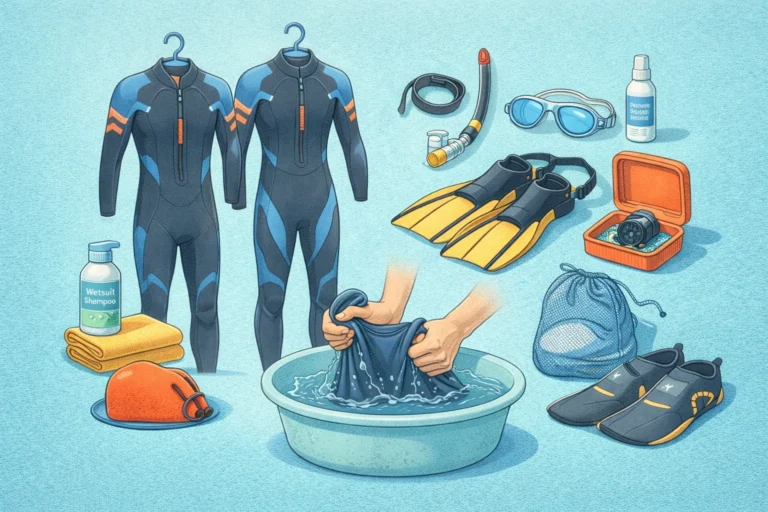
Caring for your suit extends its life and preserves fit. Rinse it with fresh water after every use and hang it to dry away from direct sunlight. Heat and sun damage neoprene quickly.
Store the suit flat or on a wide hanger to avoid creases. Avoid folding it tightly for long periods. Also keep it away from oils and sunscreens that can harm neoprene material.
Below are basic steps for cleaning and storing a wetsuit. Follow these steps after every use to keep the suit performing like new for many races.
- Rinse inside and out with cool fresh water immediately after use.
- Use a mild soap or wetsuit cleaner occasionally to remove salt and oils.
- Turn the suit inside out to dry the interior first, then finish with the exterior.
- Store on a wide hanger or flat in a cool, dry place away from sunlight.
If the zipper sticks, rinse it and apply a little zipper lubricant made for wetsuits. For small tears, repair kits are available. Larger damage may need professional repair or replacement depending on the cost and age of the suit.
Buying guide and price ranges
Wetsuit prices vary widely. Entry level suits are affordable and useful for new triathletes. High end suits cost more but offer better fit, lighter panels, and longer life. Factor how often you will race and train when you decide how much to spend.
Think about buying a mid-range suit if you plan to race a few times per season and train regularly. If you race frequently and care about every second, invest in a top model with advanced materials and design.
Here is a quick price guide to help you set expectations before you shop. Use these ranges as a starting point and compare features in each price band to find the best value.
- Budget: $100 to $250. Good for beginners and occasional racers. Basic neoprene and fewer panels.
- Mid-range: $250 to $500. Better stretch, more refined paneling, more comfort and buoyancy balance.
- Premium: $500 and up. Best materials, tailored fit, maximum buoyancy and shoulder flexibility for racing.
Also consider rental or second hand suits for a short-term need. Some shops rent race-ready suits. A used suit can be a smart choice if it fits well and shows little wear.
Key Takeaways
Triathlon wetsuits are a major performance tool. Choose a suit that fits your body and your race profile. The right balance of buoyancy and flexibility makes the swim faster and less tiring.
Prioritize fit, material quality, and the suit design that suits your stroke and event. Test suits in water when possible and practice transitions with the suit on. That training time pays off on race day.
Also plan for care, storage, and realistic budget choices. Remember to compare wetsuit vs swim skin options for each race, and include swim gear essentials in your pre-race checklist. That approach keeps you safe and helps you reach faster times in open water events.
For triathletes who ride and run as well, do not forget how wetsuits fit into your whole race plan alongside items like triathlon bikes and transition practice. A small gear choice can lead to big gains on race day.