
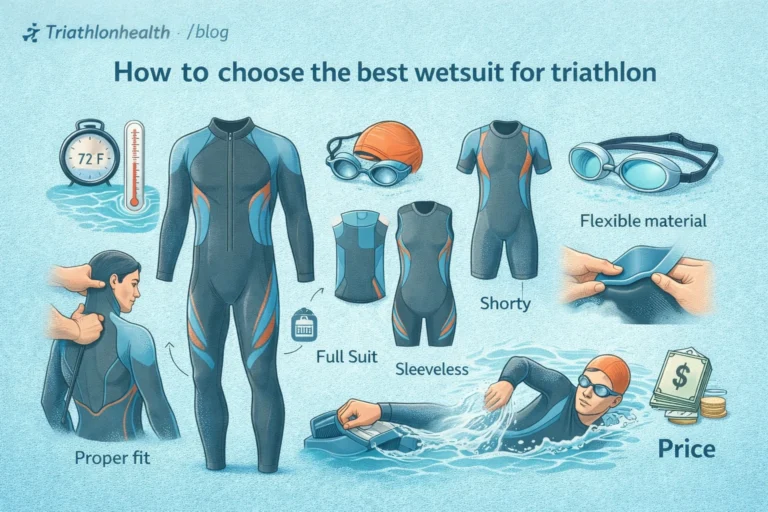
Choosing the right wetsuit can change your swim time and your whole race day mood. This article helps you choose best wetsuit for triathlon with clear, easy steps. Read on to find the wetsuit that fits your goals and makes you faster in open water.
Why the right wetsuit matters
Wetsuits do more than keep you warm. They add buoyancy, improve body position, and cut drag in the water. A good suit can save you time and effort on the swim leg.
Picking the wrong suit hurts your comfort and speed. A tight suit can pinch and restrict breathing. A loose suit lets water in and makes you work harder.
Wetsuit choice also affects transition and confidence. If you can enter and exit quickly, you gain time and calm. That matters when every second counts.
Key features to consider when you choose best wetsuit

Before you shop, think about the features that matter most for triathlon. These features affect fit, feel, warmth and speed. Below I list the top traits and why they matter.
- Fit and cut — A tri suit fits snugly around the shoulders, chest, and hips. It must allow full arm rotation without pulling up the neck.
- Neoprene thickness — Thickness affects buoyancy and warmth. Thicker panels on the legs lift your hips; thinner shoulders let you move freely.
- Flex panels — Stretch panels across the shoulders and arms reduce fatigue and let you keep a high cadence.
- Seams and construction — Glued and blind-stitched seams are common. Fewer seams on the shoulders reduce rubbing and feel better for long swims.
- Buoyancy and panel layout — Look for models designed to raise your hips and legs. This improves body position and reduces drag.
- Entry and exit features — Long zippers, easy pull tabs, and smooth ankle openings help you get the suit on and off fast in transition.
- Certifications and race rules — Check if a suit meets local race rules for thickness and materials. Some races ban certain types of suits.
These features guide your choice. Prioritize the items that match your swim skill and race distance. For example, a beginner may value warmth and buoyancy more than a pro who needs max shoulder flex.
Fit and sizing: getting the perfect fit
Fit is the single most important factor in choosing a wetsuit. A well fitted suit feels tight but not painful. It should sit close to your skin with minimal folds or gaps.
Try suits with a full dry run before you buy. Put the suit on and raise your arms. Rotate your shoulders and simulate strokes. The suit should not pull on your neck or tight across your chest in a way that limits breathing.
Pay attention to leg fit. The suit should compress your thighs without cutting circulation. Your hips should stay high in the water. If you have long legs or a long torso, test multiple sizes and cuts.
Women and men may fit differently in the same size. Women often need suits with more room in the chest and hips. Some brands offer gender-specific cuts. Test them to find the best match for your shape.
Material, flexibility, and warmth
Most triathlon wetsuits use neoprene. Not all neoprene is the same. Manufacturers blend materials to control stretch, warmth, and weight.
High-stretch neoprene around the shoulders and arms gives freer movement. That helps you maintain a fast stroke and reduces shoulder fatigue. Low-stretch neoprene on the torso and legs offers buoyancy and support.
Think about the water temperature you will race in. If you race in cold water, you will want more insulation. Warmer conditions call for thinner suits or more flexible panels to avoid overheating.
Some suits mix smooth skin panels and textured neoprene. Smooth skin cuts drag on the surface, while textured panels can add grip and slightly reduce water resistance. Balance the features based on your swim style and climate.
Buoyancy, thickness, and speed
Buoyancy is a key reason to wear a wetsuit in triathlon. It helps you maintain a higher, more horizontal position in the water. That reduces drag and saves energy.
Thickness is usually measured in millimeters and varies across the suit. Typical setups include thicker lower body panels and thinner shoulder panels. This helps lift the hips while allowing arm rotation.
If your swim technique is less efficient, choose a suit with more buoyancy. If your stroke is already strong, pick a suit with better flexibility and less bulk. Pro-level suits aim to balance lift and low drag for speed.
Remember, buoyancy changes how your body feels. Practice in your race suit before race day. That helps you adjust your stroke and catch the benefits without surprise.
Entry, exit, and race-day handling
Transition speed matters in triathlon. A suit that is easy to strip off and put on will give you a clear time advantage. Look for features that simplify transitions.
Long rear zippers with a good pull tab let you unzip quickly after the swim. Smooth knee and ankle openings help the suit slide off with less force. Practice this motion until it feels natural.
On race day, warm up in the suit so it feels familiar. Put a thin layer of lubricant or talc at the neck and ankles if you need to reduce friction. That makes stripping easier and keeps your skin safer.
Also plan how you will store and handle your suit between warm-up and race start. Keep it dry and shielded from rough surfaces. Wetsuit care during the day keeps it flexible and fast for your race.
Comparing options and budget
Wetsuit prices vary a lot. High-end options cost more for better materials and refined panel shapes. Budget suits can still offer great value for beginners on a limited budget.
Think about how often you will race. If you compete frequently, a higher-end suit may pay off in comfort and performance. If you race once or twice a year, a mid-range suit may be more sensible.
Compare features and try multiple brands. Test suits for fit and feel. Also consider models that focus on specific goals, like open water training versus race-day speed.
When you compare suits, you may also weigh wetsuit vs swim skin in certain race conditions. Swim skins can be legal in warm water races and offer low drag for fast swimmers. Choose based on rules, temperature, and your personal strength in the water.
Practice, testing, and care
Testing your suit before race day is essential. Swim several sessions in your chosen suit to learn how it affects body position and stroke. Practice entry and exit too.
Bring the right supplies when you train. Pack swim gear essentials like a spare cap, lubricant for the neck, and a small towel to protect the suit when changing. These small items make practice and race day smoother.
Proper care extends a suit’s life. Rinse with fresh water after every use and hang to dry away from direct sun. Avoid harsh cleaners and hot water that can break down neoprene.
Follow a simple maintenance checklist to keep your suit race-ready:
- Rinse immediately after use to remove salt and chlorine.
- Dry inside out first, then finish drying on the outside.
- Store flat or on a wide hanger to avoid creases.
- Repair small cuts quickly with neoprene glue or a patch kit.
- Rotate suits if you train heavily to extend life.
Key Takeaways
To choose best wetsuit for triathlon focus on fit first. A snug, comfortable fit beats a suit that looks fast but restricts your shoulders. Test range of motion before you buy.
Balance buoyancy and flexibility. Thicker panels help new swimmers. More flexible shoulders help experienced swimmers keep a fast stroke. Pick the balance that fits your skill and race goals.
Practice in your suit before race day. Learn how it changes your position and your rhythm. Also practice quick removal so you gain time in transition.
Lastly, care for your suit and pack swim gear essentials for training and race day. With the right suit and preparation you will feel more confident and swim faster. Consider options and brands wisely and choose the suit that helps you perform at your best.