
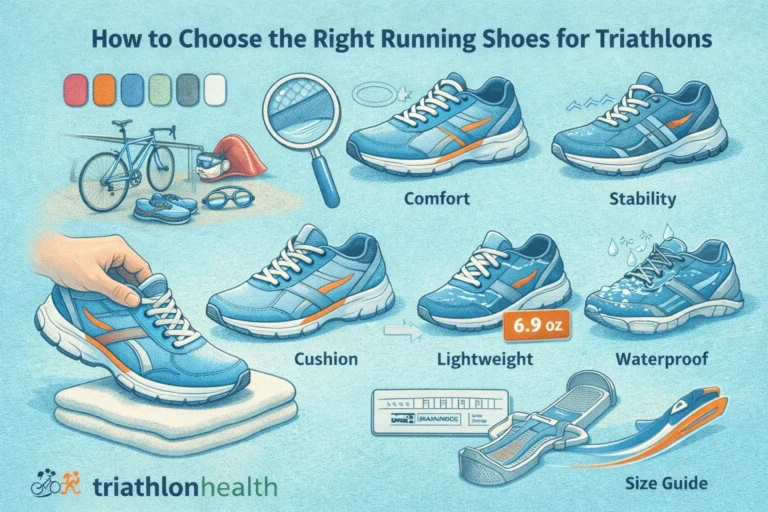
Want to choose running shoes that help you run faster and feel better after the bike? This guide will help. I am a triathlon journalist and coach. I share clear, practical steps so you can pick shoes that work for your body, your race, and your goals.
We cover fit, cushioning, weight, transitions, and simple tests you can do at home or at a store. Read on to learn how to choose running shoes that match your training and race needs.
Why the right shoe matters
The right shoe changes comfort and speed. A shoe that fits well reduces hotspots and blisters. It also helps you hold form when you are tired.
Running after the bike is unique. Your legs may feel heavy and your cadence can shift. Shoes that match that shift keep your running smooth. That means fewer wasted steps and less pain.
Good shoes protect your feet over long training miles. They also lower the chance of injury by giving the right support. Choosing running shoes well helps you train more and race with confidence.
Finally, a well-chosen shoe can improve your transitions. Shoes that are easy to put on and adjust save seconds. When seconds count, preparation and the right gear matter a lot.
How to choose running shoes: the main factors

Start by focusing on a few core factors. These will guide your choice and help you narrow the options fast. Think of fit, cushioning, weight, heel drop, and terrain when you choose running shoes.
Below is a clear list of the factors to evaluate. Read it, then use it when you try shoes at home or in the store.
- Fit: Length, width, and volume matter. Your toes need room to splay on longer runs and during the run after the bike.
- Cushioning: More cushion can feel comfortable after the bike, but too much can reduce ground feel. Find a balance that suits your distance and body.
- Support and stability: Look for shoes that match your foot motion. Neutral runners work for many, but some athletes need mild stability or motion control.
- Weight: Lighter shoes feel faster and tire you less. For short races, favor weight. For long races, balance weight with cushion and comfort.
- Heel drop: The height difference between heel and toe affects your stride. Lower drops encourage a midfoot strike. Higher drops can ease calf strain for some athletes.
- Traction and durability: The sole must match the course surface. Road shoes differ from trail shoes. Durability matters if you train many miles.
- Transition-friendly features: Heel tabs, wide openings, and quick-lace systems speed transition times and reduce fumbling.
After you review these factors, try to rank them by importance for your race. For a sprint, weight and quick transitions may top the list. For an Iron-distance race, cushion and durability will matter more.
Keep a note of models that meet most of your priorities. You want a shortlist to test in real conditions rather than dozens of shoes.
Fit and testing: how to judge comfort and size
Fit is the most personal part of choosing running shoes. Measuring and simple tests will tell you if a shoe fits. Always test shoes with the kit you plan to use on race day.
Try shoes at the end of the day when your feet are slightly swollen. Wear the socks you run in. If you plan to race without socks, test that too. These small details change how a shoe feels.
Do these steps in-store or at home to test fit and comfort. The steps are easy and fast, and they reveal problems before you race.
- Stand with shoes on and check toe room. You should have about a thumb width of space in front of your longest toe.
- Walk and jog in the shoes. Notice any pressure points in the forefoot, arch, or upper.
- Bend the shoe. The forefoot should flex under the ball of the foot but stay stable in the midfoot.
- Try a short run of 10 to 20 minutes if possible. Pay attention to how the shoes feel after a few minutes of running.
After testing, pay attention to hot spots, slippage in the heel, and tightness across the midfoot. These are signs a shoe will cause problems on long runs or during the run after the bike.
Keep in mind that a shoe can feel different after cycling. Some athletes prefer slightly looser shoes because their feet swell and their cadence changes after the bike. Try doing a short bike then a run to test this effect if you can.
Choosing cushioning and structure for race distance
Your race distance should guide cushioning and shoe structure. Shorter races let you choose lighter, lower-cushion shoes. Longer races need more cushioning for joint protection and comfort.
For sprint and olympic distances many athletes pick shoes with a responsive midsole and lower weight. These shoes help maintain speed and feel lively underfoot.
For half and full distances choose shoes with balanced cushioning and energy return. You still want some responsiveness, but comfort and durability gain importance. Over long miles, a soft but supportive midsole reduces fatigue.
If you are unsure, test two pairs: one lighter and one cushioned. Train in both to see which works best for your race pace and how your legs feel after long rides.
Transition tips and race-day setup
Transitions are part of the race. Shoes that are fast to put on and stable to run in save time and stress. Small choices in setup pay big dividends on race day.
Practice transitions with the shoes you plan to race in. That builds muscle memory and reduces fumbling. Put shoes on while standing or lying down to find what works best for you.
Below is a simple list of transition tips to make shoe changes faster and safer on race day. Each tip is easy to practice in training and will speed you up when it counts.
- Loose laces or elastic laces: Keep laces pre-tied or use elastic systems to slip shoes on quickly.
- Heel tabs and wide openings: Choose shoes with easy entries to save time and reduce tugging.
- Practice sock choices: Decide if you run with socks. Thin, quick-dry socks can prevent blisters and feel fast.
- Shoe placement: Place shoes in your transition spot with toes pointing out for quick access.
On race morning, warm up in shoes similar to your race pair. That primes your feet and helps you avoid surprises. Also check for any new pressure points after a practice bike-run session.
Remember that small gains in transition add up. A shoe that fits your foot and your process will make transitions calm and fast.
Buying, care, and foot health
Buy shoes after testing them in real runs. Avoid buying only on looks or a single quick walk. Take your time and evaluate comfort over miles.
Keep these maintenance steps in mind to extend life and protect your feet. Caring for shoes and feet keeps training consistent and pain-free.
Here are practical care tips that matter over season after season. They are simple and they help reduce wear, prevent blisters, and keep shoes reliable for race day.
- Rotate shoes: Use two pairs in training to let foam recover. Rotation increases shoe life and reduces repetitive pressure on the same spots of your foot.
- Dry shoes naturally: Air dry shoes after wet training. Avoid direct heat from a heater or dryer because it can break down foam.
- Inspect soles: Check tread and midsole compression. Replace shoes when cushioning and traction decline noticeably.
- Foot care: Keep toenails trimmed and skin healthy. For many athletes, paying attention to foot care triathlon issues like blisters and hot spots prevents lost training days.
If you feel recurring pain during runs, see a clinician. A simple change in shoe type or orthotic support can fix many issues. Do not ignore persistent pain; it often gets worse over time.
Finally, keep a log of shoe mileage. Many shoes last between 300 and 500 miles depending on the model and the athlete. Track hours and distances so you replace shoes before performance drops.
Key Takeaways
Choosing running shoes for triathlons means balancing fit, cushioning, weight, and transition speed. Your race distance and personal comfort guide most choices. Test shoes in real runs and bring your race socks when you try them.
Practice transitions, try a bike-run if you can, and pick shoes that match how your legs feel after cycling. Rotate shoes in training and take care of your feet. Small choices add up to better race day results.
If you follow these steps you will know how to choose running shoes that suit your body and your race. Be methodical, test often, and replace shoes at the right time. That will help you stay fast and stay healthy.
Now get out and test a few pairs with confidence. Choosing running shoes well is one of the best investments you can make in your triathlon performance.