
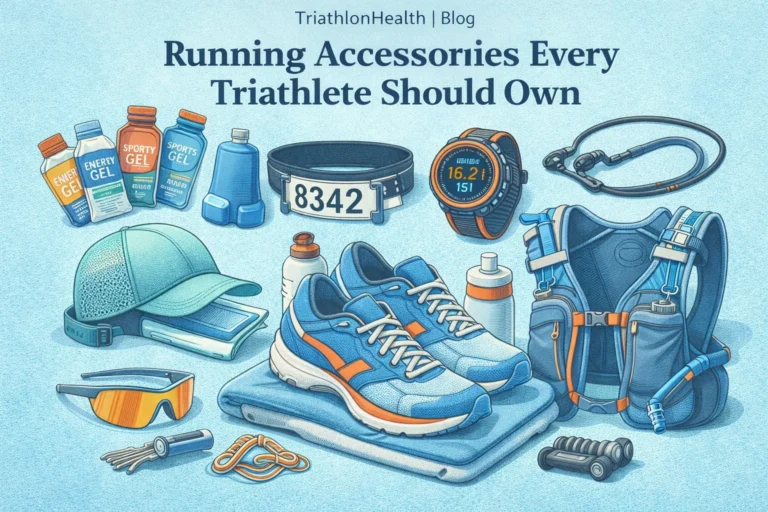
Every triathlete knows that the run is where seconds feel longest. This guide covers running accessories triathletes need to race faster, stay comfortable, and avoid injury. Read on for practical gear advice and clear buying tips.
Top running accessories triathletes should own
Good accessories cut distractions and add speed. The right items help with pacing, comfort, and safety. They also make race transitions smoother and training more enjoyable.
Think of accessories as tools that support your training plan. You cannot rely on one item to do everything. Each piece has a role, from hydration to foot protection and data tracking.
Budget matters. You want items that last and do what they promise. Spending a little more on proven gear often pays off with better comfort and fewer problems on race day.
This section introduces the main categories to consider. Later sections go deeper and give buying pointers and maintenance tips to help you choose wisely.
Running watch and GPS
A running watch is the control center for training and racing. For triathletes, it must be reliable, easy to read, and quick to use while tired. It also needs strong GPS and swim-bike-run modes.
Look for clear lap and pace displays. Battery life matters for long races and long workouts. A watch that lasts race length plus some extra time is essential. Simple menus help when you change modes in a transition.
Smart features like heart rate monitoring and interval alerts help you stick to race plans. Advanced metrics are useful, but a clear focus on accuracy and battery will serve most athletes best.
Recommended watch features to track include elapsed time, lap time, pace, heart rate, and simple navigation if open-course running is on your schedule.
Choose running shoes and socks for triathlon performance
Picking the right shoes is one of the most important choices. You must choose running shoes that match your gait, race distance, and the way you train. Comfort during long runs matters more than style.
Socks play a significant role in comfort and blister prevention. Technical running socks with breathable fabric and a snug fit reduce friction. For triathlon, quick-dry socks or thin race socks work well for shorter events.
Train in race-day shoes well before the event. That way you can confirm fit and comfort. Try them on with the same socks you will race in to get an accurate feel.
For some athletes foot care triathlon becomes a core part of preparation. Proper padding, toe protection, and nail care reduce the chance of a painful race-day problem.
Hydration solutions and fuel carry
Hydration choices depend on race length and course support. On shorter courses you might use handheld bottles or race aid stations. On longer events a bottle belt or vest makes sense. The goal is steady hydration without fuss.
Carrying fuel is similar. Practice with the gels or chews you plan to race. Know how you will store them and how you will access them while running. Practice opening and swallowing quickly at race pace.
There are several practical carry options to consider. Each has pros and cons for comfort, access, and weight. Pick one that fits your run style and training routine.
Key items to think about when choosing a hydration system include capacity, weight distribution, and ease of access during a run or in transition.
Below is a short list of common carry systems and where they fit best.
- Handheld bottle – Good for short races and tempo runs. Easy to grab and refill.
- Bottle belt – Keeps hands free and stores a few gels. Comfortable for many runners.
- Hydration vest – Best for long runs and training with higher fluid needs. More capacity and storage.
Race belt, bib and transition tools
A slim race belt speeds transitions and keeps your number visible. Choose one that fits snugly and does not flap. A simple elastic belt is often all you need for quick changes.
Transition tools like elastic laces and quick-release shoes matter. Elastic laces on race shoes save time and reduce the chance of fumbling in transition. Practice your transitions to make them smooth and efficient.
A small pouch or pocket for gels can also help in transitions. Put fuel in the same spot you will access it during the run so you never hunt for it mid-race.
Think about the whole flow from bike to run and pick items that keep that flow clean. Tiny time gains add up across transitions and the run itself.
Sunglasses, caps and sun protection
Sunglasses protect your eyes and reduce glare. For running, lightweight frames and good ventilation stop them from slipping as you sweat. Choose lenses that match light conditions for your typical races.
A running cap or visor helps keep sweat out of your eyes and shields your head from sun. Breathable fabrics reduce overheating. For humid conditions, light colors and moisture-wicking materials are best.
Sunscreen and a small tube you keep in your kit are practical. Reapply as needed for long races. Skin care prevents painful sunburn and reduces long-term damage.
When choosing sunglasses, look for a close fit, clear lenses, and secure temples. Try them on during training runs to confirm comfort and fit.
Foot care and blister prevention
Foot care is often the difference between a strong finish and a tough day. Proper socks, lubrication, and foot tapes prevent blisters. Practice your routine during long runs to find what works.
Products like anti-chafe balm, blister plasters, and toe spacers help on race day. Keep a small first aid kit in your transition bag for quick fixes. Use items you have tested in training to avoid surprises.
Regular maintenance like trimming nails and treating hotspots quickly prevents problems. Many triathletes carry a small tube of lubricant and a roll of tape to address issues on the course.
Including foot care triathlon in your routine makes training easier and racing faster. Small steps before race day have a big payoff when you hit the run feeling fresh.
Compression and recovery tools
Compression socks or sleeves can help with circulation and reduce swelling after long efforts. Some athletes use them during recovery runs, while others prefer them after races during travel or long days.
Recovery tools like foam rollers, massage balls, and percussive devices help with muscle soreness. You do not need the most expensive item to get benefits. Consistent use and proper technique matter more than price.
Incorporate recovery tools into your cool-down and rest days. A short routine focused on tight areas reduces stiffness and helps you train more consistently.
Choose durable tools that are easy to pack for travel. Triathletes often race far from home, so portable gear is valuable.
Safety and visibility accessories
High-visibility vests, light clips, and reflective bands keep you safe on low-light runs. For early morning or night sessions, lights that clip to your shorts or shoes are practical and light.
Safety items also include identification and an emergency contact card. Keep critical details in your pocket or on your shoe for races and long training runs.
Practice using lights and reflective gear so you remain comfortable and visible. Test battery life before key sessions to avoid surprises during a training block or race.
For group training or open-road runs, visibility matters for both you and drivers. Choose items that do not bounce or rub to keep your run pleasant.
How to choose and maintain your running kit

Choosing gear means balancing function, fit, and price. Focus on what affects comfort and performance most. Prioritize items that you use every session, like shoes and socks.
Try products during training before race day. Many good purchases become poor choices if they cause irritation. Always run multiple sessions in new items to confirm fit and feel.
Maintenance extends the life of your gear. Wash technical fabrics on gentle cycles and let them air dry. Charge electronics after long outings and store batteries in a cool place.
Keep a checklist for race kit so you do not forget essentials. Lay out items the night before and pack duplicates of small items like gels or anti-chafe balm in case one gets lost.
Pricing, value, and buying tips
Price is not the only measure of value. Evaluate durability, warranty, and how much you will use an item. A cheap item that fails on race day is not a saving.
Look for reviews from triathletes for real-world feedback. User experience can reveal hidden problems like chafing or short battery life that specs do not show.
Buy key items early. Shoes and race clothing should be tested over several runs. Electronics should be charged and updated. This reduces risk and builds confidence before race day.
When in doubt, choose the piece that reduces the biggest problem you currently have. For example, if blisters are common, invest in socks and foot care. If pacing is a problem, invest in a reliable running watch.
Let’s Recap
Running accessories triathletes need are tools that save time, protect the body, and help maintain pace. The right items include a reliable watch, proper shoes and socks, hydration solutions, and practical transition tools.
Practice with every item you plan to race with. That practice includes footwear, hydration, sun protection, and foot care. Train in your race clothes and carry systems so everything feels normal on race day.
Make decisions based on comfort and reliability rather than trends. Use simple routines to maintain gear and keep a short checklist to avoid forgotten items. With the right accessories and preparation, the run can become your strength.
For shopping and training decisions, remember to choose running shoes intentionally and include triathlon running gear that fits your race plan and body. Good luck and enjoy the improvements that purposeful accessories bring to your training and racing.