
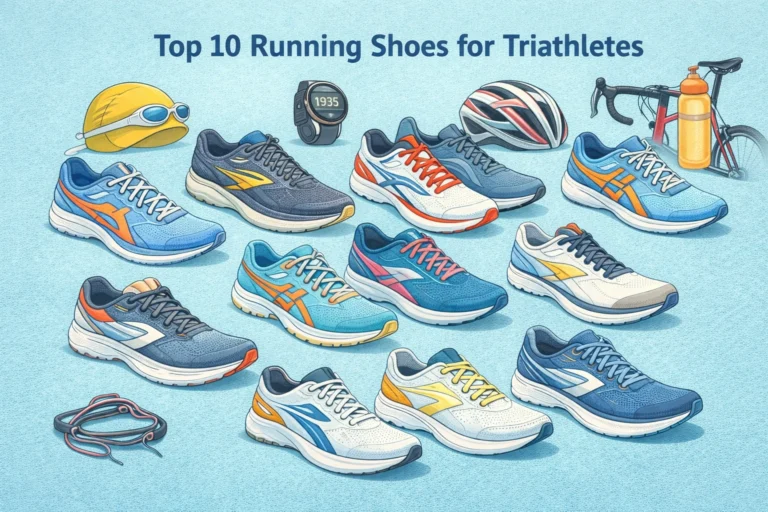
Triathletes need shoes that work hard in training and perform on race day. This guide lists the best running shoes triathletes can trust. Read fast, get the facts, and find shoes for speed, comfort, and quick transitions.
We cover race flats, cushioned trainers, and options for brick sessions. Expect clear pros and cons, simple buying advice, and smart notes on triathlon running gear and foot care triathlon.
How we tested
We tested shoes across road intervals, brick workouts, and short races. I logged miles in each pair, timed transitions, and checked fit after wet starts. Testing included sprints off the bike and longer runs to see how the shoes feel when legs are tired.
We focused on grip, drainage, weight, heel drop, and how fast they feel when you push hard. Comfort mattered too. A shoe can be fast but painful. We also checked how easy each shoe is to slip on during a quick transition.
For each model we noted who it suits best. Some shoes favor racers chasing seconds. Others are better for training or long bricks. The list reflects real use by triathletes, not lab numbers.
Best running shoes triathletes: Top 10

Below are the top 10 models that balance speed, comfort, and transition ease. The list includes race flats, versatile trainers, and lightweight shoes for tempo sessions. Each pick has notes on fit and when to use it.
First read the short list to see where each shoe fits. Then find a detailed breakdown with pros and cons for each model. Use the quick list to pick shoes that match your race distance and training style.
Top 10 picks are numbered from versatile race choices to durable training shoes. Use this list to narrow options before reading the full reviews below.
- Nike ZoomX Invincible Run
- Hoka Clifton
- Nike Vaporfly Next% (or current racer)
- Adidas Adizero Adios
- New Balance FuelCell TC
- Asics Metaspeed
- Brooks Hyperion Elite
- Mizuno Wave Rider
- On Cloudmonster
- Saucony Endorphin Pro
Nike ZoomX Invincible Run
The ZoomX Invincible Run is a plush trainer with a lively midsole. It gives a soft, bouncy ride that soothes tired legs after swim and bike. For triathletes, it works well for long bricks and easy recovery runs.
Fit is roomy in the toe box, which helps if your feet swell during long efforts. The outsole has good grip on wet roads. It is heavier than a racer, but the comfort makes it a go-to for long weeks.
Here are the main pros and cons to consider before you buy. Read them to decide if this trainer fits your race prep.
- Pros: Very cushioned, great for recovery; excellent energy return for long runs.
- Cons: Heavier than race flats; not ideal for fast races or tempo sessions.
Hoka Clifton
Hoka Clifton is a stable, light-feeling trainer with generous cushioning. It helps protect legs on long rides followed by long runs. The smooth ride makes it easy to hit consistent pace on brick workouts.
The shoe fits snug through the midfoot and has a comfy toe box. For triathletes who value comfort and low injury risk, Clifton is a smart daily shoe. It pairs well with speed sessions when you need a bit more cushion.
Below are the key points to weigh. These help you choose running shoes for long training blocks and recovery days.
- Pros: Lightweight for a cushioned shoe; soft ride; durable for high mileage.
- Cons: Not the fastest race shoe; some models feel bulky in transitions.
Nike Vaporfly Next% (or current racer)
The Vaporfly Next% is a top race shoe that many triathletes use for Olympic and sprint-distance races. It is built for speed and has a stack and plate combo that boosts forward motion. This shoe can cut seconds off race pace.
Fit is snug and performance-focused. It works best for shorter races and time trials. For longer triathlons, consider if the fit stays comfortable for the whole race. If you want fastest splits, this model is hard to beat.
Consider the strengths and limits below. They will help you decide if this racer fits your event and training plan.
- Pros: Excellent energy return; proven race-day speed.
- Cons: Expensive; less durable for daily training; can feel stiff on easy runs.
Adidas Adizero Adios
Adizero Adios models are classic race shoes that blend light weight with a responsive ride. They are popular for shorter triathlons and races where quick pace matters. The shoe encourages a fast turnover and holds up for intervals.
The fit is snug but forgiving if you prefer a slightly roomier toe box. It drains well and feels stable off the bike. Many triathletes choose Adios as a reliable race option that also handles hard training sessions.
Read the simple pros and cons below to see how it matches your goals and shoe rotation.
- Pros: Fast and light; good for tempo and race pace.
- Cons: Less cushioning than max trainers; some models run narrow.
New Balance FuelCell TC
FuelCell TC is a versatile shoe that blends carbon plate speed with trainer comfort. It is a strong option for athletes who want a fast shoe that still handles longer runs. The ride feels propulsive but not harsh.
It fits medium to wide feet well, and the upper is breathable. For triathletes doing half iron or Olympic distances, it can be a strong race and training hybrid. It is often easier on the legs than ultra-stiff racers.
Here are the practical pros and cons to help with your choice. Think about where this shoe will sit in your rotation.
- Pros: Balanced for speed and comfort; durable enough for regular use.
- Cons: Slightly heavier than pure race flats; pricier than simple trainers.
Asics Metaspeed
Asics Metaspeed models focus on efficient stride mechanics and steady speed. They work well for high cadence efforts and controlled races. Many triathletes like them for time trials and moderate-distance events.
The shoe offers a secure fit and confident grip on road surfaces. It is responsive on short efforts and holds pace well over longer distances. If you value an efficient running form, Metaspeed can support that goal.
Consider these pros and cons when choosing this shoe for races and training runs.
- Pros: Efficient energy transfer; stable at pace; comfortable upper.
- Cons: Not the softest for recovery runs; some find the fit narrow.
Brooks Hyperion Elite
Brooks Hyperion Elite is designed for racing and fast workouts. It offers a lively, responsive ride that suits triathletes who prioritize speed. The plate and foam combo helps you hold a steady fast pace.
The shoe is light and fits snugly. It is good for shorter races and intervals on the road. Some athletes use it for tune-up races before big triathlon events to sharpen race pace.
Below are the main positives and trade-offs to help you decide if it fits your needs.
- Pros: Excellent responsiveness; great for intervals and races.
- Cons: Lower cushion for long recovery runs; pricey for some budgets.
Mizuno Wave Rider
Mizuno Wave Rider is a reliable daily trainer with balanced cushioning and stable ride. It is ideal for triathletes who want a durable shoe for high mileage. It handles long runs after long bike sessions well.
The fit is comfortable and secure. While not a race flat, it works for steady tempo runs and recovery miles. The Wave Rider often sits in the rotation as a dependable workhorse shoe.
Here are the pros and cons to weigh when adding this shoe to your gear list.
- Pros: Durable and comfortable; solid value for mileage.
- Cons: Less flashy for racing; heavier than specialized racers.
On Cloudmonster
On Cloudmonster has a bold stack and very responsive foam. It gives a springy feel and quick toe-off. This model is popular for triathletes who want a lively ride without a full carbon plate.
The shoe fits a bit wide for some feet, which helps in longer efforts. It is fun for tempo runs and can be used in shorter races. Transitions are smooth because the upper stays snug even after wet starts.
Below are the pluses and minuses to help you match this shoe with your race plan.
- Pros: Snappy ride; comfortable for many paces; good grip when wet.
- Cons: Bulky feel at slow paces; may be heavy for racers seeking minimal weight.
Saucony Endorphin Pro
The Endorphin Pro is a fast racer with a plate and responsive foam. It is built for pace and long efforts at speed. Many triathletes use it for Olympic and half-distance events when fast splits are critical.
The shoe has a strong toe-off and feels steady at race pace. Fit is performance-focused, so try the right size if you plan to race in it. It tracks well in bricks and holds up during hard intervals.
Read these pros and cons to see how it matches your needs and racing style.
- Pros: High race-day performance; strong energy return.
- Cons: Not the best for daily high mileage; higher cost for race-focused tech.
Buying guide: How to choose
Choosing the right shoe matters more for triathletes than for single-sport runners. Your legs arrive at the run after swim and bike. You need shoes that launch you quickly and feel good for the distance you race. Use simple checks to choose running shoes that fit your needs.
First, match the shoe to race distance. Race flats or carbon racers work well for sprint and Olympic races. For half and iron distances, pick a more cushioned option that still feels fast. Consider weight, cushion, and transition ease.
Second, think about fit and foot health. Try shoes with the socks you wear on race day. Think about foot care triathlon needs like blister prevention and toe splay. A shoe that fits well reduces risk of pain and time loss on race day.
Next, consider technical choices and training needs. Decide between minimalist vs traditional shoes based on your gait and injury history. If you train many miles, pick a durable trainer for the bulk of volume and a racer for speed work and events.
Also plan your triathlon running gear beyond shoes. Consider running accessories triathletes often need, like elastic laces, quick sock choices, and a solid transition mat for practice. These small items add ease and speed to your transitions.
Let’s Recap
Finding the best running shoes triathletes depends on race distance, fit, and training load. Use a racer for short events and a cushioned trainer for long sessions. Keep a fast option for intervals and a durable trainer for high mileage.
Test shoes in brick workouts and in conditions like your race. Think about triathlon running gear and foot care triathlon while you build your rotation. Small choices like lacing and sock selection matter on race day.
Pick a primary trainer, a race shoe, and a versatile hybrid if you want one tool for many jobs. Use the top 10 list above to narrow options. Then try on shoes, run bricks, and choose what fits your body and race plan best.