
I write as a triathlon journalist and coach who tests gear on real roads and race courses. I love fast runs and long sessions. This short guide compares minimalist vs traditional shoes so you can make a smart choice for training and race day.
This article explains key differences, how shoes affect performance and injury, and how to choose the right pair for your needs. You will get clear steps to pick shoes and practical tips for triathlon running gear and foot care triathlon.
Why the debate matters
Runners and triathletes often ask whether they should switch to lighter, low-cushion shoes or stick with traditional models. The choice influences speed, comfort, and injury risk. I have tested both kinds on the road and track, and I see real trade-offs.
Minimalist shoes aim to let your foot work more naturally. Traditional shoes add cushioning and structure. That simple difference changes how your body moves and recovers. For triathletes, those differences matter on long rides and in the run after the bike.
Understanding these effects helps you match shoes to your goals. If you race often, you want footwear that saves energy and reduces soreness. If you train many hours, you want comfort and injury prevention. This section frames why the choice is not just style, it is strategy.
Key differences between minimalist vs traditional shoes
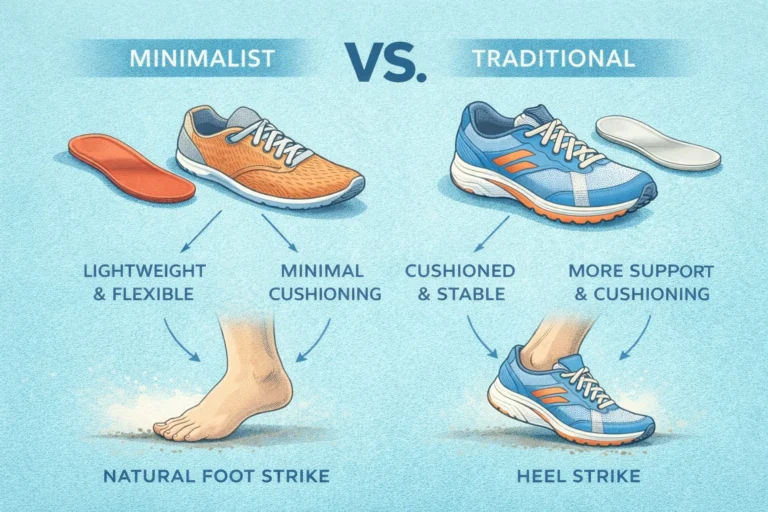
Minimalist shoes are light, flexible, and have low heel-to-toe drop. They encourage a forefoot or midfoot strike in many runners. Minimalist designs have less foam and less motion control. That leads to more ankle and foot work during each step.
Traditional shoes usually have thicker foam, higher drop, and more structure. They cushion impact and often guide pronation. Many runners use traditional shoes for long runs and recovery days. The padding reduces stress on joints and soft tissues.
The differences also show in weight, durability, and feel. Minimalist shoes feel closer to barefoot. Traditional shoes feel more protected. Your training type, foot shape, and injury history will change which set of trade-offs suits you best.
Performance and injury considerations
When you compare minimalist vs traditional shoes for speed, the lighter weight of minimalist shoes can help. Less weight means less energy wasted with each stride. That can translate to faster times, especially in short races and tempo efforts.
However, minimalist shoes also increase load on calf muscles and Achilles tendon. That can raise injury risk if you switch too fast. Many runners feel stronger and quicker after a gradual adaptation, but abrupt changes can cause pain.
Traditional shoes reduce immediate load and can protect older or high-mileage runners. They can lower impact force and reduce soreness. But some athletes report a loss of foot strength over time if they only use highly cushioned shoes.
How to choose: a practical checklist
Decide by matching shoe traits to your goals, body, and training plan. Think about race distance, typical training load, and any current pains. Use a step-by-step approach to reduce risk and find the right tool for the job.
Below is a clear checklist to guide your choice. Follow each step and test slowly. Change one variable at a time so you know what helps or hurts.
- Assess goals: prioritize speed or comfort depending on race distance.
- Check current injuries: avoid big changes if you have tendon or calf issues.
- Test gradually: use short runs when you try minimalist shoes.
- Alternate: mix both types across a week to build foot strength while protecting volume.
- Fit matters: toes need room; heel should not slip during the run.
As you use this checklist, remember to factor in triathlon specifics. Transitions, sock choices, and how the shoe feels after riding matter. For many triathletes, the balance between power on the bike and freshness in the run will guide the decision.
Pros and cons for different race distances
Choice can shift by race length. Short events reward light shoes and quick turnover. Long events reward comfort and injury prevention. I explain pros and cons for sprint, Olympic, half-iron, and iron-distance racing below.
For short races, minimalist shoes can give a small speed edge. You will feel the ground and can push cadence. For longer races, traditional shoes often reduce fatigue by smoothing impact over many miles.
Here is a simple list that breaks down pros and cons by distance. Use it as a quick reference when you plan a race shoe strategy.
- Sprint and Olympic: minimalist or lightweight trainers often preferred for speed.
- Half-iron: a balanced shoe with moderate cushioning is common.
- Iron-distance: traditional, well-cushioned shoes reduce long-term joint stress.
Testing and transition plan
If you want to move toward minimalist shoes, do it slowly. Your body needs time to adjust. A careful plan reduces risk and helps your muscles adapt to new loads.
Start with short runs of 10 to 20 minutes in the new shoe. Repeat two to three times a week and keep your usual shoes for long runs. Gradually add time as your calves and feet feel stronger.
Track soreness and performance. If you get persistent pain, pause the switch and consult a coach or therapist. Many athletes find that alternating shoes builds both speed and durability.
Buying guide: what to look for in either style

Whether you prefer minimalist vs traditional shoes, certain checks matter at purchase. Fit, stack height, drop, and sole flexibility are top items. Try shoes on later in the day when feet are slightly swollen from normal activity.
Below is a short shopping checklist to help you choose the right model. Read each item and test shoes in a store or at home on a treadmill if possible.
- Fit: toes should have a thumb-width gap; no pinching on the sides.
- Drop: lower drop favors forefoot mechanics; higher drop gives more heel cushioning.
- Stack height: more foam often equals more protection but also more weight.
- Flexibility: minimalist shoes bend at the toes; traditional shoes resist bending more.
- Weight: lighter shoes save energy over many strides.
Also consider specific gear needs like triathlon running gear and running accessories triathletes rely on. Small choices, like lacing style and sock type, change comfort and transition speed.
Top picks and real-world notes
I test shoes across many brands. The best minimalist shoes feel like a natural extension of your foot. The best traditional shoes protect without making you clumsy. Pick models that match your running feel and goals.
Try several pairs on real runs before you pick race shoes. Training in a shoe for a few runs tells you more than how it feels in the store. Pay attention to midfoot pressure, heel cup stability, and sole wear.
When evaluating options, keep foot care triathlon routines in mind. Easy-to-change shoes for transitions, breathable uppers for hot races, and flat soles for quick on-off fit some race-day needs better than others.
Care tips and common mistakes
Shoe care extends life and keeps performance stable. Rotate pairs, dry shoes properly, and replace them when midsole foam loses rebound. Rotating helps your feet adapt and can reduce repetitive stress injuries.
A common mistake is switching shoe style too fast. Another is using a single pair for every session. Both choices limit adaptation and raise injury risk. Use a plan that blends load, rest, and strength work.
Strength training for the feet and calves supports any switch. Simple exercises like heel raises and short barefoot drills on soft grass build resilience. That also improves how you handle different shoe types in training and racing.
Let’s Recap
Minimalist vs traditional shoes both have clear benefits. Minimalist shoes favor lightness and foot strength. Traditional shoes favor cushioning and long-run comfort. The best choice depends on your race distance, training load, and injury history.
Use a gradual transition plan, test shoes in real running conditions, and follow the shopping checklist above. Mix shoe styles if you want speed and durability in one season. Remember to include triathlon running gear and running accessories triathletes trust in your routine.
Make a plan, test it, and adjust. When you choose running shoes carefully, you support better performance and fewer setbacks. This approach helps you race faster and stay healthy across seasons.