
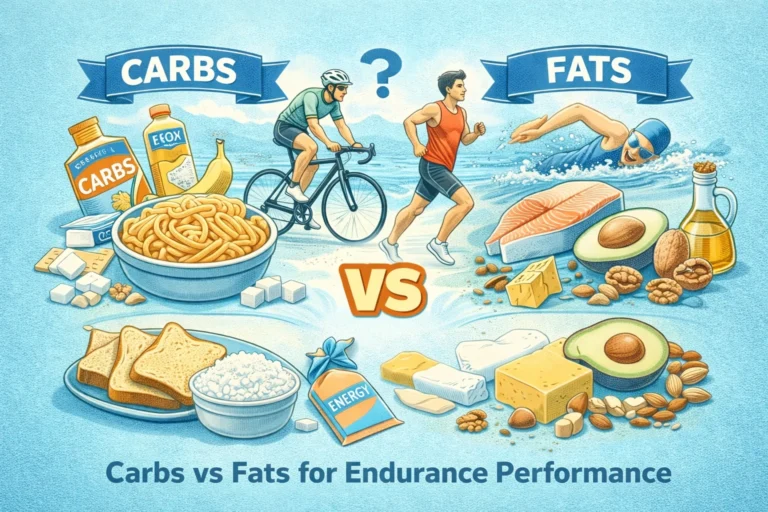
Which fuels matter most for long races, carbs or fats? In this article I compare carbs vs fats triathlonhealth style, with clear advice for training, race day, and product choices. You will get practical tips on food, supplements, and items to buy so you can test what works for you.
Carbs vs Fats triathlonhealth: Basic differences and why they matter
Carbohydrates and fats are the two main fuels your body uses during endurance exercise. Carbs burn fast and give quick energy. Fats burn slower but give much more energy per gram. Knowing how each fuel works helps you pick the right food and products for training and racing.
For triathletes the balance between carbs and fats affects speed, endurance, and how you feel late in a race. Short, intense efforts use mostly carbs. Long, steady efforts use a mix of fats and carbs. The balance can change during a race as intensity rises and glycogen runs low.
Coaches and athletes often argue about which fuel is better. The answer is not just one or the other. You need both. The trick is to train your body, test products, and build a race plan that matches your event distance and goals. That means matching what you eat and the products you buy to the demands of the race.
Below we cover physiology, training strategies, race nutrition, sample meal plans, and product picks. The advice is written for triathletes who research gear and supplements and want to decide what to buy for better performance.
How your body uses carbs and fats during endurance
Carbohydrates are stored in muscles and liver as glycogen. When you ride or run hard, your body taps glycogen first. Glycogen provides fast energy and supports high intensity efforts. If glycogen falls too low you slow down and feel heavy.
Fats are stored nearly everywhere in the body and as intramuscular fat. They provide a steady, long-lasting fuel source. Fats supply most energy during low to moderate intensity exercise, especially in well-trained athletes. They are great for long, easy efforts but cannot match carbs for quick power.
Metabolic flexibility is the ability to switch between carbs and fats efficiently. Good endurance athletes have improved fat oxidation and decent carbohydrate use when needed. Training, diet, and genetics all affect this flexibility. You can influence it with targeted training and nutrition plans.
For race planning you must consider both fuels. A half Ironman or marathon effort will still require carbs at higher intensities and during the late stages. Ultra distances push fat use more, but many athletes still take carbs to avoid bonking. Testing on training days helps you find the right balance.
Energy systems and performance: Practical takeaways
Endurance events rely on three energy systems that interact: the ATP-PC system for short bursts, anaerobic glycolysis for high intensity but short periods, and aerobic metabolism for long efforts. Carbs support both anaerobic and aerobic power when intensity is higher. Fats mainly support aerobic metabolism at low to moderate intensity.
A clear takeaway is that training intensity dictates fuel needs. If your race has hills, surges, or high-intensity segments you will need carbs. Flat, steady races at low intensity will allow more fat use. Most triathlons involve a mix, so a mixed fueling approach often works best.
Another practical point is the limit of fat-only strategies. Even very well-trained athletes cannot produce high power solely on fat. If you plan to race fast, plan to use carbs at times during the race. If you want to reduce the need for carbs, you can train to increase fat burning, but that comes with trade-offs in top-end speed.
Finally, think about recovery. Carbs restore glycogen quickly after training or racing. Fats are useful for long-term energy and for maintaining body weight. A balanced recovery approach that includes both carbs and healthy fats helps you train consistently and recover well.
Training strategies: Carb-focused, fat-adapted, and mixed plans
There are three common training nutrition strategies. Each has benefits and downsides. You can choose one full strategy or combine ideas to match race demands. Your choice should follow careful testing and gradual changes.
Carb-focused strategies prioritize high carbohydrate availability during hard sessions. These plans help you produce higher power and speed. They include regular carbohydrate intake before, during, and after key workouts. This approach supports high-quality training and faster race pace.
Fat-adapted strategies aim to improve fat oxidation so you rely less on carbs. They use periods of low-carbohydrate training, sometimes called train-low sessions, to push the body to burn more fat. That can increase fat use during long efforts, but it may reduce intensity in hard workouts if not managed correctly.
Mixed strategies use carbs for high-intensity work and allow low-carb sessions for base endurance. This hybrid approach tries to keep both high-end speed and improved fat burning. Many triathletes find mixed plans practical because they preserve performance while improving metabolic flexibility.
Below is a simple list of pros and cons for each approach. Read this list after the paragraph above to see quick comparisons.
- Carb-focused: Pros include high training quality and full power. Cons include higher calorie needs and more frequent refueling.
- Fat-adapted: Pros include better long-duration fuel availability and reduced reliance on mid-race carbs. Cons include lower maximal power and a long adaptation period.
- Mixed: Pros include balanced ability for speed and endurance. Cons include complexity and the need for careful programming.
Each strategy needs a plan for testing. Do not change your race-day fuel strategy the week before an event. Instead test on long training days and adjust. Pay attention to how you feel, your pace, and digestion. That feedback will guide product choices and the type of fueling you buy and use.
Race day nutrition and product choices for buying decisions
Race day nutrition must be simple, tested, and easy to digest. Most triathletes buy carbohydrate gels, chews, sports drinks, and bars for energy on the bike and run. You should test brands and flavors before race day to avoid stomach problems. Also test the combination of products you will use in the race.
For commercial decisions, think about cost, taste, packaging, and calories per serving. Some gels give 20 to 30 grams of carbs per pack. Sports drinks mix calories and electrolytes and may offer 60 to 90 grams of carbs per hour if used correctly. Bars are convenient but can be harder to digest when running.
Below are common product categories to consider. Read the next sentence, then check the list for options you might want to buy for training and race day.
- Gels: Fast carbs in small packets, easy to carry and use on the bike or run.
- Chews: Bite-size carbs that many athletes find easier to digest than gels.
- Sports drinks: Mix carbs and electrolytes in a bottle for steady intake.
- Bars: More solid fuel, good for lower intensity or bike sections, but test digestion first.
- Fat-based fuels: MCT oils and certain bars that include fat to extend energy between carb feeds.
When you shop, look for clear labeling of carbohydrate type and total calories. Products with combinations of glucose and fructose can increase absorbable carbohydrate per hour. If you plan to use fat-based products, use them in practice before race day to check digestion.
Also consider supplements and products that support digestion and energy. Many triathletes use caffeine in gels or tablets, electrolyte tablets to prevent cramps, and concentrated carbohydrate powders to make customized drinks. These items can be part of a product buying list when you plan what to take on race day.
Sample meal plan triathlonhealth: Pre-race, race, and recovery plans

Below I present a simple, adaptable meal plan triathlonhealth athletes can use for training and race day. This plan assumes a morning race start and a goal of steady energy without stomach trouble. Adjust portion sizes by body mass and race distance.
Three main phases matter: the pre-race meal, in-race fueling, and recovery. All three support overall performance. The pre-race meal tops up liver glycogen and avoids heavy fat or fiber. In-race fueling keeps carbs available. Recovery restores glycogen and provides protein for muscle repair.
Read the list below for a clear sample schedule and then test it on long training days. The items are simple, widely available, and easy to carry when needed.
- Pre-race (2-3 hours): 60-90 g carbs, low fat, moderate protein. Example: white bread toast with honey and a banana, plus a small amount of yogurt or whey.
- 1 hour before start: 15-30 g easy carbs if you feel hungry. Example: a small gel or half a sports drink bottle.
- During race (per hour): 30-90 g carbs depending on intensity. Use gels, chews, or drinks. Consider a mix of glucose and fructose sources to boost absorption.
- Electrolytes: Include electrolytes every hour for long events or hot conditions. Use tablets or sports drinks.
- Post-race (within 30 minutes): 1.0-1.2 g/kg carbs plus 20-30 g protein. Example: recovery shake with carbs and whey, or chocolate milk and a bar.
After the list, remember that digestion tolerance varies a lot. Some athletes take caffeine in the last hour for a performance boost. Others prefer to avoid solid foods while running. Test multiple combinations in training until you find the product mix and timing that suits you.
If you are trying to burn more fat during training, place low-intensity sessions after small meals or with minimal carbs. Keep hard sessions fully fueled. This mixed approach can improve training quality while still pushing fat adaptation in specific workouts.
Choosing triathlonhealth nutrition products and supplements
Choosing the best products means matching product type to your fueling plan. If you need quick energy, choose gels that sit well in your stomach. If you need steady energy, choose a blended drink or bar. If you want to test fat-based fuels, try small amounts in training first to watch digestion.
Many triathletes read labels and choose products with clear carbohydrate types, electrolyte content, and caffeine amounts. Trusted brands list these values. You may also want convenient packing, like easy-tear gel packets and resealable powder tubs. Comfort with taste and texture matters more than marketing claims.
For supplements, consider simple items that fill small gaps. Electrolyte tablets help with salt balance. Caffeine gels or tablets provide a legal, proven performance boost when timed properly. Some athletes use MCT oil for non-glycogen energy, but this requires practice to avoid stomach upset.
Consider adding triathlonhealth supplements and triathlonhealth nutrition notes to your shopping list. These phrases represent the types of products and service information you might search for when buying. Keep records of what you buy, how it tasted, and how you performed on each test session to make future purchases smarter.
Testing, tracking, and adjusting your plan
Testing is the most critical step. No single plan works for everyone. Use long training sessions as test days and record what you ate, what products you used, and how you felt. Keep notes on digestion, energy level, and pace. Repeat tests to confirm results before race day.
Tracking can be simple. Use a notebook or an app to record product name, timing, calories, and feelings. Track weather, race intensity, and race duration too. These variables affect fuel needs and product tolerance. Over time, you will spot patterns that guide smart purchases and meal choices.
Adjust slowly. If you want to try a fat-adapted approach, start with one low-carb session per week and monitor the effects on training intensity. If an item causes stomach trouble, stop using it and try another brand or format. Always test new supplements in training before race day.
For product shopping, make a buy list after several tests. Note which gels, drinks, or bars worked best. This helps when you search for items online or in stores. You can also include a targeted meal plan triathlonhealth entry in your notes so you can order the same items again for a race block.
Practical tips for buying and packing for race day
Preparing your race fuel box reduces stress on race morning. Pack items in clear bags labeled by time or mile marker. Pre-squeeze some gels into smaller containers if needed. Make sure bottles are mixed the day before and taped to the bike so you can practice grabbing them during training rides.
Decide how many calories you need per hour, then add some buffer. Many age-group triathletes plan 60-90 grams of carbs per hour on the bike when riding hard, but start lower and increase based on tolerance. For the run, plan 30-60 grams per hour depending on intensity.
Practice the exact motion of taking fuel while moving. Practice opening gels, chewing chews while breathing heavy, and drinking from the exact bottles you will race with. These small details reduce the chance of mistakes or spills during a race.
When shopping, build a short race kit of trusted flavors and formats. Keep a small trial stash for the weeks before the race. That way you can test last-minute options without risking a stomach issue on race day. Remember to include triathlonhealth supplements like electrolyte tablets if you have found them useful in training.
Key Takeaways
Carbs vs fats triathlonhealth is not an either-or choice. Both fuels have roles. Carbs grant power and speed at high intensity. Fats supply long-lasting energy for steady, long efforts. The best athletes use a plan that blends both fuels.
Train your body and test products. Use high-carb fueling for key hard sessions and consider low-carb sessions to improve fat use on easy days. Test gels, drinks, and bars in training and build a shopping list from the items that worked best.
For commercial decisions, compare labels, pricing, and pack size. Think about flavors, caffeine content, and carbohydrate mix. Keep notes so you can repeat what worked. If you want guidance on supplements, look at triathlonhealth supplements choices and triathlonhealth nutrition resources when you plan purchases.
Finally, make a simple, tested meal plan for race day. Use the sample meal plan triathlonhealth ideas above, tailor them to your needs, and test them on long training days. With practice and careful product choices you will enter race day confident in your fueling and ready to perform.