
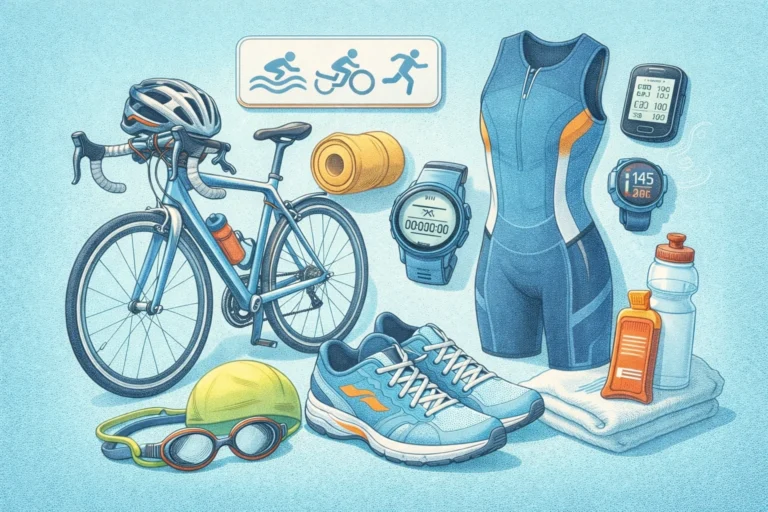
Every piece of gear you choose affects how fast, comfortable, and confident you feel on race day. This article explains how to pick the right triathlonhealth gear for training and racing, from swim suits and wetsuits to bikes, shoes, and tech. Read on for clear advice, practical checklists, and buying tips that help you spend wisely and perform better.
Why the right triathlonhealth gear matters
Good gear saves energy, prevents injuries, and helps you focus on race strategy. When your equipment fits and works, you waste less time adjusting and more time training. That boosts both confidence and results.
Gear affects three parts of a triathlon: swim, bike, and run. Each discipline has its own needs. Investing in the right items for each leg gives the best overall return for your time and money.
Choosing the wrong item can slow you down or cause discomfort that ruins a race. That makes gear selection more than a shopping exercise. It is a practical part of training and race planning. This guide covers what to buy, how to test items, and how to prioritize purchases based on your budget and goals.
Swim gear essentials for triathlonhealth gear
Swimming well depends on your body position, buoyancy, and comfort in cold or choppy water. The swim gear you choose should help with those factors. Focus on fit and material quality when you shop.
A good wetsuit can improve buoyancy and reduce fatigue. Not all wetsuits are equal. Some are built for buoyancy and floatation, while others aim for flexibility around the shoulders. Pick the one that matches your stroke and the water conditions you race in most often.
Swim caps, goggles, and race suits also matter. A well-fitting goggle reduces drag and keeps your vision clear. A triathlon suit or race-specific swimskin speeds up transitions by letting you put on other gear over it. Comfort is key for long training sessions and race prep.
Before listing key items, try each item in water if possible. Labelling and size charts can help, but real testing in a pool or open water tells you how the gear will feel on race day.
Here are the core swim items to consider and why they matter.
- Wetsuit: Improves buoyancy and warmth. Look for shoulder flexibility and correct fit around the legs and torso.
- Triathlon suit or swimskin: Designed for quick transitions and low drag in the water.
- Goggles: Choose anti-fog lenses and a comfortable seal. Tinted lenses for bright conditions, clear for low light.
- Swim cap: Reduces drag and keeps hair out of your face. Use a thin cap under a race cap if you need warmth.
- Open-water practice gear: A second wetsuit or extra goggles for training sessions and simulating race conditions.
Bike gear essentials for triathlonhealth gear
The bike leg is where equipment can make the biggest time difference. Aerodynamics, power transfer, and comfort all matter. The bike you choose should match your goals, terrain, and budget.
A road bike can be a fine starting point, while a dedicated triathlon bike improves aerodynamics and time trial performance. If you spend long hours in aero position, comfort and fit are crucial. Poor fit causes pain and reduces power.
Tires, wheels, and handlebar set-up change speed and handling. Lighter wheels accelerate faster, but deep-section rims slice through the wind better. Select components that balance weight, stiffness, and aero benefits for your race distances.
Helmet choice affects aerodynamics and safety. Aero helmets reduce drag on flat courses but can be hotter on steep climbs. Prioritize fit, ventilation, and certification when buying a helmet.
The following list covers bike basics you should have, with reasons to buy each item.
- Bike frame: Road or triathlon-specific. Choose fit, comfort, and aerodynamics that suit your races.
- Wheels and tires: Match wheel depth to course profile; use quality tires for puncture resistance and grip.
- Clip-on aerobars: Improve aerodynamics if your bike does not have integrated bars.
- Helmet: Certified, properly fitted, and matched to course demands.
- Pedals and shoes: Efficient power transfer and a comfortable shoe fit are essential.
- Bike computer or GPS: Helps pace, navigation, and training data collection.
Run gear essentials for triathlonhealth gear
Running after the bike is a test of endurance and comfort. Shoes and clothing that control sweat, friction, and heat will make your run faster. Choose running gear that supports your gait and offers good cushioning for your race distance.
Tri shoes are often lighter than road shoes and dry quickly. However, if you need more cushioning for a marathon distance, pick a shoe that balances weight and comfort. Try shoes after a bike session to simulate race fatigue and foot feel.
Clothing choices for the run include breathable tri suits and shorts. Look for fabric that wicks moisture and resists chafing. Socks matter too; a thin, well-fitted sock can prevent blisters without adding weight.
Accessories like running belts, hydration systems, and race-day nutrition carriers help keep energy steady on long runs. Practice with the items you plan to use during training sessions. That reduces surprises on race day.
Below are the most useful run items and what to pay attention to when buying.
- Running shoes: Match to your gait, race distance, and cushioning needs.
- Tri suit or run shorts: Choose comfort and quick-drying fabric to prevent chafing.
- Socks: Thin, breathable, and anti-blister design helps on long efforts.
- Race belt: Quick number changes and easy storage for gels and keys.
- Hydration and nutrition systems: Lightweight options help maintain pace without slowing you down.
Transition and race-day essentials
Transitions are often called the fourth discipline. Small gains in transitions add up to significant time savings. Gear that makes transitions faster and less stressful is a smart investment.
Simplicity and repeatable practice are the keys. Lay out your transition setup the same way every time you train. That trains muscle memory and reduces fumbling on race day. Quick-release items, elastic laces, and simple organization tools pay off.
Essential transition items include a race towel, change mat, elastic laces, and a small tool kit. A good race bag keeps everything organized and ready the night before the race. Also consider body glide or tape to prevent chafing and secure items during the race.
Practice each step of your transition many times before the race. That practice reveals which items are helpful and which add complexity. Cut unnecessary items to save time and weight.
Here is a practical list of transition essentials and why each item matters.
- Transition mat or towel: Keeps your feet clean and organized when switching legs.
- Elastic laces or quick-closure shoes: Speed up shoe entry for the run.
- Race bag: Keeps gear together and accessible the night before.
- Nutrition and hydration: Easy access gels, bars, or bottles for quick refuel.
- Multi-tool and spare tube: Quick fixes for common mechanical issues.
How to choose tech and gadgets for triathlonhealth gear
Modern tech can improve pacing, training, and recovery. Gadgets range from simple heart rate monitors to advanced power meters and multisport GPS watches. Choose tools that match your ability to use the data effectively.
A basic GPS watch with multisport modes is a great starting point. It records distance, pace, and heart rate. If you analyze workouts, get a device that syncs with training platforms. That helps you track progress and plan workouts precisely.
Power meters on the bike and advanced running metrics can refine training for competitive athletes. They are expensive, but for athletes who know how to use them, they provide precise feedback on effort and recovery. Invest in coaching or education if you buy higher-end gear.
Consider battery life, ease of use, and compatibility with other sensors when you buy tech. A device that dies mid-race is useless. A device that is hard to use adds stress rather than removing it.
Before a list of gadgets, here are the most practical electronics for serious triathletes.
- Multisport GPS watch: Records swim, bike, and run data and syncs with training platforms.
- Bike computer: Offers navigation, power data capture, and race-day metrics.
- Power meter: Measures output on the bike for precise pacing and training.
- Heart rate monitor: Useful on all legs to track effort and recovery.
- Smart trainer: Enables structured indoor bike workouts and controlled training sessions.
Fit, sizing, and customization for triathlonhealth gear
Fit matters more than flashy features. Poorly fitting gear limits performance and may cause injury. Shoes, wetsuits, bike fit, and clothing all need attention to sizing and comfort.
Start with a professional bike fit if you log serious miles. A correct fit improves power output and reduces the chance of overuse injuries. Small changes to saddle height or handlebar reach can change comfort and speed.
Wetsuit fitting is unique. A suit that is too tight restricts breathing and stroke. A suit that is too loose lets water flush in and reduces buoyancy. Try different brands and sizes. Some athletes prefer custom cuts if standard sizes do not fit well.
For shoes, test for toe splay and arch support. Feet swell during long efforts and after a hard bike leg. Try shoes later in the day and after some training to get a realistic feel. For apparel, test chafe points by wearing items for hours during training runs and rides.
Below are practical fit checks and customization tips you can follow before committing to a purchase.
- Bike fit checklist: Saddle height, handlebar reach, knee tracking, and comfort in aero position.
- Shoe fit checklist: Toe room, arch support, and comfort after a simulated race effort.
- Wetsuit fit checklist: Shoulder mobility, waist compression, and no loose legs.
- Apparel checklist: Chafe testing and breathability in pace conditions.
- Custom adjustments: Cleat position, saddle padding, and handlebar tape for fine tuning.
Budgeting and prioritizing purchases for triathlonhealth gear
Not every athlete needs top-tier gear right away. Prioritize purchases based on where you will gain the most performance and comfort. For most age-group triathletes, core items are more valuable than top-end accessories.
Start with reliable shoes, a comfortable bike that fits, and a decent wetsuit. These provide the biggest improvements in performance and comfort. After those essentials, prioritize items that save you time on race day, such as race wheels or an aero helmet.
Set a budget and split it into tiers: must-have, nice-to-have, and future upgrades. This approach keeps purchases practical and avoids impulse buys that do not improve training or results. You can also buy used items like bikes or wheels to save money, but check condition and service history.
Remember to budget for service, spares, and safety gear. A low maintenance plan keeps your kit ready and reliable. Regular tune-ups and replacing worn parts are part of being a responsible athlete.
These buying priorities help you get the most value from your budget.
- Priority 1: Fit-focused items like shoes and bike fit, and a reliable wetsuit.
- Priority 2: Safety and essentials like helmet, tires, and basic tools.
- Priority 3: Performance upgrades such as power meter, aero wheels, or lighter shoes.
- Priority 4: Comfort and convenience items like special bottles or race bags.
- Ongoing costs: Service, consumables, and replacement parts.
Common triathlonhealth mistakes and how to avoid them
Even experienced athletes make predictable errors when buying and using gear. Learning from those mistakes saves money and stress. I have seen athletes buy a top bike but ignore fit, or buy a power meter and not use the data. These are avoidable problems.
One common error is buying gear because it looks fast rather than because it fits or suits your needs. That leads to unused or uncomfortable items. Another frequent mistake is skimping on shoes or a bike fit and then paying the price with slower times and nagging pain.
Training with race gear only once before the race is another common problem. You need several long sessions with all your race gear to learn what works and what does not. Practice transitions until actions become automatic to avoid chaos on race morning.
Below are specific triathlonhealth mistakes and practical corrections that will help you avoid these pitfalls.
- Buying for looks: Correct by prioritizing fit, testing gear in realistic conditions, and asking for demo options.
- Ignoring bike fit: Correct by investing in a professional fit and making small iterative changes.
- Not practicing with race kit: Correct by scheduling brick workouts and full race rehearsals.
- Using unproven tech: Correct by validating new gadgets during low-stakes training before race day.
- Underestimating service needs: Correct by budgeting for tune-ups and spare parts.
Buying checklist and top recommended specs
When you go shopping, use a checklist to avoid impulse buys. The checklist below covers the essentials and recommended specs for each category. It helps you compare products and make a decision aligned with your goals.
For swim gear, focus on fit, flexibility, and warmth as needed. For bike gear, match frame type and wheel profile to your race course. For run gear, choose shoes that support your gait and distance. For tech, prioritize battery life and data compatibility.
Use the following checklist to guide purchases and to compare options side by side. Mark must-have features and decide what you can trade for price.
- Swim: Wetsuit fit and shoulder flexibility, goggles with fit and anti-fog coating, tri suit that dries fast.
- Bike: Correct frame fit, wheel depth matched to course, saddle comfort, efficient drivetrain, compatible computer.
- Run: Shoe cushioning and weight balance, breathable apparel, elastic laces for quick changes.
- Transition: Organized layout, simple lacing system, spare tubes and tools, and nutrition plan.
- Tech: Watch with multisport mode, bike computer compatibility, battery life for race duration, ease of data export.
How to test gear before race day
Testing gear under realistic conditions is essential. Do multiple brick sessions and full-distance training days using the gear you plan to race with. This reveals comfort, fit, and any mechanical or chafe issues.
Keep a log of each test. Note how gear felt, whether any parts slipped or caused pain, and how long battery-powered devices lasted. Update your checklist and make adjustments based on those notes.
If something fails in a test, fix it well before the race. Do not try last-minute changes, especially to shoes, saddles, or wetsuits. These need time to adapt and for you to adapt to them.
Below are practical steps to structure a gear testing plan that gives reliable feedback.
- Plan sessions: Schedule brick workouts and long training days with race kit.
- Record feedback: Note fit, comfort, and any chafing, and list action items.
- Make small changes: Adjust cleat position, saddle tilt, or lace tightness incrementally.
- Retest: Confirm that adjustments solve the problem without creating new ones.
- Final check: Do a rehearsal 2 to 3 weeks before race day to confirm readiness.
Replacement cycles and maintenance for triathlonhealth gear

Regular maintenance keeps gear reliable and safe. Parts wear out and technology evolves. Plan replacement cycles for high-wear items like tires, chains, and shoes.
Keep records of service intervals and replace consumables based on use rather than emotion. A worn tire or old chain can cost you a race. A scheduled service plan prevents that risk and keeps performance consistent.
Wetsuits and apparel also need care. Rinse wetsuits after salt water, and repair small tears promptly. Wash gear on gentle cycles and store items away from direct sunlight to extend their life.
Below are recommended replacement and maintenance practices to protect your gear investment.
- Bike: Tune every 300 to 500 miles and replace chain and cassette at recommended intervals.
- Tires: Inspect before every ride and replace when tread is thin or casing is weakened.
- Shoes: Replace every 300 to 500 miles depending on wear patterns and cushioning loss.
- Wetsuit and apparel: Rinse, dry, and inspect after each use, and repair small issues early.
- Electronics: Charge and update firmware, and replace batteries or cables showing wear.
Key Takeaways
Choosing the right triathlonhealth gear means balancing fit, function, and budget. Start with core items that affect comfort and performance, such as shoes, bike fit, and a good wetsuit. Practice with your gear repeatedly to avoid surprises on race day.
Use checklists to guide purchases and schedule maintenance to protect your investment. Avoid common triathlonhealth mistakes like buying for looks or failing to test gear in realistic conditions. Small, well-chosen purchases often deliver the best results for most athletes.
If you are ready to invest, prioritize fit-first, then select upgrades that address your specific weaknesses or course demands. With the right gear and proper practice, you will race with more confidence and fewer mechanical or comfort issues.
Take time to learn about each item you buy, test it under race-like conditions, and keep your setup simple and repeatable. That approach pays off at every level, from beginner sprint races to long-distance events.
Finally, track your spending and service schedule so your gear remains reliable and ready. Avoid triathlonhealth errors by preparing early, testing thoroughly, and buying what matches your real needs and goals.