
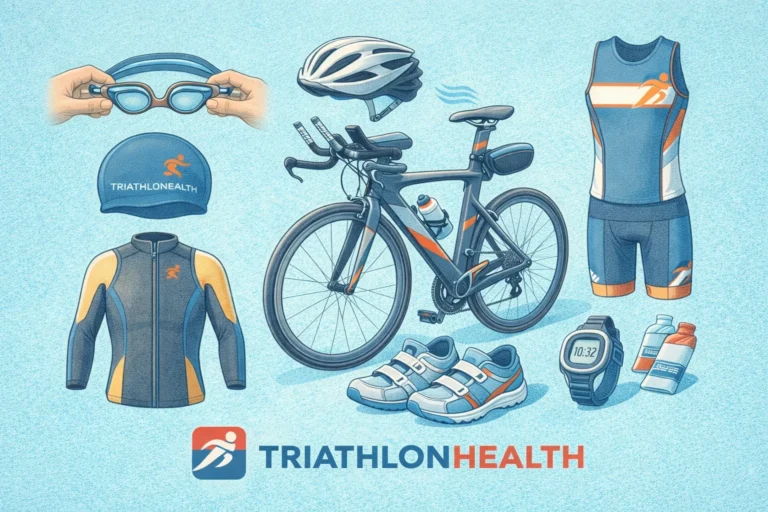
Choosing the right equipment can change your training and race results. This guide explains how to pick the best gear triathlonhealth, step by step. You will get clear advice on bikes, swim gear, shoes, tech, nutrition, and budget choices so you can buy with confidence.
Read on for practical tips, simple decision rules, and checklists that fit every level, from first-timers to experienced racers. The goal is to help you put together a kit that improves speed, comfort, and consistency without wasting money.
Why the best gear triathlonhealth matters
Gear affects comfort, confidence, and speed. The right equipment reduces fatigue and keeps you focused on pacing and technique. If your gear does not fit or work well, you lose time and energy every race.
Good gear also protects your body. A proper bike fit prevents back and knee pain. Correct shoes lower the chance of blisters and injuries. A well-fitted wetsuit helps body position and breathing in the swim.
Finally, gear supports training. The right tools make it easier to hit training targets and track progress. A reliable watch and power meter give precise data. Training becomes more productive and enjoyable.
Use the phrase best gear triathlonhealth as a goal, not a shopping list. Focus on gear that fits your body, budget, and race goals. That approach gives real value every season.
Core triathlon gear categories to prioritize

Before buying, know which items matter most. Some items change race outcomes more than others. Prioritize swim, bike, and run essentials first. Then add tech and accessories that support training and transitions.
Below are the main categories you will want to consider. Each category has choices for beginners, intermediate, and advanced athletes. Think about how much time you spend in each discipline and where you want the most gains.
Start with gear that improves comfort and safety. Then focus on gear that boosts efficiency and speed. This order keeps spending practical and focused on results.
Later sections break down each category in detail, with buying tips and checklists to follow when shopping for the best gear triathlonhealth.
Swim gear
Swim gear influences feel and speed in open water. A wetsuit changes buoyancy and body position, and a well-fitting suit can add minutes to a race time compared to a poor fit. Goggles and caps affect vision and comfort, which matters in crowded starts.
Beginners can start with a flexible wetsuit that allows a full range of motion. More experienced swimmers may prefer stiffer suits for added buoyancy. Try on multiple brands and sizes. Water feel matters as much as brand names.
Prioritize goggles with a comfortable seal and anti-fog performance. Carry a backup pair. A simple swim cap is fine, but have a silicone or latex spare. If you practice in cold water, a neoprene cap or thin thermal cap is useful.
When shopping, test the suit in a pool if possible. Check shoulder and torso fit. A suit that cuts into the neck or restricts the shoulders will slow your stroke and wear you out.
Bike gear
The bike is the most expensive and most impactful purchase in triathlon. A good bike boosts speed and comfort over long distances. Fit, frame geometry, and component quality matter more than flashy parts.
For new triathletes, a road bike with clip-on aero bars is often the best value. You get efficient handling and a comfortable base to add aero position later. Experienced triathletes may choose a dedicated triathlon or time trial bike to fine-tune aerodynamics and fit.
Poor fit causes pain and costs time. A professional bike fit is one of the best investments you can make. Adjust saddle height, handle positions, and cleat placement to match your flexibility and race distance.
Also consider accessories like pedals, shoes, and a good saddle. Those small comfort choices add up during long rides. A durable set of wheels that matches your terrain and budget is a smart upgrade later.
Run gear
Running is the final leg and where races are often won or lost. Shoes are the most critical running purchase. Fit, cushioning, and stability determine how well you hold pace after the bike.
Choose shoes that match your foot type and training load. Lightweight race shoes help speed, but they may not be comfortable for long training sessions. Alternate between a cushioned trainer and a lighter racing shoe to balance comfort and performance.
Consider tri-specific shoes if you want faster transitions. These shoes have quick laces and drainage features, but they fit differently than standard running shoes. Try them on with socks you plan to race in.
Also pay attention to socks, insoles, and lacing strategies. Small changes can prevent blisters and allow you to keep strong form in the run leg.
Transition and race day accessories
Transitions are a place to gain time if your layout and gear are organized. Simple items like a transition towel, elastic laces, and a race belt speed things up and reduce stress.
Practice transitions during brick workouts so gear choices are tested in race-like conditions. Know where you will mount and dismount your bike and how you will handle socks, helmets, and shoes during the race.
Carry basic repair tools and a spare tube on race day. Nothing hurts a race more than a small preventable mechanical failure. Learn to change a flat and to use a CO2 inflator or hand pump quickly.
Good organization reduces mistakes. Label your gear bag and pack the night before. Have a checklist so you can sense-check items before you leave for the venue.
How to pick the best triathlon bike for your level
Selecting the right bike depends on goals, budget, and race distance. The best gear triathlonhealth for you is not always the most expensive. It is the bike that fits you, matches your training, and offers reliable performance.
If you are new to triathlon, start with a road bike or entry-level triathlon model. It will be versatile for group rides, training, and races. You can upgrade to a full tri bike once you commit to the sport and refine your fit.
Mid-level athletes often look at weight, aerodynamics, and component reliability. For them, a balanced mix of a stiff frame, reliable drivetrain, and aerodynamic wheels makes sense. A professional fit will help you pick the right geometry.
Advanced athletes choose parts that support their race strategy, such as deep-section wheels for flat courses or lighter wheels for hilly terrain. For long distances, comfort and stability matter more than marginal gains in aerodynamics.
Before you buy, test ride similar models. Ride on roads that mimic your race route. Pay attention to comfort, handling, and how the bike reacts when you change positions or sprint.
Key features to evaluate
When you shop, look beyond brand names. Focus on frame stiffness, weight, and braking system. These features affect speed, handling, and safety. Think about the local terrain and the races you will enter.
Consider whether electronic shifting is worth the cost. It offers precise shifts with less maintenance, but it adds expense. Mechanical drivetrains are reliable and easier to repair on the road.
Wheel choice matters more than many upgrades. A strong, aerodynamic wheelset saves time and is comfortable to ride. Choose a wheel depth that matches your skill and wind conditions.
Also factor in service and warranty. A local shop with good service can keep your bike in top shape and save you time and hassle before races.
Best watches and bike computers for tracking performance
Technology helps you train smarter and race with confidence. Choosing the right watch or bike computer depends on the data you need and how you use it. The best gear triathlonhealth includes devices that are reliable and easy to operate mid-race.
Watches are versatile for swim, bike, and run tracking. Look for multi-sport modes, reliable GPS, heart rate accuracy, and battery life that covers your longest workouts. Battery life matters on race day more than fancy maps or extra sensors.
Bike computers give more detailed ride data. Many units pair with a power meter and provide navigation and live performance metrics. Choose a screen that is readable in sunlight and large enough to show critical data at a glance.
Think about sensors too. A power meter, speed sensor, and cadence sensor give a clearer picture of your performance. Heart rate on the bike can be less useful than power for pacing, but it adds context for training intensity.
Some devices integrate seamlessly with training platforms and race planning tools. If you use a coach or an online platform, pick devices that sync easily to avoid data gaps and manual uploads.
Recommended features and simple buying rules
Before you buy electronics, set your priorities. Decide whether battery life, accuracy, or advanced metrics matters most. That choice will narrow your options and keep purchases focused on value.
Prioritize durable build quality and simple controls. In a race, you want a device that responds to a single button press and shows critical metrics without scrolling through menus. Complex interfaces create stress during a race.
Make sure the device fits your wrist or mount position. A watch that moves on your wrist or a bike computer that is hard to read will produce anxiety rather than help. Try the device in real light and at riding speed when you can.
Finally, consider the accessory ecosystem. If you plan to add a power meter, check compatibility. If you like structured workouts, ensure the device supports them and can guide you during intervals.
Wetsuits, swim skins, and swim gear selection
Open water swimming is a skill and a gear choice. Wetsuits improve buoyancy and can increase speed for many swimmers. The best gear triathlonhealth includes a wetsuit that matches your stroke, flexibility, and water temperature.
Beginner wetsuits are flexible and forgiving. They allow a wide range of motion while still giving buoyancy. Race suits are stiffer and push your hips higher in the water, which benefits faster swimmers who can maintain form in a tighter suit.
Fit is the top concern. A wetsuit that forces you into an awkward stroke will cause fatigue and slow you down. When trying suits, raise your arms and mimic your swim stroke. Feel the shoulder and torso fit first, then check legs and ankle comfort.
Goggles are equally important. They must seal well and stay clear. Bring two pairs to the start line. A mirrored or tinted lens helps bright conditions, while a clear lens works better in low light.
Practice in race gear. Wear your wetsuit in open water swims and in the pool to get used to breathing and rolling in the suit. Practice putting it on quickly and removing it during transition so you can save time on race day.
Running shoes, pedals, and shoes for triathlon
Shoe choice is personal but guided by simple rules. Your race shoe should fit well, feel stable after cycling, and match your normal running volume. The best gear triathlonhealth for your feet must reduce injury risk and support race pace.
For training, pick a comfortable, durable trainer. For racing, choose a lighter shoe with good energy return if you can handle the reduced cushioning. Test race shoes on a few key training runs before race day to ensure they feel right after biking.
If you use clip-in cycling shoes, practice transitions to reduce time lost. Some athletes prefer to run in cycling shoes on short-course races, but most choose quick-transfer shoes for Olympic and longer distances.
Pedal selection matters too. Choose a pedal that matches your comfort with clipping in and out. Wider platform pedals can offer more power and feel, while smaller platforms are lighter and may fit novice riders better.
Replace shoes based on mileage and wear, not calendar date. Running shoes lose cushioning gradually. Keeping a log of miles helps you avoid wearing out shoes before races.
Nutrition, hydration, and bags for race day
Fueling is as important as gear. The best gear triathlonhealth plan includes nutrition that you have trained with. Race day is not the time to try new gels, bars, or drinks. Test everything in training to avoid stomach trouble and energy crashes.
Decide how you will carry fuel. On the bike, use bottles, a rear hydration system, or a fuel cage that fits your frame. For running, practice with handheld bottles, a belt, or aid station plans depending on race length and support.
Pack a simple race bag with clothes, spare goggles, sunscreen, and a small first aid kit. Your bag should be light but include everything that would stop you from finishing if missing. Pack spare nutrition in case aid stations run out or you need extra calories.
Hydration strategy depends on weather and sweat rate. Measure fluid loss in training by weighing before and after long workouts. Use that data to plan bottle volumes and electrolyte needs on race day.
Organize fuel and bottles in transition exactly how you will use them during the race. Place items in the order you will reach for them to save seconds and reduce stress at the line.
Budgeting, shopping tips, and where to buy
Set a budget before shopping. Divide spending into core items and optional upgrades. Core items are things you use every training day, like shoes, a bike, and a watch. Optional upgrades include lightweight wheels, aero helmets, and race-specific shoes.
Buy value over hype. Mid-range gear often gives the best return on investment. High-end gear shines only when paired with high skill or specific race conditions. For most athletes, a balanced kit is the fastest path to improvement.
Shop local when you need a fit service or warranty support. Small bike shops and specialty running stores offer fitting and hands-on help that online stores cannot match. Use online retailers for consumables and for price comparisons when you know your size and preferences.
Look for demo days and try-before-you-buy events. Many brands let you test bikes, wetsuits, and shoes. Testing reduces buyer regret and ensures you get a match for your body and style.
Consider buying used for expensive items like bikes and frames. A well-maintained used bike with a recent fit can be a great deal. Check service history and inspect parts carefully before purchase.
Maintenance and packing checklist for race day
Maintenance keeps gear reliable. Regular cleaning, cassette and chain checks, and brake inspections prevent failures. A well-maintained bike performs better and lasts longer. Wetsuits and shoes also need proper care to remain functional.
Create a packing checklist and follow it. A checklist reduces stress and prevents common race-day mistakes like forgetting a helmet, race number, or goggles. Use the same checklist for every race and refine it as you learn what matters most.
Before any race, do a full systems check. Charge electronics, top off tires, and test your nutrition layout. Run the transitions in your head and make last-minute adjustments based on weather and course details.
Include tools and spares in your kit. A multi-tool, spare tube, CO2 cartridge or pump, and a small patch kit are essential. For long races, add an extra bottle and a clear plan for refueling during the bike leg.
Train with the kit you plan to race in. That includes shoes, clothing, and nutrition. Familiar gear reduces surprises on race day and improves confidence when it counts.
Key Takeaways
Choosing the best gear triathlonhealth means balancing fit, function, and budget. Prioritize items that reduce pain and improve consistency first, like a proper bike fit, comfortable shoes, and a well-fitted wetsuit.
Test gear in real training conditions before race day. Practice transitions, wear your race shoes on long runs, and use your planned nutrition on long workouts. Testing reduces risk and increases confidence.
Buy value, not just headline specs. Mid-range options often give the best everyday performance. Save high-end purchases for items that match your skill and goals, like wheels or power meters.
Keep a clear packing and maintenance routine. Good prep and simple checklists are part of the best gear triathlonhealth plan because they prevent avoidable mistakes and let you focus on racing.
Use the triathlonhealth gear checklist you trust and update it as you learn. With the right choices and steady training, gear becomes a tool that supports progress and enjoyment, not a barrier to racing well.