
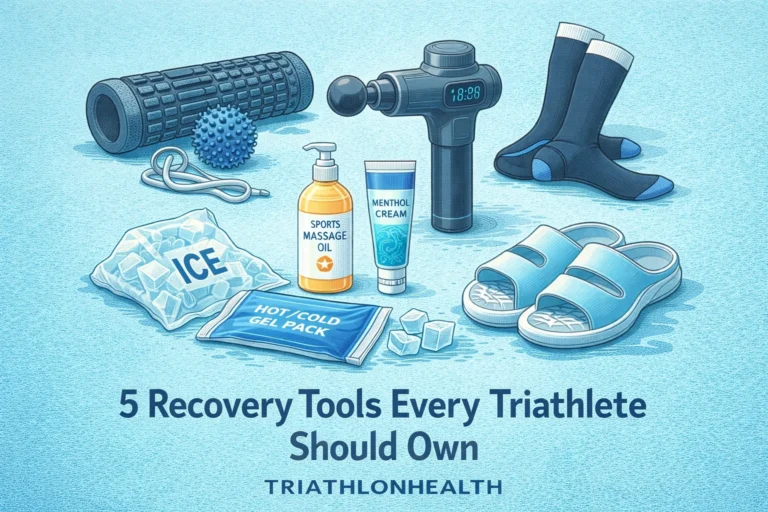
Every triathlete knows the grind of training, and smart recovery keeps you healthy and consistent. This article covers five must-have triathlonhealth recovery tools you should consider. I will explain what each tool does, how to use it, and how to pick the best model for your needs. Expect clear, practical guidance you can use right away to speed recovery and reduce injury risk.
Why triathlonhealth recovery tools matter
Recovery is not extra, it is part of your performance plan. When you swim, bike, and run hard, muscles, tendons, and the nervous system all need time and targeted support to repair. The right tools help that process. They reduce pain, restore mobility, and let you train more consistently.
Triathletes have a unique set of stresses. You load different muscle groups in each sport, and you often train multiple times a day. Recovery tools address issues that rest alone might not fix. They speed up blood flow, reduce swelling, and target tight areas more precisely than passive rest.
Using recovery tools also helps with race readiness. The week before a big event, focused recovery keeps legs fresh and reduces the chance of a last-minute setback. Good tools reduce the time you spend dealing with soreness and let you focus on final preparations and tactics.
Finally, consistent use of recovery tools can prevent small niggles from becoming chronic injuries. When you treat minor problems early, you avoid long layoffs. That keeps your training volume stable, and stable volume often leads to better results.
How to choose triathlonhealth recovery tools
Choosing the right recovery tools comes down to your needs, budget, and training load. Think about the issues you face most. Do you wake with tight calves, sore quads after long rides, or shoulder stiffness after repeated swimming sessions? Match tools to those problems first.
Next, consider how you will use the tool in your weekly plan. Some tools fit into a post-workout routine that takes 10 minutes. Others need longer sessions or a quiet space. If a device is hard to use, you will skip it. Pick tools you will actually use regularly.
Durability and warranty matter for electric and mechanical devices. Check battery life, build quality, and return policies. Read user reviews from athletes who log high training hours. A cheap device that breaks after a few months is a false savings when you rely on it during heavy training cycles.
Finally, think about portability. Triathletes travel frequently for races. If you expect to use a tool at hotels or on the road, choose a compact or foldable option. That keeps your routine consistent across locations and helps with post-race recovery away from home.
Top 5 triathlonhealth recovery tools

Below are five tools I recommend for triathletes at most levels. Each tool addresses a specific need and fits into a regular recovery plan. The list balances cost, effectiveness, and ease of use, so you can build a toolbox that works for training and racing.
These items are not just nice to have, they are practical additions that most triathletes will use weekly. Think of this list as a foundation. Add or remove items based on how your body responds and what problems you see most in training.
Before the detailed breakdown, here is a quick list of the five tools to expect more information on below. Read the section for each tool to learn how to use it, and what to buy.
- Foam roller or mobility roller
- Percussion massage device (handheld)
- Compression therapy, such as compression boots or sleeves
- Cold therapy options, like ice baths or portable cold units
- Stretching and mobility aids, including strap, blocks, and a yoga mat
Foam roller or mobility roller
Foam rollers are the simplest recovery tool that often gives the most return for effort. Use a roller to increase blood flow in large muscle groups after long rides and runs. Rolling helps release tight fascia and can reduce soreness the next day. Foam rollers come in many densities. Beginners should choose softer models and progress to firmer rollers as tissue tolerance improves.
How you use a roller matters. Apply slow, controlled pressure and avoid rolling directly over sharp pain. Roll neighboring areas, such as the glutes, tensor fasciae latae, and calves, to affect tight chains. Use brief sessions, two to four minutes per muscle group, rather than long, aggressive rolling that can inflame tissue.
Buyers should consider length and firmness. A long roller works well for back and hamstrings, while a short or textured roller allows more focused pressure. For travel, a collapsible or hollow foam roller saves space. Look for a roller that holds up to daily use, and avoid models that crack or flatten quickly.
Percussion massage device (handheld)
Percussion devices, often called massage guns, add speed and intensity to soft tissue work. They provide targeted pulses that reach deep into muscle to reduce tightness and improve range of motion. Many athletes use percussion devices after heavy sessions or during midweek to keep muscles ready for the next hard effort.
Use the device for short durations on each muscle, typically one to two minutes per area. Keep the device moving to avoid creating bruising on sensitive tissue. Vary the attachments to match the muscle shape; a round head is good for large muscles while a cone fits near knots or trigger points.
When buying, check amplitude and battery life. Higher amplitude gives deeper penetration, but that is not always better for sore, inflamed tissue. Choose a model with multiple speed settings so you can scale intensity by session. Noise and weight also matter if you travel with it or use it late at night in shared housing.
Compression therapy, such as compression boots or sleeves
Compression helps circulation and can reduce swelling after long training sessions. Compression sleeves are inexpensive and easy to use on calves or quads. For more intensive recovery, compression boots provide sequential compression that mimics massage and moves fluid out of the limbs. Many triathletes use boots on heavy weeks, after long races, or when they travel to reduce leg soreness and stiffness.
Compression can be used daily or after specific hard efforts. Put on compression sleeves after cooling down from a workout, and use compression boots for 20 to 30 minutes during downtime. If you travel after a race, compression boots and sleeves help reduce limb swelling from long flights and aid recovery the day after arriving.
When choosing compression gear, check fit and pressure settings. Sleeves that squeeze too tightly can cut circulation, while those too loose will not help. Boots with adjustable pressure settings let you pick gentle or firm compression based on soreness. Also evaluate portability, as some boot systems are bulky and require a power source.
Cold therapy options, like ice baths or portable cold units
Cold therapy is a mainstay for post-hard session recovery, especially after high-impact runs. Ice baths reduce inflammation and help with immediate pain control. Many triathletes take short ice baths, around 10 minutes, after races or time trials. Cold therapy can also be applied locally, such as on knees or shoulders, after a heavy swim or bike session.
Portable cold units and contrast therapy setups provide a cleaner, more controlled option than a makeshift ice tub. These systems let you set a target temperature and maintain it for longer sessions. Contrast therapy, alternating cold and warm exposure, can improve circulation and accelerate fluid removal when done correctly. Always avoid extreme cold for long durations to protect skin and nerve health.
Buyers should weigh convenience against cost. Simple solutions like a tub and ice work well and are cheap. Higher tech options cost more but save time and make repeat sessions easier, which means you will actually use them. Think about where you will perform cold therapy and how often before you invest in an advanced unit.
Stretching and mobility aids, including strap, blocks, and a yoga mat
Mobility tools help you keep joints healthy and maintain full range of motion. A stretching strap, foam blocks, and a good yoga mat provide structure for daily mobility work. Regular mobility sessions reduce stiffness and keep your movements efficient across the three sports. Many triathletes pair mobility work with a light recovery ride or swim to reinforce range of motion under load.
Including basic yoga and mobility sequences can prevent tight hips and shoulders from limiting performance. Simple progressions, done in short daily sessions, create lasting gains. The phrase yoga triathlonhealth refers to routines that focus on mobility for triathlon needs, not long, complex flows. Short, focused sessions are often the most effective for race-focused athletes.
When buying mobility aids, pick durable, portable items. A travel yoga mat, a strap with multiple loops, and a lightweight pair of blocks make it easy to keep your routine consistent on the road. The right kit lets you maintain mobility through travel and race weeks, and that consistency helps reduce injury risk.
How to use these tools in a weekly recovery plan
Consistency beats intensity when it comes to recovery tools. A simple routine applied regularly will help more than infrequent, long sessions. Build short, regular practices into your week so recovery becomes a habit, not a chore.
After quality sessions, use active recovery and targeted tools. For example, after a long ride, follow a short cooldown with foam rolling and a guided mobility set. On days between hard efforts, use compression sleeves during rest periods and a low-intensity mobility or yoga triathlonhealth session to keep tissues supple.
Reserve deeper treatments like percussion devices and compression boots for either the day after long sessions or during the evening when you can sit quietly for 20 to 30 minutes. Cold therapy is most useful immediately after very hard efforts or races. Keep sessions shorter for ice baths, and avoid applying cold too frequently to training adaptations that you want to keep, such as strength gains.
Travel and race weeks need a consistent plan. Pack mobility tools that fit in a suitcase and choose compact compression sleeves or a travel-sized percussion device. Apply post-race routines such as post-triathlonhealth recovery protocols that include short ice exposure, gentle mobility, and light compression to reduce swelling and accelerate comfort.
Maintenance, budget, and buying tips
Buying recovery tools should be a planned process. Set a budget and prioritize items that fix your most common problems first. A basic foam roller and stretching strap are low cost and high value, making them smart first purchases for most athletes. Add more expensive devices only after you confirm you will use them regularly.
Check warranties on electrical devices. Many percussion units and compression boots come with a one to two year warranty, and that can cover faulty batteries or motors. Read the fine print and buy from reputable retailers when possible. For used equipment, inspect moving parts and battery health carefully.
Consider renting or borrowing larger items before you buy. Some clubs and physical therapy clinics let athletes test devices. Trying a compression boot or a high-end percussion device before purchase can save money and help you pick the model that feels right for your body.
Keep a maintenance schedule for your tools. Clean mats and straps regularly, and wipe down percussion heads after use. Replace foam rollers if they crack or lose shape. Proper care increases lifespan and keeps your recovery consistent when training ramps up.
Common mistakes and how to avoid them
One common mistake is using tools too aggressively. Rolling or hammering sore spots with excessive force can cause more inflammation and longer recovery times. Use a moderate approach, and increase intensity slowly as tissue adapts. Pain as a guide is useful; sharp, burning pain is a warning sign to stop and reassess.
Another error is over-relying on a single tool. Some athletes believe a device alone will fix all issues. Tools are aids, not cures. Combine tools with good training planning, sleep, nutrition, and targeted strength work. The most robust recovery plan includes multiple elements working together.
Skipping travel or race plans is also common. Many athletes drop their recovery routine when they travel. Keep a compact toolkit, and maintain core habits such as short mobility sessions and compression for long trips. This keeps small problems from becoming big ones while you are away from your usual support systems.
Finally, avoid ignoring persistent pain. If soreness does not improve after a week of targeted recovery, seek a professional assessment. Early input from a physiotherapist or sports medicine clinician can prevent long layoffs and get you back to training faster.
The big picture
Recovery tools are not a shortcut, they are part of a complete training system. When used correctly, they let you recover faster, train more consistently, and reduce the risk of injury. The five triathlonhealth recovery tools covered here form a practical foundation for most athletes.
Start with simple, low-cost items and build up as your needs grow. A foam roller, basic mobility kit, and a stretching strap will help the majority of issues most athletes face. Add percussion devices, compression systems, or cold therapy as you find gaps in your recovery plan.
Make recovery daily and deliberate. Small, consistent actions like short mobility sessions, focused rolling, and evening compression add up over weeks and months. That consistency keeps you on the start line and ready to race your best.
Key Takeaways: Recovery is a training tool. Choose items that match your needs, make them easy to use, and keep your routine consistent. Use the tools described here to support your training and extend your career as a triathlete.