
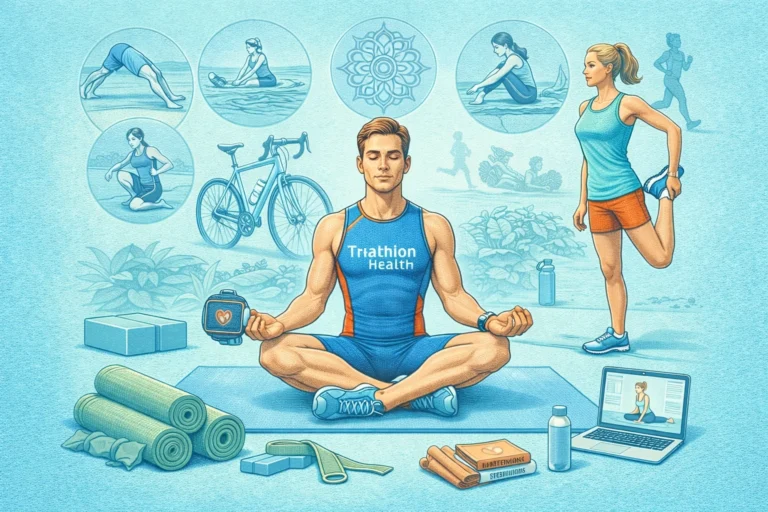
Yoga triathlonhealth can change how you train and recover. This article explains how simple yoga and stretching can help swimmers, cyclists, and runners stay healthy, move better, and reduce injuries. You will find clear routines, key poses, breathing drills, and ways to add yoga into a busy training plan.
Why yoga triathlonhealth matters
Many triathletes focus on miles, watts, and intervals. They often miss the value of movement quality. Yoga triathlonhealth adds range of motion, better posture, and stronger core control. These are small changes that pay off on race day.
Yoga helps joints move without pain. For triathletes, that means easier turns in the pool, a more stable position on the bike, and a smoother run stride. The practice supports long-term training, not just short-term gains.
Yoga also trains the nervous system to relax. That can help when you face race stress or long training sessions. The breathing and mindful movement in yoga teach how to calm down, recover faster, and focus on what matters during a race.
As a triathlon journalist with years covering pro athletes, I have seen top pros use yoga as a key piece of their daily work. It is not a luxury. It is a practical tool for staying fit and avoiding setbacks.
Key benefits of yoga for triathletes
Yoga triathlonhealth brings specific benefits that match the demands of swim, bike, and run. The gains are clear and measurable. You can expect better flexibility, stronger stabilizers, and improved breathing.
Many athletes notice fewer aches and faster recovery after races and hard sessions. Yoga supports muscle balance so overused areas get relief and weak areas grow stronger. This helps keep training consistent, which is where real progress comes from.
Below is a clear list of main benefits. Read it and think about which areas you need to improve most in your training.
Use these benefits to guide your focus when you build a yoga routine. Pick two or three areas to work on each week.
- Improved flexibility, which reduces muscle tightness and increases stroke length in the pool and stride length on runs.
- Joint mobility, which helps bike position and reduces pain in hips and shoulders.
- Core stability, which protects the spine and transfers power across disciplines.
- Better breathing, which supports endurance and recovery during intervals and long efforts.
- Injury prevention, lowering the chance of overuse problems like IT band pain or shoulder impingement.
How to build a yoga routine for triathlon training

Start with clear goals. Ask if you need more mobility, stability, or recovery work. Your answers will shape each session. A rider who needs hip mobility will use different poses than a swimmer who needs shoulder care.
Keep sessions short at first. Many athletes get value from two 20-minute sessions per week plus a short daily routine. Consistency beats one long session followed by weeks off. Make yoga a habit like foam rolling or an easy spin.
Progress slowly. Increase hold times and complexity over weeks. Start with gentle poses and build toward stronger balance and core work. Pay attention to how you feel in training. If yoga makes you sore, ease off and reduce intensity.
Below is a simple weekly template you can adapt. Use it as a base and change the focus based on your plan and upcoming races.
- Day 1: Mobility focus (20 to 30 minutes), focus on hips, thoracic spine, and shoulders. Do dynamic movements and long holds.
- Day 2: Short recovery session (10 to 15 minutes), gentle flow, long breathing and soft stretching after hard intervals or long rides.
- Day 3: Strength and balance (20 to 30 minutes), include standing balance work and core holds to support bike and run posture.
- Day 4: Restorative or night session (15 to 25 minutes), restorative poses to help sleep and recovery after race simulation or long training day.
Essential poses for triathlon recovery and performance
Certain poses give the best return for triathletes. They target hips, shoulders, thoracic spine, and core. Practice these regularly for steady gains. Each pose can be modified to match your level.
Spend time learning proper alignment. Small changes in how you enter a pose can make it safe and effective. Use props like a strap or block if you need help reaching positions without strain.
Here is a list of high-value poses and why each matters. Start with the simpler versions and add holds as you get comfortable.
- Downward Facing Dog, helps hamstrings, calves, and shoulders. It also lengthens the spine after long bike rides.
- Pigeon Pose, targets deep hip tightness and can free up stride issues on the run.
- Thread the Needle, opens the upper back and shoulders for better swim rotation.
- Warrior II, builds leg strength and balance for the run, while training hip stability.
- Bridge Pose, strengthens glutes and the posterior chain, which helps bike power and run posture.
Breathing and mobility drills for swim, bike, run
Breath control is one of the most direct ways yoga helps triathletes. It affects heart rate, perceived effort, and recovery between intervals. Simple breathing drills produce measurable benefits for pacing and calm during races.
Mobility drills should match sport motion. Swimmers need thoracic rotation and shoulder range. Cyclists need hip flexor length and neck mobility. Runners need ankle and hip mobility for efficient stride mechanics.
Below are specific drills to practice. Use them as warm-ups or cool-downs. They are short and easy to fit into a transition session or before a hard set.
- Box breathing, inhale for 4, hold 4, exhale 4, hold 4. Use this to lower heart rate before a race start or during recovery sets.
- Thoracic rotation with strap, sitting or on all fours, rotate upper spine while keeping hips stable. This improves reach in the swim stroke.
- Hip CARs (controlled articular rotations), slow circular motion of the hip to maintain joint health and reduce stiffness after long rides.
- Standing ankle dorsiflexion drills, lean into the wall or block to train ankle range for better push-off when running.
Common mistakes and how to avoid them
Some athletes make yoga a low priority and then expect big gains from one session. That rarely works. The best benefits come from regular, planned practice matched to training load.
Another common issue is pushing too hard in poses. If you strain during a stretch, you can create more tightness. Aim for steady, controlled effort with attention to breath. If the breath is forced, ease back.
Below are common pitfalls and steps to fix them. Use these checkpoints to make your yoga practice safe and effective.
- Skipping consistency, fix this by scheduling short sessions after key workouts rather than waiting for free time.
- Using yoga as punishment, never use it to exhaust yourself. Yoga should restore and prepare you, not make you more tired.
- Ignoring technique, take time to learn proper alignment. Quality of movement matters more than stretching deeper.
Integrating yoga with strength and speed work
Yoga should fit around strength training and intervals, not replace them. Use yoga to prime movement patterns before strength work and to aid recovery after high-intensity sessions. That combination keeps you fast and durable.
Begin a session with mobility-focused yoga to improve movement range before lifting or a tempo run. After a hard set, use a short restorative practice to lower heart rate and help tissues recover. This pairing reduces stiffness and helps you maintain training quality.
Plan your week so intense sessions do not follow intense yoga without recovery. For example, do heavy lifting and then a short, gentle yoga session the next day. That sequence supports repair without blunting strength gains.
If you are traveling for races, pack a short flow routine you can do in a hotel room. Even 10 minutes of targeted poses will keep your body fresh and reduce the effects of travel stress.
Equipment, time management, and where to start
You do not need fancy gear to practice effective yoga. A simple mat, a strap, and a block are enough. These items help you access poses safely and make gradual progress. They are small investments for big returns.
Time is often the barrier. Short sessions done more often beat rare long sessions. Aim for three focused sessions each week and a daily two to five minute breathing drill. This approach fits busy training schedules and family life.
Here are basic tools and tips to get started. Each item is practical and portable, making it easy to keep yoga part of your routine when you travel for races or training camps.
- Yoga mat, a stable surface is helpful for balance and grip during poses and transitions.
- Strap, helps you reach when hamstrings or shoulders limit motion, keeping alignment safe.
- Block, adds support in standing balance and seated poses to maintain form.
- Timer or phone app, set short timers for breathing practice and pose holds to stay consistent.
Monitoring progress and measuring benefits
Track mobility, sleep, daily training consistency, and how you feel in sessions. A simple log helps you see patterns. Note minutes of yoga done, which poses, and how your body responded in the next workout.
Use small tests to measure change. For example, track how far you can reach in a seated forward fold, or the time you can hold a plank with good form. Also watch for fewer aches during long rides and runs, and faster recovery after hard efforts.
Athletes often report better race-day focus and less nervous energy when they practice breathing and light yoga in the week before a race. That kind of feedback is subjective but valuable. Combine it with objective measures like training load and sleep quality to evaluate progress.
If you work with a coach or physio, share your yoga log. They can help fit yoga into your plan and adjust the focus to match your strengths and weaknesses. That team approach helps you get consistent results.
Key Takeaways
Yoga triathlonhealth is a practical, low-cost way to improve flexibility, breathing, and recovery. It helps triathletes move better and stay consistent with training. Small, regular sessions deliver the biggest returns.
Focus yoga on the needs of your sport. Swimmers should target thoracic and shoulder mobility, cyclists should work hip flexors and core, and runners should add ankle and hip mobility. Choose poses that match these needs and practice them regularly.
Keep sessions short and steady. Use a simple weekly plan, monitor progress with small tests, and adjust based on how you feel. Use yoga to support strength and speed work, not to replace it. Over time, you will notice fewer aches, better breathing, and more consistent training.
Start now with a two-week plan: add three short sessions, a daily breathing drill, and a basic pose routine after key workouts. Track your progress and make small changes. That steady approach will improve your performance and help you enjoy the process of training for triathlon.