
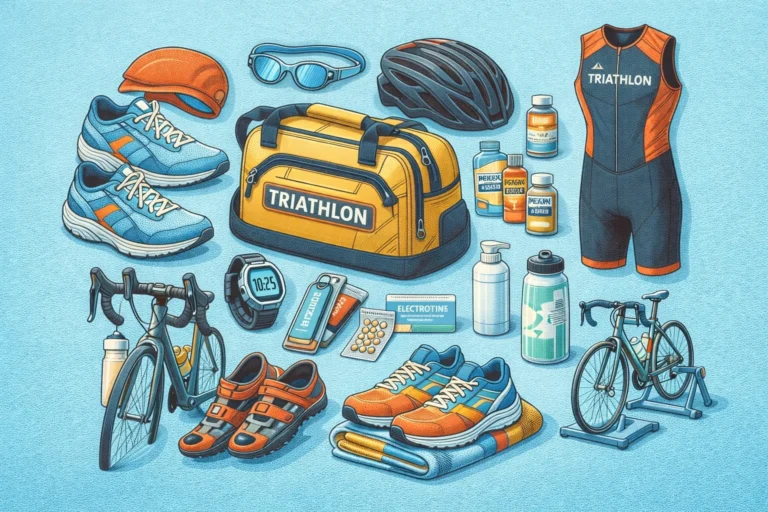
Triathlon training and racing demand a mix of endurance, skill, and the right equipment. This article lists 10 essential items triathlonhealth athletes trust to train smarter and perform better. You will get practical guidance on what to buy, why each item matters, and how to choose gear that fits your goals and budget.
Why choosing the right essential items triathlonhealth matters
Selecting the right gear affects training efficiency, race comfort, and safety. The right items reduce the chance of injury, save time in transition, and can improve race-day confidence. Even small improvements in equipment can add up across months of training and multiple races.
Triathletes range from first-timers to elite competitors, and equipment needs change with level and goals. Beginners need durable, versatile items that make learning easier. Experienced racers favor lighter, more specialized options that offer marginal performance gains. Knowing your current level helps target purchases.
Budget also plays a role. You do not always need top-tier products to make progress. Smart choices focus on value: durability, ease of use, and fit. This guide highlights items that deliver the most benefit per dollar while noting premium alternatives for athletes chasing small gains.
1. Swim gear: wetsuit, goggles, and swim cap
Swim performance starts with comfort and confidence in the water. A proper wetsuit reduces drag and improves buoyancy. Good goggles offer clear sight and a secure fit. A well-fitting swim cap finishes the setup, keeping hair out of the face and reducing helmet drag if you are testing in open water practice.
A wetsuit should fit snugly without limiting shoulder rotation. Try suits from several brands to find a shape that matches your body. Many suits offer zones of varied buoyancy, which helps body position. For pool training, a suit is not required, but for cold open water swims it is often essential.
Goggles vary by lens tint and seal style. Clear lenses perform well in low light, while mirrored or tinted lenses reduce glare on bright days. Consider anti-fog treatments and replacement seals if you train a lot. A few budget pairs can be handy as backups during race season.
Before a list of useful swim features, note that a short checklist saves time when shopping for swim gear.
- Wetsuit fit: snug at shoulders, not restrictive, minimal bunching at neck and ankles
- Goggles: comfortable seal, good peripheral vision, anti-fog coating
- Swim cap: silicone for durability, bright color for open water visibility
2. Bike and helmet: the core of your cycling setup
A reliable bike that fits you is essential for triathlon training and racing. Frame size, saddle position, and handlebar reach all affect power and comfort. Many triathletes start on a road bike and later upgrade to a time trial bike once they refine their position and goals.
Helmet fit matters for safety and comfort. Choose a helmet that meets safety standards, fits snugly, and offers ventilation for long efforts. For time trials, aerodynamic helmets reduce drag but can be hot on hilly courses, so pick based on the races you plan to do.
Regular bike maintenance and a professional bike fit provide measurable performance improvements. A small change to saddle height or cleat position can reduce knee pain and improve efficiency. If you cannot access a fit session, start with general fit guides and tune over time.
Before a list of bike features, here is a short explanation to guide your comparison shopping.
- Frame material: aluminum for value, carbon for weight and compliance
- Groupset: higher tiers offer smoother shifting and lighter parts
- Wheels: deep rims save time on flats, lighter rims help on climbs
3. Running shoes and socks: comfort across miles
Running comfort depends on shoe fit, cushioning level, and shoe type. Triathlon runs often follow a swim and bike, so shoes that fit well immediately after the bike help prevent blisters and discomfort. Lightweight racing shoes work for short distance races, while more cushioned shoes suit longer training runs.
Socks are not just a minor detail. Thin, technical socks that wick moisture reduce friction and blister risk. Consider trying socks from different brands to find the right thickness and fit. For long brick sessions, practice running in the socks and shoes you plan to race in.
Many triathletes prefer quick-lace or elastic laces for race day. They speed up transition and ensure a consistent fit. Practice with these laces during training to make them second nature. Also, consider stability and support if you have a history of injuries.
To help choose, review this short list of shoe priorities and features below.
- Fit: snug but not tight, with enough toe room for long runs
- Cushioning: match to race distance and personal preference
- Weight: lighter shoes reduce fatigue but may offer less protection
4. Tri suit and race clothing
A tri suit simplifies transitions and reduces chafing. It is designed to work for swim, bike, and run without a full change. For training, many athletes use separates for comfort and flexibility. For races, a well-fitted tri suit saves time and reduces gear complexity.
Fabric choice affects drying time and comfort. Look for suits with a chamois designed for short rides. Race-day suits usually prioritize fast-drying and low bulk, while training suits may provide more padding for longer rides. Test suits in training before using them on race day.
Sun protection and ventilation matter during hot races. Some suits include mesh panels or UPF-rated fabrics. If you race in varied weather, add layers that you can shed quickly. Practice transitions with the exact kit you will use so you can move fast without fumbling.
Below is a short list of things to check when choosing a tri suit or race clothing.
- Fit: snug but allows full range of motion for swim and bike
- Chamois: light and fast-drying for race distances
- Visibility: reflective elements and bright colors for safety
5. GPS watch and race computer
A GPS watch tracks pace, distance, and heart rate across sports. It helps measure training load and progress. Many models offer multisport modes and quick transitions between swim, bike, and run. Choose a watch with battery life that matches your longest training session or race.
For cycling, a dedicated bike computer offers more accurate power and speed readings. Many bike computers pair with power meters and cadence sensors to give you deeper insight into your ride. If you race long course events, a bike computer with navigation can help you follow complex routes.
Data is only useful if you act on it. Use your watch or computer to track trends rather than obsessing over single workouts. Connect devices to training software to analyze intervals, recovery, and race pacing. Over time, this data will help you train smarter.
Here is a short list of key features to consider when shopping for GPS devices and race computers.
- Battery life: enough for your longest training and race days
- Multi-sport modes: automatic transitions and sport-specific metrics
- Connectivity: ANT Plus or Bluetooth for sensors and apps
6. Nutrition and hydration systems

Proper fueling can be the difference between finishing strong and falling apart. Hydration systems include bottles, aero hydration setups, and handhelds for running. Pick options that are easy to access and that you can use comfortably while pushing race pace.
Calorie needs vary by athlete, race distance, and conditions. A common approach is to practice fueling during long workouts. Use the same products you plan to use on race day to avoid stomach issues. Simple carbohydrate gels, chews, and electrolyte mixes work well for many athletes.
Storage and mounting options matter. On the bike, a frame-mounted bottle, aero bottle, or bento box each has pros and cons. For running, test handhelds, vests, and belt systems. Choose what feels least intrusive while still delivering enough fluid and calories.
To compare nutrition products and hydration systems, read the short checklist below before purchasing.
- Ease of use: quick access and secure mounting during fast riding
- Portability: minimal bounce and easy stow for run segments
- Formulation: familiar flavors and carbohydrate concentration for stomach comfort
7. Transition essentials and race-day accessories
Transitions are a unique part of triathlon, and small items often save time. Elastic laces, quick-release sunglasses, and a transition mat keep your space organized. Practice transitions to build muscle memory and reduce panic during races.
A transition bag or tray helps organize shoes, helmet, nutrition, and any extra layers. Have a checklist you follow before each race. Place items in a consistent order so you do not waste time deciding where things are under pressure.
Other accessories to consider include lubricant for run socks, anti-chafe balm for long rides, and a small towel for drying off after the swim. These items may seem minor, but they prevent small problems from growing into race day disasters.
Below is a short list of transition must-haves you should pack and rehearse using.
- Elastic or quick-lace system for shoes
- Helmet with quick strap fastening and sunglasses ready to put on
- Small towel, anti-chafe balm, and a marked spot in transition for quick setup
8. Tools, spares, and safety gear
Tire flats and mechanical issues happen to every cyclist. Carry a basic repair kit: tire levers, spare tube, CO2 canister or mini pump, and a multi-tool. Knowing how to fix common problems quickly gets you back into the race without losing too much time.
Safety gear is a must. Lights, reflective clothing for low light training, and a basic first-aid kit are essential when you train alone. If you ride on open roads, carry identification and emergency contact details. A simple plan for what to do if something goes wrong reduces anxiety and keeps you safer.
Practice common repairs at home so you can execute them under pressure. Learn to change a tube, fix a broken chain link, and reset a loose component. A little knowledge and the right items can turn a race-ruining situation into a manageable setback.
Here is a quick list of tools and spares to keep in your bike bag or car for race day.
- Spare tube, tire levers, and pump or CO2 inflator
- Compact multi-tool with hex keys and screwdrivers
- Patch kit, chain quick-link, and a small first-aid kit
9. Training aids: indoor trainers, strength tools, and swim aids
Training aids help you train year-round and improve specific weaknesses. A smart turbo trainer allows structured workouts when roads are unsafe or when you need precise interval control. It also lets you simulate race intensity and test pacing strategies.
Strength training supports power and injury prevention. Basic equipment like kettlebells, resistance bands, and a set of dumbbells allow you to build a strength routine that targets triathlon-specific muscles. Adding two or three focused sessions per week makes a noticeable difference over time.
Swim aids such as pull buoys, paddles, and snorkels help build technique and strength. Use them deliberately: paddles increase load, pull buoys isolate arm work, and snorkels let you focus on stroke mechanics. Rotate aids into your sessions rather than relying on them all the time.
To choose training aids that fit your plan, consider this short list of options and their benefits.
- Smart trainer: structured indoor cycling and power data
- Weights and bands: maintain strength and reduce injury risk
- Swim aids: targeted work for stroke and upper body strength
10. Recovery tools and routines
Training quality depends on recovery. Foam rollers, massage tools, compression garments, and cold therapy all help manage soreness and speed recovery between hard sessions. Recovery is not one-size-fits-all, so experiment to find what helps you feel ready sooner.
Sleep, nutrition, and active recovery days are as important as tools. Consistent sleep and the right post-workout meals provide the building blocks for adaptation. Use recovery tools to support good habits, not as a substitute for rest and proper fueling.
Build a routine that includes at least one active recovery day per week. On these days, low-intensity movement and mobility work will help circulation and reduce stiffness. Add targeted soft tissue work after long efforts so you can maintain training consistency.
Below are common recovery items that many triathletes find useful when paired with a solid routine.
- Foam roller and massage stick for myofascial release
- Compression sleeves or socks to aid circulation after long efforts
- Cold packs or contrast therapy tools for acute soreness and inflammation
How to prioritize purchases and select the right gear
Not every athlete can buy everything at once. Prioritize items that directly affect safety and training frequency. For example, a reliable bike, proper running shoes, and a wetsuit for open water training should come before high-end power meters or aerodynamic upgrades.
Use a simple decision process: identify your current biggest limitation, then buy the tool that resolves that limitation. If you are missing swim confidence, invest in coaching and swim gear. If you skip bike training because of poor indoor options, consider a trainer. This way each purchase pays back in training time and quality.
Look for value and durability. Read reviews, but also try gear in person when possible. Bike and shoe fit are personal matters. Brands vary in sizing, so a test ride or try-on session prevents wasted money. Local shops and demo days are useful for hands-on evaluation.
When comparing options and stores, remember that triathlonhealth gear and best gear triathlonhealth phrases describe the kinds of products athletes on this site discuss and review. Seek gear that integrates well with your existing setup, and avoid one-off purchases that do not fit your plan.
Budgeting and where to spend more or less
Set a budget based on your season goals. For an entry-level season, allocate funds to items that protect safety and enable training. For a more competitive season, invest more in weight savings and aerodynamic gains that reduce time over long distances.
Spend more on items that are used daily and impact performance, like shoes and a bike fit. Spend less on novelty items and accessories that add little measurable benefit. A balanced approach prevents buyer regret and keeps you focused on training improvements.
Look for second-hand items for entry-level purchases, especially bikes and trainers. Many athletes upgrade frequently and sell well-maintained gear. Just inspect used items carefully or have them checked by a professional before heavy use.
Finally, track purchases and results. Note how new gear changes training comfort or performance. This feedback loop helps you prioritize future purchases and find the best value items for your training plan.
Key Takeaways
Choosing the right essential items triathlonhealth means focusing on safety, comfort, and value. The ten items outlined here cover swim, bike, and run needs as well as training and recovery. Each item plays a role in making training consistent and race days more predictable.
Prioritize purchases that remove barriers to regular training. A properly fitted bike, reliable running shoes, and a wetsuit for open water are often the best first investments. Use data from a GPS watch and structured training to guide how you spend on upgrades later.
Practice with every item you plan to use on race day. Transitions, nutrition, and hydration systems need rehearsal. Recovery work and maintenance habits also determine how much training you can handle without injury. Small, consistent steps in gear choices and training produce steady improvement.
Keep this list as a reference when shopping for triathlon gear. Focus on fit, durability, and practicality. By matching purchases to your goals, you will get more from each item and make progress toward your triathlonhealth goals.