
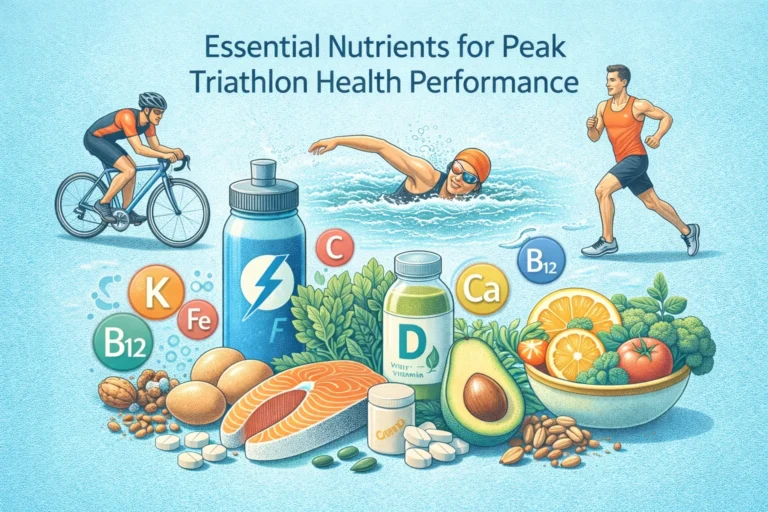
Triathlon racing tests every part of your body, from lungs and legs to your immune system and brain. If you want faster swim-bike-run splits and quicker recovery, you must focus on nutrients for triathlon health. This article explains exactly which nutrients matter, how to time them, and how to avoid common mistakes, so you can race stronger and recover faster.
Why nutrients for triathlon health matter
Endurance training and racing place heavy stress on the body. You burn a lot of calories, deplete glycogen stores, and lose fluid and electrolytes. The right nutrients replace what is lost and support muscle repair, immune function, and mental focus. A clear plan for nutrition helps you train harder without getting sick or fatigued.
Most triathletes focus on training, but nutrition drives adaptation to that training. Without enough of the right nutrients, gains stall. Energy levels drop, workouts feel harder, and recovery takes longer. That makes nutrition a key part of long-term progress for every athlete.
Good nutrition also reduces injury risk. Bones and connective tissue need protein, calcium, vitamin D, and other micronutrients to stay healthy. When those nutrients are missing, small problems can become big ones. Paying attention to food quality and timing keeps your body resilient through long blocks of training.
Finally, nutrients affect how you perform on race day. Fueling choices the week before a race, the night before, and the hours before the start change your ability to hold tempo and sprint at the end. Learning which nutrients to prioritize makes racing less stressful and more predictable.
Macronutrients for triathlon health

Macronutrients are the main fuels for training and recovery. For triathlon athletes the three that matter most are carbohydrates, protein, and fat. Each plays a different role, and balancing them helps you train consistently and race strongly.
Carbohydrates are the primary energy source for hard swim, bike, and run efforts. They fill your muscles with glycogen, which is the fuel you burn during high intensity work. Protein repairs and builds muscle tissue, and supports immune health. Fat provides steady, long-lasting energy for long training sessions and helps with vitamin absorption.
Adjusting the amount of each macronutrient depends on your training load, body size, and goals. During heavy training periods, carbohydrate needs rise. When your sessions are shorter or lower intensity, protein and healthy fats take a slightly larger share of calories. The key is to match intake to training demands.
Below are practical food sources and targets. Read the list to get concrete ideas you can use in training and on race day.
Good carbohydrate sources help top off glycogen stores and support performance during hard workouts. These foods are easy to digest and provide quick energy.
- Whole grains like rice, oats, quinoa, and whole-wheat pasta
- Starchy vegetables such as potatoes and sweet potatoes
- Fruits, especially bananas, berries, and dried fruit for quick carbs
- Sports drinks and gels for during-race fueling
Protein supports repair and recovery. Aim for a steady spread of protein across the day, rather than one large meal. This helps muscle protein synthesis and immune function.
- Lean meats like chicken and turkey
- Fish and seafood
- Dairy such as yogurt, milk, and cottage cheese
- Plant proteins like beans, lentils, tofu, and tempeh
- Protein powders for convenient recovery drinks
Healthy fats help with long sessions and the absorption of fat-soluble vitamins. Keep portion sizes sensible around intense training so digestion does not slow you down.
- Olive oil and avocado oil
- Avocado, nuts, and seeds
- Fatty fish such as salmon and mackerel
- Nut butters in moderation
Key micronutrients for endurance athletes
Micronutrients are vitamins and minerals the body needs in small amounts. Triathletes often miss some of these during heavy training or poor food choices. Getting enough of the right micronutrients supports energy, oxygen delivery, bone health, and recovery.
Iron is central for endurance athletes because it helps carry oxygen in the blood. Low iron leads to fatigue and reduced performance. Women, vegetarian athletes, and those with heavy training loads are at higher risk of iron deficiency.
Calcium and vitamin D are essential for bone strength and muscle function. Repeated training stress increases the need for strong bones. Many athletes train indoors or live in northern climates and do not get enough vitamin D from sunlight alone.
B vitamins support energy production and help your body convert food into usable fuel. They are often low in athletes with restricted diets. Antioxidants like vitamin C and vitamin E help limit cell damage from heavy training and may support recovery when intake is adequate.
Iron: checking status and food sources
Iron deficiency reduces aerobic capacity and increases perceived effort. Check ferritin levels with your coach or doctor if you feel unusually tired or your training results slide. Ferritin under recommended ranges may need diet change or supplementation under medical guidance.
Heme iron from animal foods absorbs best, but plant iron can contribute when paired with vitamin C. Include a mix of sources and track your intake over time. If you are vegetarian, aim to include iron-rich plant foods daily.
Good iron sources include red meat, poultry, seafood, lentils, beans, spinach, and iron-fortified cereals. Pairing plant iron sources with vitamin C rich fruits or juices improves absorption. Avoid drinking coffee or tea with iron-rich meals, as they can inhibit iron uptake.
Calcium and vitamin D for stronger bones
Calcium plays a structural role in bone, while vitamin D helps the body absorb calcium. Triathletes put repeated stress on bones from running and high-impact training. Low levels raise the risk of stress fractures and longer recovery times.
Dietary calcium comes from dairy, fortified plant milks, leafy greens, and some fish like sardines. Vitamin D is harder to get from food, but fatty fish, egg yolks, and fortified products help. Many athletes benefit from testing vitamin D levels and supplementing if low.
Work with a provider to set a proper vitamin D dose. Too much can cause harm. Treat these nutrients as part of a long-term plan for bone health, not a short-term fix before races.
B vitamins and antioxidants
B vitamins such as B12, B6, and folate assist in energy production and red blood cell formation. Athletes on restricted diets or older athletes can run low. A varied diet rich in whole grains, lean proteins, and vegetables usually covers needs.
Antioxidants help the body repair oxidative damage from long hours of training. Fruit, vegetables, nuts, and seeds supply vitamin C, vitamin E, and polyphenols. These nutrients support immune health so training blocks are less likely to be disrupted by illness.
A nutrition plan for triathlon health includes a daily focus on colorful fruits and vegetables. That simple change covers many micronutrient needs and supports recovery through antioxidants.
Hydration and electrolytes for consistent performance
Hydration affects power output, heat tolerance, and mental focus. Small fluid losses reduce performance, and large losses increase the risk of heat illness. A hydration plan is just as important as food, and it is part of nutrients for triathlon health.
Electrolytes such as sodium, potassium, calcium, and magnesium keep muscles firing and regulate fluid balance. During long sessions you lose electrolytes through sweat. Replacing both fluid and salts helps maintain pace and prevents cramping for many athletes.
Base hydration on sweat rate, workout duration, climate, and intensity. Some athletes sweat more salt and need higher sodium intake, while others do fine with lower amounts. Practice your hydration strategy in training so you know how your body reacts on race day.
Below are common signs of poor hydration and practical steps to stay balanced during training and racing. Use this checklist to set your habits before testing any new product on race day.
- Early signs: thirst, darker urine, mild fatigue, reduced training quality
- Moderate signs: dizziness, muscle cramps, headache, heavy breathing
- Severe signs: confusion, fainting, very low urine output, rapid heartbeat
Timing meals and fueling strategies
When you eat matters as much as what you eat. Timing your intake helps top off glycogen stores, supports recovery, and prevents stomach upset. A clear rhythm of meals and snacks supports consistent training and better race performance.
Before a hard workout or race, aim for a carbohydrate-rich meal 2 to 4 hours before start. Include some protein to reduce muscle breakdown and a small amount of fat for satiety. Keep fiber low in the final pre-race meal to reduce the risk of stomach issues.
During long workouts or races, consume 30 to 90 grams of carbohydrate per hour depending on intensity and duration. Use a mix of liquids, gels, and easily chewable foods you have trialed in training. Hydration and electrolytes should match sweat losses and environmental conditions.
After training, a recovery window exists where the body rebuilds muscle and refills glycogen. Aim for a snack or meal with both protein and carbohydrate within 30 to 90 minutes post-exercise. That helps recovery and prepares you for the next session.
Supplements: smart choices for triathletes
Most athletes get the majority of their nutrients from food, but targeted supplements can fill gaps or support specific needs during heavy training. Use supplements to support, not replace, a solid diet. Always check products for purity and follow medical advice for deficiencies.
Iron supplements help only when blood tests show deficiency. Vitamin D should be supplemented if blood levels are low. Creatine monohydrate can support short bursts of power and recovery, and research shows benefits for endurance athletes who include strength training.
Beta-alanine may help with high intensity efforts by buffering acid in muscles. Caffeine improves alertness and power when used correctly and in practiced doses. Probiotics and omega-3s support immune and joint health in some athletes.
Below is a practical list of supplements with their typical role. Use this list as a starting point for discussion with your coach or healthcare provider.
- Vitamin D for bone health and immune support, after testing
- Iron when lab-confirmed deficiency exists, with medical supervision
- Creatine for power, recovery, and muscle maintenance
- Caffeine for performance boosts in trained doses during races
- Electrolyte mixes for long events in hot conditions
Common nutrition mistakes and how to fix them
Even experienced athletes make predictable errors that hinder training and race day outcomes. Identifying common triathlon nutrition mistakes and fixing them saves time and stress. Small changes can produce big gains on race day.
A frequent mistake is failing to practice race-day fueling in training. If you plan to use gels or a new drink on race day, try them first during long sessions. Your gut needs time to adapt, and what works for one athlete may not work for another.
Another mistake is underestimating daily energy needs. Cutting calories for weight loss without matching energy to training causes chronic fatigue and poor recovery. That harms performance more than small weight savings help.
Poor timing is also common. Skipping post-workout protein or ignoring pre-session carbs reduces the benefit of hard workouts. Aim for consistent timing and a steady flow of nutrients around key sessions.
Below are some simple fixes for these mistakes. Use them to create better habits that stick across training weeks.
- Practice your race-day nutrition in several long training sessions
- Track calories and macronutrients during 1 training week to ensure adequacy
- Schedule a protein source within 90 minutes after quality sessions
- Monitor hydration daily, and adjust fluids based on sweat losses
Sample daily triathlon meal plan
Having a simple, reproducible triathlon meal plan removes guesswork and helps you meet nutrient targets. Below is a full day example for a moderately training athlete. Adjust portions to fit your size, goals, and energy needs.
This sample day shows balanced nutrients across meals and snacks to support training, recovery, and general health. It includes whole foods and practical choices that are easy to prepare.
Use the plan as a template. Swap in equivalent foods you like to keep variety. The structure is what matters more than exact items.
- Breakfast: Oatmeal with banana, a scoop of protein powder, and a handful of nuts
- Mid-morning snack: Greek yogurt with berries and a small granola portion
- Lunch: Brown rice, grilled chicken, mixed vegetables, and olive oil dressing
- Afternoon snack (pre-workout): Toast with peanut butter and sliced fruit
- During long workout: Sports drink and two gels or a couple of energy chews, depending on intensity and duration
- Post-workout recovery: Smoothie with protein, fruit, and milk or plant milk
- Dinner: Salmon, sweet potato, steamed greens, and quinoa or whole-grain side
- Evening snack if needed: Cottage cheese or a small protein-rich snack
Testing, tracking, and personalization
No single plan fits every athlete. The right mix of nutrients depends on your age, sex, body composition, training volume, and race goals. Testing and tracking help you personalize a plan that works long term.
Start by tracking what you eat for a week and note training times and perceived effort. Compare how you feel day to day. Look for patterns where performance drops, recovery lags, or illness appears. That points to gaps in your nutrition strategy.
Blood tests provide objective data for iron, vitamin D, and other markers. Work with a sports dietitian, coach, or medical provider to interpret results and create a plan. Evidence-based testing prevents overuse of supplements and targets real needs.
Lastly, use training blocks to trial changes. Adjust carbs around hard sessions, try different electrolyte doses in heat, and test simple meal timing tweaks. Track the results and keep what improves your training and racing.
Let’s Recap
Nutrients for triathlon health shape your ability to train, race, and recover. Focus on carbohydrates for energy, protein for repair, and healthy fats for long sessions. Add key micronutrients like iron, calcium, vitamin D, and B vitamins to support oxygen delivery and bone strength.
Hydration and electrolytes are central to stable performance, so create a plan based on sweat rate and climate. Time meals and snacks to support hard sessions and recovery. Practice your race-day routine in training until it feels reliable and comfortable.
Use supplements only when they fill a clear gap or provide proven benefit, and always check blood tests or consult a professional before starting major supplements. Avoid common triathlon nutrition mistakes by planning, practicing, and tracking what works for your body.
Start by setting a simple triathlon meal plan, checking key blood markers, and practicing fueling and triathlon hydration during long workouts. Small, consistent improvements in nutrition lead to better training blocks, fewer injuries, and stronger race results. Keep experimenting, keep notes, and make food part of your training toolkit.