
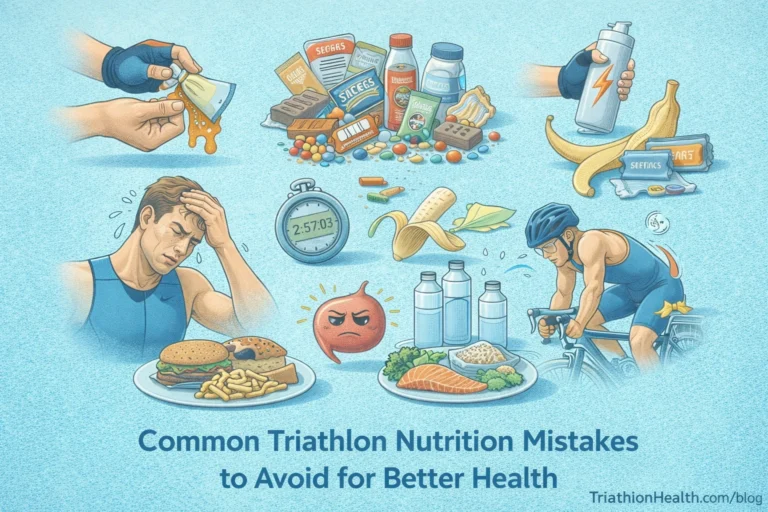
Nutrition shapes how you train, recover, and race. As a triathlon journalist who has worked with coaches and pro athletes, I have seen the same errors again and again. This article explains the most common triathlon nutrition mistakes and gives clear, practical fixes to improve health and performance.
Why nutrition matters for triathletes
Good nutrition keeps your muscles working and your mind sharp. For triathletes, energy needs are higher and recovery demands are greater than for many other athletes. The right food supports training load, reduces injury risk, and helps you hit target paces on race day.
Nutrition also influences how your body adapts to training. If you skip key nutrients or mis-time your meals, adaptations slow down and fatigue hangs on longer. That can mean missed workouts and slower race times.
Health is part of performance. Persistent poor nutrition can lower immune function and increase inflammation. That harms long-term progress as much as any single bad race or missed session.
This article focuses on common, correctable mistakes. Each section explains the error, why it matters, and step by step fixes you can use right away.
Common triathlon nutrition mistakes
Before we go into detail, here is a short list of the most common errors I see from new and experienced triathletes. I will expand on each one and show how to correct it.
The list highlights repeated patterns that cause fuel problems, gut distress, and slow recovery.
- Skipping carbs before long workouts and races
- Relying on sports drinks alone without solid food practice
- Under-fueling during long sessions and races
- Over-relying on supplements instead of food
- Poor hydration timing and electrolyte balance
- Ignoring gut training and tolerance work
- Inconsistent daily meal timing
- Not practicing race nutrition in training
Each of these mistakes is easy to fix with deliberate practice and a plan. Below I break each one down and offer clear actions you can take.
Mistake 1: Skipping carbs before long workouts or races
Many triathletes think that skipping carbs will make them leaner or force the body to burn fat. That idea can backfire. If you start a long session or race with low glycogen you will hit limits in speed and power. That often leads to early fatigue and higher perceived effort.
Carbs are the body’s fastest fuel for high-intensity efforts. During hard swims, bike surges, or race pace runs, your muscles need quick sugar. If that sugar is not available, pace drops and technique suffers.
To fix this, add a simple carbohydrate meal 2 to 3 hours before long training or racing. Choose easy to digest foods you know work for you. A bagel with peanut butter, oatmeal with banana, or a bowl of rice with a small amount of protein are practical choices.
For sessions that start earlier than two hours after waking, use a small snack 30 to 60 minutes beforehand. Options include a banana, a sports bar, or white bread with honey. Practice timing in training so you know how your stomach reacts.
Mistake 2: Relying on sports drinks without practicing solid food
Sports drinks are useful for quick carbs and electrolytes, but they do not replace solid food entirely. Some athletes assume that drinking while racing covers all needs. That belief can cause mid-race energy dips when gut absorption slows or when the drink mix is not right for you.
Solid foods provide varied carbohydrate types, plus small amounts of protein and fat that can help later in long events. The body also tolerates different textures at different stages of a race. You need to practice how your gut handles both liquids and solids.
Start by testing small amounts of real food during long training rides and runs. Try energy gels with water, soft chews, a small sandwich, or rice cakes. Note how your stomach feels, how quickly you regain energy, and whether you get stomach upset.
When you find combinations that work, build them into your triathlon meal plan and race practice. This reduces the chance of surprises on race day and makes your fueling more reliable under stress.
Lead-in to food list
The following items are examples of solid foods and quick choices useful during long training and races. Try them in training before using them in a key event.
- Energy gels with water
- Soft chews or gummies
- White bread with jam or honey
- Rice cakes or plain rice in small packets
- Small banana or peeled mandarins
Mistake 3: Under-fueling during long sessions and races
Under-fueling is common among athletes who fear weight gain or want to practice hard sessions fasted. But prolonged under-fueling reduces power output and increases risk of bonking. The brain and muscles both need steady carbohydrate in long efforts.
Signals of under-fueling include lightheadedness, sudden loss of pace, and inability to maintain technique. If you have to stop or slow more than planned, you probably need more calories during that session.
For longer sessions and races, aim for 30 to 90 grams of carbohydrate per hour. The exact amount depends on event length and intensity. Use a mix of sources, like gels, chews, and diluted sports drinks, to hit the target while easing digestion.
Practice your hourly fueling plan on long training rides and runs. Adjust amounts and timing until you can hold target pace without gut distress. Consistent practice reduces anxiety on race day.
Mistake 4: Over-relying on supplements instead of whole foods
Supplements have a role for some athletes. But relying on pills, powders, or exotic products instead of balanced meals can leave nutrient gaps. Whole foods bring broad nutrients and tend to be cheaper and more reliable.
Many triathletes try to fix fatigue with caffeine, B vitamins, or proprietary mixes. Those can help briefly, but they do not replace a steady meal plan that supports training loads. Also, supplements are not regulated the same way as food, so quality can vary.
Prioritize a base of real foods for daily nutrition and use supplements where they fill a specific need. For example, a consistent iron or vitamin D strategy should be based on test results and professional advice, not trial and error.
Practical steps include planning varied meals, tracking key nutrients if you have concerns, and consulting a sports dietitian before starting new supplements. That keeps your approach safe and effective.
Mistake 5: Poor hydration timing and electrolyte balance
Hydration is more than drinking lots of water. Timing and electrolyte balance matter. Drinking too much at once can cause stomach sloshing. Drinking too little, or missing key electrolytes, raises the risk of cramps and hyponatremia in long events.
Start sessions well hydrated and sip regularly rather than gulping occasionally. For sessions longer than 60 minutes, include electrolytes in your drinks. Sodium helps retain fluid and maintain muscle function.
Heat, humidity, and individual sweat rates change needs. Test hydration plans in similar conditions to race day. Weighing yourself before and after long workouts helps estimate fluid loss per hour so you can match intake accordingly.
A simple guideline is to begin with 400 to 800 ml per hour in moderate conditions, adjusted for your sweat rate, and include 300 to 700 mg of sodium per liter for longer efforts. Practice this in training first.
Mistake 6: Ignoring gut training and tolerance work
Gut training means practicing what and how you will eat during racing while you train. The digestive system adapts with regular exposure. If you never consume calories on the bike during training, your gut will likely protest on race day.
Start gut training during build weeks, adding small amounts of carbs during sessions of increasing length. Track how your stomach feels and whether you notice bloating, nausea, or changes in stool. Slow adjustments are safer than sudden large increases.
Work on rates of carbohydrate that match your event needs. For example, practice 60 grams per hour during long rides and build tolerance before the race. Use a variety of textures so your gut learns to handle gels, chews, and real food.
Gut training reduces the risk of race day surprises and improves your ability to absorb carbs at race pace. It also makes food choices more flexible when aid stations change or conditions are different.
Mistake 7: Inconsistent daily meal timing
Training adaptation requires consistent fuel. Irregular meal timing causes energy swings and poor recovery. Even if total daily calories are adequate, timing matters for workouts and sleep quality.
Set a routine for key meals around workouts. Have a carbohydrate and protein-containing meal within two hours after long or hard sessions to support recovery. Snacks between meals help maintain steady blood sugar and training quality.
For athletes who train twice a day, plan meals and snacks to support both sessions without feeling heavy. Small, frequent feeds often work well, such as yogurt and fruit, a small sandwich, or a recovery shake timed right after a session.
Consistency also helps body weight control and immune health. When your system expects fuel at set times, it runs more predictably and supports daily training stress better.
Mistake 8: Not practicing race nutrition in training
Practicing your exact race nutrition plan in training dramatically reduces risk on the day. That includes timing, portion sizes, flavors, and packaging. If you plan to use gels and specific bottles, test them under similar intensity.
Simulation sessions are the best test. Do a long ride at race intensity while using the bottles, gels, and snacks you plan to use. Practice eating and drinking as you would on race day, including transitions if possible.
Note what works and what does not. If a gel flavor becomes cloying at hour two, choose a different option. If your bottle position on the bike causes you to miss sips, adjust bottle placement or practice grabbing at speed.
When race nutrition is practiced often, you reduce anxiety and make the plan automatic. That allows you to focus on pacing and race strategy rather than fussy nutrition choices.
How to build a triathlon meal plan

Creating a triathlon meal plan starts with daily calories, macronutrient balance, and timing that supports training. A plan should be practical, repeatable, and adjustable for harder weeks or taper periods.
Begin by estimating calories based on training load, body size, and goals. Aim for a mix of carbohydrates, protein, and healthy fats. For many endurance athletes, carbs will be the largest portion on heavy training days, with 45 to 65 percent of total calories coming from carbohydrates.
Protein is critical for recovery and repair. Aim for 1.2 to 2.0 grams per kilogram of body weight daily depending on training intensity. Spread protein evenly across meals to help muscle repair.
Here is a short example structure to use when you build your plan. Tailor portions to your calorie needs and practice this plan in training so you know it works for you.
- Breakfast: carbohydrate focus with moderate protein, for example oatmeal with fruit and a scoop of yogurt
- Pre-workout snack: small carb source 30 to 60 minutes before early sessions, such as a banana or toast with jam
- During long sessions: 30 to 90 grams of carbs per hour using a mix of sports drink, gels, and real food
- Post-workout recovery: carbohydrate plus 20 to 30 grams of protein within two hours of hard sessions
- Dinner: balanced plate with vegetables, lean protein, carbs, and a small amount of healthy fats
Make sure to include a variety of whole foods in your weekly plan. That reduces boredom and ensures a wider nutrient base. Think about iron-rich foods for athletes prone to low iron, and include vitamin D sources if you have limited sun exposure.
Also, write down your plan as a simple schedule that includes timing and portion sizes. This makes it easier to follow during busy weeks and travel, and it helps coaches or dietitians help you adjust when needed.
Race day nutrition checklist
On race morning, follow a tested routine to avoid surprises. Pack extras of anything you plan to eat in case aid stations run out or flavors change. Familiarity reduces stress and improves focus on pacing.
Use this checklist as a guide. Practice every item in training at least once under similar timing and effort to the race. That will show what needs to change before the big day.
- Pre-race meal timing and contents set and tested
- Race nutrition packed and double-checked, including extra gels and a backup bottle
- Hydration plan based on temperature and estimated sweat rate
- Electrolyte strategy for long events or hot conditions
- Recovery food available immediately after finish
On race morning, eat within your usual window, warm up as trained, and begin your planned fueling early in the race rather than waiting until you feel low. That early start prevents large energy swings and keeps pace steady.
Common nutrition myths and the facts
There are many myths about endurance nutrition. Separating facts from fiction helps you avoid wasted time and poor choices. Here I list common myths and the practical truth behind them.
Some myths persist because they sound plausible or are repeated by high-profile athletes. But what works for one person does not always work for another, so testing and evidence matter.
Below are a few persistent myths followed by simple facts you can use to shape your plan. Read them and then try a small test in training before fully changing your approach.
- Myth: Training fasted burns more fat and makes you faster. Fact: Fasted sessions have a place, but they reduce high-intensity capacity and should be used sparingly and with purpose.
- Myth: Carbs make you fat. Fact: Carbs fuel hard training and are burned during long workouts. Excess calories cause weight gain, not carbs alone.
- Myth: Supplements can replace training meals. Fact: Supplements help in narrow situations, but whole foods provide a broader nutrient base and are more reliable.
- Myth: Caffeine is always helpful during races. Fact: Caffeine can improve focus and power, but timing and dose must be practiced to avoid jitters and stomach upset.
Use these facts to guide choices. If something sounds convenient but untested, try it in a lower-stakes event or training session first to confirm it works for you.
Practical tips to avoid triathlon nutrition mistakes
I recommend a few practical habits that remove most common errors. These are small changes that add up to consistent energy, better recovery, and fewer race-day surprises.
First, keep a simple log for a few weeks. Track what you eat, drink, and how training feels. That will show patterns and quick fixes. Most athletes find 1 or 2 easy adjustments that make training much better.
Second, plan and pack. Make a short list for training and racing that includes all nutrition items. Pack extras. Visual reminders reduce the chance of forgetting a gel or bottle on race morning.
Third, work with a coach or sports dietitian for specific needs. They can help with ratios, iron status, and energy targets for serious athletes. Small tests guided by an expert are efficient and safe.
- Practice race nutrition in at least three long training sessions before a key race
- Weigh yourself before and after long workouts to estimate sweat rate
- Use mixed carbohydrate sources to raise your per-hour intake without causing gut issues
- Include a recovery meal with protein and carbs within two hours of hard sessions
Follow these habits and you will dodge most common triathlon nutrition mistakes. They are easy to implement and deliver consistent benefits.
Key Takeaways
Nutrition shapes training quality, recovery, and race performance. Avoiding common triathlon nutrition mistakes is one of the fastest ways to improve health and results. Small, repeatable actions matter more than one-off strategies.
Practice your race fuel, prioritize carbs for long and hard efforts, hydrate with electrolytes, and build a simple triathlon meal plan that fits your life. Test supplements and avoid relying on them as a primary strategy.
Keep things simple, measure what matters, and adjust slowly. Use whole foods, practice timing, and record what works in training. Over time this builds a reliable routine that supports both daily training and peak race performances.
If you focus on these steps and avoid the mistakes listed, you will see better energy, fewer stomach problems, and stronger race days. Good nutrition is steady work, not a quick fix, and your efforts will pay off.