
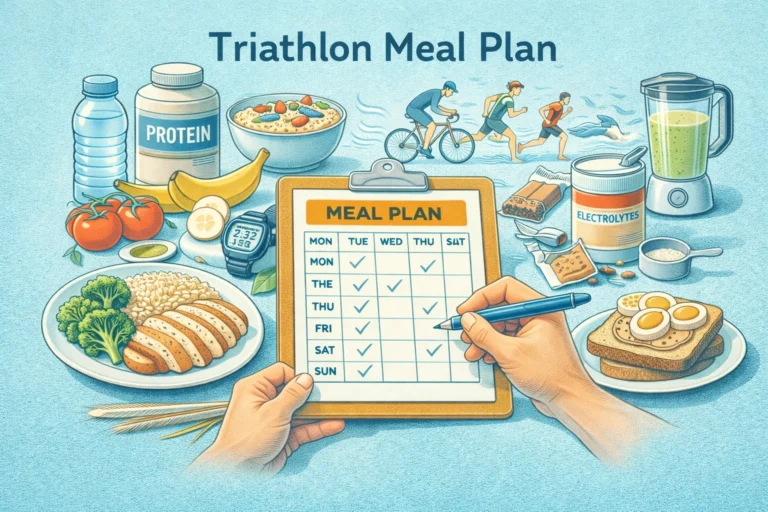
Preparing food for hard triathlon training can feel like a small race on its own. A clear triathlon meal plan makes daily work easier, keeps energy steady, and helps you perform better on race day. This article explains how to create a meal plan that matches your training, your body, and your goals.
Why a triathlon meal plan matters
A focused triathlon meal plan gives structure to eating. It helps you balance calories, carbohydrates, protein, and fat so you can recover faster and train harder. Many athletes underestimate how much food quality affects speed, recovery, and mood. A plan removes guesswork and prevents last-minute poor choices.
Consistency is a big advantage. When you eat similar meals around workouts, your body learns to run efficiently on that fuel mix. That matters for long sessions and race day. The plan also makes grocery shopping and meal prep faster, which reduces stress during heavy training weeks.
A meal plan lets you test foods and timing before key events. That testing lowers the chance of stomach trouble or energy gaps during a race. You can track what works, adjust portions, and lock in a routine that fits your digestive system and training schedule.
Finally, a plan keeps recovery on track. Proper fueling after hard sessions speeds muscle repair and restores glycogen. That means you are fresher for the next day. Over weeks, this consistency can raise your training load and race results.
Basic nutrition for triathletes
Understanding the basics of sports nutrition is the foundation of any triathlon meal plan. The three macronutrients you must consider are carbohydrates, protein, and fat. Each plays a different role: carbs fuel workouts, protein repairs tissues, and fats support long-term energy and hormone balance.
Carbohydrates should make up the largest portion of energy for most triathletes, especially those training many hours each week. Choose whole grains, fruits, starchy vegetables, and dairy. These sources provide steady energy and help top up glycogen stores before long sessions.
Protein is essential for recovery and muscle repair. Aim for regular protein at each meal and snack to maintain a steady supply of amino acids. Lean meats, fish, dairy, eggs, legumes, and some plant-based proteins work well. The exact amount depends on body weight and training load.
Healthy fats support longer rides and runs and help with vitamin absorption. Include sources like nuts, seeds, olive oil, and fatty fish. Keep portion control in mind, since fats are calorie dense. Balance is the key: carbs for performance, protein for repair, fat for endurance and health.
How to calculate calories and macros

Start by estimating your daily calorie needs. Use a simple calorie calculator or follow a basic formula: multiply your body weight in kilograms by a factor that matches your training load. Low training might use 30 to 35 kcal per kg, moderate 35 to 45 kcal per kg, and very high volume 45+ kcal per kg. This gives a starting point for daily energy needs.
Once you have calories, split them into macronutrients. A common starting split for triathletes is 55 to 65 percent carbs, 15 to 20 percent protein, and 20 to 30 percent fat. This supports endurance training and recovery. Adjust these ranges based on how you feel, your race distance, and body composition goals.
Track intake for a couple of weeks to see how your energy and body weight respond. Small changes work best. If you lose too much weight and feel drained, add 200 to 300 kcal per day. If you gain unwanted weight, reduce by a similar amount. The goal is stable energy and steady training progression.
Use portion reminders rather than strict rules long term. For example, a plate approach works well: half vegetables or fruit, one quarter lean protein, and one quarter starchy carbs for main meals. Snacks should pair carbs and protein after workouts to speed recovery.
Meal timing and fueling around workouts
Meal timing affects training quality. Eating the right foods at the right times gives you better sessions and faster recovery. Before easy sessions, a small snack may be enough. Before long or intense workouts, aim to eat a full meal with carbs and some protein two to three hours before the start.
For a session under an hour, a light snack 30 to 60 minutes before can help. Choose something easy to digest like a banana, toast with honey, or a small bowl of oatmeal. For sessions over 90 minutes, include a mix of slow and fast carbs, and try to practice the fueling you will use in races.
During long workouts, plan to take in carbs regularly. A common guideline is 30 to 60 grams of carbs per hour for efforts up to around two and a half hours. For longer or very intense sessions, aim for 60 to 90 grams per hour using multiple carbohydrate sources. Practice these amounts so your gut adapts.
After workouts, prioritize recovery. Eat a snack with carbohydrates and protein within 30 to 60 minutes, then have a balanced meal within two hours. A recovery snack could be yogurt with fruit, chocolate milk, or a sandwich. This approach restores glycogen and starts muscle repair promptly.
Sample meal plans by training phase
Training phases require different fueling strategies. The main phases are base training, build, and taper. Each phase has its own energy and recovery needs, so your triathlon meal plan should change with the training load.
Below are sample meal structures for each phase. Use these as templates and adapt portions to your calorie and macro targets. The examples include whole foods that many athletes find reliable.
Base phase focuses on volume and steady-state sessions. Carbohydrate needs are moderate but steady. Emphasize quality breakfasts and recovery meals to support consistent training. Protein should be steady across the day to aid repair.
Build phase increases intensity. You may need more carbohydrates to fuel quality intervals and higher intensity brick sessions. Add extra snacks or slightly larger portions around the hardest workouts. Monitor body weight and energy to keep adjustments small and practical.
Taper phase reduces volume and sharpens intensity. Reduce total calories slightly to prevent unwanted weight gain while keeping carbohydrates high the day before a race. Use familiar meals and avoid new foods. This is the time to practice race day nutrition and avoid surprises.
Example daily menus
Below are practical meal examples you can adapt to your personal needs. These menus follow the plate approach. Adjust portion sizes to match your calorie targets and training load.
Breakfast choices should provide steady energy. Good options include oatmeal with nuts and fruit, whole grain toast with eggs, or a smoothie with yogurt, banana, and oats. These meals combine carbs and protein for a strong start to the day.
Lunch should be balanced and portable for busy training days. Try a rice bowl with lean protein and vegetables, a grain salad with beans and olive oil, or a sandwich with chicken and salad. Add fruit for extra carbs if you expect a hard afternoon session.
Dinner should focus on recovery after key sessions. Think roasted fish with sweet potato and leafy greens, pasta with lean meat and vegetables, or a bean stew with whole grain bread. Finish with a light dessert or yogurt if you need more carbs or calories.
Race day nutrition plan
Race day requires practice and precision. Your triathlon meal plan for race day must be tested in training. Avoid new foods, and pick items that sit well in your stomach. The timing of your pre-race meal matters more than brand new ingredients.
Eat your pre-race meal two to three hours before the start, focusing on familiar carbs and a little protein. Keep fats low to moderate to reduce stomach load. A good example is a bowl of oatmeal with banana and a small amount of nut butter, or toast with jam and a yogurt on the side.
For long races, plan in-race fueling as part of the meal plan. Practice what you will take on the bike and run during long training sessions. Use a combination of gels, sports drinks, and solid snacks that have worked in training. Balance sweetness and electrolytes to keep focus and power.
After the race, begin recovery with a carb-protein snack within 30 minutes, then a full meal within two hours. This quick recovery feeding helps reduce muscle soreness and replenish glycogen stores so you bounce back faster.
Hydration and electrolytes
Hydration is part of any effective triathlon meal plan. Fluid balance affects power, concentration, and heat tolerance. Start each session well hydrated and replace fluid losses during and after workouts. Use sweat rate testing or a simple weight check to estimate losses.
Electrolytes matter when sessions are long or hot. Sodium is the main electrolyte lost in sweat and can be included with sports drinks, salty snacks, or electrolyte tablets. Drink to thirst if sessions are short, but use targeted plans for long or intense efforts.
Plan fluid intake by session length. For most training, sipping sports drink or water during workouts will be enough. For sessions longer than 60 to 90 minutes, include carbohydrate and electrolyte sources to maintain energy and balance.
Recovery hydration is as important as on-bike fueling. Replace fluid losses after training by weighing yourself before and after a session. Aim to drink 1.2 liters of fluid for every kilogram of weight lost to fully rehydrate over a few hours.
Supplements that can help
Some supplements can support your triathlon meal plan, but they do not replace whole foods. Use supplements to fill gaps, not as the main source of calories or nutrients. Common choices include vitamin D, iron for athletes prone to low levels, and omega-3 for inflammation control.
Caffeine is a legal and effective performance aid when used properly. Small doses before a race or a hard session can increase alertness and power. Test caffeine amounts in training to find your sweet spot and avoid stomach issues.
Protein powders can be a convenient way to meet protein targets after workouts. They provide a quick and digestible source of amino acids when you cannot prepare a full meal. Use them as a tool for busy schedules or during travel.
Electrolyte tablets or sports drink mixes are useful for long sessions and hot conditions. Choose products with balanced sodium and carbohydrate content and practice them in training. Track how your stomach responds and adjust as needed.
Common mistakes and how to fix them
Many athletes make avoidable nutrition mistakes. One common error is not eating enough overall calories during heavy training. This can lead to fatigue, illness, and stalled performance gains. Track intake and energy levels to prevent under-fueling.
Another mistake is inconsistent timing around sessions. Skipping a recovery meal or snack slows repair and reduces the quality of the next training day. Plan and prepare quick recovery options like yogurt, smoothies, or sandwiches so you can refuel promptly.
Relying on sugar-only products for long sessions without balancing electrolytes can cause stomach problems or energy crashes. Mix carbohydrate sources and include electrolyte solutions when doing long hours of training, especially in heat.
Finally, changing foods right before a race often causes issues. The fix is simple: test everything in training. Build a triathlon meal plan that you have used for weeks before the race, so your gut and energy systems are ready on race morning.
How to build your weekly triathlon meal plan
Building a weekly plan starts with mapping training sessions. Write down the type, duration, and intensity of each workout. Use this map to place bigger meals and higher-carb days around the heaviest sessions. This approach matches fuel to demand across the week.
Next, plan three main meals and two to three snacks each day. Keep breakfasts consistent and recovery snacks ready after hard workouts. Prepare a grocery list from your weekly menu so you buy exactly what you need and avoid last-minute poor choices.
Meal prep saves time. Cook grains, roast vegetables, and portion proteins into containers at the start of the week. This makes it easier to grab balanced meals when training and life get busy. Pre-prepared meals also keep portion sizes steady and make tracking simpler.
Finally, leave space for flexibility. Training can change week to week. Keep a few quick, nutritious backup meals and snacks on hand. This makes it easier to adjust the plan while still meeting your fueling and recovery needs.
Tracking progress and making adjustments
Track how you feel, your training quality, and body weight to judge if the meal plan works. Keep a simple log for a few weeks and note energy during workouts, sleep quality, and recovery. Small trends will tell you when to increase or cut calories.
If you feel drained, add a snack or increase portion sizes around the hardest workouts. If you gain unwanted weight, reduce portions slightly or move a higher-carb meal to align with a heavy training day. Change one variable at a time to see real effects.
Work with a coach or dietitian if you need tailored advice. Professionals can help refine calorie needs, diagnose deficiencies, and manage special diet choices. They also assist with race day plans for long or multi-day events.
Keep testing and refining. The best triathlon meal plan is the one you can follow consistently and that keeps your training strong. Small, steady improvements add up to better performance over months of training.
Let’s Recap
Creating a triathlon meal plan starts with clear goals, basic nutrition knowledge, and practical testing. Focus on balanced meals, timing around workouts, and consistent recovery feeding. These habits support training and race performance.
Adjust calories and macronutrients to match training load, and practice race day fueling during long sessions. Use whole foods as your base and add supplements only when they fill specific needs. Plan ahead to reduce stress and keep food quality high.
Finally, monitor how the plan affects your energy and training. Make small adjustments when needed and keep the plan simple enough to follow for months. With a tested meal plan, you will feel more confident and more prepared for both training and race day.
Use these steps to build your own plan, test it, and refine it. Strong nutrition gives you a performance edge and makes hard training more productive. Start small, plan well, and watch the gains follow.
Note: Throughout the article, practical terms like triathlon foods, meal timing, and race fueling are intended as starting points. Adapt them to your needs, and consult a professional for specific medical or dietary concerns.