
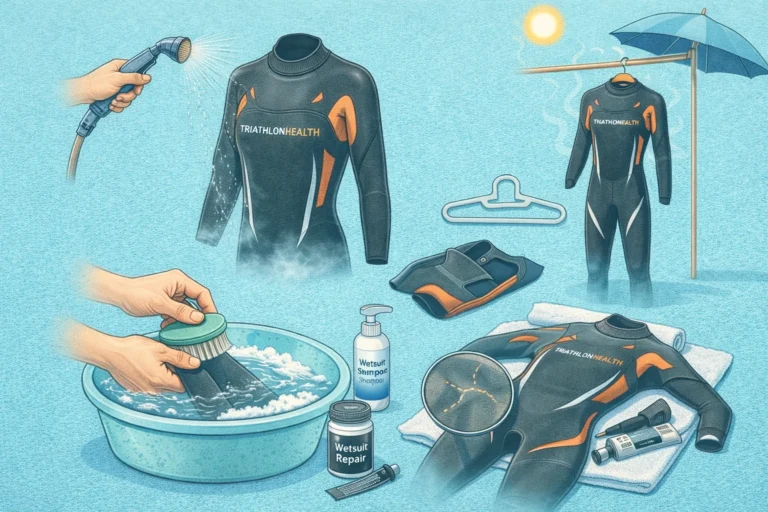
Want your wetsuit to last and perform at its best? This guide shows clear steps on how to care for wetsuit after every swim, race, and season. Read on for honest, expert tips a triathlete can use right away.
Why care for wetsuit matters
Triathlon wetsuits are an investment. They give you buoyancy, speed and comfort in open water. If you treat your suit well, it will stay flexible and fit right for many races.
Water, salt, chlorine and sweat all wear on neoprene. If you do not clean and store the suit correctly, seams can stretch and panels can thin. Small damage can turn into tears if you ignore it.
Caring for your suit keeps insulation and fit consistent. That matters for race day and for training. A well kept suit also stays easier to put on and take off.
Follow the simple steps in this guide to keep your suit ready. I write as a triathlon journalist and coach who tests gear. These are practical tips you can use after every swim.
Rinse and clean after every use
Rinsing your suit right away is the single best habit. It removes salt, chlorine and sand. Quick action reduces long term wear.
Start by turning the suit inside out. Rinse the inside first. Then rinse the outside. Use cool or lukewarm water. Do not use hot water because it can weaken glue and stretch neoprene.
Next, gently squeeze excess water from the suit. Do not wring it. Wringing can damage seams and panels. Treat zippers and seals with care when handling.
Here is a short checklist to follow each time you rinse your suit.
Lead-in: Follow these steps after rinsing to finish the basic clean.
- Turn suit inside out before rinsing to clean the liner and seams.
- Use cool or lukewarm fresh water only; avoid hot water.
- Gently run water through cuffs and neck to remove grit and salt.
- Squeeze out water without twisting; hang to drip dry in shade.
Deep cleaning and odor control
Occasionally your suit needs more than a rinse. That is true after heavy training or long race weekends. A mild, wetsuit-safe cleaner removes body oil and sunscreen that build up over time.
Choose cleaners made for neoprene or use a small amount of gentle soap. Avoid strong detergents, bleach, and fabric softeners. These break down the neoprene glue and the fabric coating.
Apply cleaner in a tub of cool water and soak the suit for a short time. Lightly rub problem spots with your hands. Do not scrub hard. Rinse thoroughly afterwards to remove any soap residue.
Below are common products and tools you can use for deep cleaning and to control odor.
Lead-in: Select one of these options based on how often you train and how your suit smells.
- Wetsuit shampoo designed for neoprene; follow dilution on the label.
- Mild baby shampoo as a gentle, low-risk alternative.
- Baking soda paste for spot odor treatment; rinse well after use.
- Specialty odor removers made for athletic gear; test on a small spot first.
Drying and storage best practices
Drying correctly preserves shape and stretch. Always dry your suit away from direct sun. UV rays damage neoprene and fade colors. Shade and good airflow are best.
Hang the suit on a wide hanger that supports the shoulders. Thin wire hangers create pressure points and can deform panels. You can also fold it loosely over a padded bar if space is tight.
Store the suit either flat or on a wide hanger in a cool, dry place. Avoid warm attics and damp basements. Keep it away from petrol, sunscreens, and chemicals that degrade neoprene.
Here is a simple drying and storage checklist to keep your suit healthy between uses.
Lead-in: Use these steps after rinsing and deep cleaning to finish care and ready the suit for storage.
- Drip dry inside out first, then turn right side out to finish drying the exterior.
- Hang on a wide or padded hanger that supports shoulder seams.
- Store flat or on hanger in a cool, dry place away from sunlight and heat sources.
- Use a breathable suit bag for travel, but avoid long term storage in a sealed bag.
Maintenance and repairs
Small repairs extend the life of the suit. Fix small tears and loose seams early. That prevents water entry and larger damage. A simple repair kit does the job for most issues.
Use neoprene cement to glue small cuts. For seam damage, a flexible adhesive or patch works well. If the zipper fails, many shops can replace it. For serious damage, contact a specialist repair service.
Keep a basic repair kit with these items. They help you handle common problems at home or at a race venue.
Lead-in: Pack these repair items in your transition bag or at home so you can act fast if you notice damage.
- Small tube of neoprene cement for edge and small cut repairs.
- Neoprene repair patches for quick temporary fixes.
- Flexible seam cement or seam tape for loose stitching areas.
- Soft cloth and isopropyl alcohol to clean surfaces before gluing.
When to retire or replace your suit
Even a well kept suit wears out. Loss of buoyancy, thinning panels, and a poor fit signal it is time to replace the suit. Regular checks help you notice these signs early.
Check the neoprene for soft spots and pinholes. Also look at the interior lining. If it peels or the seams come apart, repairs may not fully restore performance. Consider replacement before an important race.
Age, frequency of use, and care affect life span. A racing suit used year-round will wear faster than a suit used only for season races. Keep a log of use if you want to track expected retirement.
Below is a quick guide to signs that mean you should replace or upgrade your wetsuit.
Lead-in: Use these signs to judge whether a suit still gives you the edge or if it is time to move on.
- Noticeable loss of buoyancy or uneven float from side to side.
- Thinned or soft neoprene panels that crease easily.
- Zipper or seam failures that affect fit and water entry.
- Persistent odor or lining breakdown that cleaning cannot fix.
Choosing and fitting: pick gear that lasts

Choosing the right suit helps with care and longevity. Fit, material quality and design all matter. A suit that fits well will stretch less and suffer lower wear.
Try different styles and brands. Pay attention to arm and shoulder fit. Triathlon wetsuits often have flexible shoulders and buoyant legs to help swim position. Test how the suit feels to put on and take off.
Understand the trade offs between different swim options. For example, wetsuit vs swim skin matters in some races. A swim skin is faster in warm water but offers no buoyancy or insulation. Choose what fits your race conditions and rules.
Here are items to review when you evaluate a suit and build your gear list.
Lead-in: Use these criteria to choose triathlon gear that balances speed, comfort and ease of care.
- Fit across shoulders and chest; no large gaps at the neck or cuffs.
- Materials labeled for high stretch and quality neoprene for panels.
- Design details like taped seams and durable knee panels for longer life.
- Compare triathlon wetsuits options and include swim gear essentials in your checklist.
Common mistakes and how to avoid them
Many triathletes make the same care mistakes. Avoiding these saves time and keeps the suit in shape. Small habits are the difference between a short lived suit and one that serves you for seasons.
One common error is using harsh detergents. Another is drying in direct sun. Both speed up neoprene breakdown. Also do not store a wet suit in a sealed bag for long periods; mold and odor can form quickly.
Do not leave sunscreen and body oils on the suit between uses. They degrade the material. Also avoid folding the suit tightly for storage. Repeated pressure at the same point can create flat spots and thin panels.
Here are simple actions to stop common mistakes and protect your suit.
Lead-in: Follow these tips to correct habits that harm your suit and to keep it race ready.
- Do not use bleach, strong detergents or fabric softener on neoprene.
- Never dry your suit in direct sun or on a hot surface.
- Do not fold the suit tightly; use wide hangers or store flat.
- Always rinse after use and deep clean only when needed.
Key Takeaways
Care for wetsuit with simple routines and your suit will last longer. Rinse after each use, deep clean sparingly, and dry in the shade. These habits keep neoprene flexible and seams strong.
Repair small damage quickly with a basic kit. Replace a suit when buoyancy or fit declines. Choosing the right fit and material up front lowers the chance of early wear.
Keep a short gear checklist that includes swim gear essentials and notes about fit. Think about wetsuit vs swim skin for different races and plan your kit accordingly.
Follow these steps with enthusiasm and consistency. Proper care saves money, improves performance, and keeps you focused on training and racing.