
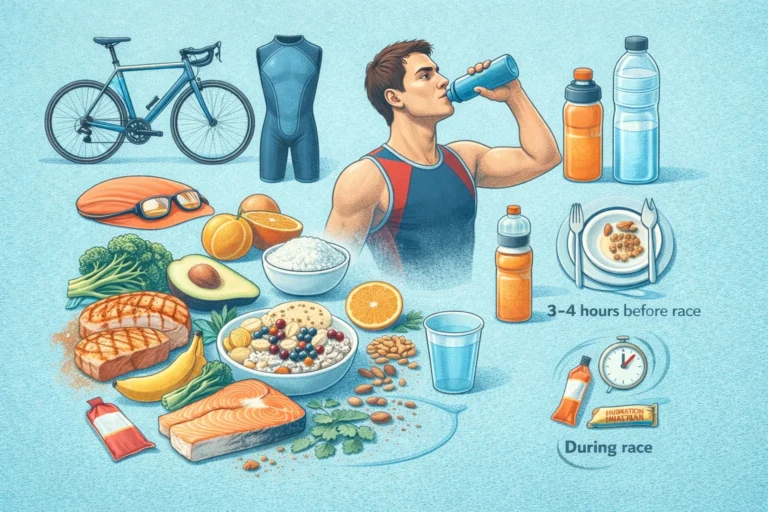
Want to know how to fuel body triathlons so you race stronger and recover faster? This guide gives clear, practical steps for everyday training and race day. Read on to get simple plans you can use now.
Fuel body triathlons: Why it matters
Fueling well changes how you feel on the bike and run. When you feed your body right, you keep energy high and avoid hitting sudden fatigue. Simple meals and smart timing can make a big difference on race day.
Good fueling helps your muscles work and your mind stay sharp. It also speeds recovery after long workouts. If you want steady training and fewer missed sessions, nutrition is a main tool.
As an expert triathlon journalist, I have watched many athletes gain time through better fueling. Small changes in what you eat and when you eat can give consistent gains. This is especially true for beginners and age-group racers.
Macronutrients for fuel body triathlons
Macronutrients are carbs, protein, and fat. Each plays a different role for training and racing. A clear plan helps you pick the right mix for hard sessions and recovery.
Carbohydrates are the primary fuel during higher intensity work. They top up glycogen in muscles and the liver. Eat enough carbs before and during long sessions so you keep power and speed.
Protein repairs muscle and supports immune function. It is key after sessions for rebuilding. Fat provides steady energy for long, low intensity training and helps absorb some vitamins.
Below is a simple breakdown of nutrient targets for most triathletes. Use these as starting points and adjust by feel and results.
Here are target ranges:
- Carbohydrates: 5 to 8 g per kg body weight per day for moderate training. For heavy training, 7 to 10 g/kg.
- Protein: 1.2 to 1.8 g/kg per day depending on training load and goals.
- Fat: 20 to 35 percent of daily calories, focusing on healthy sources.
Practical triathlon nutrition means matching intake to session type. Short intervals need more carbs before and during. Long steady rides need a mix of carbs and fat. Nights after hard days focus on protein and carbs for repair.
Hydration and electrolytes
Hydration affects pacing, power, and how you feel. Even a small sweat loss can lower performance. Drink consistently during the day and have a plan for training and racing.
Sweat rates vary by person and weather. Weigh yourself before and after a session to estimate fluid loss. This gives a simple number to guide drinking. Aim to replace about 80 percent of losses in the hours after a hard session.
Electrolytes are salts lost in sweat. Sodium is the main one to replace during long or hot sessions. Low sodium can cause cramps and poor feeling. Add electrolyte tablets or sports drinks when sessions exceed 60 to 90 minutes.
Use these signs to know if hydration needs attention:
- Thirst and dry mouth despite drinking.
- Darker urine and fewer bathroom visits.
- Feeling lightheaded or heavy legs late in a session.
- Noticeable cramping that is new or more severe than usual.
Practice hydration plans in training so you know what works. On race day, stick to what you practiced. Small adjustments are okay for heat or longer events.
Pre-race and pre-ride fueling for fuel body triathlons
What you eat before a race sets the tone for performance. The goal is to top up energy and feel light. Timing and food choice both matter.
For sessions or races 2 to 4 hours after a meal, aim for a higher carbohydrate meal with moderate protein and low fat. That gives steady energy and reduces stomach upset. Avoid new foods on race day.
If you have less than 2 hours, choose a small, carbohydrate-rich snack and drink fluid. Examples include a banana, a bagel, or a small bowl of oatmeal. Keep portions familiar from training.
Here are sample pre-race options:
- 3 to 4 hours before: bowl of oatmeal with banana and small yogurt.
- 2 hours before: toast with honey and a small fruit.
- 30 to 60 minutes before: a gel or sports drink for quick carbs.
Practice these options during training to learn which gives you best energy and comfort. The right pre-race fueling will help you avoid early fatigue and keep pace steady.
During-race fueling strategies
Fueling during a triathlon supports steady power and avoids sudden drops in energy. Your needs change by distance. Sprint athletes need less on-course fuel than iron-distance athletes.
The basic rule is to consume carbs regularly. For events under 90 minutes, many athletes do fine with a small amount of carbs before and maybe during. For longer events, plan regular intake every 20 to 45 minutes.
Practice intake rates in training so your stomach adapts. Use real race conditions at least once before the big day. That helps you know which brands, textures, and timing work best.
Common in-race fuel items include gels, chews, sports drinks, and bars. Below are options and when to use them:
- Gels: quick carbs, easy to swallow during high effort. Use with water.
- Sports drinks: hydrate and fuel at the same time, useful on the bike.
- Chews and gummies: good for variety and slightly slower release than gels.
- Bars and real food: best in longer races or when stomach handles solids well.
On the bike, you can use more fuel because movement is smoother. On the run, prefer lighter items and practice taking them while moving. Aim for 30 to 90 grams of carbs per hour depending on duration and tolerance.
Training nutrition and daily plans
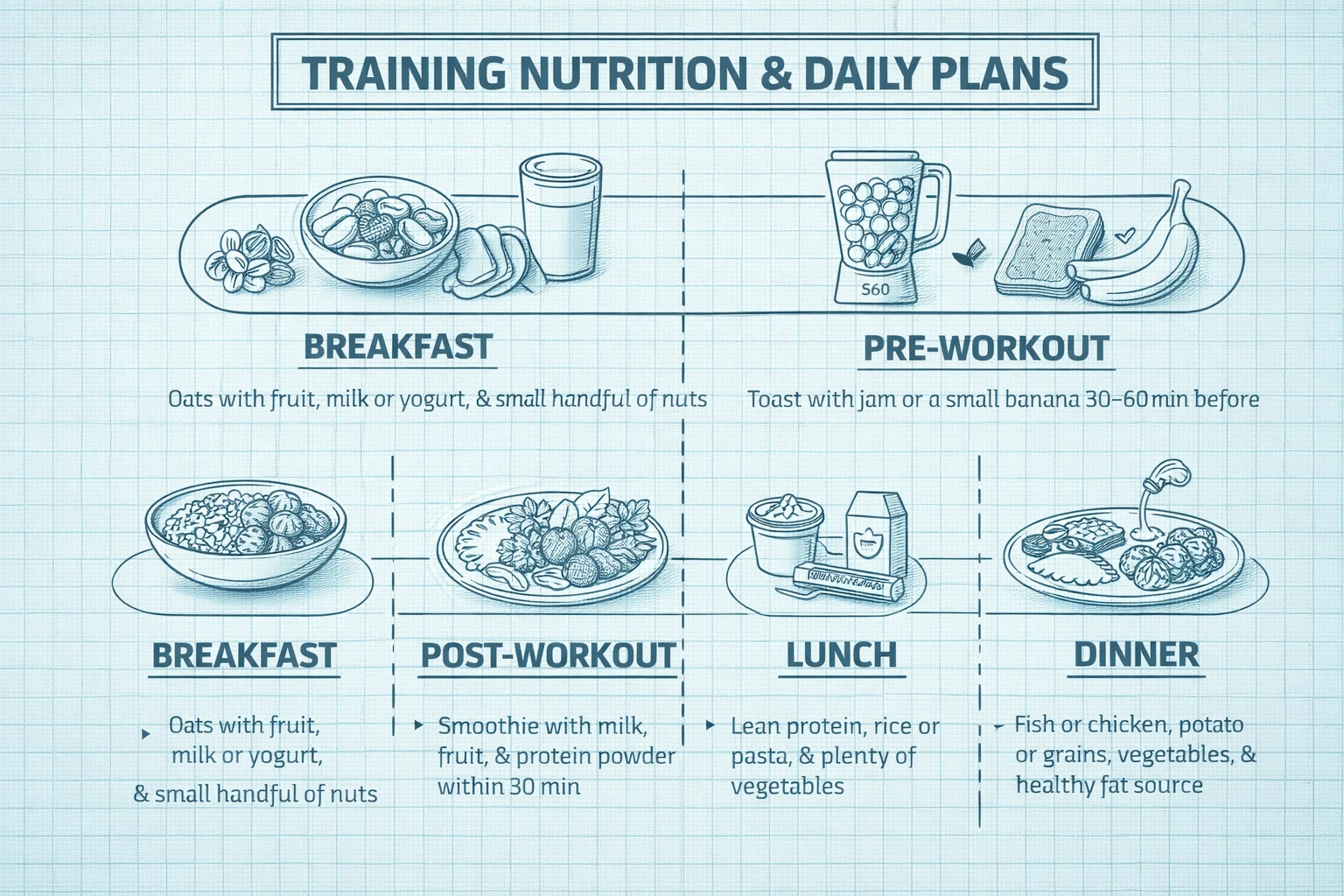
Daily nutrition fuels training and builds fitness over weeks and months. Balance matters. Calories must match training load and recovery needs. Keep meals consistent and simple.
Use a routine that covers base needs. Eat a mix of carbs, protein, and fats at each main meal. Add a snack before harder sessions and a recovery snack after. This keeps training quality high.
Below is a sample day for a moderate training load. Use portion sizes based on body size and hunger cues. Adjust carbs up on heavy days and down on easy days.
- Breakfast: oats with fruit, milk or yogurt, and a small handful of nuts.
- Pre-workout snack: toast with jam or a small banana 30 to 60 minutes before.
- Post-workout: a smoothie with milk, fruit, and protein powder within 30 minutes.
- Lunch: lean protein, rice or pasta, and plenty of vegetables.
- Snack: yogurt, fruit, or a bar mid-afternoon.
- Dinner: fish or chicken, potato or grains, and vegetables. Include a healthy fat source.
Tracking is helpful at first. Log meals and training sessions for 2 to 4 weeks. You will see patterns and know what to change. Start simple and refine slowly.
Recovery nutrition
Recovery is where fitness grows. What you eat after hard sessions affects how quickly you bounce back. Aim to refuel within 30 to 60 minutes of finishing key workouts.
A recovery meal combines carbs and protein. Carbs restore glycogen. Protein repairs muscle. Fluids and electrolytes top up losses. A mix of all three speeds recovery.
Options that work well are easy to digest and familiar. Avoid heavy or very greasy meals right after intervals. Choose items that settle well and replenish energy fast.
Good recovery choices include:
- A smoothie with milk, banana, and protein powder for fast carbs and protein.
- Yogurt with fruit and granola for a balanced and quick option.
- Rice or pasta with lean protein and vegetables for a full meal later.
Make recovery part of your routine. The faster you refuel and rest, the better your next session will feel. Small habits add up to steady improvement.
Practical tips and common mistakes
Many athletes struggle with stomach issues and wrong timing. The right plan is one you can repeat. Practice in training and tune as you learn.
Common mistakes include skipping breakfast, overloading on fat before a race, and trying new products on race day. These lead to poor performance and avoidable discomfort.
Keep a short checklist to follow on race day. That reduces stress and ensures consistent fueling. The list should cover your last meal, snacks, hydration plan, and backup items.
Here are quick practical tips:
- Test all race foods and drinks in training at least twice.
- Pack backups in case your first choice is not available on course.
- Adjust intake for heat. Increase fluids and electrolytes when it is hot.
- Prioritize sleep and daily recovery to get the most from your fueling.
Keep learning and adjusting. Use simple measures like body weight changes, training quality, and how you feel to guide tweaks. Small, smart changes lead to steady gains.
Let’s Recap
Fuel body triathlons by matching carbs, protein, and fat to your training. Plan meals and timing so you have steady energy during sessions and fast recovery after. Practice your plan in training and keep it simple.
Hydration and electrolytes matter, especially in heat or long events. Use weight checks and simple signs to guide fluid needs. Stick to tested products on race day and bring backups.
Daily nutrition and recovery build fitness. Use consistent meals, a post-workout refuel, and gradual adjustments to match training load. This is how you make gains you can count on.
Remember to include core triathlon nutrition habits in every week. That gives you more strong days and fewer surprises on race day. Keep practicing, stay curious, and enjoy getting faster.