
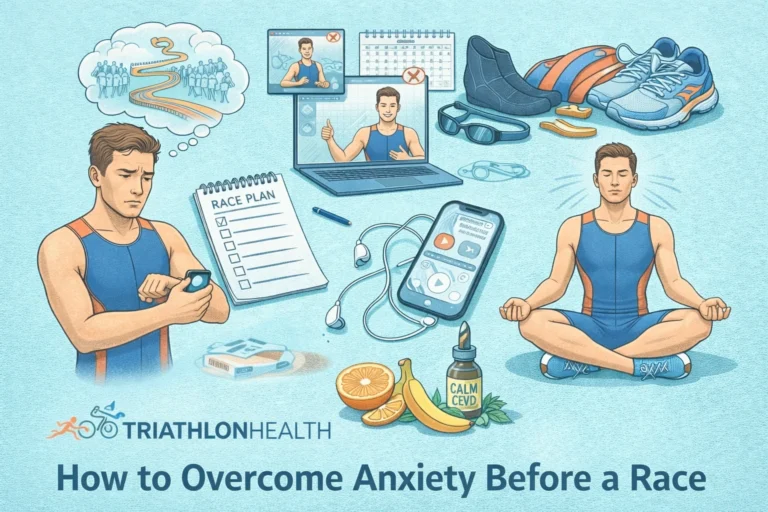
Race nerves are normal and they can feel loud. As a triathlon journalist and coach, I am excited to share clear, practical steps to help you overcome race anxiety. This article explains why nerves happen and gives proven habits and mental skills you can use before and during the race.
Why pre-race anxiety happens
Feeling anxious before a race is a physical and mental response. Your body prepares for challenge by raising heart rate and releasing adrenaline. This can make you feel jittery, short of breath, or keyed up. Those sensations are uncomfortable, but they are not harmful.
Mind plays a big role too. Worrying about results, about other athletes, or about gear problems can make anxiety worse. The mind often predicts worst-case scenarios. That creates a feedback loop where worry fuels physical signs and physical signs feed more worry.
Experience and expectations change how intense anxiety feels. A new triathlete may panic over unknowns. A veteran may worry about marginal gains. Both types of worry are focused on outcomes rather than process. Shifting focus from result to process reduces the power of nerves.
Recognizing that anxiety is a performance signal helps you use it. You can learn to turn nervous energy into focus. The goal is not to remove nerves entirely. The goal is to manage them and keep them from disrupting your warm-up, race plan, or enjoyment.
Physical and logistical preparation
Good preparation reduces avoidable stress. When your equipment, nutrition, and transitions are sorted, your brain has fewer things to worry about. Preparation is a practical way to lower baseline anxiety in the days and hours before a race.
Preparation also builds confidence. Confidence is one of the strongest buffers against pre-race fear. When you know you practiced the swim, rode the distance, and rehearsed transitions, you feel safer and calmer. Confidence grows from repeatable habits, not from wishful thinking.
Use a checklist to cover key items and tasks so small details do not steal mental energy. A checklist frees your attention for the race itself. It also gives you a sense of control, which reduces anxious thoughts.
Below is a short pre-race checklist you can adapt. Read it before the race and again during race week to keep your plan intact.
- Confirm race packet, bib, timing chip, and helmet fit the night before.
- Lay out clothes and shoes in order of use for transitions.
- Prepare nutrition for pre-race, during race, and post-race. Test it in training.
- Charge devices and pack spares like a pump, tube, or sunscreen.
- Review course map, key turns, and expected conditions.
Mental techniques to overcome race anxiety
Mental techniques change how you respond to anxiety. They shift attention away from worry and toward actions you control. These techniques are practical and easy to use in the days before the race and on race morning.
Start with simple routines that repeat each race. Routines cue your brain to move from preparation mode into performance mode. The steady repetition of a routine makes it hard for panic to take over. Routines can be physical, like a warm-up, or mental, like a set of short cues you repeat.
Below are mental approaches that many triathletes use. I often advise athletes to try several and keep the ones that fit their style. The phrase mental strategies triathlon captures this toolbox approach. Pick techniques you can use under pressure.
Common techniques include controlled breathing, short self-talk phrases, and setting process goals. Use them consistently to build familiarity. Rehearse them in training so they come naturally on race day.
- Process goals: Focus on the next action, not the final result. Think ‘smooth cadence’ or ‘relaxed shoulders’ rather than finishing time.
- Self-talk scripts: Prepare short, positive phrases like ‘steady and strong’ or ‘one stroke at a time’. Repeat them during high pressure moments.
- Mindfulness checks: Name what you feel without judgment. Say ‘tight shoulders’ or ‘fast breath’ and then return to action.
- Pre-race imagery: Visualize a successful start, a calm transition, or a strong finish in concrete detail.
- Anchor cues: Use a small action like tapping your watch or a palm squeeze to reset focus during the race.
Breathing, visualization and race cues
Breathing ties the body and mind together. A deliberate breath pattern can lower heart rate and quiet the mind. Simple breathing exercises are powerful because they are portable and easy to use in a crowded start area.
Visualization prepares your brain for expected moments. When you imagine a smooth start or a clean transition, the movements feel familiar on race day. This reduces surprise and the panic that comes with it. Visualize details like the rhythm of your stroke or the feel of clipping in on the bike.
Use short cues to regain control during a chaotic moment. A cue is a short word or phrase that brings attention back to performance. Cues work fast because they require little thought. Pair cues with breathing to create an instant reset.
Here are simple practices to include in your warm-up and on race morning. Practice them in training so they become second nature.
- Box breathing: Inhale 4 counts, hold 4, exhale 4, hold 4. Repeat three to five times to steady nerves.
- Soft-count breathing: Breathe in for 3, out for 4. Longer exhale signals relaxation.
- Micro-visualization: Spend 30 seconds picturing the first 500 meters of your race with calm, steady effort.
- Single-word cue: Choose one word like ‘steady’ or ‘flow’ and repeat it as needed.
- Progressive body scan: Tense then relax shoulders, neck, and jaw to release physical tension.
Race-day routine and pacing

A clear race-day routine reduces decision fatigue and keeps your nerves manageable. Build a timeline that includes arrival time, transition setup, warm-up, and final mental checks. Keep it flexible for small delays, but stick to the main sequence.
Warm-up is more than physical. It primes your mind to perform. A short easy run, a few strides, and light bike pedaling are good. Add a short visualization and a couple of breathing cycles to tie the routine together.
Pacing is another anchor. Start too fast and anxiety can spike when your body protests. Train to follow a pacing plan so you know what effort feels like. Use a heart rate or perceived effort plan that you have practiced.
Below is a simple race-day sequence to adapt for your triathlon distance. Run through it mentally the night before so you know each step.
- Arrival and check-in 90 to 60 minutes before start depending on event size.
- Transition setup and gear check 45 to 30 minutes before start.
- Warm-up: 10 to 20 minutes of easy movement plus mobility and light effort.
- Mental check: 3 to 5 minutes of breathing, visualization, and repeating your cue.
- Final routine: Move to start area with a calm walk and steady breath.
Nutrition, sleep and recovery habits
Sleep and nutrition shape how strongly you feel race nerves. Poor sleep raises baseline stress hormones. Lack of fuel makes anxiety feel worse. Prioritize sleep and nutrition during the week leading up to the race.
Plan simple, repeatable meals you have tested in training. Race week is not the time for experimentation. Familiar foods reduce the risk of stomach issues that add to anxiety. Small, regular meals can stabilize energy and mood.
Recovery in the days before the race matters. Reduce training load, but keep short sessions that maintain rhythm. Gentle swims or rides help keep your body engaged while letting fatigue fade. This lowers nervous tension and increases readiness.
Here are practical points to guide your race-week routine and to help calm nerves with physical care.
- Prioritize sleep: Aim for consistent bed and wake times, and create a calm pre-sleep routine.
- Fuel reliably: Eat familiar carbs and protein, and avoid heavy new foods before the race.
- Hydrate steadily: Drink small amounts often rather than large volumes at once.
- Taper smart: Keep intensity but reduce volume so you feel rested and ready.
- Active recovery: Use short, easy workouts to keep movement calm and purposeful.
When to get outside help
Sometimes anxiety is more than pre-race nerves. If worry affects daily life or persists long after races, professional help can add tools and perspective. A sport psychologist or therapist can teach systematic techniques that accelerate progress.
Working with a coach also helps. A coach provides structure, feedback, and objective assessment. Coaches can fine-tune training, pacing, and mental plans to match your personality and goals. They help you practice under race-like stress in training sessions.
There are clear signs you might need more support. If panic attacks occur, if sleep is severely disrupted, or if race anxiety leads to avoidance of events, reach out for help. Getting support early prevents long-term patterns of fear.
Use outside help as an addition to your own toolkit. Combining coaching, mental skills training, and consistent practice gives the best chance to overcome race anxiety and to race with joy and focus.
Key Takeaways
Race anxiety is a normal response, and it can be managed with clear habits. Physical preparation, checklists, and routines reduce avoidable stress. When you feel ready, nerves become fuel rather than a roadblock.
Mental techniques like breathing, short cues, and visualization are practical and easy to use. Practice them in training so they are automatic on race day. Use process goals to keep your attention on the next controllable step.
Healthy sleep, tested nutrition, and a sensible taper reduce physical triggers for anxiety. If worry becomes persistent or disruptive, seek help from a coach or mental health professional. Combining expert guidance with daily practice yields steady improvement.
Be enthusiastic about the small wins. Every race you approach with a plan is a step toward being calm and confident. Use these strategies to overcome race anxiety and to show up ready to perform your best.