
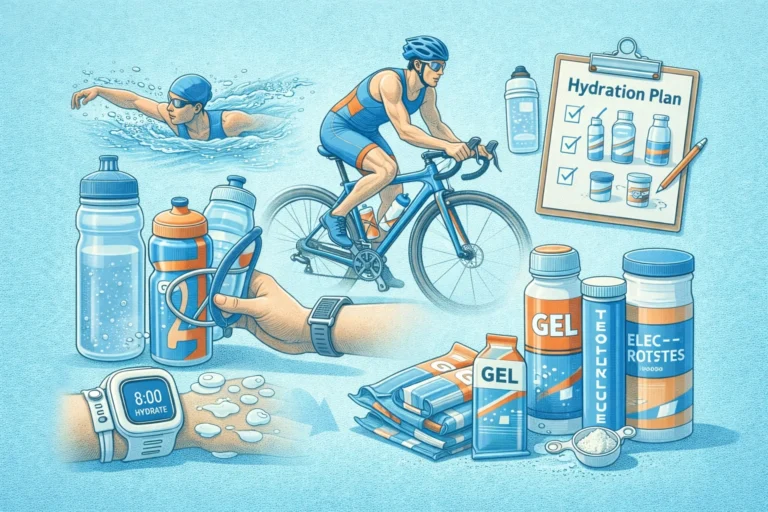
Hydration strategies triathlon matter more than many athletes expect. I write as a triathlon journalist with years of experience watching fast improvements when athletes nail their fluids. This article explains clear, practical steps to help you plan fluids for training and race day. You will get simple rules, sample plans, and hands-on tips you can use the next time you train or race.
The goal here is to teach how to balance water, electrolytes, and calories across swim, bike, and run. I keep the language simple and the advice practical. Read on to learn hydration strategies triathlon that help you perform better and recover faster.
Hydration basics
Hydration is not just drinking water. It is managing fluid volume, sodium, and energy so your muscles and brain work together. When you focus on hydration strategies triathlon you reduce cramps, keep power steady, and think clearly under stress. That combination improves lap times and reduces risk of illness or injury.
Fluids leave the body through sweat and urine. Sweat rate varies a lot between athletes. Knowing your sweat rate helps you choose how much to drink before and during a race. Test your sweat in training so you do not guess on race day.
Electrolytes are minerals like sodium and potassium. They help nerves fire and muscles contract. Plain water can dilute sodium if you drink a lot. That is why many athletes mix electrolytes into their plan. Good hydration strategies triathlon always mention electrolytes as a core piece.
Calories matter when races are long. On long rides and runs you need to fuel body triathlons with carbohydrates. When you pair calories with fluids you reduce stomach slosh and maintain steady energy. That is the backbone of smart race fueling.
Before the race
Pre-race hydration sets the stage for success. Start the day before the event by checking urine color and drinking steadily. Aim for light yellow urine. If urine is dark, you need fluids now. Small, steady sips beat large gulps that leave you bloated before the swim.
Two to three hours before the start drink 500 to 750 ml of fluid. Include an electrolyte tablet or sports drink if you sweat a lot. This gives time for the fluid to leave your stomach and for your body to reach good blood volume. It also provides sodium to help hold fluid in the system.
Thirty minutes before the start you can take a small sip or 100 to 200 ml to top up. Do not overdrink. Too much fluid close to the start can force extra bathroom breaks or slow you in the swim. Practice this timing in training to find what works.
Below is a simple checklist you can follow before race morning. Use it as a guide and adapt to your needs based on temperature and race length.
- Check urine color the evening before and morning of the race.
- Drink 500 to 750 ml two to three hours before start with sodium added if you sweat a lot.
- Take a small 100 to 200 ml top-up 30 minutes before start.
- Avoid high-fiber and very salty meals right before the race.
During the race
During the race you must replace fluids and electrolytes while you also consume energy. The right plan depends on race length, pace, and heat. Sprint events may only need small sips, while half Ironman or Ironman events need scheduled fueling on bike and run.
Use bottle cages and aid stations to plan exact volumes. Always practice the same routine in training. Knowing how many bottles you drink per hour removes guesswork. If you train in heat, adjust to drink more because sweat loss will be higher.
Sports drinks with carbohydrates and sodium often work best for steady feeding. They deliver both energy and electrolytes. If your stomach is sensitive, split calories across gels and sips of a mild sports drink to keep stomach comfort high.
Here are practical race-day options to follow. Read the options and pick one that matches race length and your comfort level.
- Sprint and short Olympic: small sips from aid stations. Prioritize comfort and avoid overdrinking.
- Olympic and half distance: 200 to 400 ml every 20 to 30 minutes on the bike. Add a gel every 30 to 45 minutes if needed.
- Long distance: 300 to 600 ml every 15 to 30 minutes and at least 300 to 400 mg sodium per hour through drink mix or salt tablets.
Adjusting for heat and sweat rate
Heat increases sweat loss and electrolyte needs. If you race in hot conditions you must plan for higher fluid and sodium intake. Heat also raises heart rate and perceived effort. Proper hydration helps keep those signs in check so you can maintain pace.
Measure your sweat rate at race pace. Weigh yourself nude before and after a one-hour hard effort. Each kilogram lost equals roughly one liter of sweat. Add back the fluid you drank during the hour to get net loss. Use that number to plan hourly intake.
When heat is extreme choose drinks with higher sodium and possibly use a small salt capsule per hour. Do not start high-salt strategies without prior trial in training. You want your gut to accept the mix on race day to avoid stomach cramps.
Also use cooling strategies along with fluids. Pour water on your neck and head when allowed. That lowers core temperature and can reduce sweat rate slightly. Cooling plus planned fluids is a stronger approach than fluids alone.
After the race
Recovery fluids matter for the next training block and the next race. After you finish, start by drinking 300 to 500 ml of a balanced sports drink. Your body needs both water and sodium to restore blood volume and begin muscle repair.
Continue to drink slowly over the next few hours. Aim to replace 150 percent of fluid lost in training or racing to account for ongoing urine losses. A good target is to weigh yourself after the race and then use the number to guide rehydration. If you lost 1 kg, plan to drink about 1.5 liters over the next several hours.
Food also plays a role in after-race hydration. Meals with some salt help retain water. A snack or meal with carbohydrates and protein within 30 to 60 minutes aids muscle recovery and pairs well with fluids. This is part of triathlon nutrition that supports fast recovery.
Below are practical recovery drink and food options to use after hard sessions or races. Use what you tolerate best and match flavors you like to ensure you drink enough.
- Balanced sports drink plus a sandwich with salty cheese or ham.
- Chocolate milk that provides carbohydrates, protein, and fluid in one package.
- Bland broth or soup with bread if you have low appetite after a race.
Practical hydration plans

Having a written plan eliminates last-minute choices on race morning. Write down volumes and products for each segment. Include what you will put in each bike bottle and what you will take at aid stations on the run. Practice this plan every key workout so it feels automatic on race day.
Plans vary by race distance. Shorter races focus on minimal drinking for stomach comfort. Longer races require steady intake of carbohydrate and sodium. Pick one plan template and adapt it to your sweat rate and personal taste. Consistency matters more than perfection.
Below are three sample templates you can adapt. Read them and pick the one closest to your event. Then trial it in a long training session and make small tweaks until it feels right.
- Sprint to Olympic: Pre-race 500 ml two hours before. Bike: 150 to 250 ml per hour. Run: small sips at aid stations.
- Half Ironman: Pre-race 500 to 750 ml. Bike: 400 to 600 ml per hour with a 60 to 90 g carb per hour target. Run: 200 to 300 ml per hour and gels every 30 to 45 minutes.
- Ironman: Pre-race 500 to 750 ml. Bike: 500 to 800 ml per hour with 60 to 90 g carbs per hour, sodium 500 to 800 mg per hour. Run: 300 to 500 ml per hour with carb targets and salt as tolerated.
When you test plans, log how you feel and any stomach trouble. Adjust the carbohydrate concentration, product brand, and timing based on that log. Small changes add up over long races.
Common mistakes and how to avoid them
Several simple mistakes cost time and comfort on race day. The most common are overdrinking, under-testing products, and ignoring sodium needs. Overdrinking can cause bloating and hyponatremia. Under-testing means you risk stomach trouble when pressure is highest.
Avoid these mistakes by following a step-by-step practice routine. Use the same drink mix for training and racing. Start with a middle-of-the-road concentration and move up if you feel thirsty or hard to finish long sessions. Keep a small notebook on each key long session to track intake and symptoms.
Also avoid using new foods or supplements on race day. Stick to what you have tried in training. That rule applies to both food and salt tablets. When you train with the same products, you make stomach tolerance part of the plan. That reduces surprises under stress.
Nutrition matters around hydration. Work with your triathlon nutrition notes to match calorie targets with fluid targets. If you need 60 grams of carbs per hour, find a drink or gel schedule that delivers that in a way that your gut accepts. Training the gut is part of fitness for long events.
Key Takeaways
Hydration strategies triathlon are a core skill for any athlete. They boost performance, protect health, and speed recovery. Start by testing sweat rate and practicing a consistent plan in training sessions. Small, consistent gains in hydration show up as faster and steadier performance on race day.
Use electrolytes and calories when events last more than an hour. Pair fluids with carbohydrate to fuel body triathlons and maintain power. Adjust plans for heat and your personal sweat rate to avoid both dehydration and overdrinking.
Write down a plan for pre, during, and post-race steps. Practice that plan until it feels automatic. Keep notes on what works and what causes trouble. This process builds confidence and reduces surprises on race day.
Finally, remember that hydration sits alongside other training tasks like nutrition and pacing. Combine hydration with smart triathlon nutrition and follow nutrition tips triathletes use in training. With steady practice, your hydration plan will become a strength you can rely on in every race.