
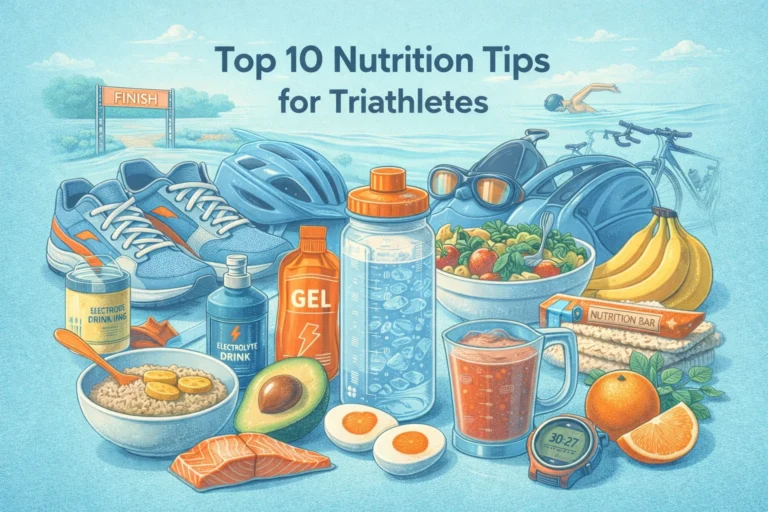
Triathlon nutrition matters. If you want to train well and race strong, you need clear and practical advice you can use every day. This article gives ten focused nutrition tips triathletes can apply now. Read on to learn how to plan meals, hydrate smarter, and fuel body triathlons effectively.
1. Daily balance matters
Good daily meals create the foundation for performance and recovery. Eat a mix of carbohydrates, protein, and healthy fats at each main meal. That mix keeps energy steady through long training days and helps muscles recover after hard sessions.
Carbohydrates are your main fuel for long swims, rides, and runs. Proteins help repair muscle and support recovery. Fats support long-term energy and overall health. Focus on whole foods and steady portions rather than extreme rules.
As an expert in triathlon nutrition I recommend simple shifts you can keep for months. Small, consistent habits beat dramatic short-term fixes. Keep meals repeatable and practical for travels and race weeks.
Before a list of practical daily meal examples, note that variety reduces boredom and improves nutrient intake. Include fruits, vegetables, whole grains, lean proteins, dairy or dairy alternatives, nuts, and seeds.
Try these easy daily meal patterns:
- Breakfast: Oatmeal with banana, milk or yogurt, and a spoon of nut butter.
- Lunch: Whole grain sandwich or bowl, lean protein, salad with olive oil.
- Dinner: Fish or chicken, roasted vegetables, quinoa or sweet potato.
2. Fuel before workouts
Pre-workout fuel sets the tone for the session. Plan snacks 60 to 90 minutes before harder workouts. If the session is short and easy, a small snack or nothing may be fine. For long or intense work, choose something high in carbs and low in fat and fiber to avoid stomach upset.
Keep choices consistent in training so you know what your stomach tolerates. Practice the timing and the portion size. This builds confidence for race day. Simple choices are best when time is short.
Remember that both what you eat and when you eat matter. Hydration is part of pre-workout fuel too. Drink water in the hour before training and include electrolytes for longer sessions.
Here are quick pre-workout ideas that are easy to adapt:
- Banana with a small spoon of peanut butter.
- Toast with honey or jam plus a small yogurt.
- Sports drink 30 minutes before long training sessions.
3. During training: simple fueling
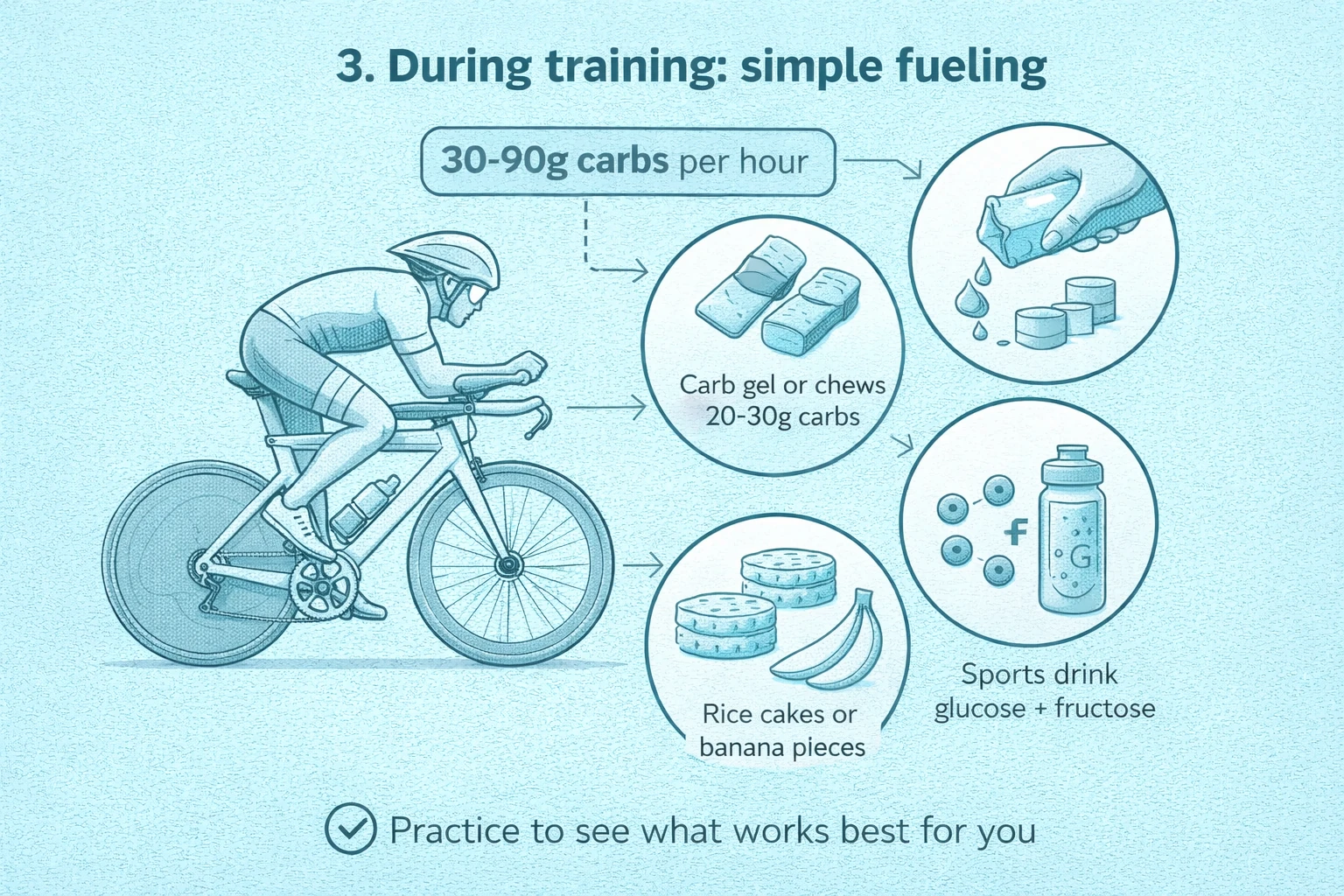
During long sessions your body needs steady carbohydrate. Aim for 30 to 90 grams of carbohydrate per hour depending on duration and intensity. Practice exact amounts in training so you know what works.
Use a mix of chews, gels, bars, or real food when possible. Liquid carbs in sports drinks are useful for easy digestion during hard efforts. Keep flavors consistent to avoid surprise stomach issues on race day.
Hydration ties directly to mid-session fueling. Include electrolytes and check urine color for a quick hydration check. Avoid trying completely new products on race day.
Here are reliable on-bike and on-run fueling items many athletes use:
- Carb gels or chews carrying 20 to 30 g carbs each.
- Sports drink with a mix of glucose and fructose for higher carb needs.
- Rice cakes or small banana pieces for long easy rides where chewing is okay.
4. Recovery fuel after every session
Recovery starts right after you stop training. Aim to eat within 30 to 90 minutes of a hard session. That window helps muscles rebuild and restores glycogen. Include protein and carbs in the recovery meal.
Good recovery supports the next workout and reduces injury risk. Make the recovery snack repeatable. A small shake, yogurt with fruit, or a sandwich can be enough after many sessions.
For long workouts that empty glycogen stores, a larger recovery meal is needed within two hours. Plan your meals around your training schedule to avoid missed recovery windows.
Here are solid recovery combinations to try:
- Chocolate milk: easy, simple mix of carbs and protein.
- Greek yogurt with fruit and granola.
- Chicken wrap with veggies and a piece of fruit.
5. Race week planning
Race week is about lowering risk and keeping energy high. Don’t try new foods or supplements. Increase carbohydrate intake slightly two to three days before a longer race to top up glycogen. Focus on familiar, easy-to-digest meals.
Hydration needs rise with travel and race stress. Drink regularly and track urine color. Rest and sleep are also key parts of race week nutrition. Food supports recovery and mental sharpness.
Practice your race day meal plan in training runs and rides. That prepares your gut and your mind. Keep the plan simple and predictable.
Try this short race week checklist to prepare:
- Two to three days before: boost carbs with pasta, rice, potatoes, and fruit.
- Night before: a familiar, moderate carbohydrate meal with protein.
- Morning of race: small, tested meal 2 to 3 hours before start and a small snack 30 to 60 minutes prior if needed.
6. Hydration and electrolyte strategy
Hydration affects performance and safety. Drink to thirst during easy sessions and set a plan for long or hot workouts. Include sodium and other electrolytes when you sweat a lot or when sessions last longer than an hour.
Weighing before and after sessions gives a clear picture of fluid loss. About 0.5 to 1.0 liter per hour is a common sweat rate for many athletes. Adjust fluids and electrolytes based on that number and the weather.
Sports drinks are useful because they combine fluid and carbohydrate. Keep morning and evening fluids steady to support recovery and sleep quality.
Use these hydration steps to guide planning:
- Start hydrated; drink 300 to 500 ml in the hour before long sessions.
- For sessions over an hour, include a drink with electrolytes and carbs.
- After training, rehydrate with water and sodium if needed to restore balance.
7. Body composition and fueling goals
Many triathletes want to improve body composition for speed but cutting calories too hard hurts training. Aim for steady, moderate changes over months. Keep training quality and recovery as the priority.
Fuel to support both workouts and daily life. If you need to reduce body fat, do so slowly and keep protein high to protect muscle. Strength training helps preserve power while calories are lower.
Track progress with simple measures: training performance, how clothes fit, and how you feel. Avoid crash diets that reduce your ability to perform or recover.
Consider these practical rules when adjusting weight:
- Reduce calories by a small amount, such as 200 to 300 kcal per day, not extreme cuts.
- Keep protein at about 1.6 to 2.0 g per kilogram of body weight per day for athletes.
- Monitor training output and adjust fueling if performance drops.
8. Smart supplements for triathletes
Supplements can help but they are not a substitute for real food. Use supplements that have clear evidence and fit your needs. Vitamin D, iron for athletes at risk, and omega-3s are common choices. Check levels with a doctor before starting.
Quality and safety matter. Use products that have third-party testing where possible. Avoid unproven supplements that make big promises. Keep your main focus on whole foods, then add targeted supplements as needed.
For endurance athletes, caffeine and beetroot juice are proven to help performance when used correctly. Practice doses in training to understand your response.
Here are simple supplement guidelines to follow:
- Test iron and vitamin D levels before starting pills.
- Use caffeine in amounts you have practiced and that do not upset sleep.
- Consider a daily multivitamin only if your diet lacks variety.
9. Train your gut
Race day feeding should feel natural. Train the gut by practicing race foods, gels, and drinks during long sessions. The stomach gets better with regular exposure to the same products and timing.
Start small and build up. For example, if you plan to take two gels per hour, test that twice on a long ride before race day. Note how your stomach feels and adjust volume and spacing.
Hydration and sodium affect gut comfort too. If you have trouble, reduce concentrated drinks and add small real-food options that you tolerate. Every athlete is different.
Follow these steps to build a reliable gut routine:
- Pick a single fueling plan and practice it in training long sessions.
- Record how you felt and tweak timing or product choice slowly.
- By race week, use only what you have practiced successfully.
10. Timing, sleep, and overall routines
Nutrition is only one part of the performance puzzle. Meal timing, sleep, and daily routines work together. Good sleep improves appetite control, recovery, and mental sharpness. Plan meals so they do not disrupt sleep or digestion.
Meal timing also helps training quality. Eat enough on high-load days and keep lighter meals on easy days. That balance keeps energy stable across a training block and reduces stress on the body.
Plan weekly routines that fit your life. Consistency beats perfection. Small habits done daily add up into big gains over months of training.
Use these routine tips to support your training:
- Set regular meal windows that match training sessions.
- Prioritize 7 to 9 hours of sleep and adjust food timing to protect rest.
- Review and refine your plan monthly based on training load and results.
Key Takeaways
Nutrition tips triathletes use daily are simple and practical. Build a solid base with balanced meals, practice race fueling, hydrate well, and prioritize recovery. Train your gut and test your plan many times before race day.
Keep changes small and consistent. Focus on real food first, then add targeted supplements if needed. Track how you feel and how you perform.
With steady practice you will improve how you fuel body triathlons and how you respond on race day. Good triathlon nutrition is a repeatable routine, not a last-minute fix. Stay curious and keep practicing what works for you.