
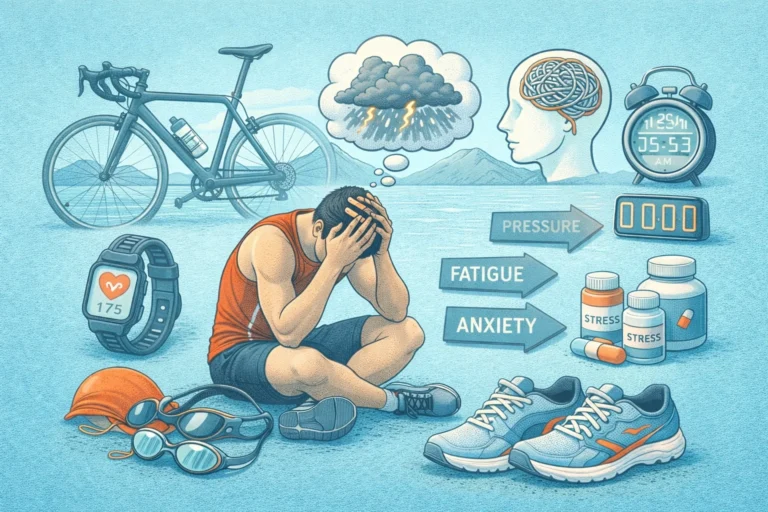
Mental training is as vital as swim, bike, run work. Many athletes spend hours on intervals, bricks, and technique, but they skip the mental side. This article explains triathlonhealth mental challenges and gives clear, practical steps you can use in daily training and on race day. You will learn common problems, how they form, and how to respond with simple plans that actually fit a busy life.
Mental Challenges in Triathlon Training
Triathlon training can be joyful and draining at the same time. Building volume and juggling life, work, and family creates stress. That stress often shows up as anxiety about performance, loss of motivation, or trouble sleeping. The phrase triathlonhealth mental challenges captures the mix of issues athletes face while chasing fitness and race goals.
Many athletes feel guilty when rest replaces a planned session. Others push through tiredness and then hit a low period where training feels meaningless. These swings can harm consistency and lead to injury or burnout. You need a clear plan to spot early warning signs and adjust training before things get worse.
Coaches and teammates talk about form, watts, and pace. They discuss strategy and equipment. They sometimes skip talking about mood swings, worry, or the fear that you are not enough. Bringing those topics into normal training talk makes them easier to manage. This article treats them seriously and offers realistic methods to improve your mental fitness along with physical fitness.
Common Signs and Symptoms of triathlonhealth mental challenges
Recognizing problems early makes solutions easier. Many athletes dismiss small changes in mood or focus. Those small changes can become bigger problems if you ignore them. Here are common signs to watch for, with short examples so you know what they might look like in real life.
Before any list, you should read these quick notes. Signs may be physical, emotional, or behavioral. They often overlap. If several signs appear together, it is worth pausing and reviewing your training and life demands.
- Persistent fatigue that rest does not fix, even after easy days.
- Loss of motivation, where workouts feel pointless or boring.
- Heightened anxiety before races or hard sessions, beyond normal nerves.
- Difficulty concentrating during training or at work, with frequent mind-wandering.
- Sleep problems, such as trouble falling asleep or waking often at night.
- Irritability with family, friends, or training partners.
- Appetite changes and unexplained weight shifts.
These symptoms do not always mean a mental disorder. Many athletes have short periods of low mood after a stressful life event or a tough race block. However, if signs persist for several weeks, or they affect daily life and performance, you should consider adjustments and professional help.
Why triathlonhealth mental challenges happen
There is rarely a single cause for mental strain in triathlon. Training load, sleep quality, nutrition, and life stress all play a role. The interaction between these factors is where problems grow. For example, a tight work deadline can reduce sleep, which lowers recovery, which then makes workouts feel harder. That pattern creates extra worry and negative self-talk.
Comparison culture also adds pressure. Social media shows fast finish times and polished race photos. That image can create unrealistic standards. Athletes may overtrain to match that image, which invites exhaustion. Recognizing the traps that social comparison creates helps you make healthier choices.
Personality traits matter, too. Perfectionism and high drive can push athletes to hit ambitious training targets, even when the body is signaling to back off. That drive helps results, but without balance it can cause burnout. A clear, simple plan helps channel motivation into steady progress, not repeated cycles of overreach and crash.
Training strategies for triathlonhealth mental challenges
Training the mind requires practice and small habits, not a single big change. The next paragraphs outline strategies you can use in daily training to improve resilience and focus. These steps are practical and do not add huge time demands.
First, set process goals along with outcome goals. Process goals focus on actions you control, like completing key sessions, sleeping seven hours, or hitting nutrition targets on long rides. Process goals reduce anxiety about results and keep you focused on consistent behavior. Write down one process goal each week and review progress at the end.
Second, add short mental drills to your routine. These drills take five to ten minutes and include breathing practice, visualization, and attention training. A simple breathing exercise before a hard set can lower heart rate and sharpen focus. Visualization helps you rehearse tricky race situations so they feel familiar on race day. These small practices build what many coaches call mental fitness over time.
Here is a short list of easy drills and how to use them. Read the lead-in and then follow the steps during warmups or after sessions.
- Box breathing: inhale for four counts, hold four, exhale four, hold four. Repeat three to five times.
- Micro-visualization: close your eyes for one minute, imagine a successful lap, and focus on sensory details.
- Focus sets: during an easy interval, note three things in the environment, keep attention and notice when the mind wanders.
- Mantra practice: pick a short phrase that reminds you to stay calm and repeat it during tough moments.
Third, plan weekly recovery blocks. Recovery is part of training, not optional. Schedule easy weeks, and protect them like important training days. That strategy reduces the risk of mental fatigue and keeps motivation steady. Recovery includes sleep, nutrition, short low-intensity movement, and social time away from training talk.
Race-day tactics for triathlonhealth mental challenges
Race day brings a unique set of mental pressures. Even experienced athletes can feel a spike in anxiety. Preparing for those pressures can turn them into an advantage. The key is to create routines that lower uncertainty and to practice those routines in training.
Start with a simple race plan that covers warmup, pacing, nutrition, and contingency responses. A clear plan reduces last-minute worry. Routines also include small cues, like a warmup song, a breathing pattern, or a pre-race checklist. When these cues are familiar, your mind moves into a prepared state rather than a reactive one.
Use short coping strategies during the event. You cannot think through long plans mid-race. Keep phrases, actions, and cues brief. These small tactics help with focus, pain management, and decision making when fatigue sets in. If you practice them in training, they become automatic during the race.
Below is a short list of race-day tactics that are easy to practice and effective. Read the paragraph and then use the list as a quick memory aid on race morning.
- Pre-race checklist: items, warmup, nutrition, and gear checks written and ticked off early.
- Anchor phrases: short, positive phrases to repeat when your mind wanders or you feel doubt.
- Micro-goals: break the race into manageable pieces, for example, 10-minute blocks or each lap.
- Reset cues: a defined action to reset focus after a mistake, like a steady breath or adjusting your form.
Recovery, support, and professional help for triathlonhealth mental challenges
Recovery is not only about muscles. Mental recovery needs rest, social contact, and time away from training talk. Many athletes underestimate the value of non-training hobbies. Doing other activities that bring joy reduces the pressure on sport to provide all meaning and satisfaction.
Support networks matter. Talk with training partners, a coach, or a friend about how you feel. Normalizing mental struggles reduces shame and makes it easier to accept help. A coach can adjust training load and add mental skills work, which often leads to faster performance returns than adding more physical sessions.
Some situations require professional help. If anxiety or low mood lasts for weeks, or if you have trouble functioning at work or with family, see a mental health professional. Therapists with sports experience can offer techniques tailored to athletes. If you are unsure, start with a phone call or a short screening. Asking for help is a sign of strength and a smart strategy to protect your long-term progress.
When seeking help, consider a few practical steps. The next list covers those steps and how to start the conversation with professionals or coaches, so you feel clearer about the path forward.
- Prepare examples of what you are experiencing, like missed sessions or sleep loss.
- Ask about experience with athletes, if possible, to find someone who understands sport demands.
- Start with short sessions and set goals for therapy or coaching work.
- Keep your coach informed about any changes so training can be adjusted safely.
Practical weekly plan to build triathlonhealth mental fitness

Creating a short, repeatable plan helps you make steady gains in mental skills. The plan below is simple, fits into most schedules, and complements normal training. It focuses on small steps that add up. Use it for eight weeks and track changes in mood, sleep, and training quality.
The plan balances physical training, mental drills, and recovery tasks. It is flexible so you can swap session order but keep core practices. Each week includes one longer mental practice and daily short drills. This pattern builds confidence and reduces the pressure to be perfect.
Here is a short weekly outline to try. Read the paragraph and then use the list as a template for your own calendar. Adjust session intensity to match your current training plan and life schedule.
- Monday: Easy recovery session, five-minute breath practice, and a short gratitude note.
- Tuesday: Key workout, pre-session visualization for five minutes, and a post-session reset phrase.
- Wednesday: Cross-training or easy swim, focus set for ten minutes, and early bedtime routine.
- Thursday: Harder session with micro-goal checkpoints, short relaxation practice after session.
- Friday: Rest or active recovery, check-in with training partner, light mental stretching exercise.
- Saturday: Long session with nutrition practice and mid-session anchor phrase use.
- Sunday: Short ride or run, planning for the week, and a longer 10-minute guided visualization.
Track progress with simple notes. Write one sentence after each week about what worked and what did not. Small adjustments allow the plan to fit your life. This practice builds steady improvements in triathlonhealth mental fitness over time.
Common mistakes and how to avoid them
Athletes often make avoidable errors when addressing mental challenges. They wait too long, try too many new things at once, or treat mental work as optional. That approach leads to frustration and no lasting improvement. Instead, focus on a few consistent actions and measure progress.
One common mistake is using only outcome goals like finish time or ranking. These goals can trigger anxiety and reduce enjoyment. Add process goals that you can control. Another error is ignoring sleep and nutrition while adding more mental work. You need a basic recovery foundation for mental strategies to stick.
Finally, do not assume mental training must be long. Short, regular practices beat rare, long sessions. Five minutes a day of focused practice often leads to meaningful change. Keep the work simple, track it, and build slowly.
Resources and phrases to use in training
Practical language and short phrases help during hard moments. They are tools you carry into training and races. Practice them so they become automatic when fatigue makes thinking harder. Below are sample phrases and short practices you can use immediately.
Use a simple list of anchors and mantras during sessions. These phrases should be positive, neutral, and action-focused. Avoid long sentences. Keep them short so they are easy to repeat under stress.
- Short anchors: “steady”, “relax shoulders”, “calm breath”.
- Mantras: “one step at a time”, “strong and steady”, “trust the work”.
- Reset actions: three deep breaths, adjust position, sip water.
- Preparation phrases: “I have trained for this”, “focus on the next 10 minutes”.
Coaches and athletes sometimes use branded mental programs, but many effective practices are free and simple. Try a set of short drills for four weeks and note changes in training focus, sleep, and enjoyment. If you want a guided program later, a coach or therapist can provide structured support that fits your goals.
triathlonhealth mental strategies for long-term success
Long-term mental resilience grows from routine, not sudden changes. The strategies above are building blocks. Combine them with steady physical training and life balance. Over months and years, these habits protect you from burnout and help you enjoy sport more.
One useful habit is a weekly review. Spend ten minutes each week writing what went well and what to change. This review keeps small wins visible and prevents small problems from growing. It is also a time to adjust goals to current life demands.
Another long-term idea is to rotate focus areas. Some months you emphasize sleep, other months you focus on visualization or pacing skills. That rotation prevents boredom and ensures continuous growth. The aim is steady progress, less emotional volatility, and a greater sense of control.
Finally, keep the conversation going. Use language like triathlonhealth mental fitness and triathlonhealth mental strategies when you talk with coaches and peers. Naming the work makes it easier to plan and to get support. The mental side of triathlon can be trained with the same discipline and curiosity you use for your swim sets and interval rides.
Key Takeaways
Mental challenges in triathlon are common and treatable. Start by recognizing signs such as persistent fatigue, loss of motivation, or sleep problems. Early action is the best prevention. Small, daily practices build resilience over time.
Use process goals, short mental drills, and clear routines to handle pressure. Plan recovery and protect it. Practice race-day cues so you respond quickly during stress. Simple habits like a weekly review and short breathing practices can make a big difference.
Seek support when needed. Talk with coaches, friends, or a mental health professional if issues persist. Remember that asking for help is smart, not weak. With steady work, you can improve both your mental and physical performance.
Make a plan, start small, and track what changes. Over weeks, you will notice better focus, more consistent training, and more enjoyment in the sport. Use triathlonhealth mental fitness practices and triathlonhealth mental strategies as part of your regular training toolbox, and treat mental work as an essential part of race preparation and long-term health.