
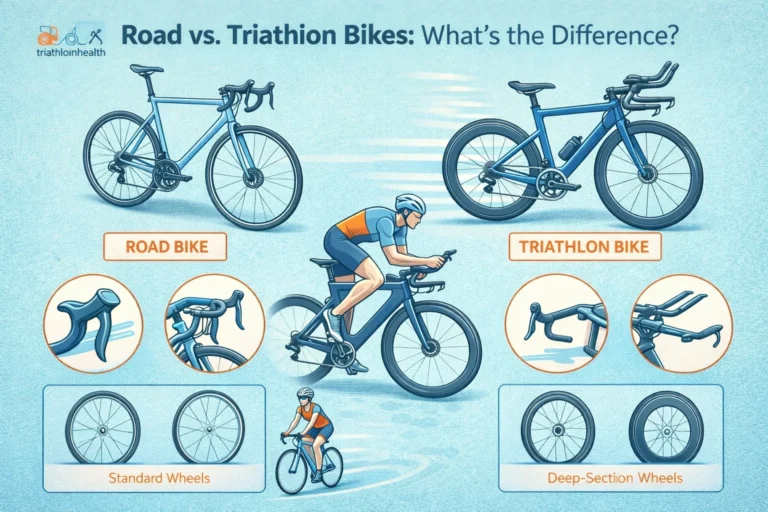
As a triathlon journalist with years of experience on the start line and in the bike fit studio, I get excited about the small choices that change race day. This article compares road vs triathlon bikes so you can make a clear choice. I explain the key differences, who benefits from each bike, and what to look for when shopping.
Whether you are shopping for your first race bike or deciding on an upgrade, this guide will help. I write in plain language and give practical advice. Expect clear points on geometry, aerodynamics, components, comfort, and buying tips.
You will also find a focused buying checklist to match a bike to your race goals. I use real-world experience from races and tests to keep the guidance useful and realistic. Let us get into the core differences between road vs triathlon bikes.
Geometry: road vs triathlon bikes
Frame geometry is where most differences show up. Triathlon bikes push the rider forward and down. Road bikes aim for a balance between speed, comfort, and handling. Geometry affects comfort, power output, and control.
Triathlon frames usually have a longer top tube and a steeper seat tube. This places the rider in a stretched, aerodynamic position. The seat tube angle moves your hips over the cranks. That helps keep power steady while you ride in an aero tuck for long periods.
Road frames use a more relaxed geometry. The top tube is typically shorter and the head tube taller. This gives a more upright ride. That upright position helps with handling, comfort in group rides, and quick position changes during attacks or sprints.
Below are the main geometry points that make the greatest difference between the two bike types. These points show what to expect when you compare frames on a shop floor or in online specs.
Key geometry differences to note before you buy:
- Seat tube angle: Triathlon bikes 76 to 79 degrees vs road bikes around 72 to 74 degrees.
- Top tube length: Triathlon bikes are typically longer to open the hip angle and put weight forward.
- Head tube height: Road bikes have taller head tubes for a more upright fit and easier steering.
- Wheelbase: Triathlon bikes often have a longer wheelbase for stability at speed.
Aerodynamics and riding position
Aerodynamics is a primary focus for triathlon bikes. The frame, bars, and rider position work together to cut drag. In time trial and triathlon racing, even small gains in aerodynamics add up over a long course.
Triathlon bikes let you hold an aero tuck for longer. They use aero bars and a shape that reduces frontal area. The rider sits on a seat position that supports the torso in a lower posture. That reduces wind resistance with less muscular cost over time.
Road bikes are aerodynamic, but their geometry targets versatility. Modern road frames combine aero shaping with comfort. They allow quick shifts in position and more efficient handling in a peloton. That makes them a better option for group racing and varied terrain.
When choosing, think about your race and typical riding. If you spend long stretches in an aero tuck on flat courses, a triathlon bike will give more gains. If you ride in groups, need nimble handling, or race varied road events, a road bike may be a smarter choice.
Components and gearing
Components affect shifting, braking, and weight. Triathlon bikes and road bikes can use similar groupsets, but their setup and priorities differ. Triathlon setups favor steady power and clean aerodynamics. Road setups favor rapid shifting and varied use.
Triathlon bikes often use trimmed gearing and cassette choices tuned for steady tempo efforts. You will see larger chainrings and a range that suits time trial pacing. Brake placement and cable routing on triathlon bikes prioritize aerodynamics.
Road bikes often come with wider gearing ranges. That helps with climbs, accelerations, and racing tactics. Brake and shift ergonomics on road bikes are designed for frequent, quick use. They support changes of position and attacks in a group.
Here is a short equipment checklist to compare components when you test ride bikes. Read each line and match it to your needs before you buy.
- Groupset choice: Look at gear range and shifting style for your courses.
- Brake type: Rim brakes are lighter but disc brakes give better control and stopping power.
- Crank and chainring: Triathlon bikes may use larger chainrings for steady speed.
- Wheelset: Deeper rims help in time trials but can be tricky in crosswind.
Comfort, handling, and long rides
Comfort matters for race pace and training miles. Triathlon bikes can feel harsh if you are not fitted properly. The forward position puts more load on shoulders and lower back until you adapt. Many riders train specifically to hold that position for hours.
Road bikes are tuned for a wider range of comfort. The more upright position eases strain on the neck and shoulders. That is helpful for long training rides, group events, and mixed-terrain routes.
Handling differences are also important. Triathlon bikes are stable in a straight line. They excel at holding a steady line at speed. But they are less agile in tight corners or quick position changes. Road bikes deliver quicker steering and better balance at slow speeds.
Think about how you normally ride. If you plan long solo efforts and time trials, the triathlon geometry and aero position will pay off. If you ride in groups, climb steep hills, or need nimble handling, a road bike may be more forgiving and practical.
Choosing the right bike: road vs triathlon bikes

Choosing between road vs triathlon bikes starts with your race goals. Ask whether you will prioritize pure speed on flat time trial courses, or versatility for group rides and varied events. Your answer will point you to the right category.
Next, consider fit and training. A triathlon bike often requires a dedicated fit session. You must adapt to the aero position and ensure your pedals, saddle, and handlebars suit your body. A road bike fit focuses on power and comfort across many riding situations.
Budget also matters. High-end triathlon bikes offer more aerodynamic gains but cost more. Road bikes can offer better value for mixed use. Think about how many races you enter, your training demands, and whether you will keep one bike for multiple roles.
Below is a practical buyer checklist. Read each item and use it as a decision guide when comparing models. This list helps you match bike features to your needs and budget.
- Primary use: Time trials and triathlons vs group rides and varied courses.
- Fit needs: Do you need a specialized fit for an aero position?
- Handling requirements: Stability at speed or agile cornering?
- Budget and upgrades: How much will you spend on frame, wheels, and fit?
- Maintenance and resale: Consider long-term service and market value.
Maintenance, upgrades, and accessories
Maintenance keeps either bike performing at its best. Triathlon bikes need careful attention to cable routing, aerobars, and wheel choices. A small maintenance routine helps prevent aero losses and keeps shifting crisp.
Upgrades can be an efficient way to improve speed. On a triathlon bike, a fitting session and a better wheelset give big gains. On a road bike, a lighter wheelset or wider tires can improve comfort and climbing performance.
If you are assembling a kit for racing, consider practical items that save time and improve comfort. I often recommend items every triathlete should consider before race day. These items help with aero position, hydration, and quick adjustments during events.
Suggested gear to support your riding and racing includes careful picks for nutrition and tools. These items help you perform on race day and during long training blocks. The next list highlights common items riders add to their setup.
- Aero bars and mounts: Essential for triathlon-specific position and comfort.
- Wheelset upgrade: Deep, stiff wheels improve sustained speed on flats.
- Hydration systems: Integrated systems reduce drag and keep feeding simple.
- Essential tools: Quick link, mini pump, chain tool and tire levers for on-road repairs.
- Common extras: I recommend testing bike accessories triathletes often choose, like bottle mounts and saddle bags for training.
Key Takeaways
Road vs triathlon bikes are built for different needs. Triathlon bikes focus on aerodynamics and position for steady power outputs. Road bikes focus on versatility, comfort, and handling in groups and mixed terrain.
Choose a triathlon bike if you race time trials or long flat triathlons and want the maximum aero benefit. Choose a road bike if you ride with others, climb often, or want a more versatile machine for varied events.
Fit and training matter more than the brand. A properly fitted bike will give you more speed and comfort than a mismatched high-end frame. Invest in a fit session and pick gear that matches your race plan and budget.
As an editor who tests bikes and watches athletes on race day, I find that clear goals and a smart fit produce the best results. Use the checklists in this article to compare models and make a confident purchase decision between road vs triathlon bikes.