
Choosing the right bike can make training easier and race day faster. This article explains how to choose right bike triathlon in plain terms. I write as a triathlon journalist and coach with years of experience helping athletes pick the best bike for their goals. Read on to get clear steps you can use today.
Why bike choice matters
The bike is one of three race legs that decides your time on race day. A good bike fits your body and your plan. It saves energy and helps you hold the right position for a long time.
Pick a bike that matches your race distance and your strengths. The right choice can reduce fatigue in the run. That matters a lot in triathlon. Small gains on the bike often show up as big improvements overall.
Comfort and confidence go hand in hand. A bike that fits well lets you train more and worry less. That leads to better fitness and better race results. My advice will help you make a practical choice you can stick with.
Types of bikes: quick overview

Knowing the main bike types cuts your decision time. There are clear differences between road bikes and triathlon-specific machines. I will describe the main types and what they do best.
Below is a short list of the bike types you will see when shopping. Read the short notes to match each type to common race plans and rider preferences.
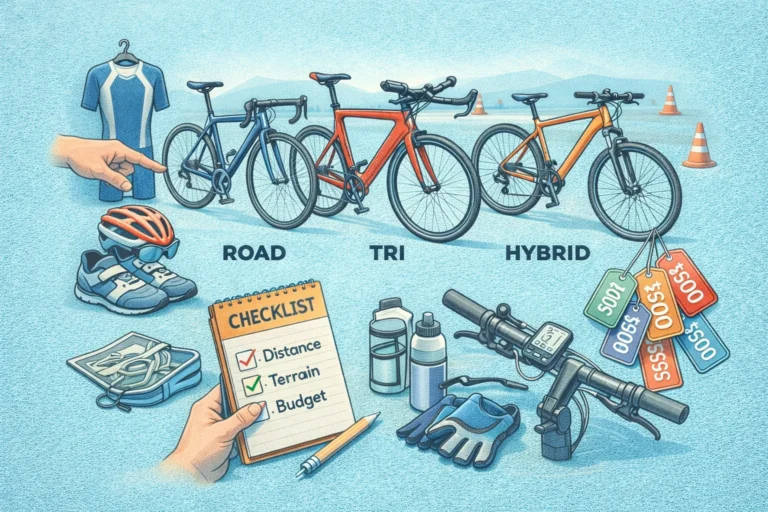
- Road bikes: Lightweight, versatile and easy to ride in groups. Good for shorter triathlons, training and club rides.
- Triathlon bikes: Built for time trial position and aerodynamics. Ideal for time trials and middle to long distance triathlons.
- Gravel or endurance bikes: Stable and more upright. Useful for off-road or very long training rides where comfort is key.
- Disc vs rim brake options: Disc brakes add stopping power and consistency in wet conditions. Rim brakes are lighter and easier to repair in simple shops.
When you talk to a seller or test ride a bike, use these categories to frame your questions. Ask about how the bike performs on flats, climbs and in windy conditions. That will reveal which category fits you best.
Choose right bike triathlon by race distance and goals
Start by matching your bike to the races you plan to do. Sprint and Olympic races put a premium on handling and acceleration. Longer races reward aerodynamics and comfort.
If your main goal is a sprint or an Olympic triathlon, a light road bike with clip-on aero bars may be a smart choice. It gives you speed and better handling in pack riding. You can often upgrade wheels later.
For half iron or full iron distance, triathlon bikes shine because of their aero gains and steady fit. They let you hold a low, efficient position for hours. That saves energy for the run, which matters most in long events.
Also think about your training. If you spend most rides in a group, a road bike makes weekly sessions safer and more social. If you mostly ride solo or train for time trials, a triathlon bike will reward your efforts on flat, long courses.
Fit, frame and components explained
Fit is the top priority. A bike that is faster on paper can be slower on the road if it does not fit. Proper fit reduces pain and improves power output. Always prioritise fit over looks.
Frame material matters for weight and feel. Aluminum frames are common and affordable. Carbon frames can be lighter and more aerodynamic, but they cost more. Choose material that matches your budget and how much you ride.
Components like the groupset affect shifting, durability and cost. Higher-end components shift smoother and weigh less. But entry-level parts are increasingly reliable and work well for most age-groupers.
When you test a bike, check reach and stack. These numbers describe how stretched or upright you will be. A good bike shop or a skilled fitter can adjust bars, stem and saddle to refine the fit. Remember that small changes can make a big difference.
Wheels, tires and aerodynamics
Wheels often give the best performance bang for your buck. A deeper rim is more aero on flats but can be harder to control in crosswind. A shallow rim is more stable and often lighter for climbing.
Tire choice affects rolling resistance and comfort. Wider tires at lower pressure often roll faster on rough roads and keep you more comfortable. For long triathlons, comfort adds up to better performance.
True aerodynamic gains come from the whole system: frame, wheels, position and helmet. A bike with aero tube shapes and a stable, powerful riding position will save time on flat courses. But do not force a position that causes pain. Pain kills speed.
Think about the courses you will race. If you race on windy, hilly terrain, prioritize control and climbing ability. If your events are flat and sheltered, prioritize aerodynamic wheels and positions. Balancing these trade offs will help you choose the right setup.
Budget and buying options
Setting a budget early makes decisions easier. Bikes range widely in price. You do not need top of the line to be competitive in your category. Pick what fits your wallet and your training plan.
Buying new gives warranty and the latest tech. Buying used saves money and can let you access higher quality parts. A lightly used triathlon bike can be a smart value if you check for damage.
Here is a simple checklist to guide buying decisions and priorities. Read each item and weigh how important it is for your goals.
- Fit first: Budget for a proper fit session if you buy new or used.
- Wheels and tires: Invest in better wheels if you ride mostly flat courses.
- Frame quality: Look for a stiff frame that suits your weight and strength.
- Service history: On used bikes, check maintenance records and inspect for damage.
- Upgrade path: Choose a bike that you can upgrade over time as needs change.
Use local bike shops for test rides. They often give short-term demo options. That helps you compare new and used bikes under real conditions. A careful plan protects your budget and keeps progress on track.
Essential bike accessories and maintenance
Accessories matter more than many riders think. Simple gear keeps you safe, saves time and helps you finish strong. I recommend building a short list of must haves before your first race.
Below I list the key items every triathlete should consider. Each item solves a common race or training problem. Start with basics and add more as you gain experience.
- Clip on aero bars: Improve position and speed on long flat sections.
- Hydration systems: Proper hydration setup avoids wasted time and puts fluids within reach.
- Spare tube and CO2 or pump: Mechanical issues happen. Be ready and you will waste less time.
- Proper saddle: Comfort on long rides makes a big difference in your run.
- Multitool and chain quick link: Minor repairs can be handled on course and in training.
Good maintenance keeps the bike reliable. Clean your drive train regularly and check tire pressure before every ride. Regular service at a shop will extend the life of your components and keep shifting crisp.
Make a simple checklist to follow before each long ride and race. That saves stress and reduces on-course mistakes. Bike prep is a skill you can learn in a few sessions.
Testing rides and making the final decision
Never buy a bike sight unseen. Test rides show you how a bike really feels. Try bikes on roads that match your race types. If you train on hilly terrain, test climbs. For flat courses, find a windy open road.
During test rides focus on comfort, handling and how easy it is to hold an aero position. Ride for at least 30 to 60 minutes if possible. Short spins hide fit issues that appear after longer time in the saddle.
Bring your regular shoes and pedals or at least your shoe cleats. Small differences in setup change the ride. If you can, book a professional bike fit after you buy. That ensures your position is dialed for race day.
Once you decide, set a plan to train on the new bike. Allow a few weeks to adapt your body to the position. Gradual increases in ride length help you hold the effort and stay healthy. That adaptation is part of why testing and fit matter so much.
Key Takeaways
Choosing the right bike starts with your race goals and the courses you plan to ride. Use the phrase choose right bike triathlon as a checklist point: match bike type, fit and wheels to your events. Keep it practical and goal focused.
Always prioritise fit and comfort before chasing technology. A well fitted road or triathlon bike will improve your training and reduce injury risk. Invest in a good fit session if your budget allows.
Think about wheels, tires and accessories as upgrades you can add over time. Basic maintenance and simple bike accessories triathletes use every day will keep you fast and reliable on race day.
Test ride multiple bikes, compare how they feel in real conditions and be honest about your training habits. That is the best way to choose right bike triathlon and enjoy faster, more confident races.