
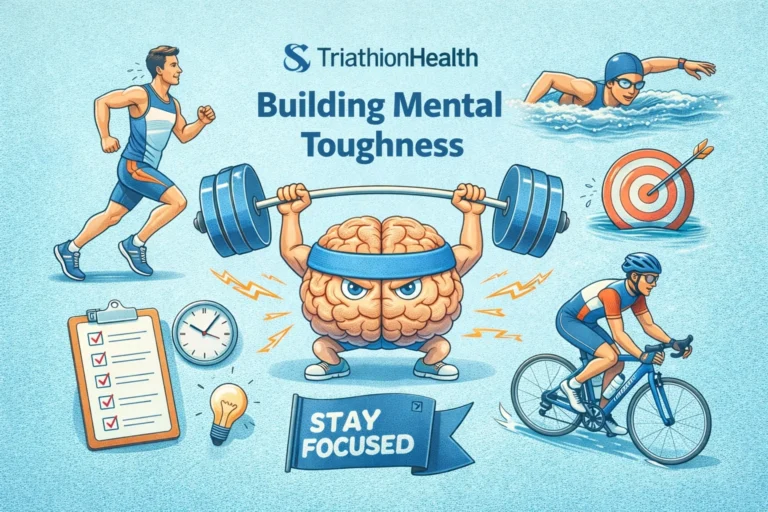
As a triathlon journalist and expert, I get excited about the small mental gains that change race outcomes. This article teaches how to build mental toughness triathlon athletes need. You will find clear steps, workout ideas, and practical race strategies you can use right away.
Why mental toughness triathlon matters
Mental toughness changes how you train and how you race. In triathlon, physical fitness is vital. Still, your head often decides how hard you can push when things get uncomfortable. A calm mind helps you hold pace on the run, push through a tough swim, and manage fatigue on the bike.
Strong mental skills reduce wasted energy from doubt and panic. When you practice mental toughness, you can stay focused on process instead of worrying about outcome. That brings better split times and smarter decisions on course.
Building mental resilience also helps you recover from setbacks. Bad weather, flats, or a missed transition are easier to handle when you have habits that keep you steady. This matters for both training days and race day performance.
Core skills every triathlete should train
Start by learning the core skills that form a triathlon mindset. These skills are practical. You can practice them in sessions and apply them during races. Each skill strengthens your ability to push through discomfort and maintain focus.
Below is a list of core skills to train regularly. Practice them in short blocks and then in longer sessions. Build them into workouts so they feel natural when you need them most.
- Goal setting: Set clear process goals for each training session. Process goals keep your attention on what you can control.
- Attention control: Learn to move your focus between technique, effort, and environment. This keeps you present and reduces panic.
- Breath control: Use simple breathing cues to lower heart rate and calm nerves during hard efforts.
- Imagery and visualization: Rehearse key parts of the race in your mind to build confidence.
- Framing and self-talk: Switch from negative thoughts to helpful, task-focused phrases.
Practice these skills often and in context. For example, add breath drills to interval sessions and use imagery before open-water swims. Repetition builds automatic responses under stress.
How to build mental toughness triathlon in training
Make mental training part of your weekly plan. Treat it like strength work or intervals. A consistent block of mental practice will produce steady gains. Start small and add more as you get comfortable.
Here are specific drills and routines you can use during sessions. Each drill targets a different mental skill. Use a training log to note what works and what needs changing.
- Simulated pressure sessions: Do a workout that mimics race stress. Add uncertainty or a competitor to push decision making.
- Breath-first intervals: During hard repeats, use a breathing pattern to control tempo and focus.
- Visualization sets: Spend 5 to 10 minutes before key sessions imagining perfect execution. Visualize transitions and pacing.
- Positive self-talk cues: Create short, simple phrases to use when fatigue hits. Keep them concrete and action-focused.
- Progressive exposure: Gradually practice the parts of the race that scare you, such as mass-start swims or hilly bike sections.
Rotate these drills so you do a few different kinds each week. Track how each drill affects your perceived effort and control. Over weeks, you will notice better focus and faster recovery from hard efforts.
Race-day mental strategies
On race day, use a short plan you practiced in training. A clear mental race plan reduces decision fatigue. It prevents you from reacting to every change in conditions or competition.
Below are reliable mental strategies triathlon athletes use on race day. These techniques help you stay calm, follow your plan, and make smart moves when stress rises.
- Pre-race routine: Establish a repeatable warm-up and mental check. Stick to it even if things run late.
- Micro goals: Break the race into small segments. Focus on the next 10 minutes or next feed instead of the whole race.
- Anchor cues: Use a short physical or verbal cue to bring your focus back when it wanders.
- Flexible focus: Switch your focus between body sensations, technique, and environment so you maintain control.
- Recovery script: Have simple steps for when things go wrong: breathe, assess, act, reset. This keeps emotions from escalating.
Practice all of these during tune-up races and hard training days. Familiar routines will feel normal on race morning. Familiarity builds calm. Calm helps you execute your plan.
How to overcome race anxiety and setbacks
Race anxiety is common. It shows up as a tight chest, quick thoughts, or poor sleep. You can manage these symptoms with a few focused practices. The goal is not to remove anxiety completely but to keep it from harming performance.
Use these steps to overcome race anxiety. They work for pre-race nerves and during unexpected race problems. Practice them so they become your automatic response when stress rises.
- Label the feeling: Name the emotion out loud or in your head. Labeling reduces intensity and gives you space to act.
- Control the breath: Slow, even breathing lowers heart rate and clears thinking. Use a 4-4 or 6-4 pattern until you feel steadier.
- Refocus on process: Use a small, immediate action to anchor your mind. A focus on cadence, technique, or a single phrase works well.
- Plan for setbacks: Predefine actions for common problems like flats or wrong turns. A plan reduces panic and speeds recovery.
- Post-race reflection: After the event, review what you handled well and what to improve. Focus on controllable learning points.
Many athletes find that practicing these steps in low-stakes settings reduces their power during big races. The more you rehearse, the easier it becomes to regain control when anxiety appears.
Common pitfalls and how to avoid them
Even with good habits, athletes can fall into traps that steal performance. Recognize these common pitfalls and build simple countermeasures into your training plan. That keeps progress steady and avoids wasted effort.
Below are frequent mistakes and practical fixes. Each fix is easy to test during training so you can confirm it helps before race day.
- Overreliance on motivation: Motivation ebbs. Rely on routines and process goals instead of mood.
- Skipping mental practice: Treat mental work like physical training. Schedule it and track it.
- Unclear race plans: A vague plan breeds bad choices. Set clear pacing and feeding guidelines.
- All-or-nothing thinking: Expecting perfect races increases anxiety. Learn to accept imperfect days and adapt.
- Neglecting recovery: Mental fatigue comes from physical overload. Build rest and easy weeks into your plan.
Use simple metrics to check progress, such as how often you hit process goals or how quickly you calm after a mistake. Data helps you refine mental practice the same way it refines swim or bike work.
Practical weekly template to build resilience

Integrate mental practice into a weekly plan that also balances swim, bike, run, and recovery. A short, repeatable template makes consistency realistic. Keep sessions simple and repeatable so they fit into busy lives.
Below is a compact weekly template you can adapt. It combines physical and mental elements without adding a big time load. Use it for 6 to 12 weeks and measure results in both training quality and mood.
- Monday – Active recovery: Easy swim or bike with 10 minutes of breath control and visualization.
- Tuesday – Threshold work: Intervals with pre-set self-talk cues and focus checks between repeats.
- Wednesday – Technique and skill: Open-water practice or group ride to practice attention control and transitions.
- Thursday – Race simulation: Short brick session with simulated pressure elements and a post-session reflection.
- Friday – Rest and mental reset: Stretch, short meditation, or guided imagery for confidence building.
- Saturday – Long training: Endurance ride or run with micro-goal pacing and breathing cues on climbs.
- Sunday – Short sharp efforts: Speed work with a focus on recovery script after each effort.
Adjust volume for your level. The key is repetition and reflection. Note what works in a training diary and refine your cues and scripts over time.
Let’s Recap
Mental toughness triathlon success comes from small, steady habits. Train specific skills like breath control, visualization, and attention control. Use those skills often and in tough sessions so they transfer to race day.
Adopt short pre-race routines and micro goals to manage pressure. Practice how to overcome race anxiety with labeling, breath work, and simple recovery steps. Plan for setbacks so you can act instead of panic.
Make mental practice part of your weekly plan. Use the template above and track progress. Over weeks, these methods build a triathlon mindset that helps you perform better and enjoy racing more.
As a triathlon journalist and coach, I can tell you the athletes who commit to mental work get measurable gains. Start small, stay consistent, and celebrate the steady improvements. Your next race will show the difference.