
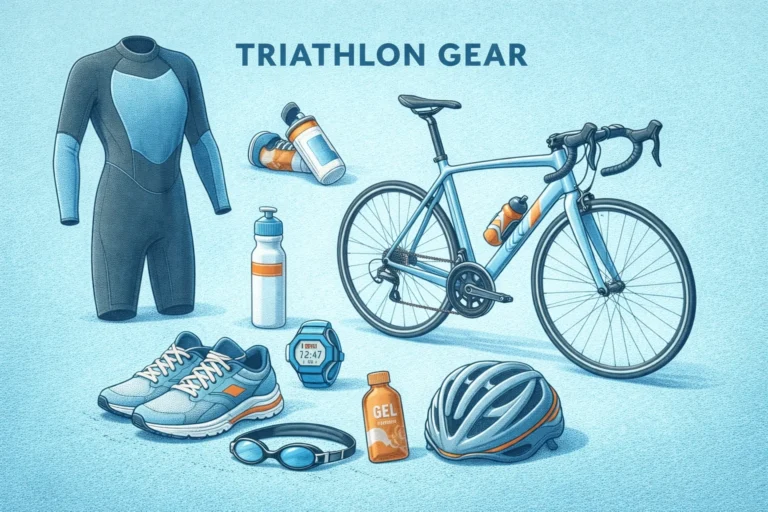
Triathlon gear matters. Choosing the right kit makes training easier and race day more confident. This article explains what to buy for swimming, cycling, running, and transitions. I write as a triathlon journalist and expert. Expect clear advice, gear checks, and practical tips to help you buy with confidence.
How to choose triathlon gear
Picking triathlon gear starts with your goals. Are you training for a sprint, an Olympic distance, or a long-distance race? Your budget and experience also shape choices. A beginner needs reliable, forgiving gear. A seasoned racer looks for speed and weight savings.
Fit matters more than brand. A poorly fitting wetsuit or bike seat will slow you down and cause discomfort. Try items in person when you can. If you buy online, check return policies and size charts carefully.
Think about where you will train. Open-water swims, hilly rides, and city runs require different items. Local weather and available support should guide gear choices. This reduces wasted spending and improves training quality.
Consider durability and resale value. Good triathlon gear keeps value and can be resold if you upgrade. High-quality items often cost more up front but save money over time because they last longer and perform better.
Triathlon swim gear
Swim gear is the first part of the triathlon experience. The right swim kit helps you move smoothly and saves energy for the bike and run. For many athletes, a well chosen wetsuit is the biggest performance gain in open water.
Fit and flexibility are key for swim items. A wetsuit must fit snugly but allow a full shoulder rotation. Goggles should seal well and be comfortable for the full swim. Swim caps should sit flat and not pull on hair.
If you need a quick checklist, start with a wetsuit, goggles, a swim cap, and a race suit. I list common swim essentials next with explanations of why each matters and what to look for.
Before the list, here is a short guide that explains choices and priorities for swim gear. Use it to match gear to skill level and water conditions.
- Triathlon wetsuits: Designed for speed and buoyancy. Look for flexible shoulders, smooth skin panels for glide, and proper thickness for local water temperature.
- Goggles: Choose anti fog and clear or tinted lenses based on light conditions. Try several to find the best seal and comfort.
- Swim cap: Bright colors improve visibility in open water. Silicone caps balance comfort and durability.
- Race suit or trisuit: Worn under wetsuit or alone for non wetsuit swims. Choose a suit that balances comfort in water and on bike and run.
- Open-water accessories: Nose clips, earplugs, and glide products can help with comfort, but test them in training before race day.
Triathlon bikes

Choosing a bike is often the biggest decision in triathlon gear. Bikes vary from road bikes to time trial rigs. Your race distance, budget, and skill level guide this choice. A beginner benefits from a stable, comfortable road bike. A racer chasing time looks at aerodynamics and weight.
Fit is essential for power and comfort. A proper bike fit reduces the risk of injury and improves efficiency. Shops and certified fitters can set saddle height, handlebar reach, and cleat position to match your body and goals.
Components and frame material affect performance and the price. Aluminum frames are common and durable. Carbon frames save weight and often improve comfort and speed. Consider wheel upgrades and tire choices. These can yield big performance changes without replacing the bike.
Below is a clear list of features to compare when shopping for triathlon bikes. Read it before you test ride or order equipment online.
- Frame type: Road or time trial. Road bikes are versatile. Time trial bikes are built for aerodynamics and maintained speed.
- Fit options: Adjustable stems, seatposts, and aerobars allow fine tuning for comfort and speed.
- Wheelset: Lighter, aerodynamic wheels improve speed. Consider durability for training wheels vs race wheels.
- Groupset: Higher tier groupsets shift cleaner and weigh less. Choose a reliable groupset within your budget.
- Brakes and tires: Disc brakes improve stopping power in varied conditions. Wider tires can offer comfort and rolling efficiency.
Triathlon running gear
Running is the final discipline and often decides race outcomes. Good shoes, apparel, and pacing tools help you finish strong. Prioritize footwear that matches your gait, terrain, and race length.
Shoe selection should be based on comfort and function. Lightweight trainers help with speed but need adequate cushioning for longer distances. Try shoes in the afternoon when your feet are slightly swollen for the best fit.
Clothing matters for comfort and speed. Breathable trisuits reduce chafing and speed transitions. Socks and anti-chafe products can prevent blisters on long runs. Carrying simple hydration or nutrition can avoid late-race energy drops.
Here is a list of running gear essentials with short notes to guide choices. Read these items carefully to match them to your running style.
- Triathlon running gear: A proper trisuit, shoes designed for running, and lightweight socks. Trisuits reduce time in transitions and cut friction.
- Shoes: Match cushioning to your race length and training volume. Test shoes on long runs before race day.
- GPS watch: Tracks pace and distance to help manage race effort and training targets.
- Nutrition: Gels, chews, and electrolytes are small items that yield big gains when used correctly.
- Sun and weather protection: Caps, visors, and light jackets protect against heat and rain.
Transition and essential accessories
Transitions are the hidden race within the race. Well chosen and practiced accessories shave minutes from your total time. Practice with the exact items you plan to use on race day.
Good organization and simple aids speed transitions. A clear sequence, labeled gear, and small tools like zip ties or elastic laces reduce fumbling. Lights and reflective items may be required for early starts.
Below is a practical list of transition and essential accessories to prepare. Each item helps you move quickly and handle common race issues.
- Transition bag: A simple bag keeps gear organized and easy to access at the rack.
- Elastic laces: Allow quick shoe entry and exit while keeping a secure fit for running.
- Towel and marker: A small towel marks your space and a marker labels your race number on your body.
- Spare tube and CO2: For quick bike fixes. Practice basic repairs and carry what is allowed by race rules.
- Nutrition and hydration setup: Pre-plan bottles and gels so you do not search for items in transition.
Triathlon gear maintenance and gear troubleshooting
Care extends the life of your kit and keeps performance steady. Simple cleaning routines and regular checks reduce the chance of equipment failure. I recommend a short maintenance plan that you can follow after each training block.
Daily and weekly checks catch wear before it becomes a race problem. Rinse wetsuits after open-water swims. Clean and lube your chain regularly. Inspect tires and brake pads for wear before long rides. These habits pay off in reliability and safety.
For common race-day issues, a clear approach helps. Learn basic gear troubleshooting steps so you can act fast. Practice replacing a flat, fixing a loose cleat, or adjusting goggles in training. Knowing how to respond reduces stress and saves time on race morning.
Here is a focused list of maintenance and troubleshooting items with practical tips. Keep these routines simple and repeat them often for the best results.
- Triathlon gear maintenance: Rinse wetsuits, air shoes, clean goggles, and store gear dry and cool. Regular checks prevent mold and material breakdown.
- Bike care: Clean the drivetrain, check tire pressure, and tighten bolts. Small checks prevent big mechanical failures.
- Shoe and apparel care: Wash trisuits after heavy sessions and replace key items when padding or seams fail.
- Gear troubleshooting: Learn to change an inner tube, reset electronic shifting, and replace a broken strap. Practice these until they become routine.
- Storage and transport: Use padded bags for bikes and breathable bags for clothing to avoid damage in transit.
Training habits and triathlon mindset
Gear supports training, but mindset drives performance. A consistent plan and focused workouts will make gear feel more effective. Train with your race kit when possible to avoid surprises.
Practice transitions, open-water swims, and brick sessions regularly. Brick sessions combine bike and run practice to train the body and mind for the shift. Consistent practice helps you trust your kit on race day.
Good mental habits include a simple pre-race checklist and a calm routine. Visualize transitions and key parts of the race. Use a checklist for equipment to reduce pre-race anxiety and last-minute errors.
Below is a short list of mindset and training habits that pair well with the gear choices discussed earlier. Use these habits to get more from your kit and to race with confidence.
- Triathlon mindset: Focus on routines and small wins. Break race day into manageable sections and control what you can.
- Train with race gear: Use your trisuit, shoes, and bike setup in training to ensure fit and comfort.
- Practice transitions: Repeat the full sequence until it becomes automatic and fast.
- Rest and recovery: Quality sleep and recovery reduce injury risk and help gear feel comfortable during intense efforts.
- Set realistic gear upgrades: Prioritize comfort and function before chasing marginal gains.
Key Takeaways
Triathlon gear can improve comfort, speed, and confidence. Start with priorities: fit, durability, and how the item matches your race type. Test gear in training and choose items that match your budget and goals.
Swim, bike, and run each need specific gear. Triathlon wetsuits improve open-water performance. Triathlon bikes must fit and match your race style. Triathlon running gear should focus on shoes and comfort for the final leg.
Maintenance and simple checks keep gear working when it matters most. Practice basic gear troubleshooting and regular triathlon gear maintenance to avoid on-course failures. Training habits and a focused triathlon mindset make equipment feel like an advantage.
Use the lists and steps in this guide to plan purchases and training. Buy smart, test often, and keep gear in good shape. Small choices and routines add up to a better race experience and steady progress in the sport you love.