
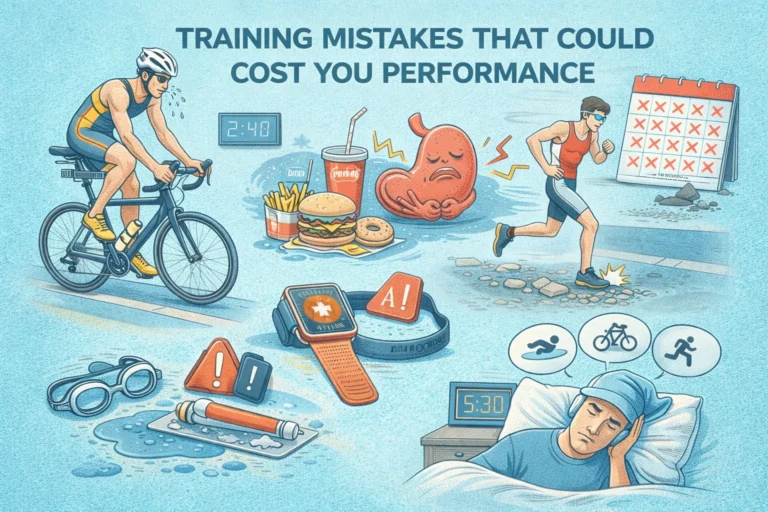
Why focusing on training mistakes triathlonhealth matters
Every triathlete wants faster times and more consistent results. Yet many good athletes stall or lose progress due to avoidable errors in training. This article points out common training mistakes triathlonhealth athletes make, and gives clear, practical ways to correct them. Read on if you want to learn how to train smarter, not just harder.
The aim here is simple. Help you spot the habits that cost fitness, make races feel harder than they should, and raise your injury risk. I write as a triathlon journalist who trains and coaches athletes, so these are field-tested ideas. Expect plain language, clear steps, and examples you can use next week.
Throughout this article you will find sections on planning, specific sport errors, recovery, nutrition, gear, and how to measure progress. I also point out common beginner issues, including beginner triathlonhealth mistakes, and mistakes experienced athletes still make. Use this as a checklist to audit your training.
Common training mistakes triathlonhealth athletes make
Many triathletes share the same blind spots. They skip recovery, chase volume over purpose, or copy workouts that do not fit their schedule. These are the training mistakes triathlonhealth athletes repeat across skill levels. Spotting them first is the step that leads to better training decisions.
Some errors are subtle. For example, doing easy runs too fast or using a single hard workout each week and expecting gains. Other mistakes are obvious, like skipping strength work or ignoring swim technique. Both types cost time and energy when you could be improving faster with small corrections.
Triathlon training is complex because you balance three sports, transitions, and life commitments. This complexity creates room for triathlonhealth errors to creep in. Awareness is the easiest defense. When you review your week, ask what you did that did not help your goals and why.
Below I list the most common categories of mistakes. For each I explain why it hurts progress and how to fix it. Use the headings as an audit tool when you plan your next block of training.
Planning and program design
Good plans start with clear goals. Too many athletes follow cookie-cutter plans without adjusting for their fitness, available time, or weak links. A mismatched plan leads to burnout or slow progress. Make your goals specific, realistic, and time-bound, then choose training blocks that match them.
Another planning mistake is poor periodization. Beginners may train the same way year-round, while experienced athletes sometimes pile intensity without proper build or taper. Both approaches prevent peak performance. Structure your year into preparation, build, peak, and recovery phases and keep each phase focused on a few priorities.
Here is a short list of planning items that most athletes overlook. Read the lead-in paragraph, then review the list to find gaps in your plan.
- Built-in recovery weeks that reduce volume every 3 to 4 weeks.
- Clear priority for each training block, for example swim efficiency or threshold endurance.
- A realistic weekly training time that fits work, family, and sleep.
- Progressive overload with only one major change at a time, like increasing bike time before adding intensity.
Fixing poor planning means writing a simple plan you can actually follow. Start with a three-week training block and a recovery week. Set one technical focus per week and one physical focus per block. Review after each block and adjust rather than sticking to a long plan that does not work.
Overtraining and under-recovery
Training hard without recovery is a fast route to stagnation and injury. Overtraining reduces power, slows swim pace gains, and makes every run feel heavy. Many athletes confuse fatigue for productive stress and keep pushing. That is a costly mistake.
Recovery is more than rest days. It includes sleep quality, nutrition, active recovery sessions, and load management. Poor recovery habits show up as rising resting heart rate, trouble sleeping, decreased motivation, and persistent soreness. These are signs to reduce the load and rebuild the base.
Common recovery mistakes triathlonhealth athletes make include skipping sleep, not scheduling recovery weeks, and treating easy workouts as junk miles. Easy workouts should feel easy and promote recovery. If they do not, you are likely overreaching and need to reassess intensity and volume.
To correct overtraining, reduce weekly load by 20 to 30 percent for one to two weeks, focus on sleep and nutrition, and keep easy sessions truly easy. Add purposeful recovery like mobility work and short, low-intensity swims or rides to keep movement flowing without additional stress.
Swim training mistakes
Many triathletes treat the swim as a fitness test rather than a technical sport. Pushing too hard in the pool without technique work builds poor stroke habits and wastes energy. That creates slower swim times and harder transitions to the bike and run.
Another swim error is training only in the pool when your race is in open water. Pool work improves fitness and stroke, but you also need waves, sighting, and pack skills. Missing open-water practice increases race-day anxiety and causes time loss when you have to slow to sight or dodge others.
Below are key swim issues and how to fix them. Read the paragraph and then the list to check your swim habits.
- Poor body position from head lifting or sinking hips. Fix with drills like balance and kick on back.
- Over-reliance on arms. Add kick sets and catch-focused drills to build efficiency.
- No open-water practice. Schedule sighting sets and group swims weekly when possible.
Finally, work on breathing patterns and pacing. Practice bilateral breathing and tempo sets that mimic race pace. Small technical improvements often yield bigger time gains than more volume alone.
Bike training mistakes
On the bike, the biggest errors are poor pacing and ignoring bike fit. Riding too hard early in a race or on long rides burns glycogen and makes your run suffer. Conversely, a poor bike fit causes pain, reduces power, and increases fatigue.
Another common error is relying solely on time in the saddle rather than purpose. Endurance rides are valuable, but you also need structured intervals to build threshold and power. Using power or heart rate targets makes workouts effective and measurable.
Here are typical bike training traps and the fixes you can apply. Read this short lead-in paragraph and then use the list to check your bike routine.
- Ignore power targets. Use power zones or heart rate zones to guide intensity.
- Neglect cadence work. Include drills that use higher and lower cadence ranges to improve efficiency.
- Skip bike fit. Schedule a proper fit or check saddle height and reach if you feel discomfort.
Finally, practice race-specific efforts such as climbing, time-trial pace, and riding in a tuck. Train how you will race to reduce surprises on event day.
Run training mistakes
Running carries high injury risk if volume or intensity jumps too fast. Many triathletes increase run distance or speed without building the connective tissue and strength needed to handle the load. The result is setbacks and lost training weeks.
Another common run mistake is ignoring easy pace benefits. Easy runs build aerobic capacity and help recovery, but many athletes run them too fast and lose the intended effect. Keep a few runs truly easy each week and add faster sessions separately.
The following list highlights standard running pitfalls and corrective steps. Read the explanatory paragraph, then review the list to see what applies to your training.
- Too much intensity too soon. Build speed gradually with a cap on weekly hard sessions.
- Poor strength base. Add two short strength sessions per week to support running mechanics.
- Neglecting stride and form work. Use drills and short accelerations to maintain economy.
Lastly, track fatigue and soreness. If a minor niggle appears, reduce run volume for a week and keep cross-training on the bike or aqua jogging to maintain fitness with less impact.
Nutrition and fueling mistakes
Poor fueling undermines all training gains. Many athletes underfuel during long rides or runs, or do not practice race nutrition until race day. This leads to gastrointestinal trouble, bonking, and missed opportunities to perform at your best.
Underestimating daily calorie needs is another mistake. Training increases protein and carbohydrate requirements, and not meeting them slows recovery. Athletes should track intake for a short period to understand needs, then adjust for training load.
Read this short lead-in sentence and then the list for common fueling mistakes and practical fixes you can adopt right away.
- No race nutrition practice. Simulate race fueling in long training sessions.
- Ignoring electrolytes. Use salted drinks or supplements on long, hot sessions.
- Skipping post-workout protein and carbs. Aim for a recovery snack within 45 minutes of hard sessions.
Also consider timing. Smaller, frequent meals can support consistent energy and better sleep. If you have GI issues, test products during easy workouts before using them on race day.
Recovery mistakes triathlonhealth athletes make
Many athletes see recovery as passive and only do it when injured. That view wastes performance potential. Active recovery, planned rest weeks, mobility work, and sleep hygiene are key and should be part of every plan.
Common recovery mistakes triathlonhealth athletes make include irregular sleep, poor post-workout routines, and failing to use easy days effectively. Those choices prolong soreness and reduce training quality. Fixing them is often the fastest route to improved form.
Before the list, here is a quick note. When you tighten recovery habits, you keep more training in the bank and reach quality sessions with fresher legs. Read the list and choose two changes to implement this week.
- Inconsistent sleep. Aim for a regular schedule and 7 to 9 hours per night.
- No active recovery. Include short easy swims or rides on rest days to boost blood flow.
- Skipping mobility and soft tissue work. Add 10 to 15 minutes after sessions to reduce stiffness.
Remember, recovery is training too. Treat it like a planned session and track it alongside your workouts to get the full benefit.
Gear and race-day preparation
Gear choices can help or hurt performance. Common mistakes include buying race kit at the last minute, neglecting bike maintenance, or using unfamiliar shoes. Race-day surprises often come from poor equipment prep rather than fitness gaps.
Transitions are a part of the race that can save or cost minutes. Many athletes fail to practice transitions enough. Simple drills that simulate race-day conditions reduce stress and save time. Practice mounting and dismounting smoothly and rehearse strip-down and put-on moves for wetsuit swims and shoes.
Below are common gear and prep mistakes with direct fixes. Read the short lead-in paragraph and then the list to make a quick pre-race checklist.
- Not testing race nutrition or wetsuit. Rehearse everything in training to avoid surprises.
- Skipping bike checks. Inspect brakes, tires, and drivetrain before long rides and race morning.
- Poor transition setup. Practice racking, mounting, and quick changes in mock transitions.
On race week, reduce training load, finalize equipment checks, hydrate, and get to the venue early. A calm, practiced routine beats last-minute panic every time.
How to measure progress and when to get help
Measuring progress keeps training honest. Many athletes rely solely on how they feel, which is useful but subjective. Combine feelings with objective measures like power, pace, stroke rate, and simple fitness tests to track improvements.
Keep a short training log that records workouts, perceived effort, sleep, and soreness. This makes it easier to spot patterns of overtraining, consistent plateaus, or gains that match your plan. If you are stuck, an outside view from a coach or experienced peer often speeds improvement.
Here is a short lead-in paragraph to a small list of measurement tools you can use this week to improve clarity in your training and avoid triathlonhealth errors.
- Simple fitness checks, like a 20-minute FTP test on the bike and a 5k time trial for running.
- Weekly training score. Rate sessions 1 to 10 by quality versus plan.
- Body and sleep log. Note how many hours you sleep and how rested you feel each morning.
Coaches are useful when you cannot fix persistent plateaus, have recurring injuries, or need a plan tailored around life constraints. A short consultation can prevent months of wasted effort.
Fixing the most costly mistakes, step by step
Fixing training mistakes starts with a short audit. Pick a recent two-week period and list what went well and what did not. Check for patterns like consistent missed workouts, high fatigue, or poor nutrition. This targeted approach helps you make the smallest changes for the biggest gains.
Start with one change at a time. If you try to overhaul sleeping, training load, and nutrition all at once, you will likely fail. Instead pick one high-impact fix, like adding a weekly recovery week or improving nightly sleep, and track the result for four weeks.
Below is a compact, practical checklist to correct common errors. Read the lead-in sentence, then follow the three-step list to create a short plan you can implement this week.
- Audit two weeks: note missed workouts, fatigue, and meals. Identify one pattern to change.
- Implement one fix for four weeks. Examples: real easy runs, a weekly recovery week, or practiced race nutrition.
- Measure and adjust. Use simple metrics like perceived effort and a fitness test to judge progress.
Small consistent changes beat occasional heroic efforts. Make training more reliable by choosing fixes you can keep when life gets busy.
Sample week for correcting training mistakes

Here is a sample week that balances three sports, recovery, technique, and strength. Use this as a template to correct common training mistakes triathlonhealth athletes make. It assumes an intermediate athlete with around 7 to 10 hours per week.
Below is a clear, short lead-in paragraph and then a practical weekly layout you can copy and tune. Each session has a purpose so you avoid random training and wasted miles.
- Monday: Easy swim 30 to 45 minutes with drills, mobility, and 20 minutes of strength work.
- Tuesday: Bike intervals 60 to 90 minutes. Include 4 x 6 minutes at threshold with 4 minutes easy spin between efforts.
- Wednesday: Run easy 45 minutes plus short strides, or tempo if well rested. Add 10 minutes of core work.
- Thursday: Swim session focused on technique and pacing, 45 minutes. Followed by short brick: 20 min bike + 15 min run at moderate pace.
- Friday: Rest or active recovery: easy spin 30 to 45 minutes and mobility work. Prioritize sleep.
- Saturday: Long bike 2 to 4 hours at endurance pace with practiced nutrition and hydration.
- Sunday: Long run 60 to 90 minutes at conversational pace, or a shorter run with intervals if racing soon.
Adjust volume to match your available time. The key is to maintain one hard session per discipline each week, keep most sessions easy, and include two focused technique or strength sessions.
Common beginner triathlonhealth mistakes and how to avoid them
Beginners often make predictable errors that slow progress. They try to improve all three sports at once, use the wrong gear, or fail to practice transitions. These beginner triathlonhealth mistakes are fixable with a structured plan and patience.
Another beginner trap is trusting every online plan you find without adapting it. Plans are tools, not rules. If a workout is beyond your current fitness, scale it down and build up gradually. Most gains come from consistency, not intensity extremes.
Look through this short list to see which beginner issues apply to you and pick two to fix this month.
- Too much focus on one sport. Balance training to avoid big weaknesses on race day.
- Poor swim practice. Take a few lessons or join group sessions to fix basic technique early.
- No transition practice. Mock transitions reduce stress and save time during races.
For new triathletes, the most valuable things are consistency, sleep, and a small strength program. These build a foundation that supports faster progress than chasing every new workout trend.
The big picture
Training mistakes triathlonhealth athletes make are common, but also fixable. Most of them come down to poor planning, insufficient recovery, and ignoring technique. When you correct these areas, you convert wasted effort into faster, more sustainable gains.
Start small and be consistent. Use the sample week and the checklists in this article to build a training routine that fits your life and goals. Track progress objectively and do one meaningful change at a time to avoid overwhelm.
Finally, if you still struggle after making these adjustments, seek outside help. A coach can provide the objective feedback and tailored plan you need to move past plateaus. Many athletes find that a short period of guided coaching pays for itself in time saved and better race results.
Take this as an invitation to audit your training, choose one or two fixes, and measure the result in the coming weeks. That approach beats chasing more workouts without purpose.
Key Takeaways
Training mistakes triathlonhealth athletes make are often simple to spot when you know what to look for. Common themes are poor planning, lack of recovery, and neglecting sport-specific technique. Fixing these saves time and reduces injury risk.
Use the lists and sample week in this article to create a one-month improvement plan. Focus on one high-impact change at a time and measure progress. Small, steady steps lead to big results over a season.
If you notice persistent issues like rising fatigue or repeated injury, add more recovery or seek a coach. Objective feedback will help you avoid repeated errors and reach race day in better shape.
Finally, remember the exact phrases that highlight common concerns in triathlon training, such as triathlonhealth errors, beginner triathlonhealth mistakes, and recovery mistakes triathlonhealth. Keep these in mind as you audit your training and make targeted improvements.