
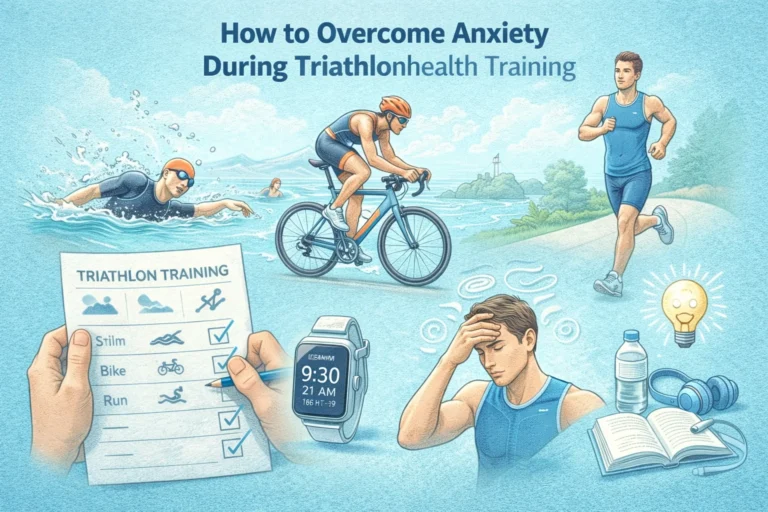
Feeling anxious during training or before a race is common, and you can learn to control it. This article teaches how to overcome anxiety triathlonhealth with clear, practical steps. You will get breathing methods, mental habits, training changes, and race routines that help calm your mind and improve performance.
Why anxiety affects triathletes
Anxiety shows up for many reasons when you train for triathlon. The sport asks you to be fit in swimming, biking, and running, and that pressure can pile up. You may worry about injury, losing time, or not meeting your coach’s expectations. Those worries can cause physical symptoms like tight chest, shaky muscles, or trouble sleeping.
Training volume and intensity add another layer. Long sessions and hard efforts tax your body and mind. When recovery is low, small worries become bigger. Your brain interprets physical strain as danger, and anxiety rises. That makes sessions feel harder than they are, and it can block progress.
Social and identity factors matter, too. You might compare yourself to other athletes or feel you must prove yourself at a race. These thoughts increase mental strain. That social pressure is real for many triathletes, and it often gets worse before big events. Recognizing these triggers is the first step to respond differently.
Triathlonhealth readers also face specific pressures tied to the sport community and goals. You may read training plans, results, and athlete profiles and feel behind. That is normal, and it can spark self-criticism. A practical approach helps you treat anxiety like a skill to train, not a failure to hide.
Common training and race triggers
Understanding what sparks anxiety helps you plan a response. Triggers often fall into predictable categories. They include physical fatigue, uncertainty about conditions, equipment problems, and expectations. Each trigger has a different solution path, and you can work on several at once.
Physical triggers come from missed sleep, poor nutrition, or high training load. When your body is taxed, your mind is more reactive. Race-day triggers include cold water, crowded starts, traffic on the bike course, and the unknown. These can create a spike in anxiety even for experienced athletes.
Mental triggers include negative self-talk, fear of failing, and perfectionism. You might replay past mistakes or imagine worst-case outcomes. That habit makes anxiety feel larger than the real problem. Replacing harsh thoughts with neutral or helpful ones makes a big difference over time.
External triggers can also involve social media or comparison to other athletes. If you spend time watching elite performances without context, you may feel inadequate. That is where balanced information helps. Recognize that every athlete has strengths and weaknesses, and your path is valid.
How to overcome anxiety triathlonhealth: core mindset shifts
Mental skills are like physical skills, they need practice and repetition. Start by normalizing anxiety as part of training and racing. When you accept its presence, you reduce the extra fear of having fear. That simple shift lowers the pressure and opens the door to practical coping steps.
Next, focus on controllable factors. You cannot control weather or other athletes, but you can control nutrition, sleep, gear, and your pre-race routine. Shifting attention to what you can manage reduces the sense of helplessness. This shift is steadying and gives you immediate actions to take.
Set process goals instead of only outcome goals. Process goals focus on actions, such as consistent rest, pacing, or feeding strategies. Outcome goals focus on results, like finishing time or place. When you aim at actions, you improve focus and reduce anxiety tied to uncertain results. This keeps training and race day more present-centered.
Practice self-kindness and realistic expectations. Your body and mind have good and bad days. Treat setbacks as data, not proof of failure. That attitude encourages learning. Over time, small course corrections create big gains in confidence and less anxiety during training and races.
Practical tools to calm your mind

Below are tools you can use before, during, and after training. These are simple habits that work when used regularly. Begin slowly and test what fits your routine and personality. The list that follows gives clear steps for breathing, focus, and short mental resets.
- Box breathing: Inhale for four seconds, hold four seconds, exhale four seconds, hold four. Repeat four times to lower heart rate and steady nerves.
- Mindful scanning: Take one minute to notice sensations in your body from head to toe. Name tension and then let it soften. This anchors you in the present.
- Short visualization: Spend 60 to 90 seconds picturing a smooth transition or a calm swim start. Focus on sensations, not outcomes. This builds muscle memory for calm action.
- Mantra use: Choose a short phrase like “strong and steady” or “one turn at a time.” Repeat it when you feel anxious to redirect thought patterns.
- Progressive muscle relaxation: Tense and release large muscle groups, one at a time. Use this after a stressful session to lower physical tension.
Use these tools often, not just when anxiety is high. Regular use trains your nervous system to respond differently. Start with one or two tools and build consistency. Keep a short journal to track which methods help most and under what conditions.
Adjusting training to reduce anxiety
Training can either increase or reduce anxiety depending on how you balance load and recovery. A clear plan that includes easier days, purpose for each session, and regular reflection reduces uncertainty and stress. Coaches and self-coached athletes benefit from a simple weekly structure that is predictable yet flexible.
Include deliberate recovery in your plan. Recovery is not optional, it is part of progress. Rest days, easy rides, and short, restorative swims help your body and mind reset. When recovery is scheduled, you avoid the spiral of doing too much and then feeling guilty or anxious about poor results.
Mix in confidence-building sessions. Short efforts that you can complete well, or technical work you enjoy, reinforce competence. These sessions counterbalance long, draining workouts. They remind you of progress and reduce fear when race day arrives.
Track your training and mood together. Note your sleep, perceived effort, and how you felt mentally. Over weeks, patterns appear. You can see what raises anxiety and what lowers it. That data lets you adjust volume, intensity, and timing to better support your mental health.
Race day routines and strategies
A clear race routine reduces last-minute worry. Start with a checklist for gear, nutrition, and warm-up. Practice the checklist at a few training sessions and tune it. Familiar routines give your brain a sense of control and reduce decision fatigue on race morning.
Plan for predictable problems. If you fear a cold swim, rehearse getting into cold water during training. If transition nerves hit you, practice quick transitions until they feel routine. The aim is not to remove challenge, but to create familiarity so anxiety drops when you face the same situation in a race.
Use pre-race breathing and short visual cues to reset your state. Before the start, spend 60 to 90 seconds on box breathing and a short visual image of a calm, strong part of the race. This sets a steady baseline. At any moment during the event, you can use a one-sentence mantra to bring your focus back to the present.
Accept uncertainty as part of racing. No plan survives every condition. Prepare for likely issues and then commit to flexible problem solving. That stance reduces the pressure to control everything and frees energy for performance. Trust your training and your routine, and allow space to adapt if something goes wrong.
When to seek professional help and support
Anxiety that blocks daily life, ends training, or causes panic attacks should prompt professional support. A sports psychologist, counselor, or therapist can help you learn deeper skills and work through patterns that simple routines do not fix. Getting help is a practical, strong step for long-term progress.
Coaches can help when anxiety centers on performance and planning. A coach who understands mental skills can offer realistic goals, structured plans, and perspective. They can also prevent overtraining and guide recovery strategies. If your coach does not address mental skills, ask for a referral to a sports psychologist.
Peer groups and teammates also matter. You can share experiences with others who face the same pressures. That reduces isolation and gives practical coping tips. Consider training groups, forums, or local clubs that emphasize a supportive culture. Healthy social feedback helps reduce shame and worry.
If anxiety comes with depressive symptoms, severe sleep disturbance, or thoughts of self-harm, seek immediate professional care. These are medical concerns that need urgent attention. Reach out to a medical professional, mental health hotline, or local services to get support quickly.
Tools, apps, and daily habits that help
Simple daily habits provide the foundation for lower anxiety. A consistent sleep schedule, basic nutrition, and short movement breaks during the day reduce baseline stress. These habits make it easier to handle the bigger stressors that come with training and racing.
Apps can support specific skills like breathing, sleep tracking, and guided relaxation. Use them as practice tools, not as fixes. Pair app use with real-world practice so you build confidence outside the phone. The goal is to integrate these habits into training and life, not to rely solely on a digital tool.
Write a short pre-race note to yourself that lists practical reminders and a few calm phrases. Keep it simple and review it the night before. A short written plan gives your mind a clear anchor and reduces rumination. Many athletes find this reminder helps them focus on process instead of outcomes.
Remember to celebrate small wins. Finish a tough set you once avoided, or stick to your sleep plan for a week. Those wins are progress. Tracking them builds momentum and slowly changes how you see yourself. Over time, consistent small wins reduce the frequency and intensity of anxiety.
Key Takeaways
Anxiety is a common part of triathlon training and racing, but it is manageable with practice and structure. Start by recognizing triggers, using easy breathing and focus tools, and building a training plan that includes recovery. These steps create a steady base that lowers fear and improves performance.
Work on mindset shifts like focusing on controllable factors and using process goals. Regular practice of simple skills, such as box breathing, mindful scanning, and short visualizations, trains your nervous system to respond differently. Use those tools before and during sessions to stay calm and focused.
When anxiety interferes with daily life or performance, seek professional help from a sports psychologist or counselor. Coaches and peer groups provide practical support, and clear race routines reduce last-minute worry. If symptoms are severe, get urgent medical attention.
Keep practicing and tracking what works. Use a mix of training adjustments, mental tools, and supportive habits. Over time, you will see progress and greater confidence. For more context on sport-related stress, consider reading about triathlonhealth mental challenges and how athletes adapt to pressure. If your focus is on broader care, mental health challenges triathlonhealth is also useful to review. With steady work, you can overcome anxiety triathlonhealth and enjoy stronger, calmer training and racing.