
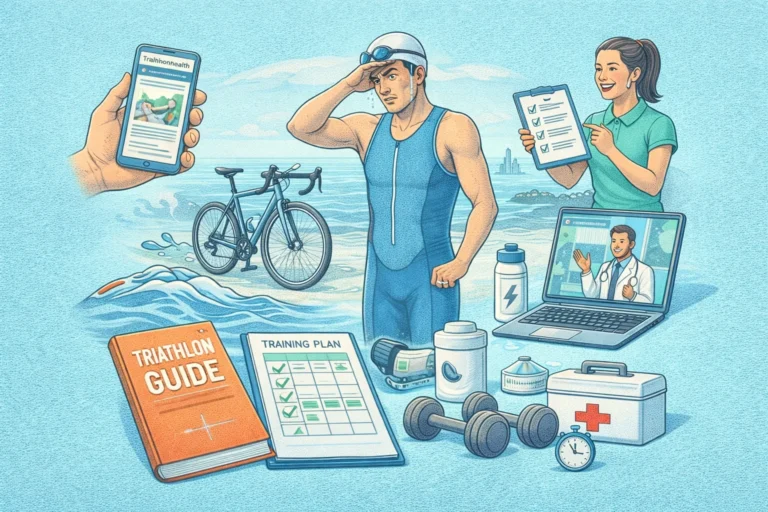
Every triathlete needs a team, even when training alone on the road, on the pool deck, or the bike. This article explains how to find and use support systems triathlonhealth recommends. You will learn practical steps to choose coaches, connect with peers, manage health, and handle race-day logistics.
Why support systems matter
Support systems shape how you train, recover, and race. Good support helps you avoid injury, stay motivated, and reach goals more consistently. The right mix of people and services makes hard weeks manageable and keeps progress steady.
Support is not just about experts. Friends, training partners, and local clubs give emotional backup. They celebrate small wins and help steady confidence after setbacks. That social side also creates accountability, which makes training plans easier to follow.
Support systems triathlonhealth talks about include practical help too, like bike mechanics or nutritionists. These resources reduce the friction that steals training time. When routines run smoothly, you can focus energy on pace, form, and strategy.
Types of support
Support comes in several forms. Each type fills a different need. Knowing the options helps you build the right mix for your goals.
Below is a list of common support types many triathletes use. Read the short descriptions and think about which fits your current needs.
Use the list to start a checklist of services to seek out, or people to meet at your next race or club night.
- Coaching, for planning, pacing, and technique.
- Medical and physiotherapy, for injury prevention and recovery.
- Mental performance support, for focus, anxiety, and race-day stress.
- Nutrition and diet planning, for fueling training and recovery.
- Community groups and clubs, for motivation and social training.
- Gear and bike support, for maintenance and tech advice.
Coaches and training plans
A coach provides structure. They tailor sessions to your fitness level and goals. A good coach explains why workouts matter and makes adjustments when life gets busy.
Coaching can be in-person, remote, or hybrid. Each style has trade-offs. Remote coaches offer flexibility, while in-person sessions give immediate feedback on swim or bike technique.
When choosing a coach, ask about their experience with triathletes, certification, and communication style. A quick conversation reveals if their approach matches your needs.
Medical and recovery professionals
Doctors, physiotherapists, and osteopaths keep you training longer. They spot problems early and build recovery plans. Regular checks speed up return from injury and help prevent recurring issues.
Look for clinicians who know endurance sport demands. Sports physiotherapists and sports medicine doctors understand common triathlon injuries and how to manage training load safely.
Set up a relationship before a problem becomes urgent. Regular check-ins, even when healthy, help track weak points and improve resilience over time.
Mental skills and counseling
Mental skills coaches and therapists help with focus, motivation, and race nerves. They teach routines to stay calm and perform on the start line. This work is practical and skill based.
Some athletes need help with motivation, others need strategies for anxiety. Search your local scene and ask other athletes about trusted providers. You can find people who specialize in endurance sport psychology.
Many triathletes report searching phrases like triathlonhealth mental challenges when they first look for help. That search often brings up common issues and ways to begin getting support.
How to find the right coach
Finding the right coach is a step-by-step process. Start by listing what you need from a coach, such as weekly sessions, race planning, or technique work. Then match coaches to that list.
Talk to potential coaches about their training philosophy and how they measure progress. Ask how they handle illness, travel, and unexpected life events. Strong communication skills often matter more than any single credential.
Before you commit, request a trial period or a short plan to assess fit. Coaching relationships improve when both sides give clear feedback and set realistic goals from the start.
Below is a short checklist to use when you speak with a coach. Read it and copy any items you want to use as your own questions.
- What is your experience with triathletes at my level?
- How often will we communicate, and by what method?
- Do you adjust plans for work, family, or travel?
- How do you measure progress and adjust workouts?
- Can you provide references or athlete examples?
Finding medical and recovery support
Medical support for triathletes should balance prevention and treatment. Find professionals who understand load, recovery, and sport-specific demands. This keeps you training day to day and season to season.
Start by asking your coach or local club for referrals. Many clubs have trusted physios and sports doctors they use. A recommendation saves time and leads to providers familiar with endurance sport needs.
When you meet a clinician, describe your training volume, any recurring pain, and race goals. A clear history helps a professional create a plan that fits your schedule and performance targets.
Working with a physiotherapist
A physiotherapist can test your movement and set recovery targets. They work with strengthening programs, manual therapy, and return-to-run or bike protocols. Their goal is to get you back to full training safely.
Follow the plan they give you, even if it means missing a few sessions or adjusting race targets. Consistent progress beats rushed returns that set you back further.
Keep notes on pain levels and training changes. This helps your therapist make better adjustments and track how well rehab is working over time.
Nutritionists and dietitians
Nutrition shapes how you feel in training and how quickly you recover. A sports nutritionist can tailor a plan to your workouts, body type, and race demands. They can also advise on race fueling and weight management.
Look for a registered dietitian or certified sports nutritionist who works with endurance athletes. They will run simple tests or food logs and design meals that fit your life and training schedule.
Small changes in fueling timing or composition often produce big gains in energy and recovery. Test any changes in training, not on race day, so you know how your body reacts.
Community and peer support
Community is a powerful tool for motivation. Local clubs, online groups, and training partners make lonely workouts more fun. They also provide tips learned through experience, from bike handling to open water starts.
Joining a group can expose you to athletes at different levels and help you set realistic benchmarks. Training with others helps you hold pace on hard days and improve technique through shared coaching and feedback.
Club culture varies. Visit a few sessions and see how you feel. The right group makes training feel like a welcome part of your week rather than a chore.
Below are common forms of community support and how they help you stay consistent.
- Local triathlon clubs, for structured group workouts and race-day teams.
- Online forums and social groups, for quick advice and product tips.
- Meetup-style running or cycling groups, for regular social sessions.
Finding a training group
Look for groups that match your pace and goals. Many clubs have beginner, intermediate, and fast groups. Pick one that challenges you, but does not leave you struggling to keep up every week.
Attend a few sessions before joining. Watch how coaches run the workout and how members support each other. The right vibe often equals long-term membership and better results.
Ask about safety, ride plans, and expected etiquette. Clubs that emphasize safety and clear communication tend to keep athletes training happily through seasons.
Online communities
Online groups can provide quick answers, product reviews, and event suggestions. Use them to learn from other athletes and to troubleshoot gear or training questions between sessions.
Be selective with advice online. Look for posts backed by experience or credentials. When in doubt, check with your coach or a clinician before trying new techniques or products.
Posting clear questions and sharing what you tried will often get useful feedback. Treat online tips as ideas to test, not absolute rules.
Support for mental health and race stress
Mental strength matters as much as physical fitness. Many triathletes face pressure to perform and manage training with life responsibilities. Having mental support strategies helps you stay focused and enjoy racing.
Common issues include pre-race anxiety, loss of motivation, and burnout. Many athletes search for help and find the phrases triathlonhealth mental challenges or mental health challenges triathlonhealth in articles and forums. Those searches often point to practical tips and local providers.
Working with a sport psychologist or counselor gives you tools to manage stress and keep performance consistent. These experts teach breathing techniques, pre-race routines, and ways to reset after a bad session or race.
Some athletes ask how to overcome anxiety triathlonhealth before signing up for a first Olympic distance or long-distance race. The methods below are simple to test and can help calm nerves before race day.
- Establish a pre-race routine that feels familiar and low pressure.
- Practice visualization for transitions and difficult race moments.
- Use short breathing exercises to reduce heart rate before the start.
- Set process goals, such as sticking to a fueling plan, rather than only outcome goals.
When to seek professional help
Seek a therapist if anxiety or low mood affects daily life, sleep, or training consistency. A mental health professional can offer structured plans and, if needed, coordinated care with your doctor.
Look for clinicians who understand athletes and sport schedules. They will help you create strategies that fit your training and life obligations, rather than adding extra stress.
Start with a few sessions to set clear goals. Track progress and adjust the approach if needed. This process helps you build reliable mental tools for training and racing.
Race day and logistical support
Race day runs smoother with support for logistics and planning. This includes help with travel, transition setup, nutrition, and pacing plans. A calm, practiced routine reduces surprises and saves energy for the race itself.
Experienced teammates or club members often act as race-day crew. They help with bike checks, marking transition areas, and carrying spare gear. Having a plan for these needs reduces stress and improves focus.
Write a simple race day checklist and run through it during training. Practice transitions and nutrition in the weeks before the event to avoid last-minute changes that can cost time or cause stomach issues.
Below is a sample race-day checklist to adapt for your events. Use it during practice races and tune it to fit the distance and your experience.
- Pre-race gear check: helmet, shoes, goggles, race belt.
- Bike check: tires, brakes, chain, cleats.
- Nutrition plan: pre-race meal, on-course fueling times, hydration.
- Transition plan: where to place items and a practiced order for each stage.
- Emergency items: spare tube, CO2, basic first-aid items.
How crews and pacers help
A crew can save time and mental load on race day. They hand up supplies, hold vigil over your kit, and cheer you through tough moments. This small extra support often adds meaningful kilometers of confidence.
Pacing support can come from a coach, a teammate, or a pacer group. They help keep effort steady and avoid burning out early. On long events, rhythm and fueling matter more than raw speed.
Prepare your crew with a clear list of duties and a timeline. A calm, organized crew does not need to be large. Even one reliable person can change the quality of your race experience.
Building a personal support plan
Create a personal support plan that matches your goals and schedule. Start by writing what you need most right now and what you might need later as you progress. This makes choices clearer when time or money are limited.
Set short-term and long-term goals and map support to each. For example, hire a coach for 12 weeks to improve swim speed, then shift focus to a physio plan before a big race. Breaking help into stages makes costs and time more manageable.
Review your plan every 6 to 12 weeks. Training cycles change, life changes. Regular check-ins keep your support focused and effective.
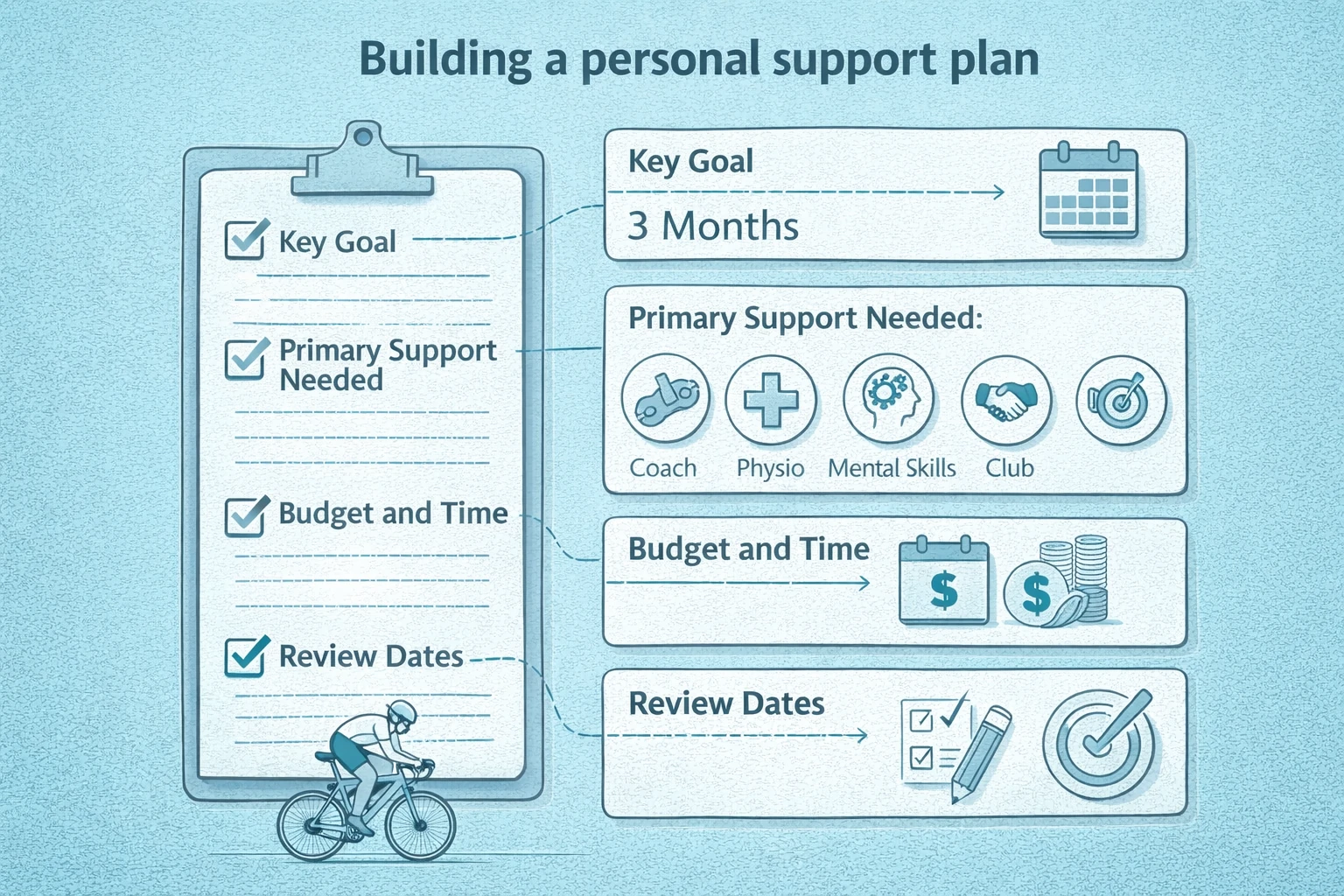
Below is a simple template to build your support plan. Customize it for your current training load and upcoming races.
- Key goal: what you want to achieve in the next 3 months.
- Primary support needed: coach, physio, mental skills, club.
- Budget and time: how much you can commit each week and month.
- Review dates: set checkpoints to measure progress and adjust plans.
Prioritizing support on a budget
Money is often the limiting factor. Prioritize the support that removes the biggest roadblocks to training. For most athletes, that is injury prevention and coaching that keeps training consistent.
Use group coaching, clinics, and club resources as lower-cost ways to get expert input. Many clubs run affordable technique sessions and meetups that provide a lot of value for a small fee.
Invest in one or two key services and add others as your needs change. Small, consistent investments often beat a single expensive purchase that you may not use fully.
Resources and next steps
Take small actions that have big returns. Start by writing a short list of the top three support needs you have this month. Then find one contact for each need, even if it is just a referral from a club mate.
Try services on a trial basis where possible. A month with a coach or a few physiotherapy sessions is a good test. You can learn fast whether the service helps you meet your goals and fits your life.
Keep learning and stay flexible. Support needs change as you gain experience, move up in distance, or face new life challenges. Regular review keeps your support aligned with your current goals.
Remember searches like triathlonhealth mental challenges, mental health challenges triathlonhealth, and overcome anxiety triathlonhealth may point you toward resources and discussions other athletes found useful. Use those searches to gather ideas and to find providers who understand triathlon demands.
Key Takeaways
Support systems triathlonhealth recommends include coaching, medical care, mental skills, nutrition, and community. Each element plays a different role in your training and race performance.
Start simple, prioritize the biggest roadblocks, and test services with short trials. Regular review and small adjustments keep your plan relevant and effective.
Use club networks and trusted referrals to find clinicians and coaches who know triathlon demands. Practice race-day routines and mental skills in training so race day feels familiar and manageable.
With the right mix of people and services, you will train smarter, stay healthier, and enjoy racing more. Build your support system step by step, and let those resources carry you through harder training phases and towards your best race efforts.