
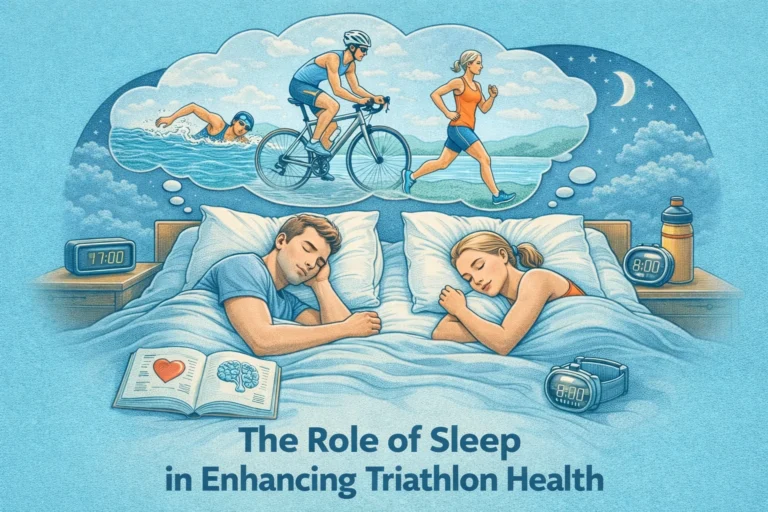
Good sleep is one of the most powerful tools a triathlete has, yet it is often the most neglected. This article explains how sleep triathlon health links to recovery, training adaptations, and race performance. You will get clear guidance, simple routines, and practical sleep tips triathletes can use right away.
Why sleep matters for triathlon health
Sleep is not just rest. For athletes it is a time when the body repairs muscle, balances hormones, and strengthens the brain. When sleep is regular and deep, training gains become real. Poor sleep makes workouts feel harder and raises the risk of illness and injury.
For triathletes the demands are high because you train three sports. That means repair needs are greater than for single-sport athletes. Growth hormone, which helps muscle recovery, is released mostly during deep sleep. Less deep sleep reduces recovery and slows progress.
Sleep also affects the immune system. A day or two of bad sleep can lower immune defenses and increase illness risk. This matters during heavy training blocks and travel. Even small sleep losses add up and can lead to missed sessions.
On the mental side, sleep supports attention, decision making, and mood. These skills matter for pacing, transitions, and race tactics. Poor sleep can make you less sharp and less confident, which can change race outcomes. Mental health triathletes depends on stable, restorative sleep.
How much sleep do triathletes need?
Most adults need 7 to 9 hours of sleep each night. Many triathletes benefit from the upper end of that range. During heavy training phases you may need more sleep to fully recover. Some athletes need 9 to 10 hours for optimal results.
Quality matters as much as quantity. Sleep should include both slow wave deep sleep and REM sleep. Deep sleep supports muscle repair. REM sleep supports memory and skills, such as technique and race plans. Fragmented sleep reduces both of these benefits.
Naps can help when nightly sleep is short or when training load is high. Short naps of 20 to 30 minutes boost alertness without making night sleep harder. Longer naps that include slow wave sleep can aid recovery, but they may affect bedtime. Use naps strategically around training sessions.
Track how you feel, not just hours in bed. If you are noisy in workouts, sore for days, or feel mood swings, try adding sleep. Use simple measures like training consistency, perceived exertion, and mood to judge if you need more sleep during a block.
Sleep and training adaptation
Training adaptation happens when you stress the body, then allow time for it to rebuild stronger. Sleep is the main time the body rebuilds. Without enough sleep, the benefits of hard sessions are reduced. The same workout yields bigger gains when you sleep well after it.
Hormones that help adaptation are affected by sleep. Cortisol, a stress hormone, can stay higher when sleep is poor. That can block recovery. Testosterone and growth hormone, which assist muscle repair, fall when sleep is limited. Over weeks, this imbalance slows gains.
Sleep also affects inflammation. Poor sleep raises inflammatory markers that delay recovery and increase soreness. For triathletes who do back-to-back sessions or brick workouts, managing inflammation through sleep is key to staying consistent. Better sleep lowers daily inflammation and helps you train more frequently.
Use sleep as a training tool. Schedule heavier sessions when you expect good sleep. Plan easier sessions after travel or hard nights. Track recovery with simple measures like resting heart rate, heart rate variability, and how fast you complete workouts. If those markers drop, sleep may be the first thing to improve.
Sleep impact triathlon: effects on race day
Race performance depends on fitness, nutrition, and sleep. The nights leading up to a race are critical. Poor sleep in the week before a race can reduce endurance, slow time to exhaustion, and lower power output. Even one bad night can hurt decision making on race day.
Taper periods can improve sleep and recovery. A short taper reduces training load so your body can recover and restore sleep patterns. Many athletes report better sleep and clearer focus during taper. This is one reason taper works beyond simply reducing fatigue.
Travel to races adds sleep risk through jet lag and unfamiliar sleeping environments. Plan sleep shifts before long trips and use simple cues like light exposure and meal timing to help adapt. If you expect short sleep on race morning, use short naps and nutrition to reduce the impact.
Race-day routines should include sleep-aware strategies. Wake up times, caffeine use, and pre-race naps should be planned. Avoid heavy meals late at night. Keep the pre-race morning consistent with your training routine. That helps mental focus and physical readiness.
Common sleep problems for triathletes
Many triathletes face similar sleep issues. Training early, late workouts, travel, stress, and caffeine can all harm sleep. Recognizing the common problems helps you fix them. Below is a clear list of issues to watch for and what they mean.
- Insomnia: Trouble falling or staying asleep. It may be caused by stress, late training, or poor sleep habits. Chronic insomnia reduces recovery and mood.
- Fragmented sleep: Waking several times at night. Causes include late meals, alcohol, noise, or sleep apnea. It reduces deep and REM sleep.
- Jet lag: Shifted sleep timing and daytime sleepiness after travel. It disrupts circadian rhythms and impairs performance for days without a plan.
- Overtraining-related sleep disturbance: High training loads can raise cortisol and lower sleep quality. You may sleep longer but still feel tired the next day.
- Sleep-disordered breathing: Snoring or pauses in breathing. This can severely reduce recovery and may need medical assessment.
Each problem has different fixes. Start with simple changes before moving to medical help. Good sleep hygiene and routine adjustments solve many problems for most athletes.
Practical sleep tips triathletes can use tonight

Good sleep is built from consistent habits. Small changes add up quickly. Here are practical sleep tips triathletes can use tonight to get better rest and faster recovery. These steps are simple and can be applied even during heavy training.
- Keep a consistent sleep schedule. Go to bed and wake at the same times each day, even on weekends. A steady schedule helps your circadian rhythm and improves sleep depth.
- Create a pre-sleep routine. Use 30 to 60 minutes of calm activities before bed. Read, stretch lightly, or use relaxation breathing. Avoid intense screen use close to bedtime.
- Manage light exposure. Bright morning light helps wake you up. Dim lights in the evening to help melatonin rise. On travel days use light strategically to adjust your clock.
- Watch caffeine timing. Avoid caffeine at least 6 to 8 hours before bed. Some athletes are very sensitive and need longer cutoffs after late workouts.
- Use naps wisely. Keep naps under 30 minutes when you need alertness without hurting night sleep. For recovery naps longer than 60 minutes can help, but plan to avoid late afternoon naps that delay bedtime.
- Optimize your bedroom. Keep it cool, quiet, and dark. A room temperature around 60 to 68 degrees Fahrenheit often works well for sleep. Use earplugs or white noise if noise is a problem.
- Time your carbs and protein. A light snack with carbs and protein can help if you wake hungry. Avoid heavy meals right before bed as they can disrupt sleep.
These tips are practical and low cost. Try a few at a time and measure the effect over a week. Small steady improvements in sleep often result in better training and race outcomes.
Building a sleep plan for training cycles
Plan sleep around your training phases. During base training you may need consistent long sleep to build a stable foundation. In build phases you may need extra naps or earlier bedtimes to handle higher volume. Tailor your plan to the workload.
During heavy blocks aim for more total sleep. Shift bedtime earlier if mornings are busy. Use naps after long sessions to restore energy. Monitor performance signs like consistent paces and lower perceived exertion as indicators that the sleep plan is working.
During taper reduce training load and keep sleep consistent. Taper often brings deeper sleep and mental calm. Use that period to recover fully and practice race routines. If travel is involved, plan how to adjust sleep schedule before departure to limit jet lag.
Keep a simple sleep log during each cycle. Note bed time, wake time, naps, and how you felt in sessions. Use the log to find patterns, such as poor sleep after late sessions or before key races. Adjust the plan based on those findings.
Technology and when to seek help
Wearables and apps can show sleep duration, stages, and trends. They are useful to find patterns and see effects of changes. Use them as a guide but do not treat single night readings as definitive. Trends over weeks matter more than one night.
Heart rate variability and resting heart rate can show recovery status. If your HRV drops and sleep quality is poor, consider reducing load. If trackers show severe fragmentation or signs of sleep apnea, seek medical advice. Trackers cannot replace clinical assessment.
If sleep problems persist despite good habits, get professional help. Options include sleep clinics, sleep medicine specialists, and therapists trained in cognitive behavioral therapy for insomnia. Many athletes get major benefits from structured therapy when sleep is chronically poor.
For breathing problems like loud snoring or pauses in breathing, see a doctor. These issues can seriously reduce recovery and performance. Treatment can include lifestyle changes, devices, or other medical interventions that restore good sleep.
Key Takeaways
Sleep is a core pillar of triathlon health. It supports recovery, hormonal balance, immune function, and mental sharpness. Strong sleep habits protect training gains and make race day feel easier.
Most triathletes need 7 to 9 hours each night, and many do better near the top of that range during heavy training. Naps can fill gaps, but timing and length matter. Track how you feel and adjust sleep when you see signs of strain.
Address common problems with clear steps. Use consistent schedules, pre-sleep routines, light management, and caffeine limits. Use sleep tips triathletes can apply tonight, and build a sleep plan that matches your training cycles.
If persistent problems continue, use technology to track trends and get professional help when needed. Good sleep is one of the simplest and most effective ways to protect your training and improve race performance. Prioritize sleep triathlon health and you will see the benefits in recovery, training, and on race day.