
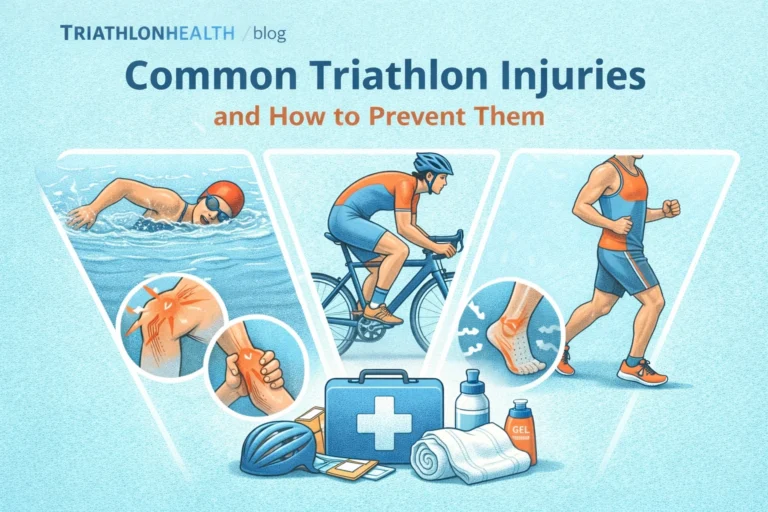
Triathlon injuries prevention should be a priority for every athlete who trains seriously. Whether you are a beginner doing your first sprint or a pro training for long distance, injuries can derail months of work. This article explains common injuries, why they happen, and clear steps you can take to reduce risk and stay healthy during training and racing.
Common Triathlon Injuries
Knowing the most common injuries helps you spot early signs and act fast. Triathletes face a mix of swim, bike, and run stresses. Some injuries come from repetitive use, others from sudden overload. The list below shows the injuries you will likely meet on the road, in the pool, and on the bike.
These injuries vary by sport segment. Runners often face knee and shin problems. Cyclists focus on knee and lower back pain. Swimmers can get shoulder irritation. Many athletes also see issues that affect more than one area, such as tendonitis and stress fractures.
Early recognition makes treatment simpler and faster. If you notice persistent pain that does not improve with rest, adjust training, or simple self-care, it is time to change your approach. Acting early prevents small issues from becoming long absences from training.
Here are the frequent problems triathletes meet and short notes on what they feel like and where they occur.
Common injuries include:
- Runner’s knee (patellofemoral pain), pain around or behind the kneecap.
- IT band syndrome, sharp pain on the outside of the knee during running or cycling.
- Achilles tendinopathy, tightness and pain at the back of the heel.
- Plantar fasciitis, heel pain first thing in the morning or after rest.
- Hamstring strains, sudden pain in the back of the thigh from overstretch or overload.
- Lower back pain, from poor bike fit or core weakness.
- Shoulder impingement and rotator cuff strain, often from high swim volume or poor technique.
- Tendonitis in the knee, hip, or shoulder from repetitive motion without adequate recovery.
- Stress fractures, small bone cracks from high load or sudden increase in training.
Why Injuries Happen
Understanding causes helps you avoid repeating mistakes. Injuries do not usually come from one single event. They appear from a mix of training load, technique, equipment, and recovery habits. When one factor is weak, others start to fail and pain appears.
Training errors are the most common cause. Increasing volume or intensity too fast forces tissues to adapt faster than they can. This overload creates tiny damage that piles up and becomes pain. Many athletes feel fine until a sudden spike in training reveals a problem.
Technique matters for all three sports. Poor running form can create excess knee or hip stress. Inefficient swim stroke can overload the shoulder. Bad bike position can strain the neck, shoulders, and lower back. Correcting form early prevents many issues.
Equipment and fit also play a role. A bike that does not fit you forces the body into awkward positions. Shoes with poor support change running mechanics. Even the wrong wetsuit fit can alter swim position and shoulder motion slightly, adding stress. Pay attention to gear and make changes gradually.
triathlon injuries prevention
Putting prevention first gives you more consistent training and faster progress. The goal is to reduce risk while keeping training effective. Many measures are simple, low cost, and effective. You do not need complicated tools to protect your body.
Prevention has three main parts: smart training, good mechanics, and recovery. Balance these areas and you will reduce injury risk. Each area has specific steps you can do right away. Small daily habits add up to big protection over time.
Below are practical steps to include in a weekly plan. Use them as a checklist and adapt to your level. The items below will help you prevent triathlon injuries and maintain steady gains.
Key prevention steps include:
- Gradual increases in load and intensity to allow tissue adaptation.
- Regular strength work for the hips, core, and legs to support joints.
- Consistent warm-up and mobility routines before sessions.
- Proper bike fit and good running shoes, matched to your mechanics.
- Planned recovery, including sleep, nutrition, and active recovery sessions.
Training and Load Management
How you plan training is the top factor in avoiding time off. Load management means tracking volume and intensity and making gradual changes. A steady plan lets tendons, bones, and muscles strengthen without failing.
Use simple rules to guide progression. A common approach is the 10 percent rule, which suggests not raising weekly volume by more than 10 percent. This rule is not perfect for every athlete, but it gives a safe baseline. Adjust slower if you feel more tired or are older and new to high volume.
Mix hard, moderate, and easy days in a clear plan. Hard sessions push fitness, but too many hard sessions without easy days add risk. Make easy days truly easy. These sessions allow recovery while keeping consistency. You will get faster and avoid breakdowns.
Monitor signs of too much load. Worsening fatigue, sleep issues, constant muscle soreness, and steady performance drops are red flags. When you see these, reduce volume or intensity for a week and increase recovery. That adjustment often prevents a small problem from becoming an injury.
Strength Training and Balance
Adding strength sessions is one of the most effective ways to prevent injury. Strength work builds the muscles that protect joints and store elastic energy. Strong, balanced muscles reduce stress on tendons and bones. You do not need long gym sessions to get benefits.
Focus on quality over quantity. Two short sessions per week that target hips, glutes, core, and single-leg strength will help. Exercises like squats, lunges, deadlifts, hip bridges, and single-leg Romanian deadlifts transfer well to swimming, biking, and running. Use moderate loads with good form.
Include both strength and power work. Strength gives durability, power gives speed and efficient force transfer. Simple plyometrics, such as low box jumps or single-leg hops, done carefully, improve running economy and tendon resilience. Start with low volume and build slowly to avoid overload.
Balance left and right sides. Asymmetry often causes pain. Include single-leg work and monitor for differences. Fixing side-to-side imbalances decreases the chance of developing overuse injuries on the stronger side. A coach or physiotherapist can help identify key weaknesses.
Warm-up, Mobility, and stretching triathlon
Good warm-ups prime the nervous system and increase tissue temperature. A proper warm-up reduces the chance of strains and improves performance. For triathletes, warm-ups must be sport specific so muscles and joints move in the patterns you will use.
Start sessions with 10 to 20 minutes of progressive warm-up. For swim workouts, include easy paced swimming and arm circles. For bike workouts, spin with light resistance and include a few cadence drills. For runs, begin with brisk walking, easy jogging, and dynamic drills that mimic race speed.
Mobility and targeted stretching triathlon routines help maintain joint range and correct tight areas. Use dynamic mobility before training, and reserve static stretching for after sessions when tissues are warm. Tight hips, calves, and shoulders are common; regular mobility reduces stress and improves technique.
Here are warm-up and mobility moves to include:
- Dynamic leg swings and walking lunges to open the hips and hamstrings.
- Calf raises and ankle circles to prepare the lower leg for running.
- Thoracic rotations and band pull-aparts for better swim and bike posture.
- Short accelerations or strides before hard runs to prepare the nervous system.
- Short, light pedal intervals on the bike before steady efforts or climbs.
Bike Fit, Gear, and Technique
Bike fit is a major piece of prevention that is often overlooked. A poor fit changes pelvic and spinal position and forces muscles to work in awkward ways. Small adjustments to saddle height, handlebar reach, and cleat placement reduce chronic pain and improve power.
Get a professional bike fit if you can. A fit that suits your flexibility and riding style prevents lower back, neck, and knee pain. If a pro fit is not possible, make conservative changes: a slightly higher saddle reduces knee strain for many athletes, while a neutral cleat position helps distribute force evenly.
Shoes also matter. Running shoes should match your mechanics and training load. Replace shoes on a schedule and watch for wear patterns. For the swim, ensure your wetsuit fits well and does not restrict shoulder motion. Small gear choices can make a big difference in comfort and injury risk.
Technique practice is prevention. Drills for swim stroke, cadence work for the bike, and running form drills keep movement efficient. Efficient movement lowers tissue stress and reduces the chance of overload. Invest time in technique early and often.
How to prevent triathlon injuries with session plans

You can design weekly sessions with prevention in mind. A balanced week includes a swim, bike, and run focus, plus strength and recovery. Plan load so you do not repeat very hard sessions across consecutive days. That layout reduces cumulative stress on tissues.
Below is an example weekly structure you can adapt to your time and race distance. The goal is to keep a mix of quality, volume, and rest. Use this as a template and tune it for your needs and schedule.
Example week:
- Monday: Recovery swim and core work, short and easy.
- Tuesday: Bike interval session with short strength session afterwards.
- Wednesday: Moderate run with technique drills and mobility work.
- Thursday: Swim speed or technique session and a light gym session focused on hips.
- Friday: Easy bike or rest day with stretching and foam rolling.
- Saturday: Long ride or brick session (bike then short run), keep intensity controlled.
- Sunday: Long run at steady pace or race pace practice with cool down and recovery routine.
Signs to change course and triathlon recovery
Knowing when to back off is part of staying healthy. Persistent or worsening pain, swelling, or loss of function are signs you need to adjust training. Rest for a few days does not mean you fail; it often prevents a longer break later.
Good triathlon recovery includes sleep, nutrition, hydration, and active recovery. Sleep is the most powerful recovery tool you have. Aim for consistent sleep each night and plan extra rest after hard blocks. Nutrition that supports repair, like adequate protein and balanced calories, speeds tissue healing.
Active recovery keeps blood flow moving without adding load. Easy bike spins, gentle swims, or short walks can help remove metabolic waste and maintain movement. After hard sessions, use these methods to recover while still staying consistent.
If pain persists despite rest and smarter training, include targeted rehab. Simple exercises and progressive loading often resolve tendon or muscle issues. Early physiotherapy is a good option for stubborn problems and can speed triathlon recovery when used correctly.
When to Seek Professional Help
Some problems need professional care. If pain limits daily activity, causes numbness or tingling, or persists for more than two weeks despite rest, see a professional. Early assessment gives clear action and reduces the chance of long-term problems.
Professionals include physiotherapists, sports physicians, and bike fit specialists. A physiotherapist can identify movement faults, give rehab exercises, and guide a safe return to training. A sports physician can check for stress fractures or medical issues that mimic training pain.
Do not wait for complete loss of function to act. Many successful athletes work with specialists at the first sign of lingering pain. That approach gets you back to full training faster and helps you learn ways to prevent the problem in future seasons.
When working with pros, bring a training log. Data on training load, intensity, and recent changes helps the clinician find root causes. Good communication speeds the process and leads to a clearer, faster plan for recovery and return.
Practical daily habits to prevent triathlon injuries
Small daily habits build resilience. Simple routines done most days of the week protect your body more than occasional large efforts. The habits below are easy to add and repay you with lower injury risk and more consistent training.
Daily habits include short mobility sessions, a brief strength routine two to three times per week, quality sleep habits, and easy recovery movement on rest days. These actions do not take much time but give big protection. Consistency beats intensity for long-term health.
Another useful habit is regular self-checks. Spend two minutes after sessions to note pain, stiffness, or odd feelings. Track these notes in your training log. When patterns show up, you can act quickly instead of waiting for serious pain.
Finally, stay curious and learn from each season. Adjust your plan if you get recurring pain. Use what you learn about your body to improve future training blocks and to prevent repeat injuries.
Key Takeaways
Triathlon injuries prevention comes down to four things: smart training, strong and balanced muscles, good technique and fit, and consistent recovery. Use simple rules to guide load, keep strength and mobility in your weekly plan, and watch for early warning signs.
Act early when pain starts. Short rest, adjustment of training, and targeted exercises will often resolve problems quickly. If pain persists, get a professional assessment to rule out serious issues and to speed recovery. Working with a physiotherapist or coach is a smart investment for long-term consistency.
Make prevention a daily focus and your training will be more reliable. Small, consistent actions protect you from the big setbacks and help you reach race day ready. Keep these ideas in your plan, and you will reduce the time you spend injured and increase time training and racing confidently.
Use this guide as a reference for your season. Apply the steps that match your level, and adjust sooner rather than later if you notice signs of overload. With attention to prevention, you will enjoy more progress and fewer interruptions on your triathlon journey.