
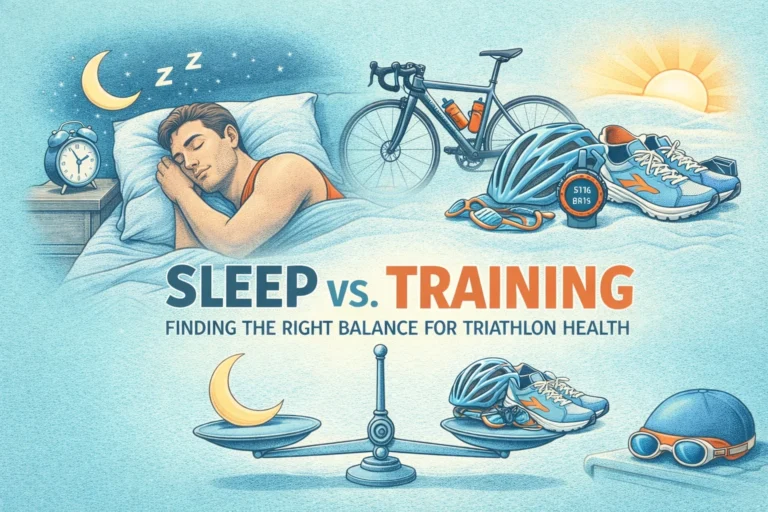
Top-level performance on race day depends on more than miles logged on the bike or laps in the pool. Sleep plays a central role for every triathlete, and understanding sleep vs training triathlon can be the difference between consistent gains and stalled progress. This article explains how sleep affects training, how training affects sleep, and practical ways to balance both so you improve performance while staying healthy.
Why sleep matters for triathletes
Sleep is when the body does most of its repair and adaptation. Muscles rebuild, inflammation goes down, and the brain consolidates skills and tactics learned during practice. For triathletes managing swim, bike, and run workloads, these processes matter a lot. Missing sleep reduces the benefit of a hard session and makes it harder to handle the next workout.
Sleep also affects hormones that regulate recovery and performance. Growth hormone and testosterone help tissue repair. Cortisol rises when sleep is poor, and chronic elevation can blunt gains and increase injury risk. Hormonal shifts change appetite and energy, which can lead to weight shifts and weaker workouts.
On the mental side, sleep matters for focus, decision making, and motivation. Open water swims, transitions, and race tactics require clear thinking. Poor sleep increases reaction time, reduces concentration, and can make race-day stress harder to manage. For competitive triathletes, even small declines in mental sharpness can cost places.
Because of all these factors, sleep belongs in any training plan alongside intervals, long rides, and technique work. The trade-off between adding training time and preserving sleep is real. That trade-off defines the central question of sleep vs training triathlon, and getting it right is a high-return investment.
How training intensity and timing affect sleep
Not all training affects sleep the same way. High-intensity sessions late in the day can raise heart rate and adrenaline, making it harder to fall asleep. Volume-focused days that leave you physically exhausted often lead to deeper sleep, but too much chronic volume without recovery causes restlessness and fragmented sleep.
Training timing matters. Early morning workouts can push your body clock earlier, which can be useful if you are racing in the morning. Evening sessions close to bedtime can interfere with the ability to wind down. Travel for races or training camps also disturbs sleep timing and reduces sleep quality.
Training stress accumulates. Weeks with many hard sessions increase the need for sleep. When athletes ignore that need, performance drops and injury risk rises. Coaches and athletes should treat sleep as a modifiable recovery tool that can be increased during heavy training blocks to preserve adaptive response.
A practical rule is to match sleep opportunity to training load. If you add intensity or volume, add bed time or daytime naps. That adjustment helps the body complete the recovery tasks required after tougher sessions and keeps training benefits on track.
How sleep affects training performance
Sleep quality and duration have immediate effects on speed, power, and endurance. Studies show that reducing sleep by even one hour per night for several nights lowers submaximal endurance and reduces time to fatigue. For triathletes, this can mean slower runs off the bike and weaker efforts on steep climbs.
Mental aspects are equally affected. Sleep loss impairs decision making, reduces patience, and increases perceived effort. During long races, small pacing errors or poor nutrition choices can become costly. Well-rested athletes judge pace better and respond to changing race conditions more effectively.
Sleep also affects the immune system. Poor sleep increases the chance of upper respiratory infections, which can force missed training or races. Preventing illness through sleep is a predictable way to protect seasonal training plans and race goals.
Understanding sleep impact triathlon means treating sleep as a performance metric. Track it alongside power, pace, and heart rate. When sleep falls, expect training to lose quality, and adjust the plan rather than push harder with poor recovery.
Finding your personal balance between sleep and training
There is no single prescription that fits every triathlete. Age, training phase, work schedule, family, and genetics all shape sleep need. Some athletes perform well with seven hours, while others need nine to feel sharp. The key is to find a balance that supports the training plan without chronic fatigue.
Start by tracking sleep and training together for several weeks. Note session quality, perceived fatigue, and mood along with sleep duration and sleep efficiency. This simple tracking reveals patterns. For example, you may see that after two nights of poor sleep interval sessions feel much harder.
When sleep drops, adjust training. That could mean reducing intensity, shortening sessions, or scheduling an extra easy day. A second approach is to protect sleep by changing training timing, shifting high-intensity work earlier in the day, or adding a short nap to increase total rest.
Coaches should program recovery proactively, not reactively. Use planned easy weeks, sleep-focused recovery days, and lighter sessions after travel. When athletes practice balancing sleep vs training triathlon during low-stakes periods, they will be better prepared for race weeks.
Practical sleep strategies for triathletes
Good sleep starts with simple habits that create consistent sleep opportunity. A bedtime routine, regular wake time, and an environment that supports rest matter. These actions help the body fall asleep faster and stay asleep longer, which increases recovery quality even when training is heavy.
Below is a short list of practical changes you can make tonight to improve sleep. Read the sentence that follows, then review the list for specific suggestions that many triathletes find effective.
- Aim for consistent sleep and wake times, even on weekends.
- Create a pre-sleep routine that includes low-arousal activities like reading or gentle stretching.
- Keep the bedroom cool and dark to promote deeper sleep.
- Limit bright screens for at least 30 minutes before bed.
- Use naps strategically: 20 to 40 minutes can boost recovery without disrupting night sleep.
Nutrition also influences sleep. Avoid heavy meals and large amounts of caffeine within several hours of bedtime. Post-workout protein and carbs can aid recovery, but plan them so digestion does not disrupt sleep. Hydration matters, but try to finish fluids an hour or two before bed to reduce night waking.
If you travel for races, simulate race-day sleep patterns before you leave. Shift bed and wake times gradually, and plan naps around the travel schedule. Pack tools that help you sleep on the road, such as earplugs, a travel pillow, and a lightweight blackout mask.
For athletes seeking targeted help, consider a sleep coach or sports psychologist. These professionals can help with persistent insomnia, travel fatigue, and race-week anxiety that affects sleep. Combining coaching with small habit changes often produces reliable improvements.
Best products to support sleep and recovery for triathletes
Selecting the right gear can help triathletes get better sleep and faster recovery. Below is an explanation and a short list of categories that deliver the most impact for athletes balancing sleep vs training triathlon. Read the paragraph, then see product types you should consider.
- Mattress that matches your sleep position and body weight to support spinal alignment during deep sleep.
- Wearable sleep trackers that record sleep stages, movement, and heart rate variability to guide training decisions.
- Blackout curtains and comfortable bedding to stabilize the sleep environment in different locations.
- White noise devices or apps to mask disruptive sounds during travel or noisy neighborhoods.
- Cooling pillow or mattress topper to maintain ideal sleep temperature during hot nights.
For triathletes focused on data, a wearable that tracks sleep and recovery metrics can be a commercial priority. Devices that measure heart rate variability alongside sleep stages provide actionable guidance. Many athletes use these metrics to decide when to prioritize sleep and when to push hard. This blends training science with practical decisions.
Another high-impact purchase is a quality mattress. Deep sleep increases after a long day of training, and a mattress that provides consistent support helps maintain sleep quality night after night. Choose a mattress that balances support and comfort and test it when possible.
Accessories like blackout curtains, a cooling pillow, and a white noise machine are lower-cost ways to protect sleep on race trips and during heavy training blocks. These items are easy to pack or buy on the road, and they reduce sleep disruptions that would otherwise blunt recovery and performance.
Sample weekly plan that balances sleep vs training triathlon

Putting principles into practice requires a plan you can follow. Below is a realistic weekly layout that shows how to structure training and sleep in a way that supports performance. Read the paragraph, then review the sample schedule and notes that follow.
- Monday: Easy swim in the morning, 7.5 to 8.5 hours sleep at night. Focus on recovery nutrition.
- Tuesday: Morning intervals on the bike, short nap in the afternoon if possible, 8 to 9 hours sleep.
- Wednesday: Long swim plus easy run, prioritize an early bedtime and a calming pre-sleep routine.
- Thursday: Tempo run in the morning, easy bike later, maintain consistent wake time, short nap if needed.
- Friday: Easy day with light strength work, aim for the longest sleep opportunity this week to prepare for the weekend.
- Saturday: Long bike or brick session, schedule recovery strategies after the ride and target 8 to 9 hours sleep.
- Sunday: Moderate long run or mixed aerobic day, include an afternoon nap if sleep was short the previous night.
Notes on the sample week: fit naps into the day when training intensity or travel reduces night sleep. Keep naps under 45 minutes to avoid deeper sleep that makes waking hard. Use morning high-intensity sessions when possible so evening arousal is lower and sleep comes easier.
During heavy training blocks, add a scheduled nap day and reduce evening social or work commitments. These small changes increase total recovery without cutting key sessions. The sample schedule treats sleep as an adjustable training input that you can increase to protect adaptation.
Race-week adjustments: taper volume, protect sleep opportunity by reducing late-day meetings and travel where possible, and use consistent wake and bed times. If you must travel, arrive early to re-establish routine. Track sleep triathlon health as part of the race-week checklist to spot problems early.
Key Takeaways
Sleep is a core performance tool for triathletes and must be balanced against training load. When you compare sleep vs training triathlon, remember that adding more hours of training often requires adding more sleep to keep gains and avoid injury. Treat sleep like a scheduled session in your plan.
Practical habits, such as a consistent sleep schedule, thoughtful nutrition timing, and a good sleep environment, produce measurable improvements in recovery. Use naps strategically and pick products that support restful nights, from mattresses to wearable trackers. These purchases support commercial decisions when you search for the best gear to improve sleep and recovery.
Track sleep alongside training metrics and respond when sleep worsens. Reduce intensity, or increase sleep opportunity. Small adjustments made early prevent big problems later. The phrases sleep tips triathletes, sleep impact triathlon, and sleep triathlon health are useful search queries to guide further product and strategy research.
If you act on the practices here, you will likely notice better quality workouts and steadier fitness gains. Balance is not a single decision, it is a set of daily choices that add up. Pay attention to sleep, plan for it, and make sleep part of your race preparation and gear shopping list.