
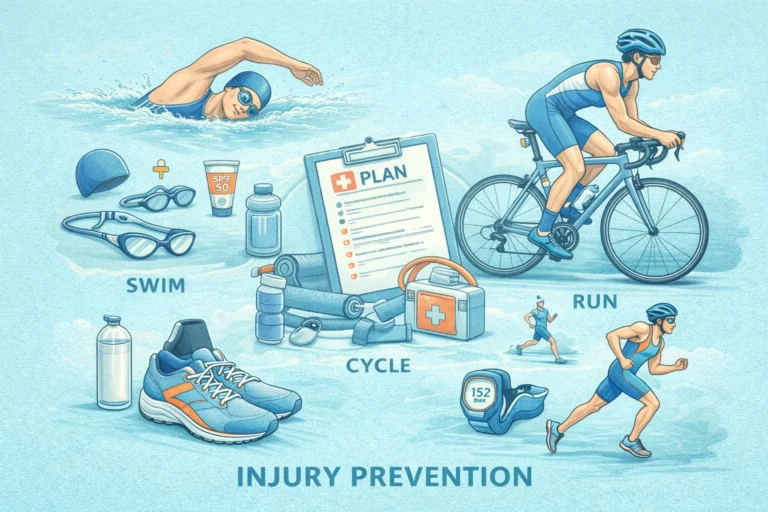
Injuries are the fastest way to stop progress and spoil race plans. This article focuses on triathlonhealth injury prevention, with clear steps you can use today. You will find training advice, strength work, recovery tips, and practical checks you can use before a race. Read on to learn how to stay healthy and keep training consistent.
Core principles of triathlonhealth injury prevention
Prevention begins with clear principles you can follow week after week. These ideas guide daily choices and help athletes avoid setbacks. Think of them as simple rules you can apply to training, gear, and recovery.
First, balance is key. Training must mix volume, intensity, and rest. Too much of one element creates stress that tissues cannot handle. You need steady progression and planned recovery to make fitness gains without injury.
Second, consistency beats extremes. Regular, moderate training builds a base more safely than sporadic intense weeks. Small, steady increases in load work better than sudden jumps. That reduces overload problems like tendinopathy and stress fractures.
Third, listen to objective signs and subjective feedback. Tools like training logs, sleep tracking, and simple pain charts give early warning. Body signals matter. Address small issues quickly so they do not become long problems.
Manage training load
Training load is the single biggest driver of injury risk. Load means how much work you do, how hard it feels, and how often you do it. Smart load management lowers injury risk and improves performance.
Use gradual increases. A common rule is to raise total weekly load by no more than 10 percent. That rule is a guideline, not a strict law. Some athletes adapt faster, others need a gentler ramp. Track how you feel and change the plan if soreness or fatigue builds.
Mix hard and easy days. Hard sessions drive fitness. Easy days let tissues adapt and recover. Include at least one full rest day each week. If you add a second rest day, make it active recovery like easy cycling or walking.
Before lists, here is a quick explanation of practical load tools you can use to guide training. These tools help you monitor both the quantity and quality of work.
- Training records, noting duration, intensity, and symptoms.
- Rate of perceived exertion, to scale effort across sessions.
- Weekly and monthly totals, to spot sudden jumps in load.
- Planned recovery weeks every 3 to 6 weeks, to allow adaptation.
Strength and conditioning for injury resistance
Strength is a core defense against injury. Strong muscles and connective tissue handle impact and load better. Strength work also improves economy and power on the bike and run.
A simple program with three sessions per week can make a big difference. Focus on compound lifts, single-leg strength, and trunk stability. Use moderate loads and focus on control rather than maximal lifts for most triathletes.
Include mobility and soft tissue work alongside strength. Good joint range of motion helps technique and reduces strain on other areas. Foam rolling and targeted mobility drills support muscle recovery and can ease tightness between sessions.
Below are effective strength priorities for triathlon athletes. Add these drills to your weekly routine and scale them to your level and experience.
- Single-leg squats or step-ups for leg symmetry and balance.
- Hip hinge movements like Romanian deadlifts for posterior chain strength.
- Planks and side planks for trunk control and transfer of power.
- Push and pull upper body work to support swim strength and posture.
Swim, bike, run technique and injury prevention
Technique reduces wasted energy and lowers strain on tissues. Small faults repeated thousands of times cause overuse problems. Work on efficient movement to protect shoulders, knees, and lower back.
In the pool, set a plan to gradually increase load and work on stroke mechanics. Rotate drills with main sets so you do technical work when you are fresh. A coach or video feedback helps identify bad habits early.
On the bike, position matters. Poor fit can cause neck, shoulder, and knee pain. Pedal technique also matters. Smooth, even force throughout the pedal stroke reduces spikes of stress on the knee.
On the run, cadence and landing pattern matter most for many athletes. Shorter stride length and a slightly higher cadence can reduce impact. Add technique drills like high knees and skip drills to build motor control.
Bike fit and gear choices
Equipment that fits you reduces injury risk. A proper bike fit prevents chronic neck, shoulder, and knee pain. Shoes that match your arch and gait make running safer and more efficient.
Spend time testing gear in training before race day. A small saddle change or a different shoe can make a big difference. Make changes when you have time to adapt, not the week before a race.
Regular bike maintenance also matters. A slipping cleat, a loose stem, or the wrong handlebar width can force bad posture. Keep your equipment well set up and clean so you are not fighting your gear during hard efforts.
Here are practical checks to run through before buying or adjusting gear. These checks help you avoid common setup errors.
- Professional or experienced fit for your ride geometry and flexibility.
- Shoe fit and sole stiffness that matches your run mechanics and power needs.
- Saddle type and position that avoid pressure points and numbness.
- Handlebar reach and drop that allow a stable but comfortable aero position.
Warm-up, cool-down, and flexibility routines

Warm-ups prepare tissues for work and reduce injury risk. A good warm-up raises core temperature, increases blood flow, and rehearses movement patterns. It also helps your nervous system fire the right muscles at the right time.
Cool-downs support recovery. Slow aerobic work, light stretching, and breathing drills help clear metabolites and reduce stiffness. Cool-downs also give you a chance to note any unusual soreness or tight spots after a session.
Flexibility is not the only answer to injuries, but targeted mobility helps. Prioritize tight areas like hips, calves, and thoracic spine. Work on mobility regularly in short, consistent sessions rather than long occasional stretches.
Below are simple warm-up and cool-down patterns you can use before and after key sessions. They are quick and practical for busy athletes.
- Warm-up: 10 minutes easy aerobic work, followed by dynamic drills for movement patterns.
- Swim warm-up: progressive pace with stroke drills and 100 to 400 meters of technique work.
- Cool-down: 5 to 10 minutes easy aerobic work then light stretching and mobility for 5 minutes.
- Short mobility: 5 minutes of hip, ankle, and thoracic spine movements on non-hard-training days.
Nutrition, hydration, and supplements for prevention
Fuel and fluids influence recovery and tissue repair. Poor nutrition can slow healing and increase injury risk. Make sure you fuel to match training load and recovery needs.
Protein intake supports muscle repair. Aim for regular protein at each meal and after sessions. Carbohydrate intake matters for hard sessions, as low glycogen increases perceived effort and reduces technique quality.
Hydration affects tendon and joint function. Dehydration can increase stiffness and reduce smooth movement. Drink according to sweat loss and environmental conditions, not just thirst during heavy training.
Below is a short list of nutritional tips that support injury prevention and recovery. Follow these guidelines week to week for best results.
- Daily protein goal of around 1.2 to 1.6 g/kg for most endurance athletes.
- Carbohydrate periodization: more carbs on heavy days, less on easy days.
- Consistent hydration strategy, including electrolytes for long sessions or hot weather.
- Use supplements judiciously, prioritizing vitamin D and iron if tests show low levels.
Recovery, sleep, and triathlonhealth recovery practices
Recovery is as important as the training itself. Adaptation happens when you rest. Sleep supports muscle repair and hormonal balance. Poor sleep reduces resilience to training and raises injury risk.
Aim for regular sleep patterns and a sleep duration that fits your needs, often 7 to 9 hours for athletes. Short naps can help after long sessions or travel, but do not rely on naps to replace nightly sleep.
Active recovery strategies help with day-to-day freshness. Easy swims, light cycling, or mobility sessions increase blood flow without adding load. Combine these with compression, contrast baths, or massage when they fit your schedule.
Here are specific recovery actions that form part of a triathlonhealth recovery plan. Use these tools to reduce soreness and prepare for the next session.
- Regular sleep schedule with a wind-down routine for quality rest.
- Planned easy days and recovery weeks in the training plan.
- Targeted soft tissue work and mobility to manage tightness and scar tissue.
- Monitor markers like resting heart rate and mood to detect poor recovery early.
Monitoring, screening, and early detection
Early detection catches problems when they are easiest to fix. Screening and monitoring give you data to guide decisions. Use both subjective and objective markers for a full picture.
Simple tools work well. Daily check-ins on soreness, sleep, and mood take minutes and give trends. Weekly load charts and occasional fitness tests show if training is progressing as expected or if recovery is slipping.
Regular screens with a physiotherapist or coach can find movement faults before pain appears. Screening tasks like single-leg squat, hop tests, and hip mobility checks reveal weak links that training can fix.
Below are monitoring tools and screening checks you can include in routine practice. Use the ones that fit your level and access to professionals.
- Daily wellness log: sleep, soreness, mood, and energy.
- Weekly load summary: time, distance, intensity, and RPE.
- Periodic movement screens for symmetry and joint range.
- Heart rate variability or resting heart rate tracking for advanced monitoring.
Common injuries and how to prevent them
Knowing common issues helps you plan prevention. Some injuries recur because athletes do not change the habits that caused them. Learn the patterns and reduce those risks with focused action.
Shoulder pain from swim overuse is common in triathletes. Prevent it with balanced strength for the rotator cuff, careful technique, and gradual increases in swim volume. Swim drills and shoulder stability work are practical ways to cut risk.
Knee pain often arises from sudden increases in cycling load or poor running mechanics. Check bike fit and pedal stroke, and add single-leg strength work. Gradual volume progression and cadence work also reduce knee stress.
Here is a concise list of common issues and targeted prevention measures. Use this list to prioritize screening and training choices. The phrase triathlonhealth common injuries can be a guide to topics you should watch.
- Swimmer’s shoulder: address stroke technique and add rotator cuff work.
- IT band and lateral knee pain: mix strength, cadence, and hip control work.
- Achilles and calf issues: manage progression, include eccentric calf work, and address ankle mobility.
- Low back pain: improve core control, bike fit, and posterior chain strength.
Return to training and rehabilitation
When injury occurs, the goal is a safe return that prevents re-injury. The path back is gradual and guided by pain-free progression and objective gains. Do not rush the return.
Start with pain-free range of motion and simple load. Progress to controlled strength, then to sport-specific work. The timeline varies by injury, but consistent progression and monitoring are key.
Use clear criteria to move from one phase to the next. Criteria can include strength thresholds, pain scores, and functional tests. Progress only when criteria are met, and use triathlonhealth recovery practices to support adaptation.
Below are standard steps for a staged return to full training. These steps help structure rehab and give clear goals for each phase.
- Phase 1: pain-free movement and reduction of inflammation.
- Phase 2: strength and motor control with low load and higher reps.
- Phase 3: sport-specific loading with incremental volume and intensity.
- Phase 4: full return with monitoring and maintenance work to prevent recurrence.
Race-day and taper strategies to reduce injury risk
Tapering and race prep influence injury risk during key weeks. A poor taper or abrupt load changes before a race can cause soreness and delay recovery. Plan the taper and final load to balance freshness and readiness.
Maintain key race intensity during the taper, but lower volume. Keep short race-pace efforts to preserve sharpness. Avoid trying big changes in gear or shoes in the last week before a race.
On race day, stick to practiced nutrition and pacing. Overpacing early or poor fueling raises mechanical and metabolic stress. Practiced plans reduce surprises and lower the chance of technical breakdowns that lead to injury.
Here are tactical checks to keep injury risk low during the final weeks and on race day. Use these as a checklist during your taper and race prep.
- Keep consistent warm-ups and mobility routines practiced in training.
- Reduce volume while maintaining short intensity sessions for sharpness.
- Use familiar gear and avoid last-minute changes to shoes or bike setup.
- Manage pacing conservatively, especially in the first half of the race.
Mental training and long-term planning
Stress and mental fatigue influence injury risk. When you are tired, technique suffers and hard sessions feel harder. Work on mental skills like focus, planning, and realistic goal setting to reduce unnecessary risk.
Set a season plan that includes base phases, build phases, and recovery periods. Long-term planning smooths load and reduces random spikes that lead to injuries. Consistent, modest progress beats sudden increases.
Use mental strategies to deal with setbacks. When illness or injury interrupts training, a calm plan keeps you engaged and reduces panic decisions. A coach or supportive training group helps maintain perspective and structure.
Below are mental and planning steps that support physical prevention. These habits help you stay on track and make deliberate choices that protect your body.
- Create a season plan with clear phases and built-in recovery weeks.
- Set process goals as well as outcome goals to maintain focus on daily tasks.
- Practice stress management: breathing, sleep routines, and breaks from screens.
- Keep open communication with coaches and medical staff for early problem solving.
Key Takeaways
Preventing injury in triathlon is a mixture of smart training, disciplined recovery, and attention to technique and gear. Follow steady progressions, add targeted strength, and keep sleep and nutrition consistent. These core habits protect your training time and allow steady improvement.
Regular screening and tracking give early warning of problems. Use simple daily and weekly checks to detect trends. If pain appears, address it early with staged rehab and clear return-to-train criteria to avoid long layoffs.
Use the specific checklists and routines in this article to build your prevention plan. Keep it simple, consistent, and practical. The combination of good planning, strength work, and recovery makes the biggest difference over a season.
Finally, remember the phrases triathlonhealth common injuries and triathlonhealth recovery as reminders of topics to watch and habits to practice. They are practical guideposts in your ongoing work to stay healthy and race-ready.