
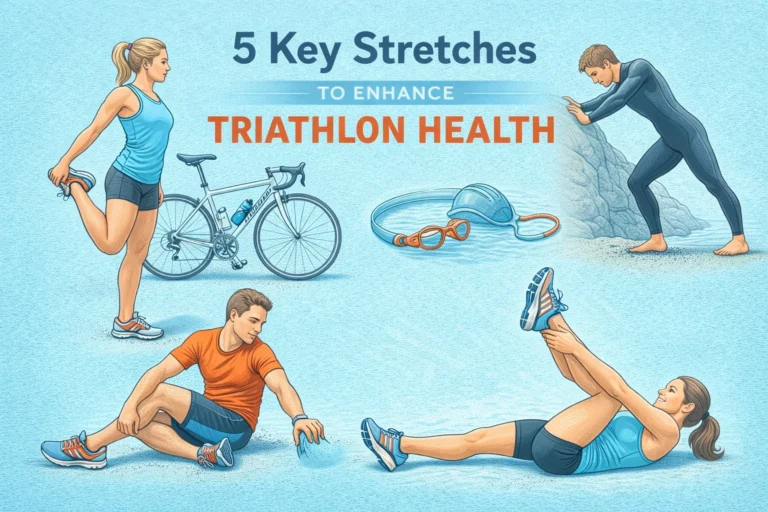
Stretching is a small habit with a big return for triathletes. Proper triathlonhealth stretches help with mobility, speed recovery, and injury prevention. This article explains five essential stretches, how to do them, when to add them to your training, and how to avoid common mistakes. Read on to build a clear routine you can use before and after swim, bike, and run sessions.
Why stretching matters for triathlonhealth
Stretching supports the three sports at the heart of triathlon. Each discipline places unique demands on muscles and joints. A focused set of triathlonhealth stretches prepares key areas like hips, hamstrings, calves, shoulders, and the lower back.
Some athletes skip stretching because they assume it slows them down. That is a misunderstanding. Done correctly, stretches increase joint range, reduce stiffness, and help make each training block more effective. The right routine can reduce soreness and speed up recovery between sessions.
Beyond performance, stretching plays a major role in keeping athletes consistent. Consistency is the single most important factor in long-term improvement. When you use triathlonhealth stretches as part of training, you lower the chance that a niggle becomes a setback.
How stretching reduces injury and boosts performance
Stretching improves tissue flexibility and neuromuscular control. That means your brain and muscles communicate more smoothly during changes of pace, transitions, and longer efforts. For triathletes, that translates to smoother bike-to-run shifts and fewer surprises during race day.
Well-timed stretches also support triathlonhealth injury prevention. Tight muscles change movement patterns. Over time, those altered patterns can lead to overuse problems. Regular stretching keeps tissues balanced and reduces stress on tendons and joints.
Stretching also helps recovery. A short, focused routine after intense sessions helps clear metabolic byproducts and reduces delayed muscle soreness. When you recover faster, you can train again sooner and maintain progress across the season.
5 Key Stretches for triathlonhealth

Below are five core triathlonhealth stretches that target the most stressed areas for triathletes. These moves are practical, effective, and easy to fit into warm-ups and cooldowns. Practice them with attention to breath and steady control.
First, here is a quick list of the five stretches. Use this as an index before you study each stretch in depth and follow the step-by-step instructions for safe execution.
- Hip flexor and quad kneeling stretch
- Piriformis and glute seated stretch
- Hamstring long-sit reach
- Calf wall stretch
- Shoulder cross-body and doorway stretch
Hip flexor and quad kneeling stretch
The hip flexors and quads take heavy loads in cycling and running. Tightness here shortens stride, limits hip extension, and can increase back stress. This kneeling stretch opens the front of the hip and the thigh, restoring a fuller running stride and better bike positioning.
How to do it. Start in a half-kneeling position with one knee on the floor and the other foot planted in front. Keep the torso upright, tuck the pelvis slightly, and gently push the hips forward until you feel a comfortable stretch in the front of the hip or thigh. Hold for 30 to 60 seconds, breathe calmly, then switch sides.
Progressions and cues. To increase the stretch, raise the arm on the same side as the kneeling leg and lean slightly away. Keep the glutes active to protect the lower back. Perform this stretch after a warm-up or as part of a cooldown to improve overall hip mobility and help with triathlonhealth injury prevention.
Piriformis and glute seated stretch
Piriformis tightness can cause pain that mimics sciatica and may limit your run mechanics. Glute tension also affects bike fit and comfort. The seated piriformis stretch isolates the external rotators and the upper glute, offering relief and better rotation at the hip.
How to do it. Sit on the ground with one leg extended and the other leg crossed so the ankle rests on the opposite knee. Gently lean forward from the hips while keeping your back long, until you feel a stretch in the buttock of the crossed leg. Hold for 30 to 45 seconds, breathing slowly. Switch sides and repeat.
Modifications. If you have limited mobility, perform the same movement while lying on your back and pulling the knee into the chest. That reduces compression and still targets the same tissues. Regular practice lowers tension that often shows up as discomfort during long rides or runs.
Hamstring long-sit reach
Hamstrings are crucial for running speed and bike power. Tight hamstrings reduce hip hinge and can increase strain on the lower back. The long-sit reach is a controlled stretch to restore length without overstretching before a hard workout.
How to do it. Sit with both legs extended in front of you. Keep a slight bend in the knees to protect the joint. Hinge at the hips and reach forward toward your toes, keeping the chest lifted. Move slowly until you feel a steady stretch along the back of the thigh. Hold 20 to 45 seconds and repeat twice.
How to use this stretch. Use shorter holds before fast workouts to avoid reducing force output, and longer holds after training to help tissue recovery. Combine the hamstring reach with light glute activation exercises to create a balanced posterior chain routine that supports triathlonhealth stretches work across disciplines.
Calf wall stretch
Calf tightness is a common source of pain for triathletes. It affects running stride and can lead to Achilles problems. A simple wall calf stretch restores ankle mobility and helps maintain an efficient foot strike while running.
How to do it. Stand facing a wall with hands on the wall at shoulder height. Step one foot back and press the heel down. Keep the back leg straight for a gastrocnemius focus, or slightly bend the back knee to reach the deeper soleus muscle. Hold each side for 30 to 60 seconds and repeat for two sets.
Tips and progressions. Perform this stretch after easy runs or warm cycling blocks. If you feel sharp pain near the Achilles, reduce the angle or stop. Increasing ankle mobility improves running cadence and reduces excessive forefoot loading that leads to common overuse issues.
Shoulder cross-body and doorway stretch
Swimmers know how much load the shoulders carry. Cycling posture and run-arm carriage also affect the shoulder complex. Combining a cross-body stretch with a doorway stretch addresses tight posterior and anterior shoulder structures.
How to do it. For the cross-body stretch, bring one arm across the chest and use the other arm to pull it closer at the elbow. Keep shoulders down and breathe into the stretch for 20 to 40 seconds. For the doorway stretch, place hands and forearms on a doorway frame and step forward until you feel a stretch across the chest. Hold 20 to 40 seconds.
When to use them. Use the cross-body stretch during cooldowns to ease tight rear shoulder tissues after swim sets. Use the doorway stretch to loosen the chest before long bike sessions when you sit in an aero or bent-over position for long periods.
When to do triathlonhealth stretches
Timing matters for stretching. Before a high-intensity session, focus on mobility and short dynamic moves. Static holds are better after training or on recovery days. Balancing timing ensures you do not blunt power while still gaining flexibility and reducing tightness.
Warm-up window. Before speed efforts, use dynamic versions of the same motions. For example, do walking lunges or leg swings instead of long static hip flexor holds. This prepares the nervous system and primes muscles for work without reducing maximal force production.
Cooldown window. After sessions, choose longer static stretches. Hold stretches for 30 to 90 seconds to support tissue relaxation and recovery. This is a good time to add the hamstring reach, calf wall stretch, and the seated glute stretch, because muscles are warm and respond well to deeper lengthening.
Daily mobility. On easy days, add a short routine that targets the five key areas. Even 10 minutes of consistent triathlonhealth stretches on non-training days helps maintain range and lowers the risk of redeveloping tightness between sessions.
Common mistakes and safety for triathlonhealth stretches
Stretching is simple, but mistakes lead to problems. Common errors include bouncing during a stretch, ignoring pain, and holding long static stretches before very intense efforts. Awareness of these mistakes keeps training safe and productive.
Avoid ballistic stretches. Bouncing into a stretch creates micro-tears and increases the risk of strain. Use steady, controlled movement when moving into position, and then hold the stretch with calm breathing. That gives tissues time to relax and lengthen safely.
Listen before push. Pain is a protective signal. If a stretch causes sharp pain, ease off and reassess. Persistent sharp pain after stretching may require a coach or medical review. For everyday checks, remember the phrase listen to body triathlonhealth and act on those cues.
Be aware of common problem zones. Many triathletes suffer from issues tied to weakness and tightness rather than single injuries. These include lower back tightness from limited hip extension, calf strains from sudden increases in run volume, and shoulder tendon irritation from poor swim mechanics. Regular triathlonhealth common injuries guidance and targeted stretching help reduce their frequency.
Putting triathlonhealth stretches into practice
Consistency and context create results. A simple weekly plan that mixes short dynamic routines before workouts and longer static stretches after sessions yields big gains. The following sample routines give clear structure you can copy and adapt to your schedule and training intensity.
Below are two sample routines. One is for pre-workout mobility, the other for post-workout recovery. Use them as templates and adjust hold times and reps based on how your body feels.
- Pre-workout mobility routine: 6 to 10 minutes of dynamic movements
- Post-workout recovery routine: 10 to 15 minutes of focused static stretches
Sample pre-workout routine. Start with a 5-minute easy cardio warm-up, such as an easy spin or light jog, to increase tissue temperature. Then perform leg swings front to back and side to side for 8 to 12 reps each leg. Add walking lunges with a torso twist for 8 to 10 steps per side. Finish with 2 sets of 30-second hip flexor glides and gentle shoulder arm circles.
Sample post-workout routine. After your cooldown, find a calm place to sit or stand. Begin with the hamstring long-sit reach for two sets of 30 to 45 seconds. Follow with the calf wall stretch for two sets of 45 seconds per side. Do the seated piriformis stretch and the kneeling hip flexor hold for 45 to 60 seconds each side. Finish with gentle doorway stretches for the chest and cross-body holds for the rear shoulder.
Weekly layout. On high-load days, prioritize recovery stretches after the session. On low-load or technique days, add more mobility minutes. For long training blocks or taper weeks, maintain daily brief sessions to support circulation and keep tissues responsive. If you want to reduce the risk of setbacks, combine these routines with strength work and targeted triathlonhealth injury prevention strategies.
How to progress and measure improvement
Progress comes from steady practice and tracking small wins. Use simple measures like ease of reaching toes, decreased stiffness after morning wake-ups, and fewer aches during long rides or runs. Track these observations in a training log so you can see trends across weeks and months.
Set small goals. Examples include being able to hold a deeper hip flexor position without lower back pain or moving from a 30-second calf hold to a 60-second hold with less discomfort. These small, clear goals keep motivation high and show the real value of triathlonhealth stretches in daily training.
Combine with strength and technique. Flexibility is one piece of the puzzle. Pair stretching with strength work for the hips, core, and scapular stabilizers to create durable movement patterns. That balanced approach gives the best protection against recurring problems and supports faster improvements in efficiency.
Key Takeaways
Regular stretching is a practical tool for triathletes. The five triathlonhealth stretches described here target hips, glutes, hamstrings, calves, and shoulders. Use dynamic work before sessions and longer holds after training to gain the most benefit.
Stretching reduces the risk of common overuse issues and supports recovery between sessions. Keep a habit by adding short daily mobility work and more focused routines on recovery days. Track progress with simple measures like range and soreness levels.
Pay attention to warning signs and avoid aggressive techniques that cause pain. If you want to protect your season, pair stretching with strength training and regular technique checks. Strong, flexible athletes can train more consistently and perform better on race day.
Use these triathlonhealth stretches as a foundation, and adapt them to your needs. Remember to listen to your body, adjust hold times, and combine stretching with proper load management to stay healthy and progress across the season.
triathlonhealth common injuries, triathlonhealth injury prevention, listen to body triathlonhealth