
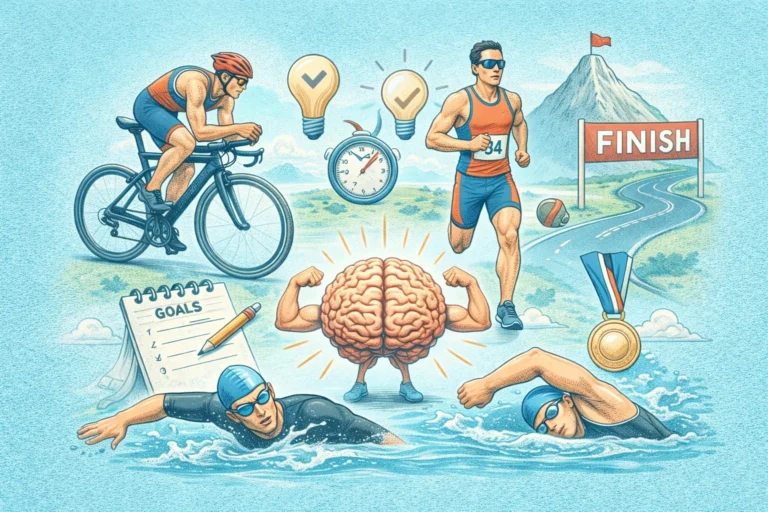
As a triathlon journalist and coach, I have watched athletes transform their results by learning how to develop mental toughness. Racing tests more than fitness. It tests your focus, your plan, and your will. This article explains clear steps and everyday drills that help you grow mental strength for training and race day.
Read on to find practical advice you can use now. The tips are simple, tested, and aimed at racers who want steady gains. You will learn skills, practice methods, and race routines that fit into training plans.
Why develop mental toughness for racing
Mental toughness decides who executes a race plan when fatigue sets in. Physical training gives you the engine. Mental training keeps you on course. When you learn to manage thoughts and stress, you keep speed, pacing, and focus under pressure.
Racing throws many surprises. Weather changes, equipment issues, or a bad swim can happen. Mental toughness lets you adapt without losing control. It also helps you remain calm and smart when other racers respond to stress with panic or overreaction.
Strong mental skills improve more than results. They reduce race anxiety and make training more enjoyable. You stay committed to the work. You recover better from setbacks. That steady progress creates confident racers who handle tough courses with poise.
As an expert covering many events, I have seen athletes use focused mental work to move up their age group and finish stronger in multi-sport events. This is repeatable. The next sections show how to train those skills.
Core mental skills to train
Before you try drills, it helps to know the core skills to build. These skills are the foundation of mental toughness. They are easy to practice, and they apply across running, cycling, and swimming.
- Goal clarity: Set specific race goals and process goals. Know what success looks like for pacing and effort.
- Focus and attention control: Learn to shift attention to the present task and ignore distractions.
- Positive self-talk: Replace negative thoughts with short, realistic cues.
- Imagery: Visualize race sections, transitions, and strong finishes.
- Arousal control: Use breathing and routines to manage nerves and stay calm.
Each skill works together. For example, a clear goal makes imagery more useful. Positive self-talk supports focus under stress. Build these skills step by step and keep practice simple.
In the triathlon context, use mental strategies triathlon in your weekly plan. That means scheduling short mental sessions the same way you schedule intervals. The effort adds up quickly and becomes automatic over months.
How to practice mental skills in training
Practicing mental skills takes consistency. Short daily practice is better than rare, long sessions. Here are concrete drills you can add to workouts to develop mental toughness.
Start with this short list of drill types. Each drill has a clear purpose and a simple way to do it during training.
- Focused breathing sets: During warm-ups or easy intervals, practice a 4-6 second inhale and 4-6 second exhale to lower heart rate and reset focus.
- Attention switching: During steady efforts, name three physical cues (breathing, cadence, form) and rotate focus every 30 seconds to train control of attention.
- Controlled negative thought practice: Intentionally notice a negative thought, label it, and then replace it with a short cue like “steady” or “relax shoulders.”
- Visualization mini-sessions: After a short cooldown, spend five minutes imagining a perfect transition or a tough climb executed calmly and efficiently.
Use these drills in short blocks of 5 to 15 minutes so they fit into existing workouts. For example, add attention switching to the middle of a long ride or do breathing sets before a tempo run. Keep the language simple and the cues short.
Practicing this way helps you learn to apply tools when they matter most. Over time, you will find it easier to overcome race anxiety and keep pace when fatigue hits. These small drills are the building blocks of wider confidence.
Designing a weekly mental training plan

Put mental work on your weekly calendar just like swim, bike, and run sessions. Small, regular practice builds habit and readiness more than occasional long sessions. A consistent plan keeps skills sharp and ready for race day.
Here is a simple plan you can follow. It fits most training loads and takes 10 to 30 minutes per session. Change details to match your schedule and race distance.
- Monday: 10-minute breathing and goal review. Set one process goal for the week.
- Wednesday: 15-minute imagery after the main workout. Visualize race start and transitions.
- Friday: 10-minute focus drill during easy ride or run. Use attention switching every 30 seconds.
- Saturday: Race-pace session with self-talk scripting. Practice short cues for different race moments.
- Sunday: Recovery with reflective journaling. Note what thoughts came up and how you handled them.
Keep one weekly session focused on how to overcome setbacks. Plan a short scenario where things go wrong and rehearse the response. This mental rehearsal reduces panic and supports calm decision-making when problems occur in a race.
Progress slowly. Increase the intensity of mental practice as you get comfortable. The goal is to make mental tools automatic, so they require little effort during a real event.
Race day routines and tactics
Race day is a test of how well you integrated mental skills. Routines make the day predictable and reduce decision load. Good routines free your attention for pacing and tactics.
Before presenting a checklist, remember to keep things simple and repeatable. Routines should be short and practiced in training. Use the following checklist as a starting point and adapt it to your needs.
- Pre-race breathing and focus: Spend five minutes doing calm breathing while reviewing one process goal.
- Short cue cards: Write two or three short cues to use on course, such as “smooth cadence” or “soft shoulders.”
- Early-race tempo control: Use your cues to avoid surging in the first minutes, especially after the swim or start line.
- Check-in points: Set simple points on course to assess pacing. Keep the check short and factual.
Practice these elements in tune-up sessions. For instance, do a short pre-ride breathing routine before a hard workout to simulate race feelings. This rehearsal makes the real routine feel familiar when nerves are high.
In races, use your trained process goals rather than outcome goals. Process goals are under your control and reduce anxiety. If you need a quick reset, return to a breathing pattern and a short cue. Those two tools will help you recover focus faster than trying to reason through the whole race plan again.
Handling setbacks and staying resilient
Setbacks are part of racing. How you respond matters more than the setback itself. Building resilience means practicing acceptance, quick problem solving, and self-compassion so you stay effective after errors.
Start by rehearsing small setbacks in training. Simulate a puncture on a long ride or start a run with tired legs. Practice clear steps to handle the problem, like calm assessment, a single corrective action, and a return to process goals.
Here is a short list of resilience steps you can use during a race or training mishap. Each step is simple and actionable so you can use it even when you feel stressed.
- Stop and assess for 10 seconds: Name the problem and identify the next action.
- Choose a single corrective action: Fix the gear, slow down slightly, or ask for help.
- Use a reset cue: A two-word cue like “steady now” helps break a panic loop.
- Return to the process: Resume the race plan and controlled breathing.
Use journaling to process setbacks after training and races. Write what happened, how you responded, and one change to test next time. This simple habit builds learning and reduces the emotional charge around errors.
Remember that resilience grows slowly. Be patient and track small wins. Over time, your reactions will become calmer, faster, and more effective in competition.
Measuring progress and staying motivated
Measure mental progress like you measure fitness. Use simple markers to see growth and adjust practice. This keeps motivation high and helps you stay consistent with mental work.
Here are practical ways to track progress. Use a training log or a notebook. Keep entries short and specific so you can review them regularly.
- Process goal success rate: Note how often you hit your process goals in sessions or races.
- Response time to setbacks: Record whether you used a reset cue or routine after a problem.
- Self-report anxiety: Rate pre-race nerves on a scale of 1 to 10 and track change over weeks.
- Use training simulations: Measure how well focus drills succeed during hard workouts.
Review these markers monthly and set small, achievable targets. Celebrate improvements even if they are modest. This steady progress keeps mental work linked to real results and keeps you motivated to continue.
Working with a coach or sports psychologist can accelerate progress when you hit a plateau. A professional can tailor tools to your personality and racing demands. But most racers will see large gains from consistent self-practice and review.
Key Takeaways
Develop mental toughness by building a small set of core skills: focus, self-talk, imagery, and arousal control. Practice them regularly in short, repeatable drills to make them automatic under pressure.
Use simple weekly plans that include breathing, imagery, and attention control. Put mental work on the calendar like any other training session and rehearse race routines in training.
Prepare for setbacks with short resilience steps: stop, assess, act, and return to process goals. Track progress with basic markers and celebrate small wins to stay motivated.
With consistent practice, you will notice steadier race execution, lower anxiety, and stronger finishes. These changes are within reach for any committed racer who wants to develop mental toughness for racing.