
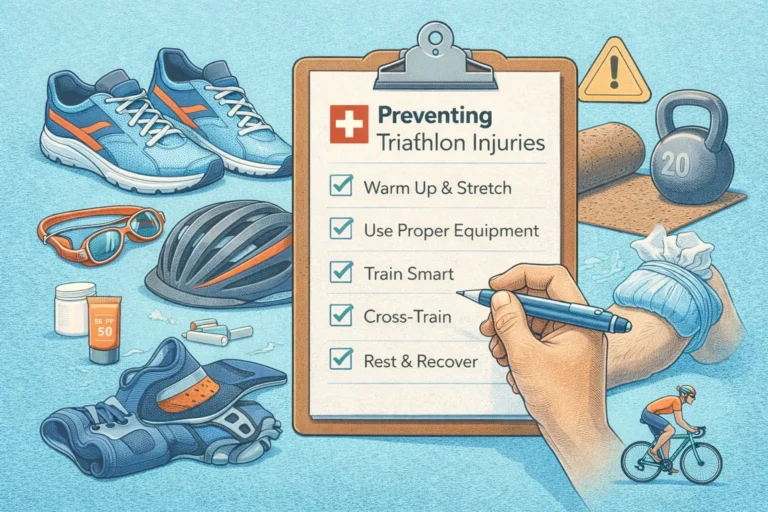
As a triathlon journalist and coach, I am excited to share a clear injury prevention checklist you can use today. This guide explains simple steps to keep you training and racing without setbacks. Read on to learn practical actions for swim, bike and run safety.
Why use an injury prevention checklist
An injury prevention checklist helps you focus on the basics every session. It is easy to forget small habits when life or work is busy. A short, repeatable list brings discipline and reduces risk.
Checklists turn vague goals into clear tasks. They make warm-up, technique and recovery automatic parts of your routine. You will waste less time guessing what to do next.
This article uses the phrase injury prevention checklist at key points so you can find practical items fast. Use these steps before hard sessions, during recovery weeks, and ahead of races.
Follow the list and treat it like a habit. Small, steady actions add up to fewer injuries and more consistent training.
Warm-up and mobility: injury prevention checklist

Warming up prepares muscles and joints for work. A good warm-up raises temperature and primes nerves. It also lowers the chance of sudden strains.
Start with general movement, then move to sport-specific actions. For triathlon, that means light running, easy cycling, and dynamic swim drills. Keep the warm-up 10 to 20 minutes depending on session intensity.
Before you begin the list below, focus on slow, controlled movement. Breathe deeply and scan for tight spots. If something feels sharp, pause and assess.
Use this practical warm-up checklist to cover the key steps every time.
- 5–10 minutes easy cardio: brisk walk, light jog, or easy spin to increase heart rate.
- Dynamic mobility: leg swings, arm circles, hip rotations, and ankle rolls to move joints through range.
- Activation drills: glute bridges, single-leg balance, and banded side steps to recruit stabilizers.
- Sport-specific prep: short swim drills, running drills (A-skips, high knees), and a few gentle bike intervals.
- Progressive intensity: end the warm-up with a few efforts at race pace if you will train hard.
Training load and progression
Managing training load is one of the most important items on any injury prevention checklist. Too much too soon causes overload. Too little progression slows fitness gains.
Use weekly and monthly plans with gradual increases. I recommend a 10 percent rule for weekly time but adjust for your experience and recent load. Track stress outside training as well.
Build recovery weeks into your calendar. These lighter weeks let tissues heal and adapt. They protect you from chronic overuse injuries that come from constant high volume.
Here is a short progression checklist to keep your training smart and safe.
- Plan cycles: set microcycles (weeks), mesocycles (months), and macro goals (season focus).
- Increase volume gradually: aim for small, steady gains rather than spikes.
- Monitor intensity: use perceived exertion, heart rate, or power to balance load.
- Schedule recovery weeks every 3–6 weeks depending on stress and race calendar.
- Record non-training stress: sleep, work, and travel affect your load tolerance.
Technique and form
Good technique reduces wasted motion and lowers joint stress. Efficient form makes you faster and less likely to get injured. Work on small fixes regularly rather than long overhaul sessions.
Swimming, cycling and running each have simple cues you can use. Focus on posture in the swim, a smooth pedal stroke on the bike, and a midfoot landing in your run. Small changes matter more than big efforts.
Technique sessions should be short and focused. Add drills that challenge one part of the movement. Repeat often so the pattern becomes automatic.
Follow this technique checklist to keep mechanics solid and consistent across disciplines.
- Swim: practice body position and long stroke; add breathing drills and fingertip drag to improve entry and catch.
- Bike: maintain a neutral spine, relaxed shoulders, and smooth cadence; practice single-leg drills on the trainer.
- Run: keep cadence around 170–190 steps per minute depending on pace, soft knees, and forward posture.
- Video check: record short clips of each discipline to spot obvious faults and track progress.
- Regular skill sessions: include one focused technique session per week for each sport when possible.
Strength and conditioning
Strength work builds resilience. It protects tendons, joints and muscles from the repeated load of training. This is a core part of any injury prevention checklist.
Focus on multi-joint moves and exercises that match triathlon demands. Squats, deadlifts, lunges and pulling exercises build a strong base. Add core and single-leg stability for balance.
Keep strength sessions short and consistent. Two focused sessions per week are enough for most age-group triathletes. Increase load slowly and track technique closely.
Here is a simple strength checklist you can follow on land days or after easy sessions.
- Primary lifts: squats or lunges for legs; deadlifts for posterior chain strength.
- Pushing and pulling: push-ups and rows to balance upper body strength for the swim.
- Core and anti-rotation: planks, Pallof press, and dead bugs for stability under load.
- Single-leg work: step-ups and single-leg Romanian deadlifts for asymmetry and balance.
- Mobility integration: add controlled range work at the end of sessions to keep joints mobile.
Recovery and flexibility: injury prevention checklist
Recovery is active work. It is when your body rebuilds and becomes stronger. Good recovery reduces injury risk and improves long-term performance.
Simple habits make a big difference. Prioritize sleep, keep nutrition balanced, and use gentle movement on rest days. Hydration matters for tissue health and repair.
Include regular mobility and soft-tissue work. Use foam rolling, gentle stretching, and targeted mobility drills after sessions. Search for ways to help tissues relax and restore range.
Below is a recovery checklist. These items help you recover triathlon injuries early and avoid chronic problems later.
- Sleep: aim for 7–9 hours per night and consistent sleep timing to support repair.
- Nutrition and protein: eat a balanced diet with protein after sessions to rebuild muscle.
- Active recovery: easy swims, rides or walks to keep blood flow without strain.
- Soft tissue care: foam roll, use gentle self-massage, and include stretching recovery techniques.
- Planned rest days: take full rest days when fatigue accumulates or pain increases.
Equipment, footwear and bike fit
Proper gear lowers injury risk. Poor bike fit or old running shoes change your movement and load. Gear checks belong on every injury prevention checklist.
Get a professional bike fit when you change bikes or if you have recurring pain. Small adjustments to saddle height and reach make big differences over hours in the saddle.
Replace running shoes regularly and choose models for your mechanics. Rotate shoes when possible and check cleat position and pedal alignment for bike shoes.
Use this gear checklist to avoid avoidable causes of pain and discomfort.
- Bike fit: professional setup for saddle height, fore-aft position, and handlebar reach.
- Shoe rotation: replace running shoes after 300–500 miles depending on wear.
- Cleat setup: ensure cleats are centered and angled to your natural foot position.
- Helmet and gear: choose comfortable, well-fitting kit that does not restrict movement.
- Regular checks: inspect bolts, saddle rails and headset for looseness before long rides.
Recognize trouble early and manage pain
Most injuries start small. Paying attention early stops small problems from becoming long-term issues. This should be a central part of your injury prevention checklist.
Learn to distinguish soreness from sharp or persistent pain. Soreness eases with warm-up and rest. Sharp pain or swelling needs attention and often a pause from training.
If pain appears, reduce load and seek assessment. Early rest, targeted rehab and sensible return-to-training plans help you recover faster. Aim to recover triathlon injuries with guidance, not guesswork.
Below are steps to follow when you feel unusual pain or find a new niggle.
- Stop or reduce the offending activity and monitor pain for 48–72 hours.
- Use ice for swelling and short-term pain relief when needed, and compress if recommended.
- See a professional: physiotherapist or sports clinician for persistent or worsening pain.
- Follow a graded return: slowly rebuild time and intensity based on pain response.
- Track changes: note what makes pain better or worse to guide rehabilitation.
Pre-race checklist for injury prevention
Races create stress and quick changes. A short pre-race checklist prevents last-minute issues. It keeps you focused and reduces the chance of injury from poor preparation.
Start by checking your plan, gear and sleep. Avoid heavy sessions in the final days and practice your transitions and equipment on easy workouts so nothing surprises you on race day.
Nutrition and hydration must be consistent before the race. Sudden changes in food or drinks can upset your stomach and affect your form during the event.
Use these practical checks on race week to help you arrive fit, calm and injury free.
- Taper: reduce volume while keeping short intensity to stay sharp without fatigue.
- Gear check: test shoes, helmet, wetsuit and bike setup during training before race day.
- Nutrition plan: use familiar foods and hydration strategies you have practiced.
- Sleep and travel: plan for good sleep and avoid last-minute travel stress when possible.
- Warm-up routine: follow your usual warm-up and mobility steps to prepare muscles and mind.
Let’s Recap
This injury prevention checklist gives simple steps you can use now. Warm-ups, load control, technique, strength, recovery, gear checks and early management are the pillars. Use them every week to lower your injury risk.
Make the checklist part of your routine. Repeat it before key sessions and during race weeks. Small habits lead to steady progress and fewer interruptions.
If you face pain that does not improve, seek professional help early. A well-timed assessment and guided rehab can help you recover triathlon injuries and return stronger than before.
Stay curious, train smart, and enjoy your sport. Use this checklist to keep training steady and racing fun for many seasons.