
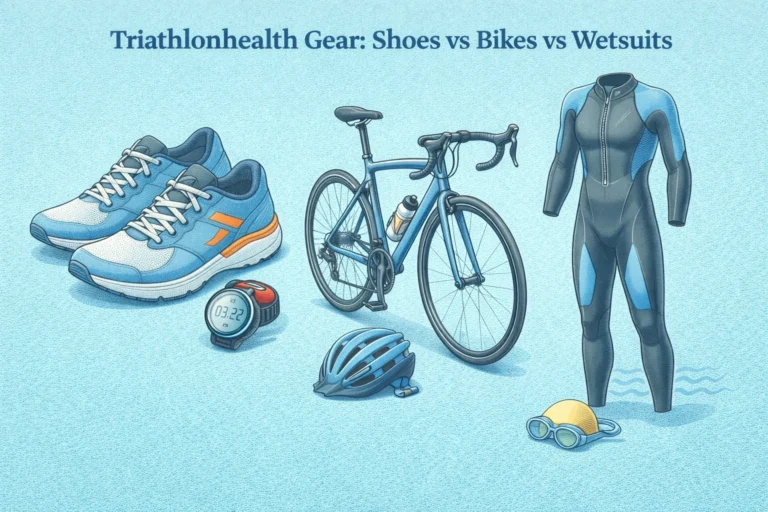
Choosing the right gear shapes your training and race day. In this article I compare shoes vs bikes vs wetsuits triathlonhealth so you can make smart buying choices. I explain how each item affects speed, comfort, and budget, and I give step by step advice you can use right away.
Shoes vs Bikes vs Wetsuits triathlonhealth: Quick overview
Many athletes ask whether to spend first on shoes, bikes, or wetsuits. Each item changes performance in a different way. Shoes affect the run split, bikes are the biggest driver of time on the bike leg, and wetsuits alter swim speed and comfort in open water.
For beginners the choice often depends on race distance and goals. Sprint racers may gain more by improving running form and shoes. For longer races a fast, fitting bike will deliver bigger time gains. Open water swimmers can see immediate benefits from a well fitted wetsuit.
Budget matters. A sound plan balances cost and impact. For example, a mid range shoe can help your run now, while a used race bike may be a smarter long term buy than an entry level new bike. I lay out practical steps to choose the right gear based on your needs.
Below I break down how each category affects performance, what to look for while shopping, and how to decide the priority for your own training and racing. I also include simple checklists you can use at the store or online.
How these three gear types affect race performance
Understanding how shoes, bikes, and wetsuits affect your time is the first step. Each item targets a specific leg of the triathlon. They also influence transitions and how tired you feel after each leg.
Shoes change your running economy and comfort. Better running shoes can reduce injury risk and make your run leg feel easier. They also change cadence and ground contact time. For most athletes, better shoes directly improve the run split.
Bikes define the largest portion of race time for all but the shortest events. Aero gains, fit, and drivetrain efficiency all add up. A better bike and proper fit can save minutes on the bike leg, which often decide race outcomes in competitive fields.
Wetsuits change your swim speed and confidence in open water. A suit that fits well reduces drag and keeps your hips high. That saves energy and gives you a faster and less tiring swim. A good wetsuit also makes sighting and drafting easier if you swim in packs.
Key metrics to compare when choosing gear
Before you buy, know the most meaningful metrics. These are the numbers and fit points that tell you how much a product can help. I list the key metrics for shoes, bikes, and wetsuits. Use these to compare models you test or review online.
Metrics for shoes include weight, stack height, heel to toe drop, cushioning level, and upper support. These factors impact comfort, injury risk, and energy return. Try shoes on and run a few minutes if possible to feel the difference in real time.
For bikes the metrics are frame stiffness, weight, aerodynamic profile, wheel choice, and gear ratios. Fit is part of the metrics. A bike that matches your body position and power output matters more than headline specs. Test rides are crucial.
Wetsuit metrics include buoyancy, flexibility, seam construction, and thickness in different panels. Some suits have more float in the legs and chest, while others focus on shoulder mobility. Choose a suit that suits your stroke and your water temperature needs.
Buying guide: Shoes for triathlon

Shoes are the easiest to test and one of the fastest upgrades you can make. Most stores let you try shoes on and run a short distance. Shoes also affect training daily, so this purchase often pays off sooner than a bike or suit.
When shopping, look for a shoe that matches your foot shape and your run style. If you are a mid foot striker you may prefer lower drop options. If you need extra support choose a shoe with firmer medial support. Think about the races you do and the typical distance you run.
Below is a short list of buying tips that will help you find the right shoe model. I include the key checks to do in store or before ordering online.
Try these checks before you buy shoes:
- Fit test: There should be a thumbnail of space at the toe when standing, and no slipping at the heel when you jog.
- Run test: Jog at least 2 to 5 minutes in the store or on a treadmill if allowed, and notice any hot spots or pressure points.
- Cushion vs responsiveness: Pick cushioning for long runs and responsiveness for faster tempo work and race day.
- Durability: Consider mileage warranties and sole wear patterns if you train high mileage.
- Compatibility: Make sure the shoe works with your socks and insoles, and that any special tri socks work with the upper.
When choosing shoes for triathlon use, think about transition. Triathlon specific shoes or lace systems that allow quick on and off can save seconds. If you use regular running shoes, practice quick lacing techniques and sockless starts to cut transition time.
Finally, balance budget and performance. Entry level shoes can be fine for base miles. Mid tier or race day shoes give better responsiveness and lower weight. Replace shoes based on wear, not solely on miles, and keep a training pair and a racing pair if your budget allows.
Buying guide: Bikes for triathlon
Bikes are the largest single gear expense for many triathletes. The money you spend on a bike can give large gains, but only if the bike fits your body and your event type. Time trial bikes, triathlon frames, and road bikes each have pros and cons for triathletes.
Fit is the first priority. A properly fitted bike lets you hold an aero position for longer and generates more power without discomfort. Many riders gain speed after a professional bike fit even without upgrading frames or wheels.
Here is a list of practical buying checks to use when you evaluate a bike. These items will affect performance and long term satisfaction.
Key bike buying checks:
- Frame fit and size: Make sure the frame allows the aero position you can hold for your race length.
- Component quality: Higher tier groupsets shift more smoothly and are lighter, which helps on varied courses.
- Wheel choice: Deep wheels add aero gain on flats, lighter wheels help on climbs. Pick based on your race terrain.
- Stiffness to weight: A stiff frame transfers power well. Too stiff can be uncomfortable on long rides.
- Serviceability and parts availability: Choose brands and standards that local shops support.
For many athletes buying a used higher end bike is a smart move. A well maintained used bike with a professional fit can beat a new entry level model. Test rides, inspection of wear and a mechanic check are essential for used purchases.
If your budget is tight, spend on a good fit and decent wheels rather than chasing the lightest frame. A proper fit and good tires often produce bigger gains than shaving a few hundred grams off the frame weight.
Buying guide: Wetsuits for triathlon
A wetsuit will improve swim speed and make open water training less stressful. For many athletes the wetsuit is the quickest way to lower their swim times. The key is fit and material choice for the water temperature you race in.
Good wetsuits hold your body higher in the water and reduce drag. Flexible shoulder panels let you keep a full stroke. If your suit is too tight you will feel restricted and tired. If it is too loose you will get water flushing and lose the speed benefits.
Below are simple checks to make when fitting a wetsuit. These checks help you choose a suit that fits your stroke and keeps you comfortable in race temperature ranges.
Wetsuit fit and purchase checklist:
- Neck and shoulder comfort: The neck should seal without choking and shoulders should allow a full swim stroke.
- Leg buoyancy: Legs should sit higher, but not so high that you cannot kick naturally.
- Seam quality and panels: Look for flexible panels on the shoulders and chest for open water movement.
- Size test in water: If possible try the suit in a pool or lake to check mobility and feel.
- Thickness by temperature: Choose thinner suits for warmer water and thicker suits for cold water, but rely on flexibility first.
Renting or borrowing a suit before you buy is a good option for first timers. This lets you test how suits feel in open water. If you plan to race many times in cold water, investing in a higher grade suit with more buoyant panels can be worthwhile.
Budget planning and upgrade timing
Budget planning helps you decide what to buy now and what to save for. The best plan balances training needs, race goals, and the speed gains each purchase will bring. I give a simple priority plan for common budgets.
For beginners with limited funds, focus on shoes and a basic wetsuit if you swim in open water. Shoes improve training every run, and a wetsuit can dramatically improve your swim splits. Buy a reliable used bike or rent for races until you can invest in a proper fit.
For intermediate athletes with a moderate budget, prioritize a bike fit and upgrades to wheels or a faster frame once fit is right. Keep a stable rotation of training and racing shoes. Choose a wetsuit that fits well and matches your race temperatures.
For advanced athletes the right sequence often starts with a full bike upgrade and a professional fit, then race specific shoes and a top end wetsuit. High level racers get the most return from aerodynamic gains and component choices on the bike.
How to decide priority for your specific race
Race distance and course profile change what you buy first. A simple way to set priorities is to weigh how much time each piece can save on your typical course. I explain how to prioritize across sprint, Olympic, half iron, and iron distance events.
Sprint and super sprint races favor run speed and transitions. Shoes and transition practice matter more here. A basic bike with good handling is fine, and a wetsuit can give a useful advantage if the swim is long enough.
Olympic distance racing needs a balanced approach. Bike time grows, so a proper fit and wheel choice help. Shoes and a good wetsuit remain important, but a small bike upgrade can move you up several places in a competitive field.
Longer races such as half iron and iron distance put the bike at the center of your performance. Comfort over hours is key. Investing in a bike that fits well and is comfortable in an aero position gives the best return. Durable shoes for the run and a reliable wetsuit for the swim complete the kit.
Practical checklists and shopping strategy
Having a plan and a checklist saves time and money. Use the checks below when you compare models or head to the shop. This keeps choices focused and reduces impulse buys that do not match your goals.
Start by testing fit and comfort, then check technical specs. Ask about returns or trial periods, shop during sales cycles for past year models, and read rider or swimmer reports from trusted testing sources. Below I give a compact checklist you can print or keep on your phone.
Shopping checklist to use before purchase:
- Fit test: For shoes, bikes, and wetsuits this is the top priority. Comfort equals race reliability.
- Trial period: Confirm return or exchange policies if the gear does not fit after road or open water testing.
- Used vs new: Consider used options for bikes and high end shoes. Check maintenance history and wear.
- Upgrade path: Buy items that will fit you as you improve, and parts that can be upgraded later like wheels.
- Training match: Choose gear that supports the amount and type of training you do now.
For a guided shopping experience, many triathlon shops offer demo days and test rides. These events let you sample equipment without the pressure of a big purchase. I recommend using these chances to test both shoes and bikes, and bring a friend to help time and observe your fit.
Comparing long term value: Where to spend first
Deciding where to spend first comes down to value per dollar. Bikes often give the largest speed gains for longer races. Shoes and wetsuits give shorter term, high impact improvements that also affect training comfort.
If your priority is fast early improvement, start with shoes and a well fitting wetsuit if open water is in your schedule. These purchases return faster because they affect everyday training and short races. A new bike is more expensive and often needs a proper fit and upgrades to shine.
For athletes focused on half iron or full iron distances, a bike purchase earlier in your upgrade plan often pays off. The time saved per hour on the bike over long distances outweighs small run or swim gains. Prioritize comfort and power rather than the lightest parts unless you race on hilly courses.
Consider maintenance costs and resale value. Higher end bikes tend to hold their value and can be easier to resell if you decide to upgrade later. Shoes depreciate with wear, but a good pair returns value in reduced injury risk and better training quality.
Buying recommendations by athlete type
Every athlete has different needs based on ability, goals, and budget. Below are short profiles and the recommended purchase priority for each type. Use these as a starting point, then adapt to your personal training and race calendar.
Recreational athlete who trains a few times a week should invest first in a good pair of shoes and a comfortable bike fit. If swimming in open water, pick a mid range wetsuit that balances buoyancy and flexibility.
Competitive age groupers who race regularly should prioritize a bike fit and better wheels, followed by race day shoes and a high quality wetsuit for race temperature ranges. Consider a training bike setup and a race bike if budget allows.
New triathletes with limited funds should buy training friendly shoes and rent or borrow a wetsuit. Use a reliable used bike or a well maintained entry level bike until you can test a full upgrade path with fit and accessories.
Key Takeaways
Choosing between shoes vs bikes vs wetsuits triathlonhealth depends on your race type, budget, and current weaknesses. Shoes improve run comfort and speed quickly. Bikes can give the largest gains on longer courses when fit and aerodynamics are right. Wetsuits provide immediate swim speed and confidence in open water.
Buy smart by prioritizing fit first, then component quality. Use trial options, test rides, and demo days before large purchases. Consider used options for bikes, and keep a training pair and a race pair of shoes when possible.
For shopping, keep three simple phrases in mind. Focus on fit, practice with the gear, and balance budget with expected return in race time. You can also consult triathlonhealth gear reviews and community feedback to narrow choices.
Finally, remember that consistency in training often matters more than any single piece of equipment. Gear improves performance, but practice, pacing, and smart race day decisions make the gains stick. Use this guide to choose the best gear and to plan upgrades over time for the most impact.
triathlonhealth gear and product reviews can help you compare models. Check lists of the best gear triathlonhealth and the essential items triathlonhealth for quick shopping ideas and to confirm priority buys for your next race.