
Every triathlete wants faster recovery and fewer aches. This article compares foam rolling vs stretching so you can make smart buying choices and pick the right routine. Read clear, practical advice and gear tips to help your training feel better and keep you racing.
Foam rolling vs stretching: quick overview
Choosing between foam rolling and stretching is a common question for triathletes. Both methods help recovery but work in different ways. Knowing the difference helps you pick tools and routines that match your training load and goals.
Foam rolling is a self-massage method. You use body weight and a roller to press into muscles and soft tissue. This can reduce tightness and improve comfort after long sessions. It often feels intense at first but can ease soreness when used correctly.
Stretching focuses on lengthening muscles and improving joint range. Static stretches hold a position, while dynamic stretches use motion. Both are useful in warm ups and cool downs. The right mix helps maintain mobility and reduce injury risk for swimmers, cyclists, and runners.
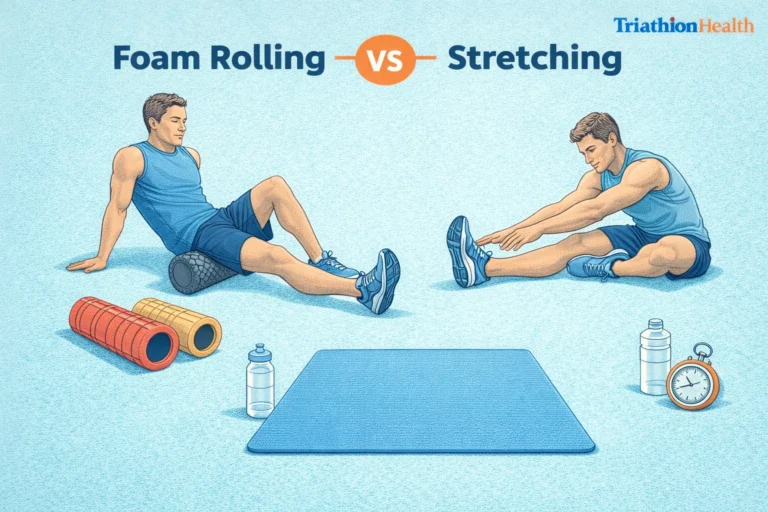
For triathlon work you rarely choose just one. Foam rolling vs stretching is best thought of as a partnership. Use rolling to address muscle knots and tight spots. Use stretching to restore length and function. This combined approach often gives the best results.
How foam rolling works
Foam rolling presses soft tissue and muscle against a firm surface. That pressure can break up tight spots and improve blood flow. Many athletes notice reduced soreness and quicker return to easy training after rolling. The sensation can be uncomfortable at first but usually eases with regular use.
Rolling stimulates nerves and receptors in the muscle and fascia. That stimulation can change how the nervous system allows the muscle to contract. The result is often softer tissue and better movement. For triathletes, that means smoother strokes on the swim, cleaner pedal strokes, and fewer braking steps in the run.
Rolling also increases local circulation. More blood brings oxygen and nutrients to tired tissue. It helps remove metabolic waste from long rides and runs. Use rolling after intense sessions to speed early recovery and before light sessions to ease into movement.
Before a list of foam rolling benefits, read this short note on timing and intensity. Use gentle pressure at first and limit painful sessions. Here are the main benefits triathletes report.
- Reduces muscle tightness and soreness.
- Improves tissue quality and feeling of motion.
- Speeds short-term recovery between workouts.
- Targets specific problem areas like calves, quads, and glutes.
- Fits easily into travel and race routines.
How stretching works
Stretching lengthens muscles and improves joint range. It changes how muscle fibers and tendons behave under tension. Static stretching increases length with holds. Dynamic stretching uses controlled motion to prepare the body for activity.
For triathletes, mobility matters across three disciplines. Good hip and ankle mobility helps run mechanics. Shoulder and thoracic mobility support the swim. Cycling benefits from hip and hamstring flexibility. Regular stretching keeps these areas working well together.
Stretching also plays a role in long-term injury prevention. A consistent routine can help balance muscle groups and correct movement patterns. Combining stretching with strength work and rolling is often the most durable strategy for staying healthy.
Below is a short list of common stretching types and where they fit into a triathlete plan. Read the next paragraph before choosing a type for each session.
- Static stretching: best for cool downs and post-session mobility work.
- Dynamic stretching: ideal for warm ups and pre-race routines.
- PNF stretching: advanced method for targeted gains with a partner or band.
- Active isolated stretching: for controlled lengthening with time limits.
When to use each: training and race day
Timing matters. Use foam rolling and stretching at different times to get the most benefit. Rolling often fits well after tough workouts. Stretching is useful both before and after sessions when done with the right approach.
Before easy or short sessions, a brief dynamic warm up with light rolling can help. Keep sessions gentle and focused on movement. Avoid long static holds before race efforts. Static stretching can reduce power if used immediately before a hard effort.
After workouts, combine rolling and static stretching to restore tissue and length. Start with 5 to 10 minutes of rolling on tight areas. Follow with 10 minutes of gentle static stretches for key muscle groups. This approach supports recovery and readiness for the next training block.
Below are clear scenarios that help you choose the right tool. Read the short note first. Use these guidelines to plan sessions across swim, bike, and run training.
- Long ride or long run: roll major muscle groups after the session; stretch gently later in the cooldown.
- High-intensity intervals: use a short dynamic warm up and light rolling before efforts; avoid long static stretches pre-workout.
- Race morning: keep rolling minimal and gentle; use dynamic drills rather than deep static stretches.
- Travel days and race weekends: roll to ease travel tightness; use short mobility sessions to stay loose.
Risks and safety for triathletes
Both methods are low risk when done with care. But you must use correct technique and avoid excessive force. Rolling too hard or stretching past pain can cause harm and slow recovery. Stay mindful and scale intensity to your training and health.
People with certain conditions need extra caution. Recent injuries, acute pain, or inflammatory conditions require advice from a clinician. If something feels sharp or unusual, stop and consult a coach or medical professional. Good technique prevents most problems.
For triathletes, use an injury prevention checklist before heavy sessions. The checklist helps you decide whether to roll, stretch, or rest. It is a simple tool to protect training consistency and long term progress.
Here are common checklist items to review before a hard session or race. Consider these points actively when planning recovery and warm up routines.
- Current pain level and location.
- Recent injuries or niggles and any medical advice received.
- Sleep and nutrition status the last 24 hours.
- Recent training load and fatigue signs.
Choosing gear: what to buy

Buying the right gear makes recovery easier and more likely. Think about size, firmness, portability, and budget. Foam rollers and stretch tools vary a lot. Choose based on how you train and where you will use them most.
Firmness matters. Softer rollers are gentler and good for beginners. Firmer rollers give deeper pressure for stubborn knots. Travel rollers are small and light but may be intense because of the small surface area. Pick at least two options if you travel a lot.
Materials and build quality affect durability. High density foam lasts longer and keeps shape. Some rollers have textures or ridges to increase pressure. Test pressure level in a store if possible, or buy from retailers with good return policies.
Below is a short list of buying priorities to guide your choice. Read this note first to match features to needs.
- Purpose: travel, home recovery, or deep tissue work.
- Firmness: soft for sensitivity, firm for deep release.
- Size: full-length for back work, short for calves and hamstrings.
- Price and warranty to protect your purchase.
Foam rollers: what to look for
Choose rollers with clear use cases. A long, 6 to 12 inch diameter roller suits full-body work. A shorter, denser roller is good for targeted pressure on calves and glutes. Look at weight and how easy it is to carry to the pool or race venue.
Texture matters for many triathletes. Smooth rollers distribute pressure evenly. Ridged or grid rollers apply more focused pressure and can feel more intense. Try both styles to see what helps loosen your tissue without causing pain.
Many riders and runners pair a large roller for morning or evening work with a small, high-density roller for travel and pre-race use. This combination covers most needs. Keep the keyword foam rolling vs stretching in mind when choosing. Rolling tools support targeted release while stretching tools improve range.
Here are common models and features triathletes prefer. Read these notes and match them to your budget and travel needs.
- High density full-size roller for home recovery.
- Short travel roller or massage stick for race day carry.
- Textured roller for deep tissue work on glutes and IT band.
- Soft foam roller for sensitive areas and light recovery sessions.
Stretching tools and aids
Stretch straps and resistance bands are simple and highly effective. They help you get into positions safely and control the stretch. Bands can also support PNF and active isolated stretching techniques for deeper gains.
Yoga blocks and foam pads increase comfort for seated or floor stretches. A good mat protects knees and hips during longer mobility sessions. For travel, a light strap and a small band often give the best value and portability.
If you want to invest, look for durable straps with loops and high-quality fabric. Bands should have clear resistance ratings. Mix tools as needed to apply stretching recovery techniques across swim, bike, and run needs. These aids help you recover triathlon injuries in a managed way when combined with professional advice.
Below are practical tool choices to consider. Read them and think about your training locations and routines.
- Loop strap with multiple holes for progressive stretches.
- Set of resistance bands for assisted mobility and PNF.
- Light yoga mat for comfort during floor work.
- Small stretch strap for travel and race day warm ups.
Sample recovery routine: foam rolling and stretching
A clear routine saves time and delivers consistent results. The example below blends short rolling, mobility drills, and longer stretches. Use this after a long session or a travel day. Adjust times to fit your schedule and tolerance.
Start with light cardiovascular movement for 3 to 5 minutes. This wakes up circulation and reduces jump into deep pressure too fast. Then use 5 to 8 minutes of foam rolling on major muscle groups. Keep pressure moderate and move slowly.
After rolling, perform mobility drills for hips and thoracic spine for 5 minutes. Finish with 8 to 12 minutes of static stretching for calves, hamstrings, quads, and shoulders. Hold each stretch for 30 to 60 seconds and breathe steadily. This sequence supports tissue quality and return to training.
Below is a step by step list you can follow after a long workout. Read this short lead-in sentence first to understand the flow.
- 3 to 5 minutes easy cardio to warm up circulation.
- 5 to 8 minutes foam rolling on quads, IT band, glutes, and calves.
- 5 minutes mobility drills for hips and thoracic spine.
- 8 to 12 minutes static stretching for key muscle groups.
- Optional: 2 to 5 minutes breathing and relaxation to finish.
Costs and where to shop
Recovery gear spans budgets. Basic rollers and bands are affordable. Higher-end tools and electric massage devices cost more but can offer deeper effects. Set a budget and think about how often you will use each item.
Look for retailers with fair return policies in case a roller is too firm or too soft for you. Warranties matter for costly items. For compact travel gear, prioritize size and durability. For home gear, prioritize comfort and long-term shape retention.
Consider pairing a basic roller with one premium item, like a dense travel roller or a strap. This approach balances cost and effectiveness. Your training and travel habits should guide where you spend most of your budget.
When shopping, compare features carefully. Think about firmness, length, and intended use. Good purchases support consistent recovery and reduce time wasted on trial and error.
Let’s Recap
Foam rolling vs stretching is not an either or choice. They work together to improve tissue quality, mobility, and comfort. Rolling targets tight spots and improves circulation. Stretching restores length and joint range.
Use rolling after hard sessions and for tight areas. Use dynamic stretching before workouts and static stretching after sessions for lasting range. Choose gear that fits your travel needs and training load. A combination of tools often gives the best value.
Keep your routine simple and consistent. Use an injury prevention checklist to guide intensity and to protect your training. If you need to recover triathlon injuries, seek professional advice and combine tools with a targeted plan.
Finally, test gear and routines during training, not on race day. With steady use, foam rolling and stretching together will help you feel better and train more consistently. Use these tips to pick tools and routines that match your goals and keep you racing at your best.