
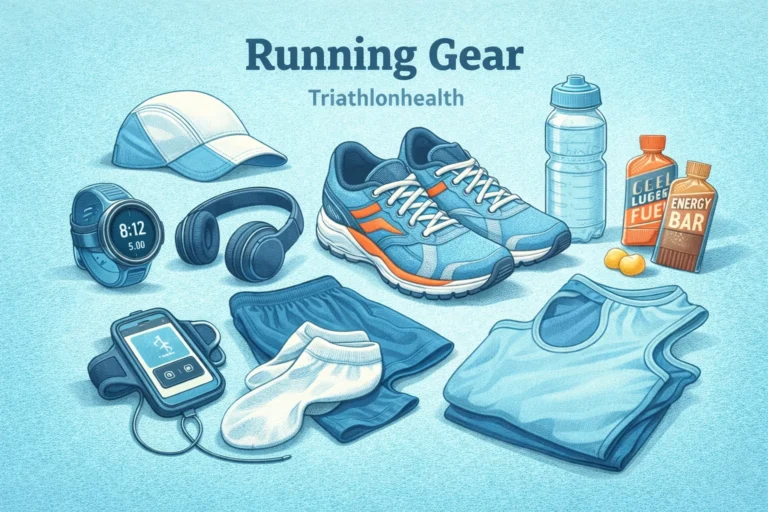
As a triathlon journalist and gear expert I get excited about the tools that help athletes run faster and stay healthy. This article explains what to buy, why it matters, and how to match gear to your goals. It focuses on triathlon running gear for training and race day and gives clear, actionable advice.
Why triathlon running gear matters
Triathlon running gear is not the same as standard road running gear. You need kit that plays well with swim and bike disciplines. The right gear saves time in transition and reduces discomfort during the run.
Equipment choices change how you feel in the final miles. Small differences in shoe fit, sock choice, or shorts can affect pace and energy. I have tested dozens of items and report what works for athletes at all levels.
Buying smart gear is an investment in consistency. Good choices reduce injuries and make training more productive. You will learn which items to prioritize for race day performance and comfort.
Below I cover shoes, apparel, tech, maintenance, and how to build a practical kit. The aim is to help you evaluate options with confidence and find the best triathlon running gear for your needs.
Choosing the right running shoes

When you choose running shoes for triathlon you must balance speed, comfort, and quick transitions. Shoes that feel great on long runs may not be ideal for racing after a bike leg. The shoe choice is central to triathlon running gear selection.
Shoe fit matters most. A secure heel and roomy toe box reduce blisters and toe pain during long races. A snug midfoot helps you keep control when your legs are tired. Test shoes in both fresh and tired conditions if possible.
Weight and stack height affect speed and stability. Lighter shoes help with quick turnover, while higher stack heights can offer cushioning for long runs. Your race distance and running style guide the best tradeoff.
Key features to compare are listed below. Read the short lead-in sentence and then the checklist for a quick shopping guide.
- Fit and sizing – Ensure half a size to one size room for swelling and toe splay. Try with the socks you plan to race in.
- Closure system – Elastic laces or quick-lace systems speed transitions. Check comfort and security during a run.
- Cushion vs responsiveness – Choose more cushion for long triathlons and more responsiveness for short events or speed-focused efforts.
- Breathability and drainage – Mesh uppers that drain water and dry fast reduce weight carried from the swim and improve comfort.
- Traction and sole durability – Look for outsole patterns that maintain grip on wet roads and in transition areas.
Apparel and race-day accessories
Apparel in triathlon is a blend of swim, bike, and run needs. Many athletes use a tri suit or split kits that work for all three sports. The right apparel keeps you comfortable and speeds up transitions.
Sleeve length, pocket placement, and fabric choices influence comfort and pace. Suits with fast-drying fabric reduce chafing. Pockets for gels and small items are a practical addition for long races.
Accessories like sunglasses, visors, hats, and socks all play a role. A small change such as lighter socks or a better visor can improve comfort and performance in hot or variable conditions.
Here is a short list that helps you prioritize apparel and accessories before race day. Read the lead-in below and use the list to refine purchases.
- Tri suit or race kit – Choose a suit with comfortable chamois and quick-dry fabric for combined swim, bike, run use.
- Race shorts and top – If you prefer separates, select items that transfer easily between sports and have secure pockets.
- Socks and foot protection – Low-profile socks reduce friction. Consider quick-dry materials to avoid blisters after the swim.
- Timing chip strap and race belt – Durable, simple systems save seconds in transition and keep essentials secure.
- Visor or hat – Sun protection that also helps manage sweat and glare on the run.
Tech and gadgets for training and race day
Technology can make training more precise and race strategies smarter. Tools such as GPS watches, foot pods, and heart rate monitors fit naturally into triathlon running gear setups.
Choose devices that match your needs. A GPS watch with multisport modes simplifies transitions and gives accurate splits. Sensors add data for stride metrics and cadence on the run.
Battery life and ease of use are critical. On race day you do not want a complicated interface or a dead device. Test settings in training so you know what to expect when it matters most.
Consider the short list below when buying tech. Read the lead-in sentence and use this checklist to evaluate what to add to your kit.
- GPS multisport watch – Tracks swim, bike, and run with quick mode switches and reliable GPS.
- Heart rate monitor – Chest straps are most accurate for swimming and transitions; optical sensors are convenient on the run.
- Foot pods and cadence sensors – Add precision to pace and turnover when GPS is inconsistent.
- Wireless earbuds – Use only in training where allowed, to maintain focus and motivation.
Maintenance, foot care and durability
Proper care keeps triathlon running gear performing longer and prevents issues like blisters and odor. Regular maintenance saves money and preserves function for training and races.
Foot health is central. I recommend a simple daily routine to prevent problems. Clean gear, trim nails, and treat hotspots early to avoid race-day setbacks. The phrase foot care triathlon is a useful search term if you want deeper reading on foot-specific strategies.
Wash and dry shoes and apparel promptly after sessions. Avoid leaving damp gear in a bag. Proper drying prevents bacterial growth and keeps fabrics breathable and stretchy.
Here are practical maintenance steps to follow. Read the short paragraph below and use the list to build your routine.
- Post-workout care – Rinse salt and chlorine off apparel and suit, then wash according to label instructions.
- Shoe care – Remove insoles to dry and let shoes air in a ventilated space. Replace worn insoles to maintain support.
- Skin care – Use lubricants on potential friction spots and treat blisters promptly with sterile dressings.
- Storage – Store gear in a cool, dry place and rotate shoes to extend life.
How to build a triathlon running gear kit
Start with essentials and add items that match your race distance and conditions. A short list of prioritized purchases helps you spend wisely and steadily improve your setup.
Identify the parts of triathlon running gear that deliver the most value. Shoes and a good tri suit come first. Then add tech, accessories, and backup items for longer races.
Practice transitions with your chosen kit. That reveals small problems such as shoe laces that tangle or pockets that shift. Training with the actual items you will race in is essential for confidence.
Use the following step checklist to assemble a practical kit. Read the lead-in sentence and follow the steps for a clear shopping path.
- Choose shoes and socks – Pick shoes that match race distance and feel comfortable after a bike leg. Use the phrase choose running shoes as a reminder to prioritize fit and transition speed.
- Buy a tri suit or kit – Select based on climate, distance, and your preference for comfort versus speed.
- Add key tech – Start with a GPS watch and one accurate heart rate solution.
- Pack backups – Extra laces, anti-chafe balm, and a spare pair of socks can save race day plans.
Let’s Recap
Triathlon running gear matters because it affects speed, comfort, and injury risk. The right shoes, apparel, and tech help you perform better and recover faster. I encourage testing gear in training to avoid surprises on race day.
Focus on fit, function, and durability. Prioritize shoes and a race-ready kit, then add gadgets and care items that match your goals. Remember to practice transitions with your chosen gear so everything works smoothly when it counts.
Use the information here to narrow options and make confident purchases. Whether you are new to triathlon or chasing a personal best, the right triathlon running gear helps you get there with less stress and more speed.
If you train across swim and bike sessions, consider how running gear integrates with your full setup. Think about triathlon bikes and triathlon wetsuits when planning a complete race system. Good planning and smart gear choices let you focus on performance and enjoy race day more.