
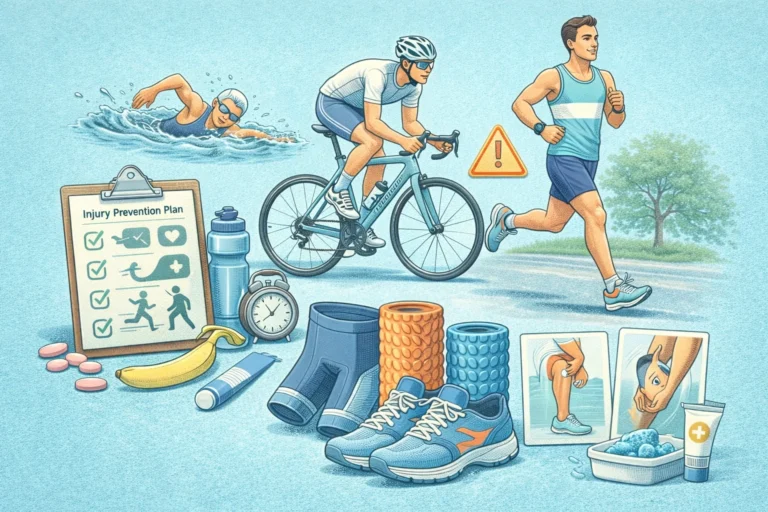
Triathlon injuries stop training and slow progress. This article gives clear steps to prevent common problems. You will learn what causes injuries, how to plan training, and practical steps to stay healthy. Read on to get actionable tips that fit your schedule and goals.
Common causes of triathlon injuries
Triathletes face a mix of swim, bike and run stresses. These combined loads create unique risks for triathlon injuries. Overuse in one sport often shows up when training ramps up fast. Many athletes feel fine until pain begins to limit workouts.
Poor technique is another common cause. Bad swim body position, inefficient pedal stroke and sloppy running form all put strain on joints and soft tissue. Small faults repeated over weeks create big problems. Fixing technique early saves months of rehab.
Equipment and fit matter too. A wrong saddle height or a stiff running shoe can cause knee or hip pain. Even small mismatches add up across long sessions. Regular checks of fit with an expert can prevent many issues in training and racing.
Finally, lifestyle plays a role. Poor sleep, weak nutrition and stress reduce recovery. When recovery is low, normal training becomes harmful. Addressing these non-training factors lowers the risk of triathlon injuries.
Training load and planning to prevent triathlon injuries
Smart training is the backbone of injury prevention. A clear plan that balances volume and intensity reduces sudden spikes in load. Athletes who increase training safely avoid many common triathlon training injuries. The right plan fits your experience, goals and available time.
Gradual increases matter. Add no more than 10 percent volume per week for major sessions. Spread intense sessions with easy days to allow tissue repair and adaptation. Rest and recovery must be part of every plan.
Here is a simple list of planning rules to follow. These are practical and easy to apply whether you train three or ten sessions a week.
- Increase weekly volume by small amounts, around 5-10 percent at most.
- Limit hard sessions to two or three per week and follow each with an easy day.
- Cycle load with easier weeks every third or fourth week to promote recovery.
- Use perceived effort and heart rate to guide intensity, not just pace or power.
Many athletes use templates from coaches or apps, but it helps to personalize. Compare any plan to your past training and recovery ability. Consider triathlon training plans that build skills and reduce injury risk instead of only chasing volume.
Strength, mobility and technique for preventing triathlon injuries
Strength and mobility stop many overuse injuries before they start. A focused plan builds resilience in the hips, core and shoulders. These are the areas most taxed by swim, bike and run. Simple strength work gives big benefits in endurance sports.
Technique training reduces wasted motion and odd loading patterns. For swimming, work on body alignment and a relaxed stroke. For cycling, smooth pedaling and correct saddle height reduce hip and knee strain. For running, aim for a balanced cadence and upright posture to protect the lower leg.
Before lists of exercises, remember that quality beats quantity. Focus on movements that match your sport actions. Small, frequent sessions work better than long, exhausting gym days for most triathletes.
- Hip strengthening: single-leg bridges, clams, and step-downs to control pelvis motion.
- Core stability: planks and anti-rotation holds to keep the torso steady across transitions.
- Shoulder and scapular work: band rows, T-raises and external rotation for swim durability.
- Single-leg balance and plyometrics: light hops and balance drills to prepare for running forces.
Do these exercises two to three times per week. Keep reps moderate and focus on control. Progress by adding small load or complexity rather than long sets.
Warm-up, cooldown and recovery strategies

A consistent warm-up reduces sudden stress on tissue. Warm muscles are more elastic and joints lubricated. Warm-up routines differ by discipline, but all should include dynamic movement and sport-specific elements.
Cooldown and active recovery help clear metabolites and reduce stiffness. Short, easy layers after hard workouts speed return to baseline. Recovery includes more than the post-session cooldown. It includes sleep, nutrition and deliberate recovery methods.
Below are practical options you can use. Read each item and pick the ones that match your needs and time. These are proven ways to recover and prevent recurring issues.
- Dynamic warm-ups: leg swings, arm circles and light mobility for 8 to 12 minutes before sessions.
- Active cooldown: 10 to 15 minutes of easy pedaling or jogging after intense work.
- Stretching recovery techniques: light static stretches after cooldown to maintain range but avoid forcing tight tissue.
- Foam rolling vs stretching: use foam rolling for short self-massage and gentle mobilization; combine both for best results.
Use sleep and easy days as non-negotiable recovery tools. Even the best warm-up cannot replace a missed night of sleep. Treat recovery as part of training, not optional add-ons.
Equipment, bike fit and swim/run technique to reduce injuries
Equipment choices affect how your body handles load. A poor bike fit can create knee pain, neck tension or lower back strain. Shoes that are too rigid or too worn change foot strike and knee tracking. Small changes add up across long rides and runs.
Getting a professional bike fit is a high-value step for many athletes. A fit that matches your flexibility and power output helps you sustain efficient posture. A good setup often reduces pain that comes from hours in the saddle. Check saddle height, cleat position and handlebar reach carefully.
On the swim, technique work reduces shoulder stress. Work with a swim coach to improve breathing, body roll and catch. On the run, address overstriding and weak hip control with drills. Better mechanics reduce chronic load on joints and tendons.
Consider simple gear checks weekly. Inspect shoe wear, tire pressure and saddle position. Small preventive steps prevent many common triathlon training injuries.
Nutrition, sleep and lifestyle choices that protect against triathlon injuries
Fueling and sleep drive repair. Muscles and connective tissue recover when you provide calories, protein and quality sleep. Without these, routine workouts become damaging. Treat nutrition and sleep as training tools.
Hydration and electrolytes also affect tissue health. Low fluid levels can change muscle function and increase cramp risk. Plan fueling around session length and intensity. Short sessions need simple snacks; long workouts need structured fueling.
Here are key nutrition and rest actions to support recovery and reduce risk. Use them as daily habits to protect your training time and performance gains.
- Eat balanced meals with protein at each meal to support repair.
- Match calories to training load so you are not in chronic energy deficit.
- Prioritize 7 to 9 hours of quality sleep each night for tissue recovery.
- Use targeted carbs and electrolytes during long sessions to maintain performance.
Many triathletes search for triathlon nutrition solutions online. Keep choices simple and test fueling in training. Avoid experimental diets the week before key workouts or races.
Actionable injury prevention checklist
Having a clear list helps you stay consistent. A checklist turns ideas into daily habits and reduces the chance of missing a key step. Use this list before, during and after important training blocks for steady progress.
Below is an organized injury prevention checklist you can follow. Read it, adapt it to your calendar and use it as a guide for weekly planning. This format keeps steps practical and measurable.
- Plan training with gradual volume increases and rest weeks. Review your plan weekly.
- Include two to three strength sessions per week focused on hips, core and shoulders.
- Do dynamic warm-ups before hard sessions and 10 to 15 minutes cooldown after.
- Check bike fit and shoe condition monthly. Correct any clear fit issues quickly.
- Prioritize sleep and match calories to weekly workload to avoid energy deficits.
- Use stretching recovery techniques and light self-massage after long workouts.
- Watch for early warning signs: persistent tightness, loss of power or changes in gait.
Keep this injury prevention checklist visible in your training log. If pain appears, pause the offending activity and use targeted steps to recover. For persistent issues, see a clinician experienced with triathlon training injuries and follow a structured rehab plan to recover triathlon injuries safely.
Key Takeaways
Preventing triathlon injuries is a mix of smart planning, consistent strength work and good recovery. Keep training increases gradual, focus on technique and make recovery a priority. These actions together cut the chance of long setbacks.
Use the practical checklist above and the training principles shared here. Small daily habits create big gains and keep you on the start line. Be proactive about equipment, sleep and nutrition to support your work.
When pain appears, act early. Modify training, use targeted recovery and seek specialist advice if needed. With steady, balanced steps you can train more, race more and enjoy triathlon with fewer injuries.
Stay curious, keep practicing the basics, and treat prevention as part of every session. These small choices protect your season and help you meet your goals with less downtime.