
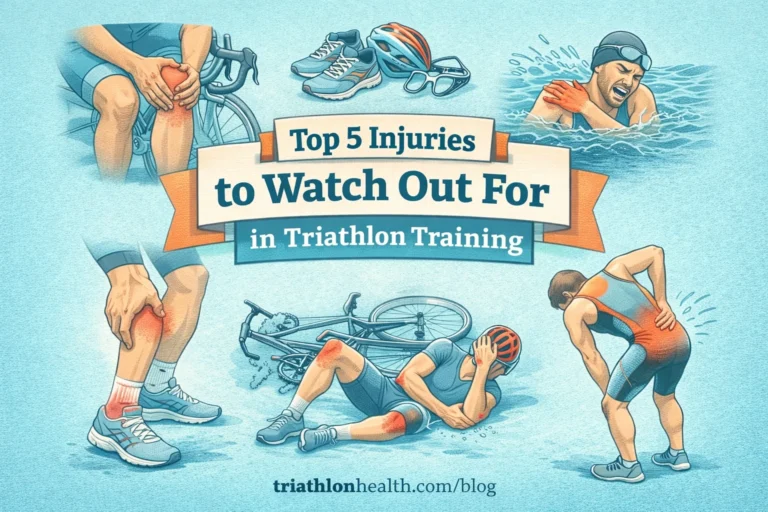
Triathlon training injuries are common but often preventable. If you train for swim, bike and run, you need clear signs and practical steps to stay healthy. This article lists the top five injuries, explains why they happen, and shows how to avoid and treat them.
Top 5 triathlon training injuries
Triathletes mix three sports and that raises risk. Overuse, poor technique and sudden load jumps are typical causes. Even small issues can grow during high-volume weeks.
Below are the injuries you will see most often in triathlon training. I describe each one, the usual signs, and what to do right away. Knowing these helps you train smarter and race stronger.
Before the detailed sections, here is a quick list so you know what to expect. Use this as a reference when you plan sessions or spot early pain.
These five problems show up across all distances and ages. Keep reading to learn clear prevention steps and recovery tips.
- Patellofemoral pain / Runner’s knee and IT band issues
- Achilles tendinopathy
- Shoulder impingement and rotator cuff pain
- Lower back pain
- Stress fractures (tibia or foot)
Patellofemoral pain and IT band issues
Patellofemoral pain, often called runner’s knee, and IT band problems are very common for triathletes. They come from repeated bending of the knee and uneven load. Poor bike fit, weak hips, and sudden increases in run volume are frequent triggers.
Symptoms include soreness around the kneecap, pain when going downhill or after long rides, and a grinding feeling in the knee. Pain often starts as mild and then grows with repeated sessions. Many athletes report tightness on the outside of the thigh with IT band issues.
Use a simple approach to protect your knees. First, check bike fit and cadence. Second, add hip-strength work to your routine. Finally, control run load increases. Below is a short prevention list to follow before hard weeks.
- Bike fit and cadence: Raise saddle or adjust reach if your knee tracks badly. A higher cadence reduces force per pedal stroke.
- Hip strengthening: Do clamshells, side-lying leg raises and single-leg bridges three times per week to stabilize the knee.
- Gradual run progression: Increase run miles by no more than 10% per week and add a step-back recovery week every three to four weeks.
- Foam rolling: Use targeted foam rolling after workouts to ease IT band and lateral thigh tension.
- Recovery steps: If pain rises, cut back running, ice the area, and use low-impact cross training until symptoms drop.
Achilles tendinopathy
Achilles problems show up when you push load too fast or change surfaces. Triathletes often add a lot of run sessions after long bike rides and that extra strain can irritate the tendon. A tight calf and poor ankle mobility make matters worse.
Early signs include stiffness in the morning, soreness after workouts, and pain when pushing off the foot. Pain that worsens with activity or feels worse after rest needs attention. Left unchecked, the tendon can become painful for months.
Prevent Achilles trouble with simple habits and a clear plan when pain begins. Start with mobility work and add strength slowly. The list below gives practical steps you can add to training now.
- Calf strength: Do slow eccentric calf raises on a step. Start with body weight and build load slowly to improve tendon capacity.
- Mobility: Work ankle dorsiflexion with simple stretches and controlled movements before runs.
- Progression: Increase run intensity gradually. Add short intervals first, then build longer sessions over weeks.
- Cross training: Substitute low-impact sessions like aqua running or cycling when pain flares to maintain fitness.
- Load management: If pain appears, reduce volume for several days and follow guided strengthening before returning fully.
Shoulder impingement and rotator cuff pain
Shoulder problems are common for swimmers and those who spend long hours in aero bars. Repeated overhead motion and poor swim technique can irritate the rotator cuff and bursa. Weak shoulder stabilizers let the joint move poorly and cause pain.
Typical symptoms are pain with reaching overhead, pain during the swim catch, and shoulder stiffness after long sessions. Pain can be sharp when you press on specific spots or follow a hard swim set and persist for days.
Keep shoulders healthy with a mix of technique work, strength, and regular mobility. A short list below will help you build a simple shoulder routine that fits into a busy week.
- Swim technique: Focus on a long reach and stable body position to reduce stress on the shoulder. Short focused drills help more than random extra volume.
- Rotator cuff work: Include external rotation with a band, prone T raises and face pulls to balance the shoulder muscles.
- Thoracic mobility: Improve upper back mobility to allow better reach and reduce shoulder strain.
- Strength balance: Add scapular stabilizers and posterior shoulder work twice a week to prevent weakness.
- Pain management: If pain rises, cut swim volume, use ice after sessions and do controlled rehab before returning to full loads.
Lower back pain
Lower back pain often shows up from a mix of long rides, poor bike position and weak core. Sitting in a flexed posture for hours adds stress to the lumbar spine. Sudden increases in intensity or long bricks can trigger symptoms quickly.
Symptoms include aching across the lower back, stiffness when getting up, and pain that can spread to the hips. It can be activity-limiting and slow to fade if you keep training hard without changes.
Address back pain by checking posture on the bike and building core endurance. Simple daily habits and a short checklist can keep your back strong for long training weeks.
- Bike fit: Reassess reach and handlebar drop to avoid excess lumbar flexion. A small change can greatly reduce strain.
- Core routine: Do plank variations, anti-rotation holds and glute activation exercises to support the spine.
- Movement variety: Break long sessions with short mobility breaks and stand when you can to change loading patterns.
- Progress sensibly: Avoid sudden long bricks early in a training block. Build the bike-run combo in steps.
- Early care: If pain increases, reduce bike time, add mobility work and seek a professional assessment if pain persists.
Stress fractures (tibia or foot)
Stress fractures are small cracks in bone from too much load and not enough recovery. They show up when athletes increase mileage too fast, change shoes, or add a hard training block. Nutrition and bone health also play a role.
Early signs are localized pain that worsens with impact and eases with rest. Pain often comes on after a change in training. Ignoring this pain risks a full fracture that needs long time off.
Prevent stress fractures with careful progression, good shoe choice, and a watchful mindset. Use a checklist to catch signs early and act fast. The steps below will help you protect your bones while you train hard.
- Gradual loading: Increase run volume slowly and plan rest weeks to let bones adapt to more load.
- Shoe rotation: Use shoes that match your training and replace them at recommended intervals to keep shock absorption steady.
- Nutrition and bone health: Ensure enough calories, vitamin D and calcium to support recovery and bone repair.
- Monitor pain: Treat treadmill or track pain as a warning. Rest early and swap for low-impact sessions to heal.
- Seek testing: If pain stays with rest, get medical evaluation. Early imaging can confirm a stress reaction before a full break.
Prevent triathlon training injuries

Prevention starts with smart planning and small daily habits. A training plan that balances load, recovery and variety helps you build fitness without breaking down. Use the tips below to form a simple routine you can follow every week.
A basic injury prevention checklist is a great tool for busy athletes. It keeps you honest and helps spot early pain. Include bike fit, strength work, mobility and a clear plan for gradual load increases.
Below is a practical checklist you can apply before heavy training weeks. Read it and add items to your weekly routine. These are small steps that give big returns over months of training.
- Weekly strength: Two short sessions focused on hips, core and shoulder stabilizers to balance swim, bike and run loads.
- Mobility minutes: Daily 5 to 10 minute mobility or soft-tissue work to keep joints moving and tissues resilient.
- Load control: Track weekly training load and keep increases under 10% most weeks unless you have a tailored plan.
- Recovery blocks: Schedule a reduced week every three or four weeks to let tissue adapt and recover.
- Prevention screening: Quick form checks for swim stroke, bike fit and run gait once a month to catch issues early.
Key Takeaways
Triathlon training injuries are common but often preventable with steady, smart steps. Know the top issues: knee and IT band problems, Achilles tendinopathy, shoulder pain, lower back pain, and stress fractures. Spotting early signs and acting fast keeps your training on track.
Make the injury prevention checklist part of your weekly rhythm. Small strength sessions, mobility work, proper bike fit, and gradual run progressions lead to long-term gains. Use these tools to manage risk and stay consistent.
If you do get injured, follow sensible recovery steps and use proven methods like stretching recovery techniques and guided strengthening. With patience and a clear plan you can recover triathlon injuries and return to training stronger and smarter.
Train with curiosity and care. Watch load, keep form sharp, and put the simple prevention steps above into practice. Your body will thank you with fewer setbacks and better race days.