
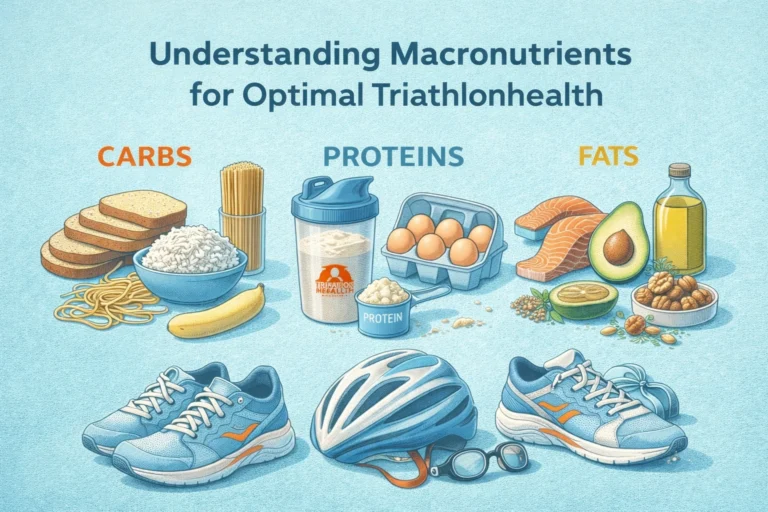
Fuel makes the difference between a hard, struggle-filled session and a strong, confident day on the bike, in the pool, or on the run. This guide focuses on macronutrients triathlonhealth, and explains how carbohydrates, protein, and fat work for triathletes. You will get clear, practical steps to set targets, plan meals, and improve training and recovery.
Read on for simple explanations, sample meal ideas, and common errors to avoid. The advice here is aimed at beginners up to experienced athletes who want to use food to support performance and health.
What are macronutrients triathlonhealth
Macronutrients are the main nutrients our bodies use for energy and repair. For triathletes, the three key macronutrients are carbohydrates, protein, and fat. Each has a clear role in training, recovery, and race-day performance.
When we talk about macronutrients triathlonhealth, we mean the amounts and timing that best support swim, bike, and run demands. Getting this balance right helps you train more, recover faster, and perform better on race day.
This section explains the basic roles of each macronutrient. It will help you understand why one size does not fit all. Age, gender, body size, training load, and goals all change what each athlete needs.
Understanding these basics makes planning easier. Later sections will show how to turn the information into real meals and daily targets that match your training days.
Carbohydrates: Fuel for training and racing
Carbohydrates are the most important fuel for high-intensity work. They are stored in muscle and liver as glycogen. When you train hard, your muscles use glycogen first.
For triathletes, carbs let you hold pace on runs, push power on the bike, and swim at race speed. Low glycogen makes workouts feel heavy and slows recovery.
Some athletes fear carbs for bodyweight reasons, but carbs do not automatically cause weight gain. The amount and timing matter. You need more carbs on hard days and during long sessions. On easy days you need less.
Below is a short list of practical carbohydrate sources to use before, during, and after sessions. Use the paragraph above as your lead-in to the list.
- Whole grains: Oats, brown rice, quinoa for steady energy.
- Fruits: Bananas, berries, oranges for quick carbs and vitamins.
- Sport nutrition: Gels, chews, and drinks for during long sessions or races.
- Starchy vegetables: Potatoes, sweet potatoes for recovery meals.
How much carbohydrate do triathletes need?
Carbohydrate needs change with the training load. Light days require less. Hard, high-volume days need much more. Use training intensity and duration to guide daily carb targets.
A simple method is to set targets by body weight and workout length. Short sessions may need 3 to 5 grams per kilogram of body weight per day. Longer or high-intensity days can rise to 6 to 10 grams per kilogram per day.
These ranges are broad. Start at the lower end if you are new or trying to control body weight. Increase carbs when you feel tired, performance drops, or your key training sessions suffer.
Practice race nutrition during training. That helps you find the right types and amounts of carbs to use during a race, without surprises.
Protein: Repair, recovery, and adaptation
Protein builds and repairs muscle. For triathletes, protein supports recovery after long sessions and helps maintain muscle mass during heavy training. It also helps immune function and general health.
Many athletes focus too much on protein for weight loss. For endurance sports, the priority is recovery, not just muscle gain. Better recovery means less soreness and faster return to hard sessions.
Daily protein targets depend on training load and goals. General endurance targets are higher than the average person, but lower than heavy strength athletes. Spread protein evenly across the day for the best results.
Before a list, here are practical protein sources you can use at meals and snacks to meet daily targets.
- Lean meats: Chicken, turkey, lean beef for solid protein at meals.
- Fish: Salmon, tuna for protein and healthy fats.
- Dairy: Yogurt, milk, cottage cheese for recovery and calcium.
- Plant proteins: Beans, lentils, tofu, and tempeh for variety and fiber.
Protein timing and amounts
A useful rule is to aim for 0.25 to 0.4 grams of protein per kilogram of body weight per meal. Eating protein within a couple of hours after hard sessions helps repair and adaptation.
For example, a 70 kg athlete would aim for roughly 18 to 28 grams of protein at each meal. Include a small protein-rich snack after workouts if your next meal is more than 90 minutes away.
Protein also helps with satiety and can make calorie control easier when needed. Keep the portion sizes realistic to match your activity level and goals.
Remember that whole foods are usually the best choice. Supplements can help when you travel, have limited time, or need extra protein but should not replace most meals.
Fats: Steady energy and health
Fats provide a dense source of energy, and they are essential for health. They help with hormone function, absorption of fat-soluble vitamins, and cell health. In endurance training, fats support long, low-intensity work.
Fats should not be feared, but they also should not crowd out carbs on high-intensity days. Balance is key. Use more fat on easy days and include healthy fats daily for overall health.
It helps to focus on types of fats. Unsaturated fats from plants and fish support heart health. Saturated fats in moderation are okay. Trans fats should be avoided.
Before the next list, read this lead-in sentence for choices to add to meals and snacks.
- Olive oil: Good for cooking and dressings.
- Nuts and seeds: Almonds, walnuts, chia and flax for snacks and toppings.
- Avocado: Great as a spread or in salads for steady energy.
- Fatty fish: Salmon and mackerel for omega-3 fatty acids.
How much fat should you eat?
Fat needs vary, but a common range for active people is 20 to 35 percent of daily calories. If you reduce carbs for a certain phase, fat will take a larger share of calories. Keep saturated fat limited and focus on whole sources.
On race day, limit heavy, fatty meals right before the start. They take longer to digest and can make you feel sluggish. Save richer meals for after you finish or for easy days.
Practice meal plans in training to see how different fats affect digestion and energy. Some athletes tolerate more fat than others during long efforts.
Balance fat intake with carbohydrate and protein goals to support training and health together.
How to calculate macronutrient needs for triathlonhealth

Calculating macronutrient needs starts with total calorie needs. Your training load and body weight drive total energy needs. Once you know calories, set carb, protein, and fat targets as percentages or grams per kilogram.
There are simple step-by-step methods to get a solid starting point. Use them as a starting point, then adjust based on how you feel, train, and race. No calculation will be perfect at first.
Below is a simple list of steps you can follow to create your own targets. Read the short paragraph above as the lead-in before the list.
- Step 1: Estimate your daily calorie needs using activity and body weight.
- Step 2: Set protein at 1.2 to 2.0 g/kg depending on training and goals.
- Step 3: Set carbs based on session demands, typically 3 to 10 g/kg per day.
- Step 4: Fill the remaining calories with healthy fats, around 20 to 35 percent of calories.
Example calculation
Here is a clear example for a 70 kg athlete who trains 2 hours a day at a moderate to high intensity. Start by estimating calories. This athlete might need roughly 2,800 calories per day, depending on other factors.
Set protein at 1.6 g/kg, which equals 112 grams of protein. That is about 450 calories from protein. Choose carbs near 6 g/kg for a high-volume day, which equals 420 grams or 1,680 calories.
The remaining calories come from fat. Subtract protein and carb calories from total calories, leaving about 670 calories for fat. That equals roughly 74 grams of fat. Use whole foods to hit these targets across meals.
Adjust these numbers as training load or body weight changes. Use a simple spreadsheet or app to track and modify over weeks.
Timing and meal planning for triathletes
Timing can be as important as totals for many athletes. When you eat affects training quality, recovery, and how you feel during long sessions. Planning meals and snacks around workouts helps you get the most out of training.
Pre-workout carbs and a small amount of protein are useful for most sessions. During long sessions, use carbs to maintain energy and focus. After sessions, focus on carbs and protein to restore glycogen and prompt repair.
Below is a short list of practical timing rules to follow. Read the sentence above for context before the list.
- Pre-workout: 1 to 3 grams of carbs per kilogram in the 1 to 4 hours before training for long or intense sessions.
- During workout: 30 to 90 grams of carbs per hour for long sessions, depending on duration and intensity.
- Post-workout: Aim for 0.3 g/kg of protein and 1 to 1.2 g/kg of carbs within 30 to 120 minutes after long or heavy sessions.
Practical meal examples
For a morning session, try oatmeal with fruit and a small serving of yogurt. This gives carbs and some protein without feeling too heavy. For late afternoon hard sessions, a rice bowl with chicken and vegetables works well.
During long rides, practice with gels, bananas, or sports drinks. Practice the exact products you plan to use on race day. That way you reduce the risk of stomach issues and learn how much your gut can handle.
After sessions, a balanced meal with carbs, protein, and some fat helps recovery. Smoothies with fruit and protein powder are a simple option when you do not feel like a big meal right away.
Plan meals by training day. Hard days need larger meals and more carbs. Recovery days can be lighter and include more vegetables and protein.
Common nutrition mistakes triathlonhealth
Many athletes repeat the same nutrition errors. These mistakes reduce training quality, slow recovery, and cause poor race performance. Here we cover the most common issues and how to avoid them.
Use the phrase nutrition mistakes triathlonhealth to focus attention on errors that often affect triathletes. These include under-fueling, poor timing, and relying on unfamiliar foods on race day. Recognizing these mistakes helps you fix them quickly.
Below is a list of common errors and why they matter. Read the sentence above as your lead-in paragraph before the list.
- Under-fueling long sessions: Starting long workouts without enough carbs leads to early fatigue and poor training adaptations.
- Skipping post-session protein: Missing protein slows recovery and reduces training gains over time.
- Over-reliance on one food: Using the same product for every session can cause tolerance issues and nutrition gaps.
- Poor race nutrition practice: Trying new foods or products on race day can lead to cramps or stomach trouble.
How to correct these mistakes
Fixing these issues starts with planning and practice. Create a weekly meal plan that matches your training load. Include extra carbs on long sessions and hard days. Pack familiar race foods for long workouts and test them in training.
Track how you feel during and after sessions. If you feel drained or slow to recover, increase carbs or adjust timing. If you struggle with weight, adjust total calories while keeping training intensity in mind.
Work with a coach or sports dietitian if you have persistent problems. They can provide a tailored plan for your body and schedule, and help you avoid common pitfalls.
Small changes lead to big gains. Start with one habit this week, like adding a post-workout protein snack, and build from there.
Sample daily plans for different training days
Sample plans show how to put macronutrients into real meals. The examples below cover easy days, normal training days, and long high-volume days. Use them as templates and adapt the portions to your weight and goals.
These meal templates show how to spread carbs, protein, and fat across the day to match training needs. They are practical and easy to prepare for most athletes.
Before the lists, read this short lead-in sentence so the lists make sense in context.
- Easy day: Breakfast: Greek yogurt, berries, and a small handful of nuts. Lunch: Salad with chickpeas, quinoa, and avocado. Snack: Fruit and a small protein bar. Dinner: Baked fish, steamed vegetables, and a medium sweet potato.
- Normal training day: Breakfast: Oatmeal with banana and milk, plus boiled egg. Midday snack: Whole grain toast with almond butter. Pre-workout: Small rice bowl or banana. Post-workout: Smoothie with fruit and protein powder. Dinner: Chicken, brown rice, and salad.
- Long hard day: Breakfast 3 hours before: Pancakes or oats with fruit and yogurt. During session: Sports drink, gels, and bananas to hit 60 to 90 g carbs per hour. Post-session: Large recovery meal with rice or pasta, lean protein, and vegetables. Evening snack: Cottage cheese and berries.
Adjusting portion sizes
Use body weight and training duration to scale portions. Heavier athletes and those with long sessions need larger portions. Lighter athletes and rest days need less.
Keep a training log and note how food affected energy and recovery. If you feel strong in key workouts, your plan is likely working. If you feel flat or fatigued, increase carbs and total calories.
Make gradual changes. Add an extra serving of carbs to one meal first, rather than overhauling the whole plan at once. Small, consistent changes are easier to maintain and evaluate.
Over time, you will find the right mix that supports both training and life.
Monitoring progress and adjusting macronutrients
Tracking performance, body weight, and how you feel is the best way to see if your macronutrient plan works. Use simple measures to track progress and change targets as needed.
Key indicators include training quality, recovery speed, sleep, mood, and race performance. If key sessions feel harder or recovery is slow, you likely need to adjust either carbs, protein, or total calories.
A short list below shows useful measures to monitor. Read the sentence above as a lead-in before the list.
- Training logs: Note session quality, perceived exertion, and energy levels.
- Body weight and composition: Track trends, not daily changes, to guide calorie adjustments.
- Sleep and mood: Low energy or poor sleep can mean under-fueling or stress.
- Race and test results: Use time trials to see if nutrition changes improve performance.
When to seek professional help
If you struggle to make progress or you have medical issues, consult a sports dietitian. They can run tests, create tailored plans, and help with special needs like allergies or eating challenges.
Professional advice is especially useful for athletes aiming for top-level events, or those with complex schedules and travel. A plan designed for your life will be easier to follow and more effective.
Small tweaks from a professional can save weeks of trial and error. They help you get the right balance without guesswork.
Use professionals as a resource, not a crutch. Learn the basics and then refine with expert help when needed.
Let’s Recap
macronutrients triathlonhealth means finding the right balance of carbs, protein, and fat for your body and training. Carbs support high-intensity work, protein helps recovery, and fat supports long efforts and health. Each plays a clear role.
Start with simple calorie and macronutrient targets, then adjust based on training, recovery, and how you feel. Practice race-day nutrition in training, avoid common pitfalls like under-fueling, and make changes slowly.
Use the sample meal ideas and timing rules here to build your weekly plan. Track progress, tweak as needed, and consider professional support for complex issues or high-level goals.
Good nutrition is a daily habit. Make small, sustainable changes this week and build from there. Your body will repay those choices in stronger sessions, quicker recovery, and better race results.