
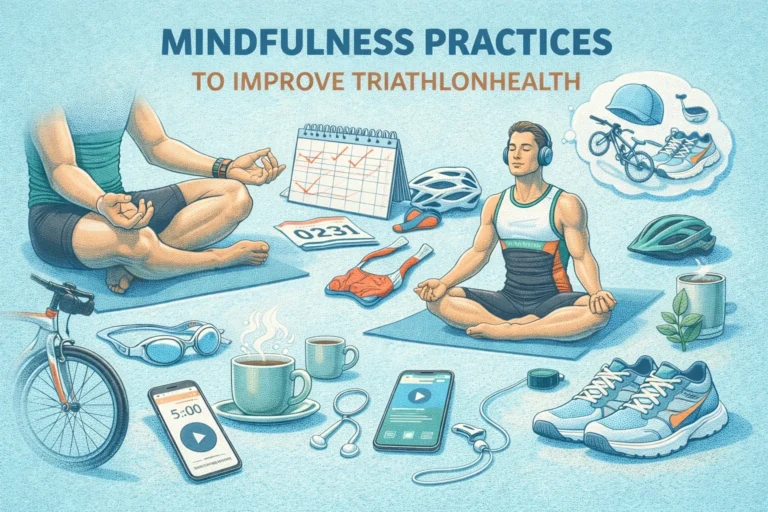
Mindfulness triathlonhealth gives athletes simple tools to race calmer, train smarter, and recover faster. This article shows clear practices you can use today. Read on to find practical steps you can add to swim, bike, and run routines.
mindfulness triathlonhealth benefits
Mindfulness helps triathletes in real ways that go beyond calm breathing. It boosts focus during long training sessions. It also lowers race anxiety and makes hard workouts feel more manageable.
A consistent mindfulness habit can cut down negative self-talk. That matters on the bike when fatigue hits or during a long run. Smaller thoughts can snowball into big problems. Mindfulness gives you tools to stop that process.
Mindfulness also helps with recovery. When you pay attention to your body, you notice tight spots sooner. You see warning signs before they become injuries. That means you can adjust training and get back on track faster.
For many triathletes, improved sleep is another benefit. Better sleep speeds recovery and sharpens focus. Mindfulness practices often reduce the mental chatter that blocks deep rest. The result is clearer training days and better race performance.
Getting started with a mindfulness routine

Starting a mindfulness habit can feel daunting. The good news is you only need a few minutes per day. Begin with short, clear steps and build from there. Small wins keep you consistent and help the habit stick.
Try this simple starter plan to get going. It takes less than 10 minutes each day. Do it first thing in the morning or right after a workout. Consistency matters more than long sessions.
Here are four easy steps to begin a routine. Each step is simple, and you can adapt it to your schedule. Practice for one week and then add time or try new exercises.
- Minute 1: Grounding breath, sit tall and breathe slowly. Count to four as you inhale, then count to four as you exhale.
- Minutes 2-4: Body scan, bring attention to your feet, legs, hips, torso, arms, neck, and head. Notice tension without judging it.
- Minutes 5-8: Focused attention, choose a word, phrase, or breathing cue and return to it every time your mind wanders.
- Minute 9-10: Intentions for training, set one clear goal for your next session, such as steady cadence or relaxed shoulders.
After you try the routine, reflect for a minute on how you feel. Keep a short note about what worked and what did not. That feedback helps you shape a habit that fits your life and training plan.
Daily practices triathletes can use
Daily routines build the base for mental strength. Small practices add up and make a real difference on race day. The key is choosing short tools you will actually do.
Below are daily practices that fit into an athlete schedule. Each one takes from one to fifteen minutes. You can do them on rest days, before training, or after sessions. Pick two or three and rotate them.
Here is a list of practical daily exercises and when to use them. Try each for a week and note the benefits you feel in training and mood.
- Morning breathing, three cycles of 4-4 breathing to start the day with focus.
- Midday short body scan, check posture and release tension in shoulders and hips.
- Pre-workout visualization, see the session going well, picture smooth transitions and steady effort.
- Post-workout reflection, sit for five minutes and notice how your body and mind felt during the session.
- Evening wind-down, a short guided relaxation to promote sleep and recovery.
Keep a simple log of which practices you do and how you feel. Track sleep, mood, and perceived effort during workouts. Over time you will see patterns that help you refine your routine.
Applying mindfulness during training sessions
Using mindfulness while you train sharpens skill and reduces wasted effort. You can use simple cues to stay present during long rides or tempo runs. The goal is not to clear your mind entirely, it is to notice thoughts and return attention to the task.
Start by choosing one cue per session. For example, focus on steady breathing during a swim set, or on pedal stroke smoothness during a bike ride. Keep the cue short and easy to repeat when your attention drifts.
When fatigue comes, mindfulness helps you distinguish useful signals from noise. You will notice real pain that needs attention, and separate it from ordinary discomfort. That lets you push where it matters and back off when needed.
Use a short reflection after each session. Ask what worked and what did not. This short debrief trains your mind to learn from sessions, not replay them. Over weeks, your training becomes more consistent and smarter.
Mindfulness techniques for swim, bike, and run
Each discipline has specific places where mindfulness helps the most. Using focused practice in the right moments makes technique gains and saves energy. The same ideas apply across all three events, with small adjustments.
For the swim, attention to breathing timing and head position reduces wasted effort. On the bike, mindful cadence and relaxed grip help maintain power and avoid neck or shoulder tension. For the run, a focus on foot strike and cadence improves efficiency and reduces injury risk.
Below are practical cues and short drills to use in each discipline. Use them during easy sessions first, then add them to harder workouts as they feel natural.
- Swim, count strokes for each lap and focus on long exhale underwater to improve rhythm.
- Bike, set a cadence target and feel the smoothness of each pedal stroke, release tension in the upper body.
- Run, check foot placement and cadence every minute, practice soft elbows and loose hands.
Practice these cues consistently and they will become automatic. When you reach race day, the cues will support steady performance and clearer decision making.
Race day mindfulness routines
Race day brings a unique set of nerves and excitement. Mindfulness helps convert that energy into useful focus. Simple, practiced routines calm the mind and allow you to execute your plan.
Create a short pre-race routine you always use. This routine becomes an anchor. It signals to your body and mind that it is time to perform. Keeping it short avoids overthinking and preserves energy.
Below is a practical pre-race routine that is quick and effective. Use it in warm-up, transition, and just before the start. Practice it in smaller events to make it familiar when it matters most.
- Three deep cleansing breaths to slow the heart and focus attention.
- One-minute body scan to release tension in jaw, shoulders, and hips.
- Two short visualizations: strong swim, smooth transitions, steady power on the bike, confident run.
- A single short phrase or cue you repeat as you line up, such as “steady” or “smooth.”
During the race, check in with your breath and posture at key moments, such as every five minutes on the bike or after each lap in the swim. These checks are short and help you stay present without losing focus on the race plan.
Using mindfulness to speed recovery
Recovery is where gains are made. Mindfulness improves recovery by helping you notice tension, optimize sleep, and reduce stress. It supports the physical work you do during training days.
After a hard workout, a short mindful cool-down helps return your nervous system to a calmer state. This practice can lower cortisol and promote tissue repair. Quiet reflection also reveals early signs of overtraining.
Include guided relaxation or body scan sessions in your recovery plan. These sessions can be 10 to 20 minutes long and focus on releasing tight areas. They pair well with light movement, stretching, or soft rolling work.
Pay attention to sleep quality as part of your recovery. Mindfulness before bed reduces racing thoughts and helps you fall asleep faster. Better sleep improves hormone balance and muscle repair, so it directly affects performance.
Building mental resilience for long seasons
Long training blocks and race seasons test your mental limits. Mindfulness builds resilience by training you to accept setbacks and stay focused on process. Resilience is a skill that grows with practice.
Use short daily practices to strengthen your mindset. Over time, you will find it easier to handle a missed session, illness, or poor race. The mind becomes less reactive and more steady under stress.
Track your progress with a training journal that includes mental notes. Record how you felt in workouts, what thoughts came up, and how you handled them. That reflection helps you learn faster and avoid repeating errors.
For many athletes, phrases like triathlonhealth mental toughness and triathlonhealth performance strategies become part of their planning. Use those ideas to shape realistic mental goals, not to pressure yourself unnecessarily. Resilience grows with balanced goals and steady practice.
Common challenges and how to overcome them
Many athletes try mindfulness and stop quickly because they expect instant results. Mindfulness is a skill. It improves slowly with steady practice. Patience matters. Small daily steps create lasting change.
Another common issue is boredom. If a practice feels dull, try a new format. Use a guided session, a short walk with attention on the feet, or add a brief breath exercise during a nap. Variety keeps the habit alive.
Time is often a barrier for busy athletes. The answer is to prioritize short sessions. Two minutes before a workout is better than none. Use training transitions, such as the warm-up or the cool-down, to add mindfulness without changing your schedule dramatically.
If you face strong negative thoughts during a session, use labeling. Name a thought quickly, such as “worry” or “tired,” then return to your cue. This simple step interrupts rumination and brings you back to the present moment.
Key Takeaways
Mindfulness triathlonhealth offers clear tools that help athletes train smarter, race calmer, and recover faster. The practices are simple and fit into busy schedules. They work best when you keep them short and consistent.
Start with small daily habits like controlled breathing, short body scans, and pre-race visualizations. Use these tools during sessions to improve technique and during recovery to speed repair. Over time they build real mental strength.
Track your progress and adjust practices that fit your life and training. Use short lists of cues for each discipline and keep a brief post-session reflection. This approach turns mindfulness into practical training work.
When you add mindfulness to a season plan, you gain steady focus and better response to stress. Tools like triathlonhealth mental toughness and triathlonhealth performance strategies can guide how you set mental goals. Start small, be consistent, and watch the gains appear in training and racing.