
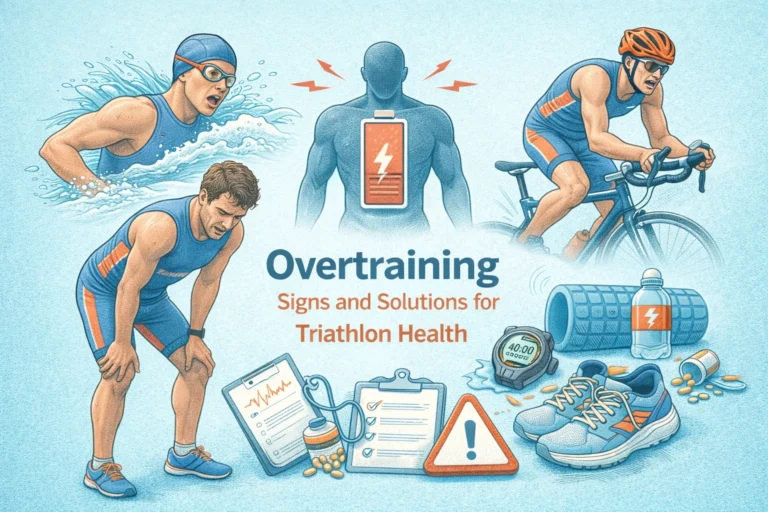
Overtraining triathlonhealth is a real risk for athletes who care deeply about progress. You may feel stuck, tired, or unable to hit race paces even after months of hard work. This article explains what overtraining looks like, how to test for it, and the clear steps you can take to recover and return stronger.
What is overtraining triathlonhealth?
Overtraining happens when training load exceeds your body and mind’s ability to recover. For triathletes, that load includes swim, bike, run, strength work, and life stress. Over time, the gap between stress and recovery grows, and your performance drops.
Overtraining is more than simple tiredness. It is a chronic condition that shows up as persistent fatigue, slower training times, and poor sleep. Many athletes first notice smaller problems, like missed intervals or lingering muscle soreness. These early problems can get worse if the training plan does not change.
Different athletes will reach overtraining at different points. Age, training history, job stress, sleep quality, and nutrition all change how much you can handle. That means two athletes with the same workout can have very different outcomes. The word overtraining here is used as a warning sign for triathletes on Triathlonhealth, not a final diagnosis.
Recognizing overtraining early gives you the best chance to recover fast. This article focuses on simple checks and practical steps that work across event distances, from sprint triathlons to long course racing.
Common signs of overtraining triathlonhealth

Signs can be physical, mental, or related to performance. Watch for changes that last more than a week or two. If you see multiple signs at once, treat them seriously.
Below is a list of common physical and performance signs. Read this list carefully and compare it with recent weeks of training. The more items you tick, the higher the chance you are overtrained.
- Constant muscle soreness that does not improve with rest
- Frequent colds or infections, lowered immunity
- Prolonged elevated resting heart rate for multiple days
- Decline in race or time-trial performance despite similar effort
- Loss of appetite or unplanned weight loss
Mental and emotional signs are often overlooked but very telling. Mood and motivation changes may be the first sign that recovery is not enough for the body to adapt to training.
Here is a short list of psychological indicators. Use it to check how your head has been feeling around workouts and races.
- Loss of motivation for training you once enjoyed
- Increased irritability or anxiety
- Difficulty concentrating at work or on simple tasks
- Feeling flat or emotionally drained after easy workouts
Other practical signs include persistent sleep problems, trouble hitting target watts or paces, and repeated minor injuries. If multiple signs are present together, consider cutting volume and consulting a coach or medical professional.
Why overtraining happens
Overtraining develops when the balance between stress and recovery is off for an extended time. Training stress is not just the hours on the bike or in the pool. It is the total load, including work stress, lack of sleep, and poor food choices.
A common pattern is steady increases in training without scheduled recovery weeks. Many athletes add too much volume or intensity too quickly. Small errors add up and produce a decline in performance rather than steady gains.
Equipment and technique issues can also increase load unintentionally. A bike fit that is slightly wrong, or running form that causes inefficiency, may force your body to work harder for the same speed. That extra effort raises your overall stress even if your scheduled workout looks normal on paper.
Finally, life stress plays a major role. Job changes, family issues, and travel reduce your ability to recover. Even short periods of poor sleep or increased work hours can push a well-trained athlete toward overtraining when combined with hard sessions.
How to assess if you are overtrained
Assessment needs both objective measures and honest self-checks. Track simple metrics daily so you can spot trends. A single bad day is not proof of overtraining, but a string of poor days is a warning sign.
Start with these easy daily checks. They are low cost and give quick feedback. Do them in the morning before caffeine or heavy activity for the most consistent readings.
- Resting heart rate: Track it each morning. A sustained rise of 5 to 10 beats per minute can signal trouble.
- Sleep hours and quality: Note how you feel after sleep, not just total hours.
- Perceived fatigue: Rate your energy and soreness on a scale from 1 to 10.
- Training performance: Compare current times or power to baseline efforts.
More structured tests can help confirm overtraining. These are best used alongside your coach or a sport doctor. They give a clearer picture of your fitness and recovery state.
Examples of structured checks include short time trials, standardized power or pace tests, and simple lab tests. For cyclists, a 20-minute power test or a 5 km run time-trial can reveal whether your fitness has dropped. If those numbers fall significantly despite regular training, the body may be overreaching or overtrained.
Blood tests can help rule out medical causes that mimic overtraining. Tests for iron, thyroid function, vitamin D, and markers of inflammation provide useful context. If you suspect an extended problem, talk with a medical professional about testing.
Practical solutions and recovery strategies
Recovery plans should be clear, simple, and achievable. Start with rest and reduce training volume, but also focus on sleep, nutrition, and mental rest. Good recovery is not just doing less. It is doing the right things to help the body repair and adapt.
Below is a list of core strategies to recover from overtraining. Read the options and pick the combination that matches your symptoms and life demands. Every athlete will need a slightly different plan.
- Planned rest: Take 7 to 14 days of reduced training or full rest. Active recovery like easy swimming or walking is okay if you feel up to it.
- Sleep: Aim for consistent bedtimes and 7 to 9 hours nightly. Prioritize sleep hygiene, such as removing screens before bed.
- Nutrition: Increase calories to match reduced but still significant activity. Focus on protein, iron-rich foods, and carbohydrates around workouts.
- Mental recovery: Reduce stressors where possible, practice brief relaxation techniques, and consider counseling if needed.
Avoid the common trap of replacing hard training with long easy sessions that keep you tired. The goal during recovery is to lower total stress while keeping movement to maintain routine. Short, easy sessions can help preserve fitness without extending recovery time.
Professional support can speed recovery. A physiotherapist can help with lingering muscle issues. A sports dietitian can correct nutrient gaps. A coach can adjust your plan and guide the return to full training. If you are unsure, start with a coach or clinician experienced with endurance sports.
Adjusting training plans safely
Returning to training after overtraining must be gradual. Jumping back to your previous workload is the fastest way to relapse. A well-structured plan lowers volume first, then slowly increases intensity as you respond well.
Here is a simple approach many coaches use. It reduces volume immediately, keeps intensity low for a short period, then builds back with monitoring. This method works for most triathlon distances if you follow it consistently.
- Week 1: Reduce volume by 50 percent. Keep intensity at easy aerobic levels only.
- Week 2: Maintain reduced volume, introduce a few controlled short efforts at a lower intensity than before.
- Weeks 3 to 4: Increase volume gradually by 10 percent per week if you show consistent recovery signs.
When you plan intensity, be careful. Many athletes underestimate how much high-intensity work adds to total stress. Use tools like the Rate of Perceived Exertion, heart rate zones, or power targets to control intensity. This helps prevent repeating past errors labeled as training intensity triathlonhealth.
Also review your past training and find patterns. Were hard weeks stacked without recovery? Did you add extra sessions before a race or event? Identifying triathlonhealth training mistakes lets you remove them from your future plans. Common errors include sudden large jumps in volume, too-frequent high-intensity sessions, and ignoring life stress.
Finally, avoid long, aimless training blocks. Use clear cycles with built-in rest. Periodization gives predictable stress and recovery windows, and it lowers the risk of repeating workout schedule mistakes triathlonhealth in the future.
Common training mistakes and how to fix them
Many athletes who face overtraining share a few common training habits. Fixing these habits prevents future problems. Below you’ll find a list of mistakes with practical fixes you can apply today.
- Doing too many high-intensity sessions in one week. Fix: Limit hard sessions to two or three per week depending on your level.
- Adding large volume increases too quickly. Fix: Use the 10 percent rule or coach-guided progressions for volume increases.
- Neglecting sleep and nutrition while increasing training. Fix: Treat sleep and diet as part of the training plan, not optional extras.
- Ignoring signs of fatigue and pushing through. Fix: Track simple metrics and force one easy day if metrics indicate strain.
Fixing these mistakes means making training decisions based on data and feelings, not emotion. Keep a short daily log with perceived fatigue, sleep, and mood. The log helps you spot negative trends early and encourages small corrections before problems grow.
If you are a self-coached athlete, consider periodic coach reviews or training audits. A coach will spot unsafe patterns in your plan that you may miss, and they can give clear permission to rest when you need it.
Prevention strategies for long-term resilience
Prevention beats cure. Once you have recovered, build habits that reduce the chance of falling back into overtraining. These habits are practical and require only small changes to daily routine.
Start with a simple weekly plan that includes one full rest day and a lighter recovery week every three or four weeks. These breaks help the body consolidate adaptations and lower cumulative stress. They also offer mental refreshment that keeps enthusiasm high.
Use cross-training wisely. Swimming, easy cycling, and mobility work can maintain fitness while reducing impact. Cross-training helps when you need to manage injuries or heavy training blocks without adding more stress.
Another prevention tool is periodization. Break your season into blocks with specific goals and built-in recovery. Plan your peak for key races and avoid constant peaking. Periods of base, build, race, and recovery keep progress steady and sustainable.
When to seek professional help
Not every bout of fatigue needs medical care, but seek help when symptoms are severe or lasting. If you have extreme exhaustion, frequent infections, abnormal heart symptoms, or marked drops in weight and appetite, see a doctor. Professional testing can rule out conditions that mimic overtraining.
Sports medicine professionals can run blood tests and screen for thyroid problems, low iron, or other issues. A physiotherapist can identify mechanical problems that increase training stress. A sports psychologist can help with motivation and mood changes linked to heavy training.
Coaches are a practical first step for plan adjustments. A coach who understands endurance sports can change your training load while keeping your season goals in mind. If you lack access to a local coach, many experienced coaches offer remote support and program reviews.
Key Takeaways
Overtraining triathlonhealth is common but avoidable. Watch for persistent fatigue, drops in performance, sleep problems, and mood changes. Use simple daily checks like resting heart rate and perceived fatigue to spot trouble early.
When overtraining appears, reduce volume, prioritize sleep and nutrition, and use active recovery. Rebuild training slowly with clear steps and avoid repeating triathlonhealth training mistakes. Keep intensity controlled, and review your plan with a coach if possible.
Prevention matters. Build recovery weeks into your program, use periodization, and address life stressors. If problems persist or are severe, seek medical evaluation to rule out other causes.
Recovering from overtraining is possible with patience and a structured plan. Follow the steps in this article, monitor your response, and make gradual changes. You will get back to consistent training and reach your goals without sacrificing long-term health and enjoyment of the sport.