
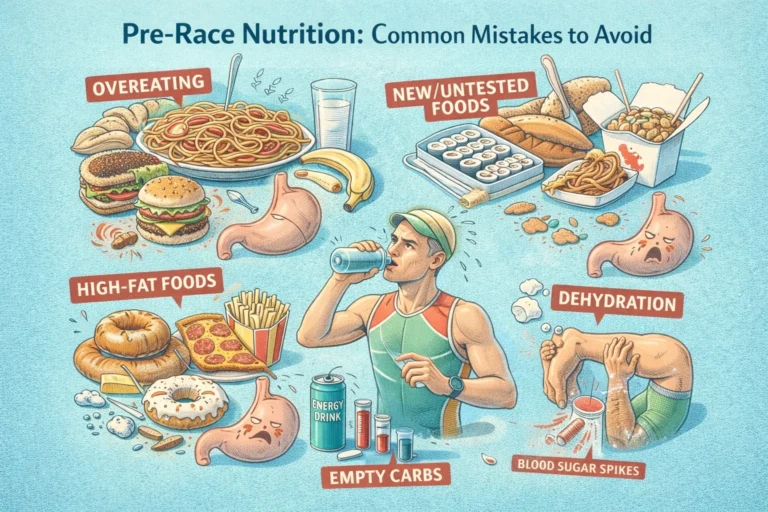
Race day can be exciting and a little nerve-racking. Many athletes train hard, but leave their fuel plan to chance. This article covers pre-race nutrition mistakes triathlonhealth athletes should avoid, and gives clear steps to prepare your body and mind for a strong performance.
pre-race nutrition mistakes triathlonhealth
Nutrition often decides how a race feels after the first hour. Simple errors can cause cramps, fatigue, or stomach trouble. Many athletes make the same basic errors. They either eat too much, too little, or the wrong kinds of food.
When I report on races, I hear the same stories. Athletes say they trusted a new gel, or skipped breakfast, or hydrated too much. These choices change the race outcome. That is why knowing common pitfalls gives you a major edge.
This section lists the most frequent problems and explains why they matter. Read these items and think about which ones you have made before. Awareness makes it easier to change your plan and build confidence for race day.
Below I outline the main mistakes, and then provide practical fixes. You will get timing advice, food lists, hydration guidelines, and a simple checklist to review the night before and the morning of the race.
Timing and meal size errors
Timing is one of the biggest reasons athletes feel off on race day. Eating too close to the start can cause stomach sloshing and cramps. Eating too early leaves you low on fuel during the race. Both can ruin the first and most important hour.
A common rule is to eat a larger meal two to four hours before the race. That larger meal should be mostly carbohydrate, modest in protein, and low in fat and fiber. This helps fill glycogen stores and reduces digestive work right before the start.
Small snacks can work closer to the start, about 30 to 60 minutes prior. These snacks should be simple carbs that your stomach tolerates. Practice these timing patterns during long training sessions so you know what works for you.
If you have a late wake-up or long travel, adjust your plan. Bring a portable, reliable option you have used before. Do not experiment with new items on race morning. Practice timing in training until you find a plan that feels steady and repeatable.
Common wrong food choices
Choosing the wrong foods before a race often causes bowel problems, bloating, or sluggishness. High fiber, high fat, and new foods are common culprits. Many athletes feel they need a huge meal, and then regret it when the race starts.
Before a race, avoid heavy, rich foods and high-fiber meals. Foods like beans, lentils, fried items, and large salads can trigger gas or urgent bowel movements. Dairy can bother some athletes, especially under stress.
Simple carbohydrate-rich foods are usually the safest pre-race option. Plain bagels, white toast, low-fiber cereals, oatmeal in small amounts, bananas, and rice work well for many people. Practice to find which of these you tolerate best.
Here is a short list of foods to avoid and foods to favor before race day. Read the list and choose options you have tested in training. Never introduce new items on race morning.
Before the list, remember that everyone is different. Use these as a starting point and make adjustments based on your own experience and digestion.
- Avoid: Beans, cruciferous vegetables, large salads, greasy or fried foods, spicy meals, new supplements, large servings of full-fat dairy.
- Favor: Plain bagels, white rice, bananas, low-fiber cereal, rice cakes, simple porridge, toast with a small amount of jam, sports drink or diluted juice.
- Tested options: Plain pancakes, applesauce, boiled potatoes, small amounts of white pasta with a light sauce before longer events.
Hydration and electrolyte mistakes
Hydration is easy to overcomplicate, and easy to get wrong. Drinking too little leads to dehydration and reduced performance. Drinking too much without electrolytes can lead to hyponatremia, a dangerous low-sodium condition.
Start hydrating in the days leading up to the race. A steady intake of fluids and some salt in food helps your body store fluid better than trying to flood yourself on race morning. Monitor urine color; pale yellow is a simple guide.
On race day, sip fluids regularly. Use a sports drink with electrolytes for longer races or for those who sweat a lot. Practice how much you need during long training sessions. Sweating rates vary widely between athletes.
Below is a simple hydration checklist to follow the day before and the morning of the race. Use this checklist as a guideline and adjust based on your sweat test and weather conditions.
- Day before: Drink steadily, avoid excess alcohol, include some salty meals if you usually sweat a lot.
- Morning of: Sip water and a sports drink, but do not overdrink. Aim for 5 to 8 ounces every 15 to 20 minutes before the start if you feel thirsty.
- During race: Follow your practiced plan, replace electrolytes on hot days, and avoid drinking more than you lose over time.
Skipping race-day practice and testing
A top mistake is trusting a plan that has never been tested in training. Race day is not the place to try a new product or timing. You need to know how your stomach and energy levels respond to specific foods and drinks.
Use long training sessions as simulated race days. Eat the pre-race meal you plan to use, drink the sports chews or gels you would use, and mimic your warm-up and pacing. Note how you feel and adjust the plan based on those sessions.
Keep a simple log during training. Record what you ate, when you ate it, how you felt during the session, and any digestive issues. Over several sessions you will see patterns and learn which items are reliable for you.
Trial and error in training builds confidence. If something fails in practice, adjust and test again. Race day stress alone can change digestion, so give yourself multiple chances to confirm a plan before race day.
Ignoring individual needs and macronutrients
No single nutrition plan fits every athlete. Body size, training load, race distance, gut tolerance, and sweat rate all matter. Personalization helps avoid common pitfalls and gives you steady energy during the race.
Carbohydrate is the primary fuel for most triathlon distances. Protein is helpful for recovery and for keeping you full in the hours before the race. Fat is useful in longer events, but keep it low in the immediate pre-race meal to avoid slow digestion.
Think about macronutrients in simple terms, and adjust to your event. Shorter races rely more on fast carbs. Longer events need more sustained carbohydrate and possibly some fat, but only if you have practiced it. Track how your body responds and build a plan that matches your needs.
Here is a short, clear breakdown to help you set targets. Use this as a basic guide and fine-tune with experience and simple testing.
- Short races (sprint to Olympic): 60 to 90 grams of carbs per hour is often enough; protein and fat should be minimal just before start.
- Longer races (half Ironman to Ironman): 60 to 90+ grams of carbs per hour, combined sources (glucose and fructose) can help reach higher intakes; include small amounts of fat and protein earlier in the pre-race day.
- Everyday focus: Practice good daily fueling and recovery nutrition. Race day will go better if your glycogen stores are topped up from consistent training nutrition.
When planning macros, remember the phrase macronutrients triathlonhealth as a reminder to consider carbs, protein, and fats in context. Prioritize carbs before the race, use protein for recovery, and reserve fats for training adaptation and very long races if you can tolerate them.
Supplement and caffeine mistakes
Supplements and caffeine can boost performance, but they must be used with care. Caffeine timing, dose, and form vary widely between athletes. Using too much can cause jitters or stomach upset. Using none when you normally do can reduce alertness.
Practice caffeine use in training. Try the dose you plan to use on race day, and see how it affects your heart rate, focus, stomach, and sleep the night before. For many athletes, 3 to 6 mg per kilogram body weight, taken 30 to 60 minutes before start, is a common range. But tolerance varies.
Also be careful with newer supplements like concentrated salts, beta-alanine, or lactic acid buffers just before a race. Many of these can cause tingling or digestive issues if used for the first time. Use only what you have practiced and know works for you.
Here is a short list of safe practices to follow for supplements and stimulants. Use training time to find your personal sweet spot.
- Test caffeine doses in training and observe sleep effects if you use it later in the day.
- Avoid trying new or high-dose supplements on race morning.
- If you use salts or concentrated electrolytes, test them in heat and at race pace to confirm tolerance.
Practical pre-race meal plans and checklists

Having a simple plan reduces stress and avoids common mistakes. A short checklist for the night before and the morning of the race helps you control variables you can. It also frees mental energy for racing.
Below are sample plans for different race distances. Use them as templates. Adjust portion sizes and timing based on your weight, gut tolerance, and what you tested in training. The key is repetition and practice.
Before the lists, remember to pack any food and drink you need for the morning. Bring extra of what you trust, and label items so you do not waste time at the start area.
- Sprint to Olympic, night before: Balanced dinner, moderate carbs, lean protein, easy-to-digest vegetables, avoid heavy sauces. Hydrate steadily.
- Sprint to Olympic, morning: 2 to 3 hours before: a bagel or toast with jam, banana, water and a small sports drink. 30 to 60 minutes out: a small gel or sports drink if you feel you need a top-up.
- Half to full distance, night before: Larger carbohydrate meal with familiar foods, include some lean protein, minimal fiber, and moderate salt. Hydrate and rest well.
- Half to full distance, morning: 3 to 4 hours before: rice or pasta, toast, or pancakes with easy toppings, moderate protein. 60 to 90 minutes before: a small carb snack like a gel, rice cake, or sports drink. During the race: follow your practiced fuel schedule.
Also prepare a final checklist for the morning. This short list reduces anxiety and helps you stick to the plan on race day.
- Night before: lay out clothing, pack race belt, prepare nutrition and bottles, set alarms, and confirm travel to venue.
- Morning of: eat planned meal, drink planned fluids, apply sunscreen, check bike and gear, warm up with light movement and stretching.
- Final check: confirm that you only use items you have tested, and avoid last-minute food experiments.
Practical tips to test and refine your plan
Testing your plan in training is the surest way to avoid race-day surprises. Plan a few long sessions and treat them like mini race days. Eat the same foods, use the same products, and follow the same timing.
After each test, write short notes. Record what worked and what did not. Track energy levels, stomach comfort, and any timing changes that helped. Repeat until the plan feels predictable.
Consider environmental factors. Heat and humidity increase sweat and electrolyte losses. Cold weather can change your appetite and how your gut handles fluids. Test in weather similar to the race or practice adjustments for different conditions.
One final tip, bring backups. Pack an extra gel, an extra bottle, and a simple snack you know you tolerate. Race logistics are rarely perfect, and having spare options keeps you calm and flexible.
Key Takeaways
Small nutrition mistakes can have outsized effects on race day. Avoiding common errors gives you the best chance to perform at your training level. Focus on timing, tested foods, steady hydration, and realistic fueling targets.
Practice your plan in training and track results. Use simple, low-fiber carbohydrates before the race. Stay steady with fluids and electrolytes, and do not overdo caffeine or new supplements. Personalization is vital, so keep notes and refine your approach.
Remember the phrases nutrition mistakes triathlonhealth and macronutrients triathlonhealth as cues to check your plan and the balance of carbs, protein, and fat. Use them to guide your decisions and to remind yourself what to test next.
When race day arrives, follow your practiced routine, bring backups, and trust the work you have done. A clear plan reduces stress, keeps your stomach calm, and helps you race confidently. Good nutrition is an advantage you can control, and small adjustments make big gains.